
Pheidole nuculiceps
- Sci. Name
- Pheidole nuculiceps
- Tribe
- Attini
- Subfamily
- Myrmicinae
- Author
- Wheeler, 1908
- Distribution
- Found in 1 countries
Introduction
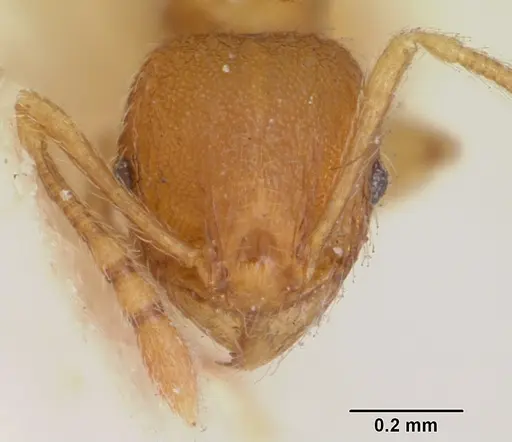
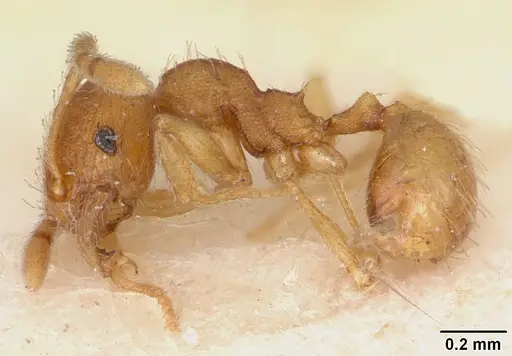
Pheidole nuculiceps is a small ant species native to the southern United States and northern Mexico. It has major and minor worker castes, with majors having larger heads for defense and seed processing. The body is light reddish yellow, and appendages are clear medium yellow. This species is only known from type specimens collected in Texas and a few Mexican states, making it one of the least studied North American ants . Nothing is known about the specific biology of this species in the wild. It belongs to the flavens group within Pheidole, but its nesting habits, foraging behavior, and colony dynamics remain undocumented .
Quick Summary
- Difficulty: Medium
- Origin & Habitat: Southern United States (Texas) and northern Mexico (Nuevo León, Tamaulipas). Found in diverse habitats including Pine-Oak-Arbutus forest, secondary vegetation, and xerophilous shrubland [3][4]. The type locality is New Braunfels, Texas [2].
- Colony Type: Unconfirmed colony structure. Most Pheidole species are monogyne (single queen), but this has not been documented for Pheidole nuculiceps [1].
- Size & Growth:
- Queen: Size data unavailable, no queen specimens have been described.
- Worker: Size data unavailable, body measurements not provided in literature.
- Colony: Unknown, no colony size data exists for this species.
- Growth: Unknown, no development data exists.
- Development: Unconfirmed. Based on similar Pheidole species, estimate 6-8 weeks at optimal temperature (around 24-27°C) [1]. (No direct development data exists for this species. Estimates are based on genus-level patterns.)
- Antkeeping:
- Temperature: Keep around 24-27°C during active seasons. This species comes from warm regions, so moderate warmth is needed. A heating cable on one side of the nest creates a gradient [1].
- Humidity: Provide a humidity gradient, mostly dry nest chamber with one small moist area. Avoid waterlogging [1].
- Diapause: Based on genus patterns, likely requires winter diapause. Keep at 10-15°C for 2-3 months during winter, with water available but no feeding [1].
- Nesting: Ground-nesting species. In captivity, test tubes work well for founding. Once established, Y-tong or plaster nests with narrow chambers are suitable. Provide an outworld for foraging [1].
- Behavior: Generally peaceful toward keepers. Minors handle foraging and brood care, while majors defend the nest. They are active during cooler hours. Escape prevention is important due to their small size. Majors can sting, but it is mild and rarely significant for humans [1].
- Common Issues: no documented biology means care is based on genus inference, results may vary., colonies may be slow to establish due to unknown founding requirements., winter diapause is likely required but timing and duration is unconfirmed., escape prevention should be practiced despite their moderate size., wild-caught colonies may carry parasites or diseases since nothing is known about their health in captivity.
Nest Preferences and Housing
Pheidole nuculiceps is a ground-nesting species, but specific preferences are unknown. For captive care, start with a test tube setup for founding colonies. Use a test tube with a water reservoir sealed with a cotton plug to provide humidity. Once the colony reaches 50+ workers, transition to a Y-tong or plaster nest with narrow chambers. Always provide an outworld for foraging [1].
Feeding and Diet
This species is a generalist feeder, but specific diet preferences are unknown. Offer sugar water or honey for carbohydrates, and small insects like fruit flies or mealworms for protein. Remove uneaten food after 24-48 hours to prevent mold [1].
Temperature and Seasonal Care
Keep the nest at 24-27°C during active seasons. During winter, reduce temperature to 10-15°C for diapause, with no feeding but water available. Gradually warm the colony in spring [1].
Behavior and Colony Dynamics
Pheidole nuculiceps has major and minor worker castes. Minors handle daily tasks, while majors defend the nest. They are not aggressive toward keepers. Colonies may grow slowly over several years [1].
Observing an Understudied Species
This species is rarely studied, so your observations can contribute to knowledge. Keep notes on founding, development, and behavior, and share findings with the antkeeping community [3][1].
Frequently Asked Questions
How long does it take for Pheidole nuculiceps to produce first workers?
Unknown for this species. Based on similar Pheidole species, expect 6-8 weeks from egg to first worker at optimal temperature [1].
Can I keep multiple Pheidole nuculiceps queens together?
Not recommended and not documented. Most Pheidole species are monogyne, so combining queens risks fighting [1].
What do Pheidole nuculiceps eat?
They accept standard ant foods: sugar water or honey for carbohydrates, and small insects for protein. Offer a variety and observe preferences [1].
What temperature do Pheidole nuculiceps need?
Keep them at 24-27°C during active seasons. A heating cable can create a gradient [1].
Do Pheidole nuculiceps need hibernation?
Based on genus patterns, likely yes. Keep at 10-15°C for 2-3 months during winter, with no feeding [1].
Are Pheidole nuculiceps good for beginners?
Difficulty is moderate. They are harder than common species due to lack of specific care data [1].
When should I move Pheidole nuculiceps to a formicarium?
Keep them in a test tube setup until the colony reaches 50+ workers, then transition to a Y-tong or plaster nest [1].
Why is Pheidole nuculiceps so rarely kept?
This species has never been documented in the antkeeping hobby before. It is only known from a handful of museum specimens [2][3].
How big do Pheidole nuculiceps colonies get?
Unknown, no colony size data exists for this species [1].
Report an Issue
The current care sheet is based fully on literature. See inconsistencies, or something that's incorrect? Please , it will be resolved after review from an admin. Contributing to the blogs tab also helps providing information, to make us be able to further improve the caresheets. Thank you for your support!
References

This caresheet is licensed under CC BY-SA 4.0 .
Community Blogs
CASENT0172977
View on AntWeb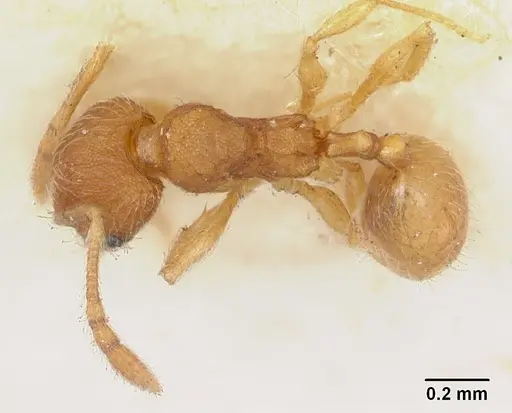
Literature
Loading distribution map...Loading products...