
Pheidole noar
- Sci. Name
- Pheidole noar
- Tribe
- Attini
- Subfamily
- Myrmicinae
- Author
- Wilson, 2003
- Distribution
- Found in 1 countries
Introduction
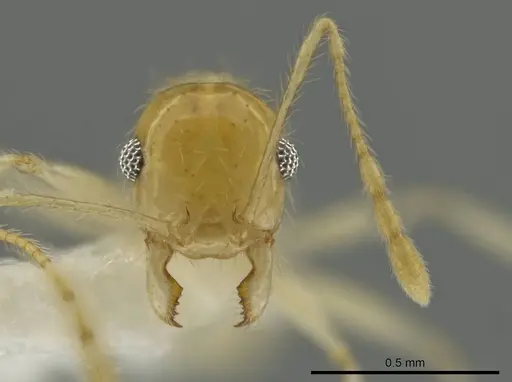
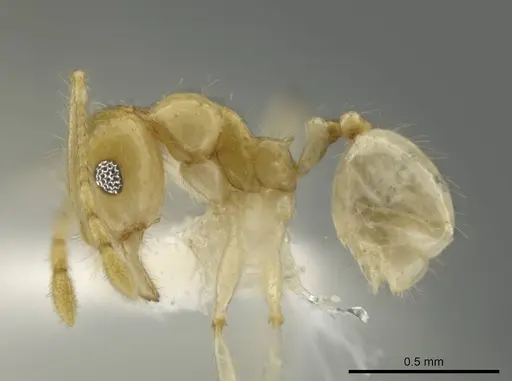
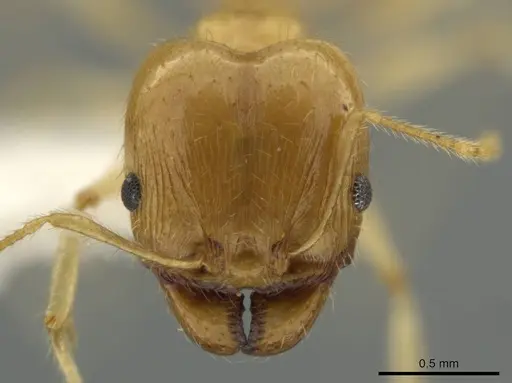
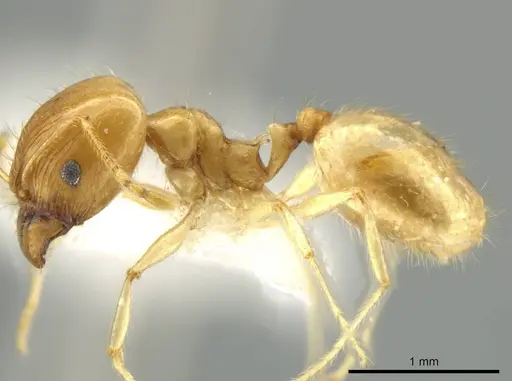
Pheidole noar is a tiny ant species endemic to the coastal desert of Cabo Rojo in the southwestern Dominican Republic, living at 5 meters elevation . The entire body is pale yellow, and majors have a pear-shaped eye that points anteriorly, while minors have thin, needle-like propodeal spines . This species belongs to the diligens group and was discovered foraging on the ground in a hot, dry habitat . The species name 'noar' means 'phantom' in Greek, referring to its pale coloration and elusive nature. Its large eyes suggest nocturnal foraging behavior, which is unusual for Pheidole .
Quick Summary
- Difficulty: Hard
- Origin & Habitat: Endemic to Cabo Rojo, southwestern Dominican Republic, a hot, dry coastal desert at 5m elevation [1][2]
- Colony Type: Unconfirmed, no specific data on queen number or social structure
- Size & Growth:
- Queen: size data unavailable
- Worker: size data unavailable
- Colony: Unknown
- Growth: Unknown
- Development: Unknown, estimated 6-8 weeks based on genus patterns for small tropical Pheidole (No direct development data exists, estimates are inferred from related species.)
- Antkeeping:
- Temperature: Keep warm with a gradient around 24-30°C, based on hot coastal habitat [1]
- Humidity: Keep substrate relatively dry with occasional moist areas, reflecting desert conditions [1]
- Diapause: No, tropical habitat suggests year-round activity [1]
- Nesting: Prefer dry to moderately humid nests, use Y-tong or plaster nests with small moisture chambers [1]
- Behavior: Nocturnal forager based on large eyes and pale coloration [1]. Generally non-aggressive but will defend nest, escape risk is high due to tiny size of minor workers.
- Common Issues: this species has never been kept in captivity, care is estimated from genus patterns, escape prevention is critical due to tiny worker size, use fine mesh barriers, no captive data on diet, start with standard Pheidole foods and observe, colony development timeline is unknown, monitor closely, cannot tolerate cool or damp conditions due to desert origin
Discovery and Distribution
Pheidole noar was discovered by Philip S. Ward in 2003 in the coastal desert of Cabo Rojo, Dominican Republic. It is known only from this single location, making it endemic to the area [1][2]. The habitat varies from sparsely vegetated desert to scrubland [1]. A male was collected with the type colony on September 9th, suggesting possible reproductive timing [3].
Identification and Appearance
This species is pale yellow throughout, with majors having a head width of 1.04mm and a pear-shaped eye, while minors have a head width of 0.42mm and thin propodeal spines [3]. Both castes lack typical ridge-like sculpturing [3]. The large eyes and pale color suggest nocturnal behavior [1].
Housing and Nesting
Since this species has never been kept in captivity, housing recommendations are based on its natural habitat. Provide warm temperatures around 24-30°C with a gradient [1]. Use Y-tong or plaster nests with dry substrate and occasional moist areas [1]. Escape prevention is critical due to tiny worker size, use tight-fitting lids and fine mesh barriers.
Feeding and Diet
No captive feeding data exists. Based on genus patterns, offer crushed seeds, small insects, and sugar water. Start with small amounts and adjust based on consumption [3].
Behavior and Temperament
This species is likely nocturnal based on large eyes and pale coloration [1]. Pheidole are generally peaceful but will defend their nest. Major workers serve as soldiers, while minors handle foraging. Escape risk is high due to tiny size.
Frequently Asked Questions
How long does it take for Pheidole noar to raise their first workers?
This has never been documented. Based on genus patterns, estimate 6-8 weeks from egg to worker at optimal temperature [3].
What do Pheidole noar ants eat?
No captive data exists. Offer crushed seeds, small prey, and sugar water based on genus patterns [3].
Can I keep multiple Pheidole noar queens together?
This is unknown for this species. Most Pheidole are single-queen, but do not combine queens without species-specific research.
What temperature do Pheidole noar ants need?
Based on their hot coastal habitat, keep temperatures around 24-30°C with a gradient [1].
Are Pheidole noar good for beginners?
This species is not recommended for beginners due to lack of captive data and high escape risk.
How big do Pheidole noar colonies get?
Unknown, no colony size data exists.
Why are Pheidole noar so pale?
The pale coloration and large eyes suggest nocturnal foraging, which may help with heat reflection and camouflage [1].
Do Pheidole noar need hibernation?
No, being from a tropical Caribbean coast, they likely remain active year-round [1].
When do Pheidole noar have nuptial flights?
A male was collected on September 9th [3], but timing is unconfirmed. Nuptial flights likely occur during warm months.
Report an Issue
The current care sheet is based fully on literature. See inconsistencies, or something that's incorrect? Please , it will be resolved after review from an admin. Contributing to the blogs tab also helps providing information, to make us be able to further improve the caresheets. Thank you for your support!
References

This caresheet is licensed under CC BY-SA 4.0 .
Community Blogs
CASENT0645838
View on AntWeb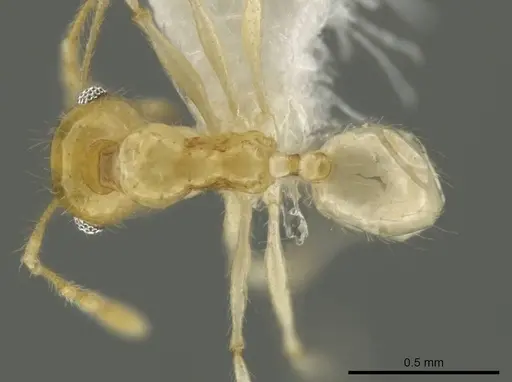
JTLC000016472
View on AntWeb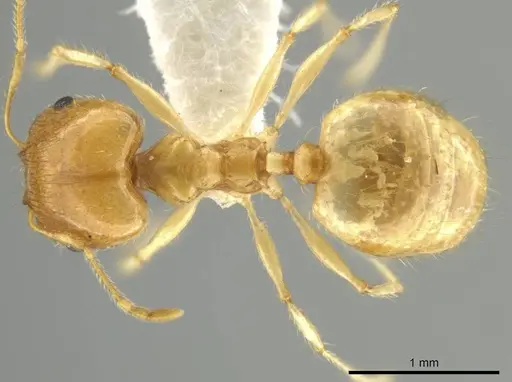
Literature
Loading distribution map...Loading products...