
Pheidole microps
- Sci. Name
- Pheidole microps
- Tribe
- Attini
- Subfamily
- Myrmicinae
- Author
- Wilson, 2003
- Distribution
- Found in 3 countries
Introduction
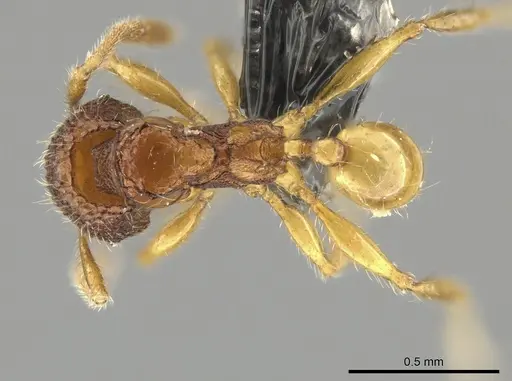
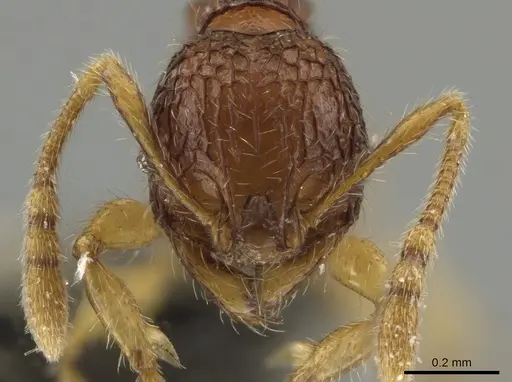
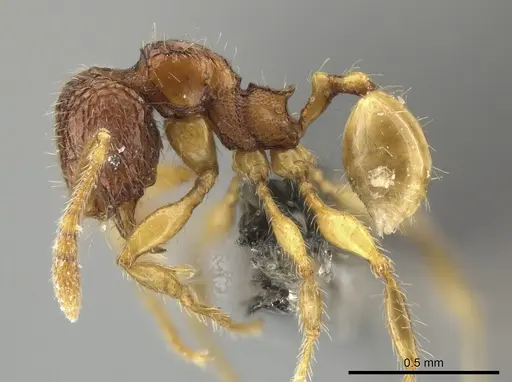
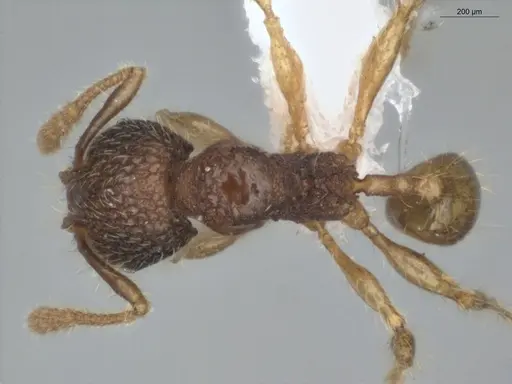
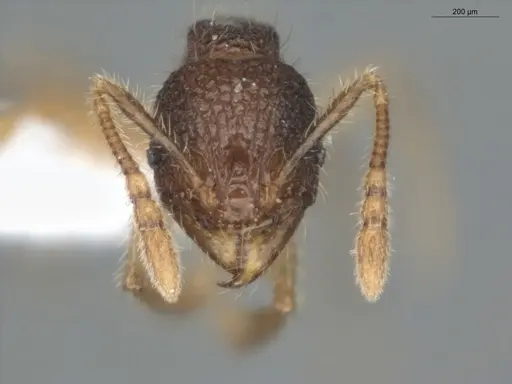
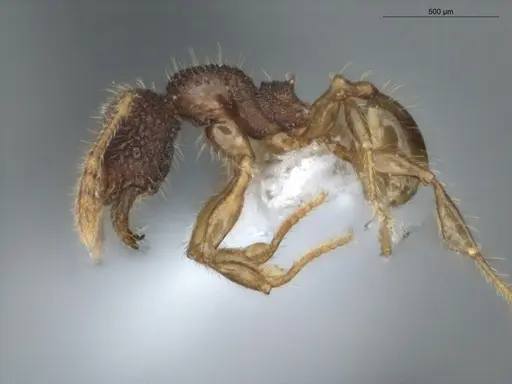
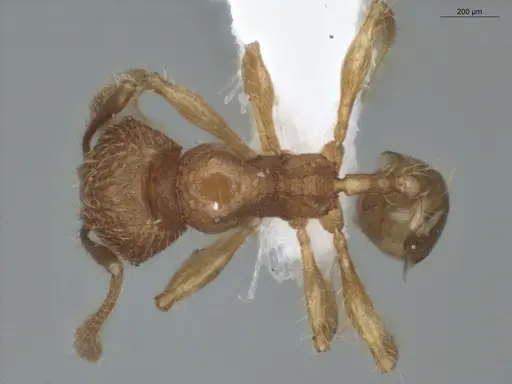
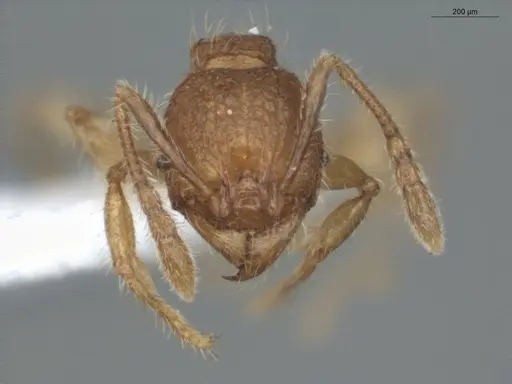
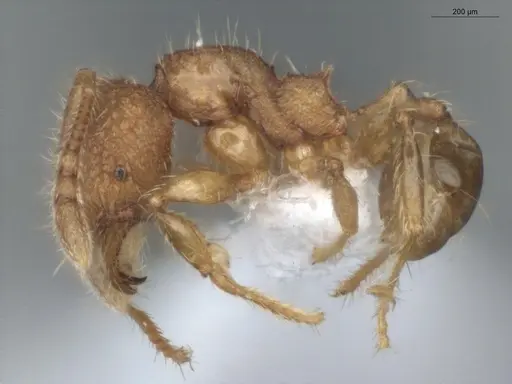
Pheidole microps is a tiny yellow ant known only from the Amazon basin region of South America. The species name means 'small eyes' in Greek, referring to its reduced eye size . It was first described from Peru near Puerto Maldonado, and has since been recorded in Brazil, Ecuador, and French Guiana . This species is notable for being known only from minor workers, with no documented queens, major workers, or colony observations, making it a mystery for antkeepers .
Quick Summary
- Difficulty: Unknown, data insufficient
- Origin & Habitat: Amazon basin lowland rainforest in Peru, Brazil, Ecuador, and French Guiana. Collected from leaf litter on sandy soil at elevations around 260m [1][2].
- Colony Type: Unknown, only minor workers have ever been documented. No queens or colony structure has been observed [1].
- Size & Growth:
- Queen: Unknown, queen has never been documented
- Worker: Size data unavailable, minor workers are tiny, but exact body length not specified in literature
- Colony: Unknown, no colony size data exists
- Growth: Unknown
- Development: Unknown, no development data exists (No brood has ever been documented in scientific literature for this species)
- Antkeeping:
- Temperature: Inferred: Keep warm in the low-to-mid 20s°C range, based on Amazon rainforest conditions [1].
- Humidity: Keep nest substrate consistently moist but not waterlogged, based on leaf litter habitat [1].
- Diapause: Unknown, no seasonal data exists
- Nesting: Inferred from habitat: likely nests in soil or rotting wood. Use small test tube or Y-tong nest with fine chambers [1].
- Behavior: Unknown in captivity. Based on Pheidole genus patterns, typically non-aggressive, but escape risk is high due to tiny size. Use fine mesh barriers.
- Common Issues: escape risk is high due to tiny size, use fine mesh barriers., high humidity requirements may promote mold if ventilation is inadequate., no confirmed food acceptance, offer small prey and sugar water cautiously., colony establishment uncertain without documented queen., lack of captive care data requires experimental approach.
Species Overview and Discovery
Pheidole microps was first described in 2003 by E.O. Wilson from specimens collected near Lake Sandoval in Puerto Maldonado, Peru. The type locality is in the Madre de Dios region at approximately 260 meters elevation [1]. This species is distinctive for its yellow coloration and tiny eyes, and only minor workers have been collected, with no records of queens or major workers [1].
Natural Habitat and Distribution
Pheidole microps is an Amazon basin specialist found across northern South America, including Peru, Ecuador, French Guiana, and multiple Brazilian states [2][3][4][5]. It has been collected from leaf litter on sandy soil in lowland rainforest, indicating it forages on the forest floor [1][6].
Housing and Nesting
Based on habitat data from AntWiki, this species likely nests in small cavities on or below the forest floor. For captivity, start with a small test tube setup or Y-tong nest with fine chambers, keeping the nest humid but with ventilation to prevent mold [1].
Feeding and Diet
Pheidole species are typically opportunistic omnivores, but P. microps is too small for large seeds. Offer small live prey like fruit flies and sugar water, though acceptance is unconfirmed [1].
Temperature and Humidity Requirements
As an Amazon lowland species, keep temperatures in the 24-28°C range using a heating cable, and maintain high humidity with a moist substrate [1].
Challenges and Unknowns
This species has no documented captive care, and queens have never been found. Escape risk is high due to tiny size, and colony establishment is uncertain [1].
Frequently Asked Questions
Has anyone successfully kept Pheidole microps in captivity?
There are no published records of this species being kept in captivity. It remains poorly documented, known only from field collections [1].
What does Pheidole microps look like?
Workers are tiny and yellow, with small eyes. Only minor workers have been documented, the major caste is unknown [1].
Where does Pheidole microps live?
It is an Amazon basin species found in Peru, Ecuador, French Guiana, and northern Brazil, living in leaf litter on sandy soil [1][2].
Can I find a queen of Pheidole microps in the wild?
No queen has ever been documented. All records are of minor workers from leaf litter samples [1].
What do Pheidole microps eat?
Unconfirmed, but likely small insects and sugar water. Offer appropriately sized prey in captivity [1].
What temperature do Pheidole microps ants need?
Inferred: Keep them warm in the 24-28°C range, based on Amazon rainforest conditions [1].
Do Pheidole microps ants need hibernation?
Unknown, no seasonal data exists.
Are Pheidole microps good for beginners?
No, due to lack of captive care data and high escape risk.
How big do Pheidole microps colonies get?
Unknown, no colony size data exists.
Does Pheidole microps have major workers?
Unknown, only minor workers have been collected [1].
What makes Pheidole microps different from other Pheidole?
It is one of the smallest Pheidole, with reduced eyes, and only minor workers are known, making it a scientific mystery [1].
Where can I learn more about Pheidole microps?
Scientific literature is limited to the original description and distribution records. AntWiki provides basic information [1].
Report an Issue
The current care sheet is based fully on literature. See inconsistencies, or something that's incorrect? Please , it will be resolved after review from an admin. Contributing to the blogs tab also helps providing information, to make us be able to further improve the caresheets. Thank you for your support!
References

This caresheet is licensed under CC BY-SA 4.0 .
Community Blogs
Literature
Loading distribution map...Loading products...