
Pheidole manantenensis
- Sci. Name
- Pheidole manantenensis
- Tribe
- Attini
- Subfamily
- Myrmicinae
- Author
- Salata & Fisher, 2020
- Distribution
- Found in 1 countries
Introduction
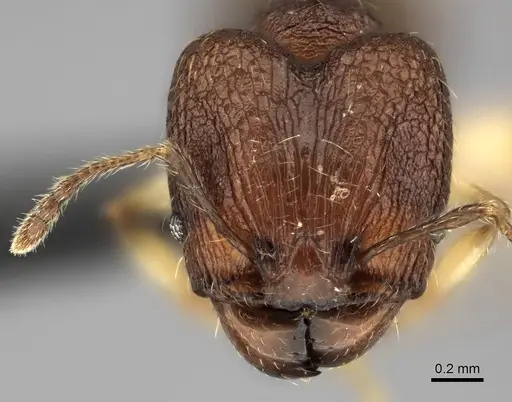
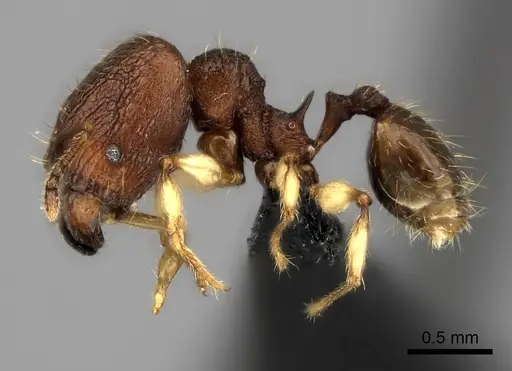
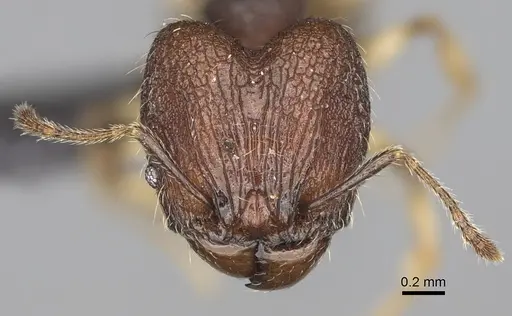
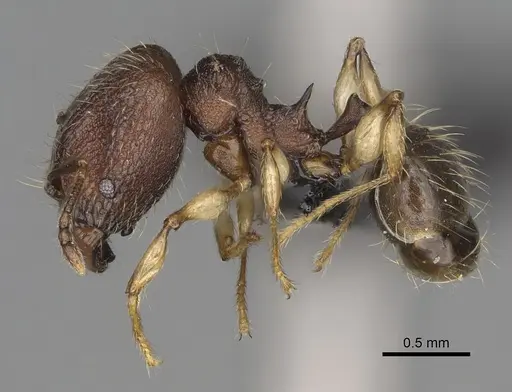
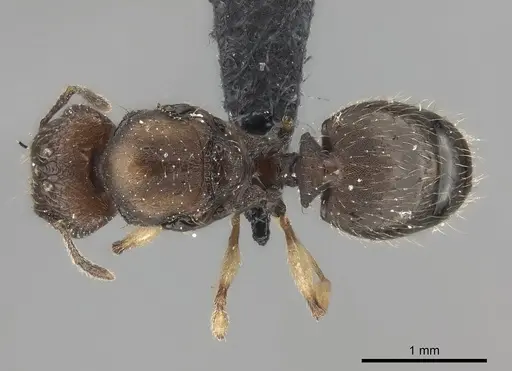
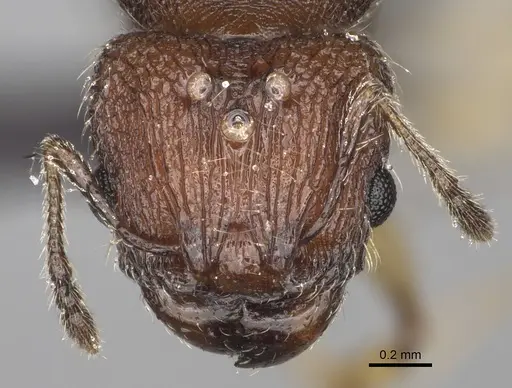
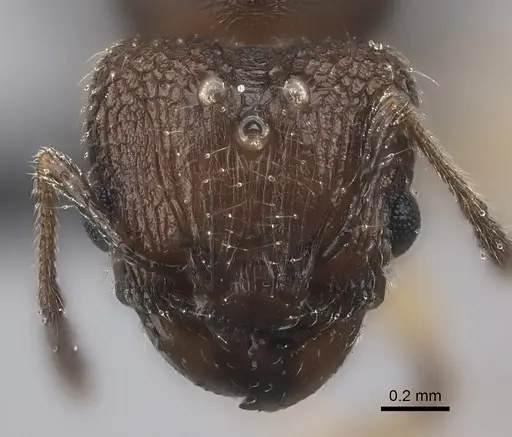
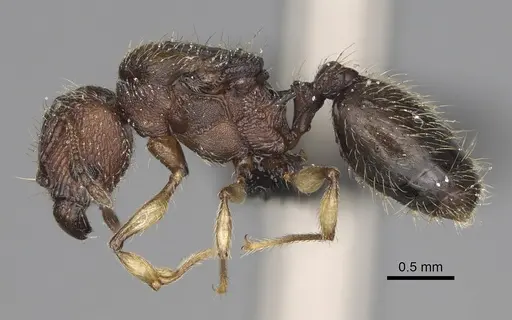
Pheidole manantenensis is a small ant species native to northern Madagascar, found in rainforests at elevations of 225-775 meters . It has a heart-shaped head in major workers, brown body, and yellow legs . Colonies nest in the petioles of Melastomataceae plants, a specialized behavior for this genus . This species shows distinct major and minor worker castes, typical of Pheidole ants.
Quick Summary
- Difficulty: Medium
- Origin & Habitat: Northern Madagascar, Parc National de Marojejy, in tropical rainforest habitats at 225-775 m elevation [1].
- Colony Type: Colony structure is unconfirmed. Most Pheidole species are monogyne (single queen), but no specific data exists for this species.
- Size & Growth:
- Queen: size data unavailable
- Worker: size data unavailable
- Colony: Unknown
- Growth: Unknown
- Development: Estimated 6-8 weeks, inferred from genus patterns [1] (Development time is inferred since no species-specific studies exist.)
- Antkeeping:
- Temperature: Keep warm, roughly 24-27°C, inferred from tropical habitat [1]
- Humidity: Keep substrate consistently moist but not waterlogged, inferred from rainforest habitat [1]
- Diapause: No, as a tropical species from Madagascar [1]
- Nesting: Provide humid nests like Y-tong or plaster, avoid acrylic nests. Inferred from natural nesting in plant stems [1].
- Behavior: Pheidole species are generally non-aggressive. Based on subfamily Myrmicinae, they have a sting but it is not medically significant. Minor workers are small, so escape prevention is important.
- Common Issues: cold drafts can stress and kill colonies due to tropical temperature needs, drying out of substrate can kill colonies due to high humidity requirements, small minor workers may escape through standard barriers, requiring fine mesh, limited captive breeding information for this newly described species
Natural History and Distribution
Pheidole manantenensis is endemic to northern Madagascar, specifically in the Marojejy National Park region [1]. It was collected at elevations between 225-775 meters in tropical rainforest habitat [1]. Colonies nest inside the petioles (leaf stems) of Melastomataceae plants, which is a specialized nesting behavior for this genus [1].
Identification and Morphology
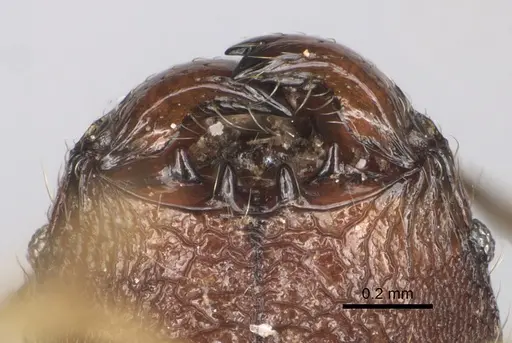
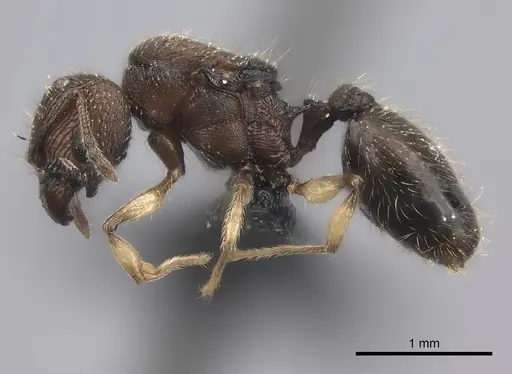
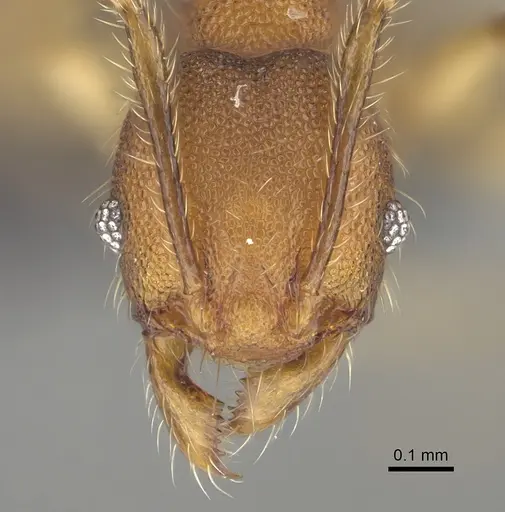
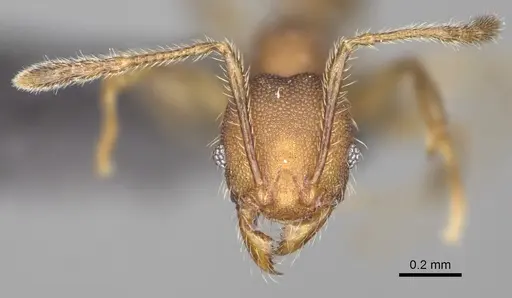
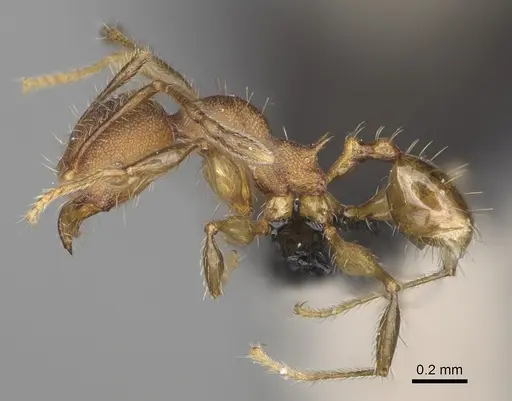
This species has distinct major and minor worker castes. Major workers have a heart-shaped head that is wider at the back, with brown to dark brown body and yellow legs [1]. Minor workers are smaller with a more typical ant shape. The species can be distinguished from similar Pheidole species by details in promesonotum shape and sculpture [1].
Housing and Nesting
Provide a humid nest environment since their natural habitat is damp rainforest. Use Y-tong or plaster nests with good moisture retention, avoid acrylic nests. Test tube setups work for founding colonies. Keep the nest humid but not waterlogged, inferred from their natural nesting in plant stems [1].
Feeding and Diet
Like most Pheidole species, this ant is likely a generalist omnivore. Offer a varied diet: protein sources like small insects and seeds, and carbohydrates like sugar water or honey. Feed protein 2-3 times per week and remove uneaten food to prevent mold.
Temperature and Humidity
Keep temperatures warm, roughly 24-27°C, inferred from their tropical rainforest habitat [1]. Maintain humidity by keeping the substrate consistently moist but not waterlogged. Avoid temperature drops or dry conditions.
Colony Development
Founding behavior is unconfirmed. Based on genus patterns, expect claustral founding where the queen seals herself in. First workers may appear 6-8 weeks after founding at optimal temperatures, inferred from typical Pheidole development [1]. Colony growth is gradual.
Frequently Asked Questions
How long does it take for Pheidole manantenensis to raise first workers?
Based on typical Pheidole development, expect 6-8 weeks from egg to first worker at optimal temperatures, inferred from genus patterns [1].
What do Pheidole manantenensis ants eat?
They are generalist omnivores. Offer small seeds, protein like fruit flies, and occasional sugar water or honey.
What temperature do Pheidole manantenensis need?
Keep them warm at roughly 24-27°C, inferred from their tropical habitat [1].
Are Pheidole manantenensis good for beginners?
This is a newly described species with limited captive breeding information, making it more suitable for intermediate antkeepers.
How big do Pheidole manantenensis colonies get?
Colony size is unknown for this specific species.
What humidity do Pheidole manantenensis need?
Keep substrate consistently moist but not waterlogged, inferred from their rainforest habitat [1].
Can I keep multiple queens together?
Colony structure is unconfirmed for this species. Most Pheidole are monogyne, but combining queens is not recommended without specific data.
When should I move Pheidole manantenensis to a formicarium?
Wait until the colony has several workers and is actively foraging. Test tubes work well for founding, move to a larger nest when the colony outgrows it.
Do Pheidole manantenensis need hibernation?
No, as a tropical species from Madagascar, they do not require diapause [1].
Report an Issue
The current care sheet is based fully on literature. See inconsistencies, or something that's incorrect? Please , it will be resolved after review from an admin. Contributing to the blogs tab also helps providing information, to make us be able to further improve the caresheets. Thank you for your support!
References

This caresheet is licensed under CC BY-SA 4.0 .
Community Blogs
CASENT0038921
View on AntWeb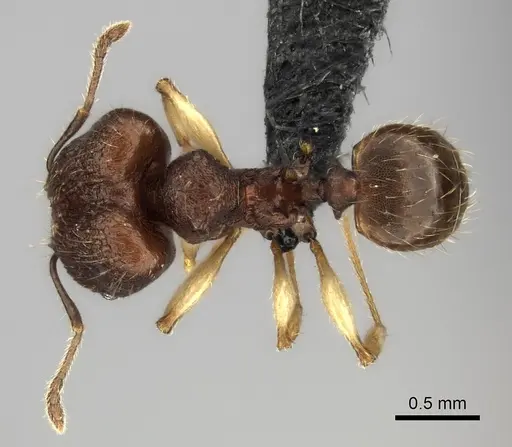
CASENT0068456
View on AntWeb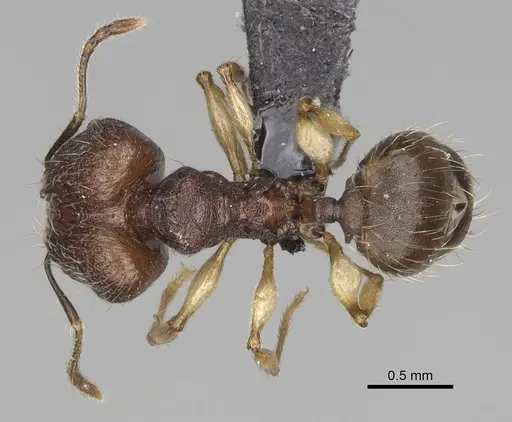
CASENT0068457
View on AntWeb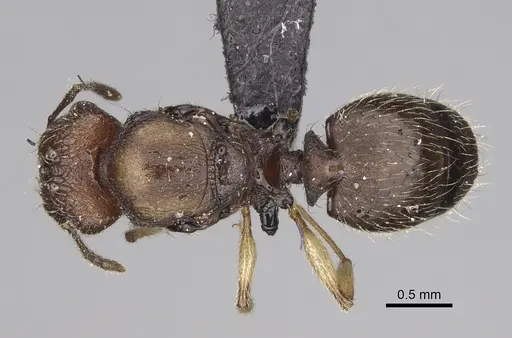
CASENT0208965
View on AntWeb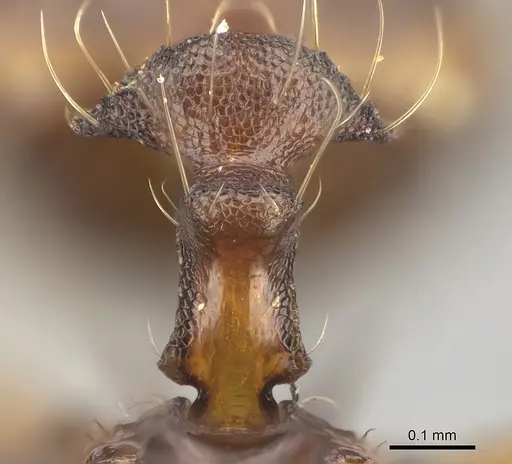
CASENT0923218
View on AntWeb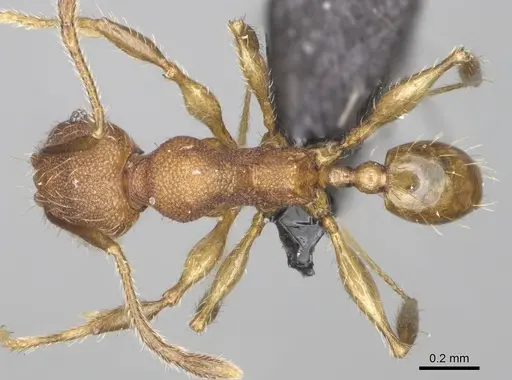
Literature
Loading distribution map...Loading products...