
Pheidole mamiratra
- Sci. Name
- Pheidole mamiratra
- Tribe
- Attini
- Subfamily
- Myrmicinae
- Author
- Salata & Fisher, 2020
- Distribution
- Found in 1 countries
Introduction
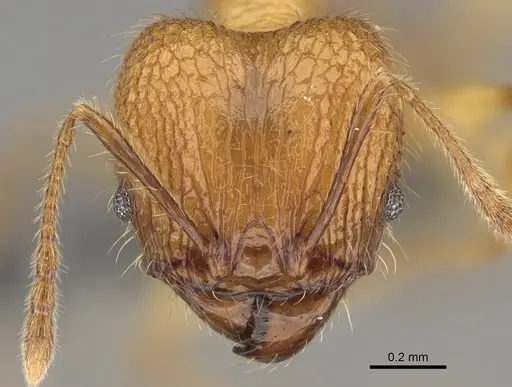
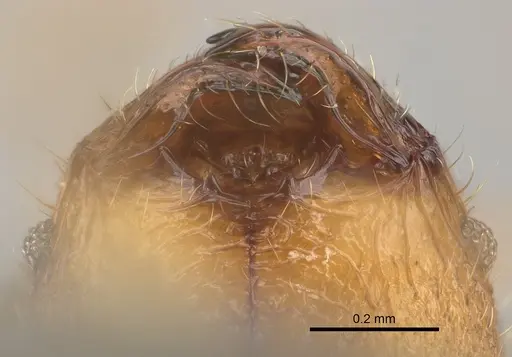
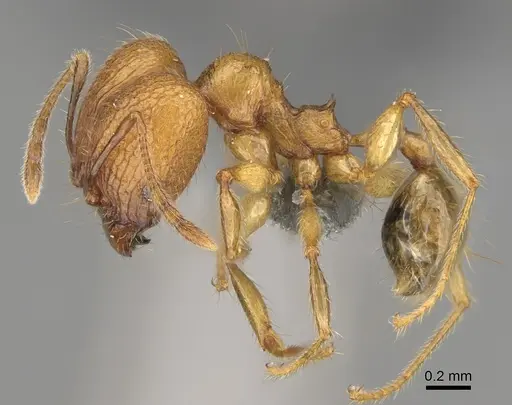
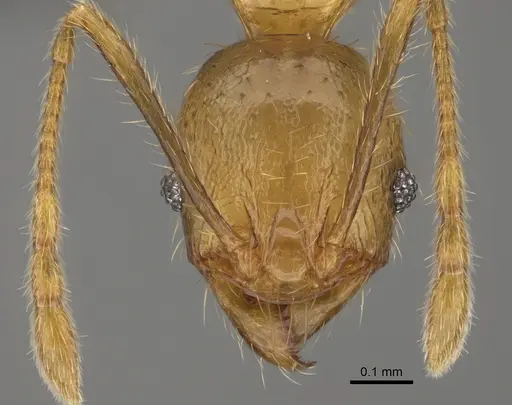
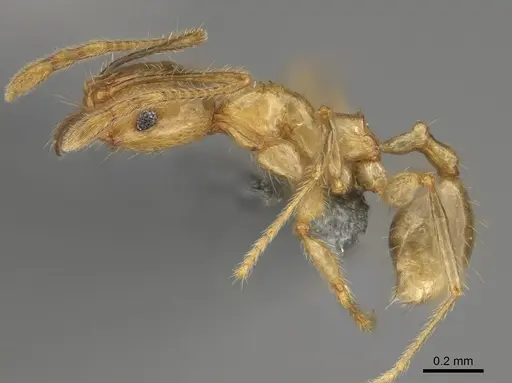
Pheidole mamiratra is a recently described ant species from the highlands of central Madagascar, endemic to the rainforest at Station Forestière Angavokely at 1460m elevation. It nests in soil and belongs to the Pheidole sikorae species group . The species name 'mamiratra' means 'to shine' in Malagasy, referring to its bright yellow coloration .
Quick Summary
- Difficulty: Medium
- Origin & Habitat: Endemic to central highlands of Madagascar, found at Station Forestière Angavokely near Antananarivo, in rainforest habitat at 1460m elevation, nesting in soil [1].
- Colony Type: Colony structure is unconfirmed for this species. No specific data on queen number or social structure is available [1].
- Size & Growth:
- Queen: Size data unavailable, no total length measurements provided in research [1].
- Worker: Size data unavailable, no total length measurements provided in research [1].
- Colony: Unknown, no colony size data available [1].
- Growth: Moderate, inferred from typical Pheidole genus patterns.
- Development: Estimated 6-10 weeks based on genus patterns, but no specific data for this species [1]. (Development time may vary with temperature, high-elevation species might develop slower.)
- Antkeeping:
- Temperature: Keep around 20-24°C. As a highland species from 1460m elevation, they prefer cooler conditions. Avoid temperatures above 28°C [1].
- Humidity: Keep nest substrate consistently moist but not waterlogged, as they come from humid rainforest [1].
- Diapause: Unknown, as a highland species, a cooler period may benefit colonies, but no specific data [1].
- Nesting: In nature, they nest in soil. In captivity, use moist soil or plaster nests with good moisture retention [1].
- Behavior: Based on typical Pheidole patterns, minor workers handle foraging and brood care, while majors defend the colony. They are not aggressive but will defend if threatened. Minor workers are very small, so escape prevention is important.
- Common Issues: high humidity needs can lead to mold if ventilation is poor., small minor workers may escape through fine gaps if not monitored., newly described species means captive husbandry is not well-established, some trial and error expected [1]., wild-caught colonies may have parasites or disease since this species has never been kept in captivity before.
Housing and Nest Setup
Pheidole mamiratra nests in soil in the wild, so a naturalistic setup with a soil-filled chamber works well. You can use a standard formicarium with a dirt chamber, or a Y-tong style nest with a moist plaster base. Since they come from humid rainforest, the nest material should hold moisture well without becoming waterlogged. A small outworld connected to the nest allows you to feed them without disturbing the colony. Use a water tube or cotton wick system to maintain humidity. Because they are a small species, ensure any connections between nest and outworld are secure against escapes [1].
Feeding and Diet
Like most Pheidole species, these ants are omnivorous. They likely forage for small insects, seeds, and honeydew in the wild. In captivity, offer protein sources like small crickets, mealworms, fruit flies, or other small insects twice weekly. Sugar sources like honey water or sugar water should be available constantly. Given their small size, prey items should be appropriately sized. Minor workers are very tiny, so offer very small prey pieces or small insects.
Temperature and Humidity Management
This species comes from a highland rainforest at 1460m elevation, which means they prefer cooler, more humid conditions. Keep temperatures in the 20-24°C range, this is comfortably room temperature for most people. Avoid temperatures above 28°C as this can stress the colony. Humidity should be high, around 70-85%. Keep the nest substrate moist but not soggy. A shallow water reservoir connected to the nest via cotton works well for maintaining humidity. Mist the nest occasionally, but ensure good ventilation to prevent mold buildup [1].
Colony Development and Growth
As a recently described species (2020), there is no established husbandry data for P. mamiratra in captivity. Based on typical Pheidole development patterns, expect the following timeline: after the queen lays eggs, eggs hatch into larvae in about 1-2 weeks. Larvae then develop for 3-5 weeks before pupating. First workers (nanitics) emerge 6-10 weeks after egg-laying. The initial colony will grow slowly, the first batch of workers are typically smaller (nanitics) and the queen may take breaks between broods. Once the colony reaches 20-30 workers, growth typically accelerates. Major workers (soldiers) appear as the colony matures, usually when there are 100+ workers.
Behavior and Observation
Pheidole mamiratra displays the classic Pheidole caste system with distinct major and minor workers. Minor workers handle most tasks, foraging, brood care, and nest maintenance. Major workers have enlarged heads and mandibles designed for seed-crushing and colony defense. When the nest is disturbed, you'll see majors rushing to defend the colony while minors carry brood to safety. They are not particularly aggressive toward humans and rarely sting. Observation is best done in the evening or at night, as many Pheidole species are more active during these periods. The bright yellow coloration makes them easy to spot against dark soil or nest materials.
Frequently Asked Questions
How long does it take for Pheidole mamiratra to produce first workers?
Based on typical Pheidole development patterns, expect first workers (nanitics) to emerge 6-10 weeks after the queen lays her first eggs. This timeline is estimated since this species has never been kept in captivity before [1].
What do Pheidole mamiratra ants eat?
They are omnivorous like most Pheidole species. Offer small protein sources (fruit flies, small crickets, mealworms) twice weekly and provide sugar water or honey constantly. Minor workers are very small, so ensure prey is appropriately sized.
What temperature do Pheidole mamiratra ants need?
Keep them at 20-24°C. As a highland species from 1460m elevation in Madagascar, they prefer cooler conditions than typical tropical ants. Room temperature is usually ideal [1].
Do Pheidole mamiratra ants need hibernation?
It is unknown whether they require a formal hibernation period. However, as a highland species, they may benefit from a cooler period (15-18°C) for 2-3 months during winter, which can help synchronize their annual cycle and may improve colony health.
Are Pheidole mamiratra good for beginners?
This species is rated as Medium difficulty. While Pheidole in general are beginner-friendly, this specific species is newly described and has never been kept in captivity before. Some trial and error in husbandry is expected. If you want a more established species, consider other Pheidole like P. megacephala or P. pallidula.
How big do Pheidole mamiratra colonies get?
The maximum colony size is unknown for this species. Based on typical Pheidole patterns, colonies likely reach several hundred to a few thousand workers at maturity. Major workers appear once the colony reaches around 100+ workers.
Can I keep multiple Pheidole mamiratra queens together?
The colony structure is unconfirmed for this species. Most Pheidole are monogyne (single queen), and combining unrelated queens typically leads to fighting. Do not attempt to house multiple founding queens together unless you observe them forming a pleometrotic (founding together) relationship naturally.
What type of nest is best for Pheidole mamiratra?
A naturalistic setup with moist soil or a plaster nest with good moisture retention works well. They nest in soil in the wild. Ensure the nest can maintain high humidity (70-85%) without becoming waterlogged [1].
Why are my Pheidole mamiratra dying?
Common causes include: temperatures too high (above 28°C), humidity too low or too high (mold from excessive moisture), poor escape prevention allowing minors to escape, or stress from wild-caught parasites. Since this is a newly described species with no captive history, some mortality is expected while establishing husbandry protocols.
Report an Issue
The current care sheet is based fully on literature. See inconsistencies, or something that's incorrect? Please , it will be resolved after review from an admin. Contributing to the blogs tab also helps providing information, to make us be able to further improve the caresheets. Thank you for your support!
References

This caresheet is licensed under CC BY-SA 4.0 .
Community Blogs
CASENT0303725
View on AntWeb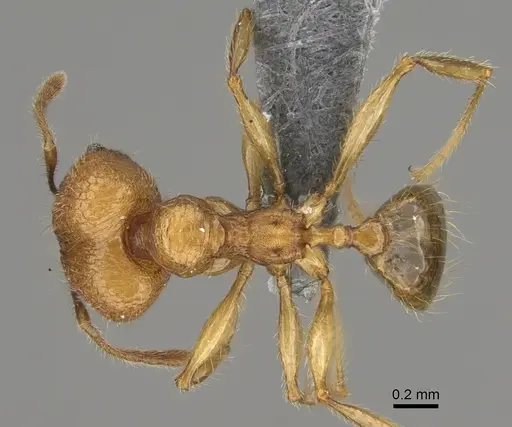
CASENT0923291
View on AntWeb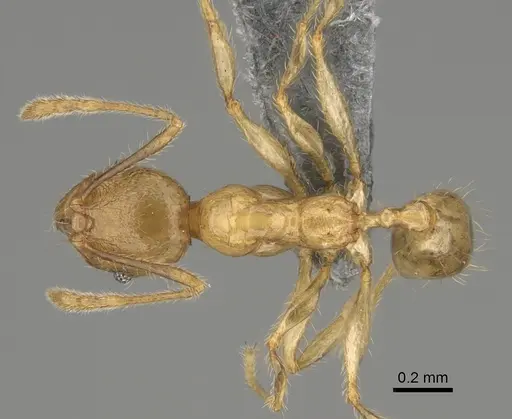
Literature
Loading distribution map...Loading products...