
Pheidole loki
- Sci. Name
- Pheidole loki
- Tribe
- Attini
- Subfamily
- Myrmicinae
- Author
- Fischer & Fisher, 2013
- Distribution
- Found in 1 countries
Introduction
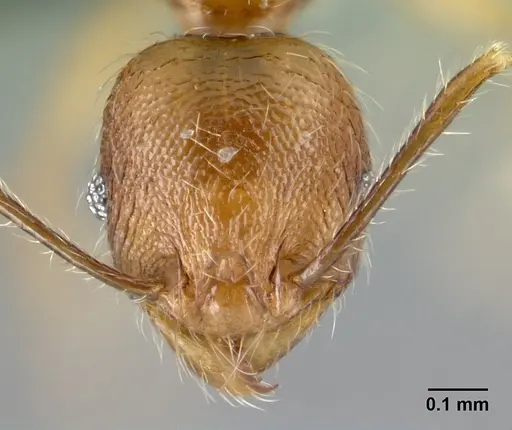
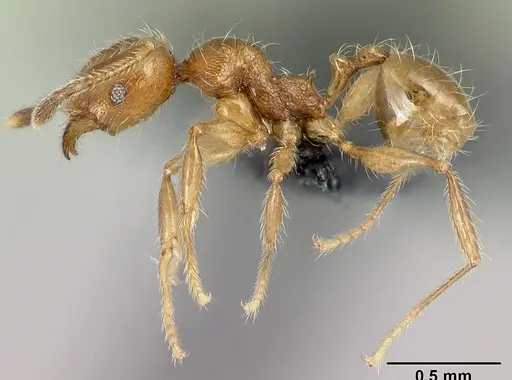
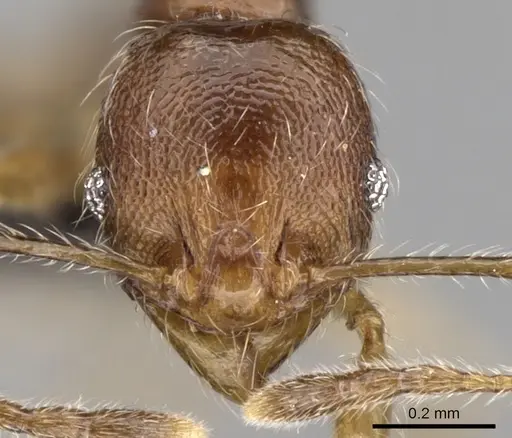
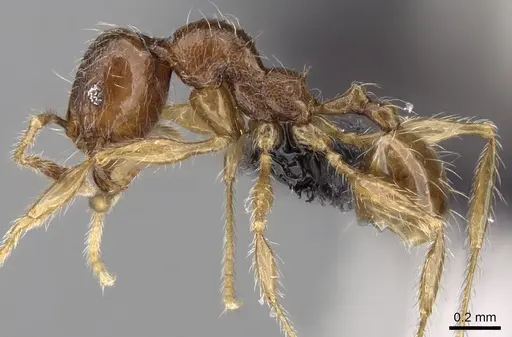
Pheidole loki is a tiny ant species known only from two minor worker specimens collected in forest leaf litter on Mayotte, a small island in the Indian Ocean between Madagascar and Africa . Described in 2013,it is named after Loki, the Norse god of mischief, reflecting its elusive nature . Only minor workers have been found; major workers remain unknown . The species is closely related to Pheidole jonas and Pheidole vulcan, sharing reduced body sculpture and sparse hair patterns . In appearance, minor workers are dark orange to brown with lighter legs and mandibles, but total body size data is unavailable .
Quick Summary
- Difficulty: Expert
- Origin & Habitat: Endemic to Mayotte, found at 470-630m elevation on Mt. Benara and Mt. Combani in forest leaf litter [1][2].
- Colony Type: Unconfirmed, only minor workers have been collected, so colony structure is unknown.
- Size & Growth:
- Queen: Size data unavailable, no measurements for queens or majors exist [1].
- Worker: Size data unavailable, only mesosoma length (WL) is provided, not total body length [1].
- Colony: Unknown, only two specimens ever collected [1].
- Growth: Unknown
- Development: Unknown, no direct observations exist. (All timelines are speculative due to lack of captive data.)
- Antkeeping:
- Temperature: Based on Mayotte's tropical climate, likely needs warm temperatures around 24-28°C [1].
- Humidity: Keep nest substrate consistently moist but not waterlogged, as they live in humid forest leaf litter [1].
- Diapause: Unlikely, Mayotte has no true winter, so this species probably remains active year-round.
- Nesting: Provide small nests with fine substrate, mimicking their natural leaf litter habitat [1].
- Behavior: Behavior is unobserved in captivity. In the wild, they live in forest floor leaf litter, suggesting secretive ground-nesting habits [1]. Escape risk is high due to their tiny size, use fine mesh barriers. Defense mechanism is a sting, as typical for Myrmicinae ants, but specific data for this species is unconfirmed.
- Common Issues: no captive husbandry information exists, this species has never been kept in captivity., only two wild specimens have ever been collected, making it extremely unlikely to obtain., tiny size means excellent escape prevention is essential., unknown whether this species can be kept in captivity at all., may require specific humidity and temperature conditions that are difficult to replicate.
Why This Species Is So Difficult to Keep
Pheidole loki is one of the rarest ants known, with only two minor worker specimens ever collected [1]. No queens, majors, or colonies have been found, and there is zero captive husbandry information [1]. This species was described in 2013 and remains known only from its type locality on Mayotte [1]. For these reasons, it is not realistically obtainable or keepable. If you are interested in Pheidole ants, consider more common species like Pheidole megacephala, which have established care protocols [3].
What We Know About Their Natural History
P. loki lives in tropical forest leaf litter at moderate elevations on Mayotte [1]. It is closely related to P. jonas and P. vulcan, sharing reduced sculpture and sparse hairs [1]. Minor workers have a relatively long postpetiole, but total body size is unknown [1]. They were collected using sifted leaf litter, indicating they hide in forest floor debris [1].
Legal and Ethical Considerations
P. loki is endemic to Mayotte, a French overseas department [1][2]. Collecting this species would require research permits, and its extreme rarity makes collection ethically questionable. Since no captive colonies exist, attempting to keep this species is experimental with low success chances. Antkeepers should appreciate it as a natural history curiosity rather than a target for collection.
Frequently Asked Questions
Can I keep Pheidole loki ants?
No, this species has never been kept in captivity and only two specimens have ever been collected. It is not available in the antkeeping hobby [1].
Where does Pheidole loki live?
Only on Mayotte, at 470-630m elevation on Mt. Benara and Mt. Combani in forest leaf litter [1].
What do Pheidole loki ants look like?
Only minor workers are known. They are tiny, dark orange to brown, with sparse hairs. Total body size is unknown [1].
Are there major workers for Pheidole loki?
Unknown, no major workers have ever been collected [1].
What temperature do Pheidole loki need?
Not directly studied, but based on Mayotte's tropical climate, they likely need 24-28°C [1].
How big do Pheidole loki colonies get?
Unknown, only two individual workers have ever been found [1].
What should I keep instead of Pheidole loki?
Consider common Pheidole species like Pheidole megacephala, which have established care protocols and are available from suppliers [3].
Is Pheidole loki endangered?
Conservation status is unassessed, but with only two known specimens from a limited range, it could be data deficient. Its habitat may be threatened by deforestation [1].
Why is it called Pheidole loki?
It was named after Loki, the Norse god of mischief, because the species remained hidden and mysterious [1].
Report an Issue
The current care sheet is based fully on literature. See inconsistencies, or something that's incorrect? Please , it will be resolved after review from an admin. Contributing to the blogs tab also helps providing information, to make us be able to further improve the caresheets. Thank you for your support!
References

This caresheet is licensed under CC BY-SA 4.0 .
Community Blogs
CASENT0059114
View on AntWeb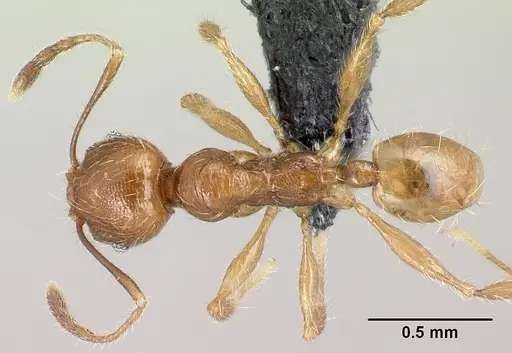
CASENT0059150
View on AntWeb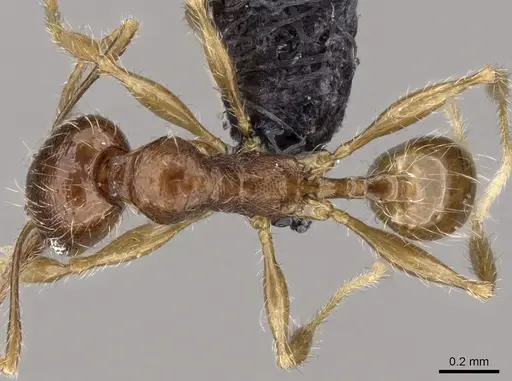
Literature
Loading distribution map...Loading products...