
Pheidole leptina
- Sci. Name
- Pheidole leptina
- Tribe
- Attini
- Subfamily
- Myrmicinae
- Author
- Wilson, 2003
- Distribution
- Found in 3 countries
Introduction
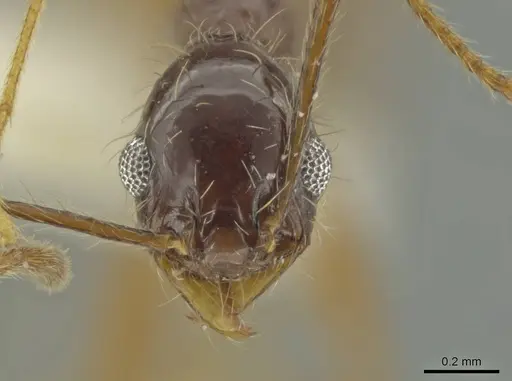
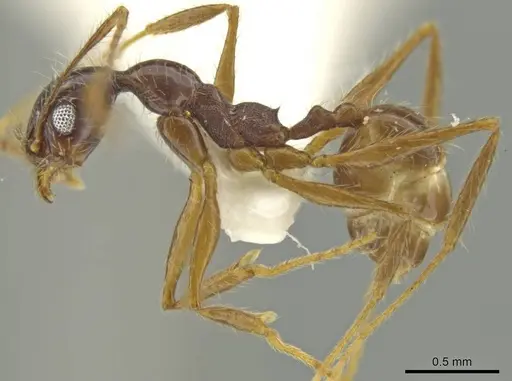
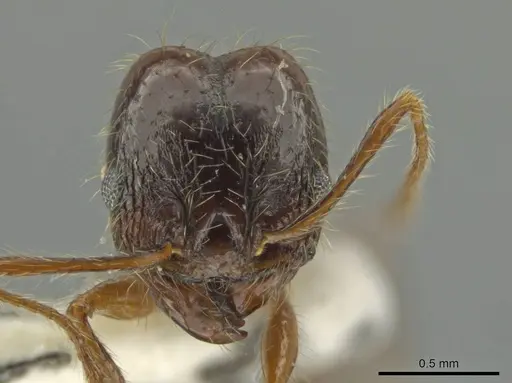
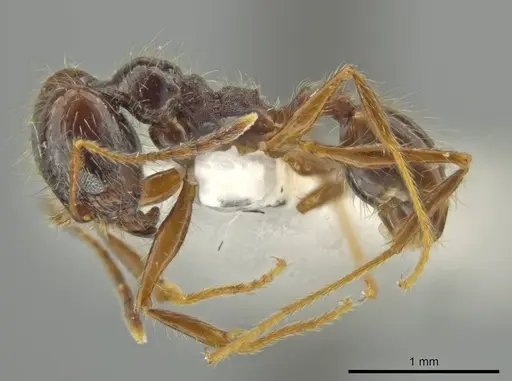
Pheidole leptina is a small ant species in the 'jujuyensis complex' within the fallax group. Major workers have a small, narrowed head and smooth, shiny body, while minor workers have an elongated head and long antennal scapes that extend past the occipital corner. Both castes are brown with dark yellow appendages. This species is found in tropical lowlands of Peru and Brazil, inhabiting rainforest environments . Biological information is limited, as it was described in 2003 and remains poorly studied.
Quick Summary
- Difficulty: Hard
- Origin & Habitat: Tropical lowland rainforest in Peru (Madre de Dios) and Brazil (Acre) at around 400m elevation [1][2].
- Colony Type: Unconfirmed. Pheidole species are typically monogyne (single queen), but this has not been documented for P. leptina specifically.
- Size & Growth:
- Queen: size data unavailable
- Worker: size data unavailable
- Colony: Unknown, no colony size data exists
- Growth: Unknown
- Development: Unknown, based on typical Pheidole patterns, expect 6-10 weeks at tropical temperatures, but this is unconfirmed. (Development is likely temperature-dependent, no specific data for this species.)
- Antkeeping:
- Temperature: Keep warm, roughly 22-28°C, based on tropical origin [3].
- Humidity: Keep substrate consistently moist but not waterlogged, based on rainforest habitat.
- Diapause: Unknown, tropical species may not require hibernation, but may slow down in cooler periods.
- Nesting: Nests in soil, recommend soil-based nests or test tube setups. Related populations nest in open soil at forest edges [3].
- Behavior: Workers are active foragers attracted to sugary substances [3]. Escape risk is moderate due to small size, use standard prevention measures.
- Common Issues: biological information is extremely limited, this is one of the least studied ant species in captivity, no documented colony founding or queen behavior exists, keepers must extrapolate from genus patterns, development timeline is unknown making growth predictions difficult, tropical origin means temperature sensitivity may be an issue in cooler climates, no established husbandry protocols exist for this species
Species Identification and Taxonomy
Pheidole leptina is part of the 'jujuyensis complex' characterized by a slender body and long antennal scapes. Major workers have a small head that narrows toward the occipital margin, with smooth, shiny surfaces and reduced propodeal spines. Minor workers have a moderately developed occipital neck. The species name means 'slender' in Greek [4]. This species was described by Wilson in 2003 based on specimens from Peru [3].
Distribution and Habitat
Pheidole leptina is known from Peru and Brazil, with the type locality at Cocha Cashu Research Station in Madre de Dios, Peru [1][2]. Related populations in Colombia nest in open soil at forest edges near rivers [3].
Known Biology and Behavior
Direct biological information is limited, but research on related species shows workers are strongly attracted to sugary substances and nest in soil [3]. Minor workers are more frequent foragers than majors. Both castes have brown bodies with dark yellow appendages.
Keeping Considerations
Since no established protocols exist, keepers must use general Pheidole care. Use a test tube setup for founding colonies. Maintain warm temperatures and moist substrate. Feed sugar water for energy and small insects for protein. Workers are attracted to sugary foods [3]. Use standard escape prevention due to small size.
Frequently Asked Questions
How do I keep Pheidole leptina ants?
Use a test tube setup for founding, maintain warm temperatures (22-28°C), and keep substrate moist. Feed sugar water and small insects. This is experimental due to lack of data [3].
What do Pheidole leptina ants eat?
Workers are attracted to sugary substances like sugar water or honey [3]. Offer small insects for protein.
How long does it take for Pheidole leptina to develop from egg to worker?
Development timeline is unknown. Based on typical Pheidole patterns, expect 6-10 weeks at warm temperatures, but this is unconfirmed.
Are Pheidole leptina ants aggressive?
Aggression levels are unconfirmed. Pheidole species generally defend nests but are not highly aggressive toward humans.
How big do Pheidole leptina colonies get?
Colony size is unknown. Pheidole colonies can vary, but no data exists for this species.
Can I keep multiple Pheidole leptina queens together?
Colony structure is unconfirmed. Pheidole are typically monogyne, so house queens separately until confirmed.
Does Pheidole leptina need hibernation?
Diapause requirements are unknown. As a tropical species, formal hibernation may not be needed, but activity may slow in cooler periods.
Is Pheidole leptina suitable for beginners?
This species is not recommended for beginners due to lack of care data. Start with more common Pheidole species.
Where can I find Pheidole leptina ants for sale?
This species is extremely rare in captivity and unlikely to be available. It is primarily of research interest.
Report an Issue
The current care sheet is based fully on literature. See inconsistencies, or something that's incorrect? Please , it will be resolved after review from an admin. Contributing to the blogs tab also helps providing information, to make us be able to further improve the caresheets. Thank you for your support!
References

This caresheet is licensed under CC BY-SA 4.0 .
Community Blogs
CASENT0645817
View on AntWeb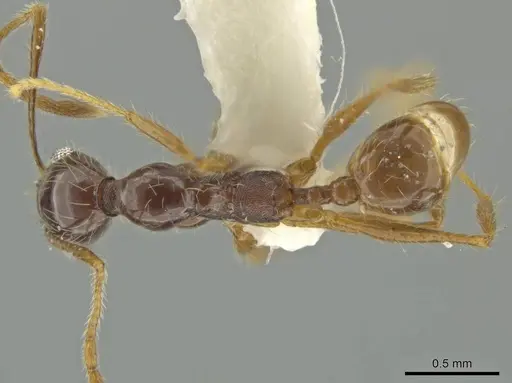
JTLC000016433
View on AntWeb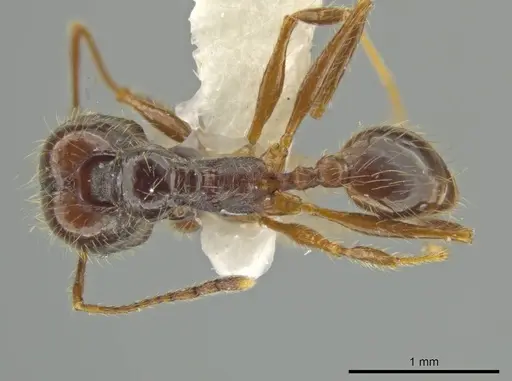
Literature
Loading distribution map...Loading products...