
Pheidole lemur
- Sci. Name
- Pheidole lemur
- Tribe
- Attini
- Subfamily
- Myrmicinae
- Author
- Forel, 1912
- Distribution
- Found in 1 countries
Introduction
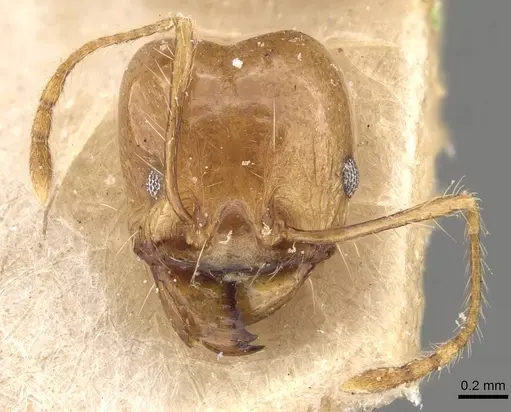
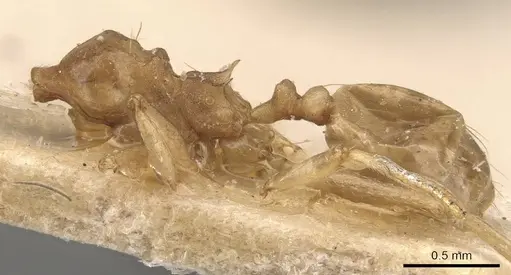
Pheidole lemur is a small, yellow ant from the diligens group, known only from the type locality in Belém, Pará, Brazil . There are dubious records from Argentina , and it has been recorded in Santa Fe province . The species name 'lemur' means ghost, referring to its pale coloration. Body size data is unavailable, as no total length measurements exist. This species is poorly studied, with no biological data on colony structure or behavior.
Quick Summary
- Difficulty: Hard
- Origin & Habitat: Neotropical Brazil, Belém, Pará region [1]. Dubious record from Argentina [2]. Recorded in Santa Fe province [3].
- Colony Type: Unconfirmed, no colony structure data exists. Most Pheidole species are monogyne (single queen), but this has not been confirmed for P. lemur.
- Size & Growth:
- Queen: Size data unavailable, no body size measurements documented.
- Worker: Size data unavailable, no body size measurements available.
- Colony: Unknown, no colony size data exists.
- Growth: Unknown
- Development: Unknown, no development data exists. Based on typical Pheidole patterns, egg to worker may take 6-8 weeks at warm temperatures. (Inferred from genus patterns, no species-specific data.)
- Antkeeping:
- Temperature: Unknown, no data. As a tropical species from Brazil, keep warm, roughly 24-28°C.
- Humidity: Unknown, no data. As an Amazon species, likely moderate to high humidity. Keep substrate moist but not waterlogged.
- Diapause: Unknown, no data on overwintering requirements.
- Nesting: Inferred from genus: likely nests in soil or wood. In captivity, use test tubes for founding, then small nests with appropriately scaled chambers.
- Behavior: No specific behavior data exists. Based on Pheidole patterns, majors defend the nest and minors forage. Their small size means high escape risk, use fine mesh and tight barriers.
- Common Issues: no documented biology means all care is based on genus-level inference, results may vary., tiny size makes escape prevention critical, use fine mesh and tight-fitting barriers., lack of colony data means founding success rates are unpredictable., no confirmed diet preferences, start with standard ant foods and observe acceptance., humidity control is important, too dry and colonies may fail, too wet and mold becomes an issue.
Appearance and Identification
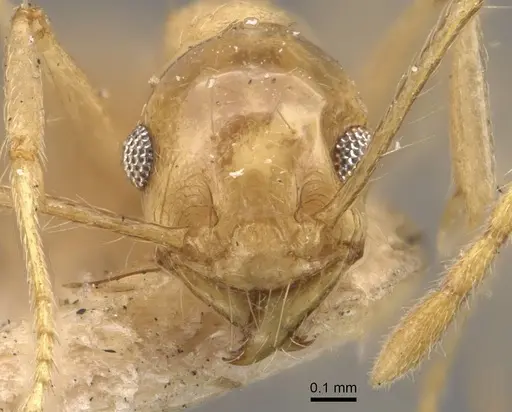
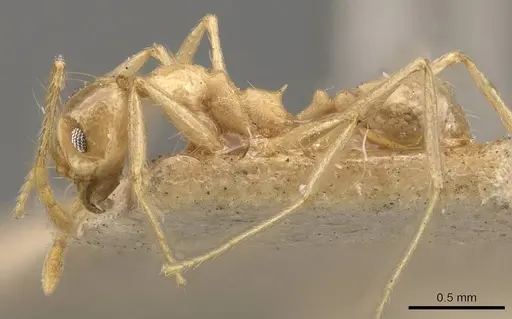
Pheidole lemur is a small, yellow ant with the characteristic big-headed majors of the genus. The species is pale, earning its name 'lemur' meaning ghost [1]. Specific body size data is unavailable, but it belongs to the diligens group, similar to Pheidole diligens [1].
Distribution and Habitat
This species is known only from Belém, Pará in Brazil [1]. There are dubious records from Argentina [2], and it has been recorded in Santa Fe province [3]. The natural habitat is tropical forest in the Amazon region.
Feeding and Diet
No specific dietary studies exist for Pheidole lemur. As a member of the tribe Attini, they may be omnivorous, but this is inferred from genus patterns. Start with sugar sources and small proteins, and observe colony preferences.
Temperature and Care
No temperature data exists. As a tropical species, keep warm around 24-28°C. Humidity should be moderate to high, with moist substrate. No diapause data exists.
Nesting and Housing
No specific nesting data exists. Inferred from genus: likely nests in soil or wood. Use test tubes for founding colonies, then small nests with appropriately sized chambers. Ensure excellent escape prevention due to tiny size.
Known Information Gaps
Little is known about this species. The scientific literature states 'nothing is known about the biology' of Pheidole lemur [1]. All care is based on inference from related species.
Frequently Asked Questions
How long does it take for Pheidole lemur to produce first workers?
Unknown, no species-specific data exists. Based on typical Pheidole patterns, expect around 6-8 weeks from egg to worker at warm temperatures.
What do Pheidole lemur ants eat?
No specific dietary data exists. Based on genus patterns, they likely accept sugar sources and small proteins. Start with standard ant foods and observe preferences.
Are Pheidole lemur ants good for beginners?
No, this species is not recommended for beginners due to the complete lack of documented care information. It is suitable only for experienced keepers.
Do Pheidole lemur ants need hibernation?
Unknown, no data exists. As a Brazilian Amazon species, they likely do not require true hibernation.
How big do Pheidole lemur colonies get?
Unknown, no colony size data exists for this species.
What temperature should I keep Pheidole lemur at?
Unknown, no data. As a tropical species, keep warm around 24-28°C.
Can I keep multiple Pheidole lemur queens together?
Unknown, no colony structure data exists. Most Pheidole are monogyne, but this has not been confirmed for P. lemur.
What size nest should I use for Pheidole lemur?
Start with a test tube for founding colonies. Once established, use a small nest with chambers scaled to their tiny size.
Why is so little known about Pheidole lemur?
This species is known only from a few museum specimens. No biological studies have been conducted, and the literature states 'nothing is known about the biology' [1].
Report an Issue
The current care sheet is based fully on literature. See inconsistencies, or something that's incorrect? Please , it will be resolved after review from an admin. Contributing to the blogs tab also helps providing information, to make us be able to further improve the caresheets. Thank you for your support!
References

This caresheet is licensed under CC BY-SA 4.0 .
Community Blogs
CASENT0908222
View on AntWeb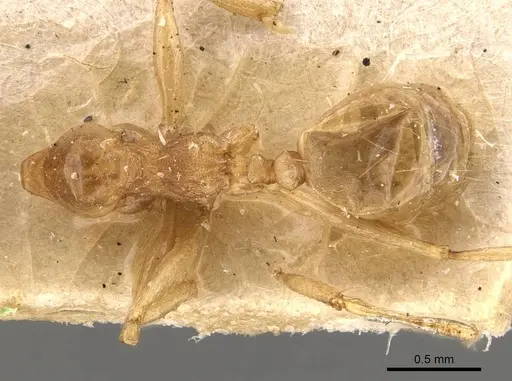
CASENT0908223
View on AntWeb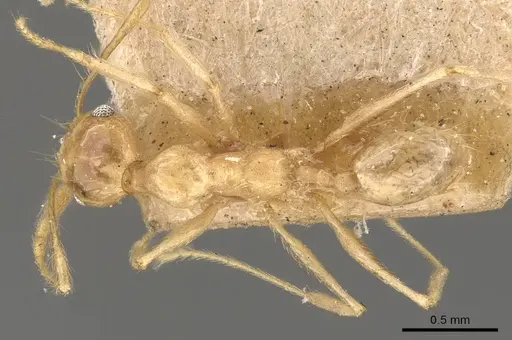
Literature
Loading distribution map...Loading products...