
Pheidole laevinota
- Sci. Name
- Pheidole laevinota
- Tribe
- Attini
- Subfamily
- Myrmicinae
- Author
- Forel, 1908
- Distribution
- Found in 1 countries
Introduction
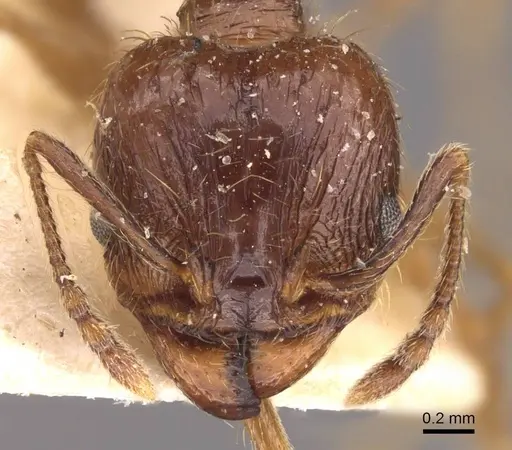
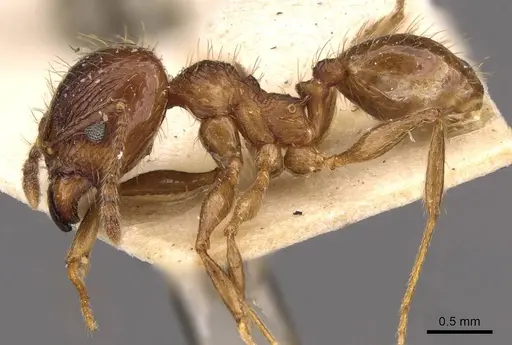
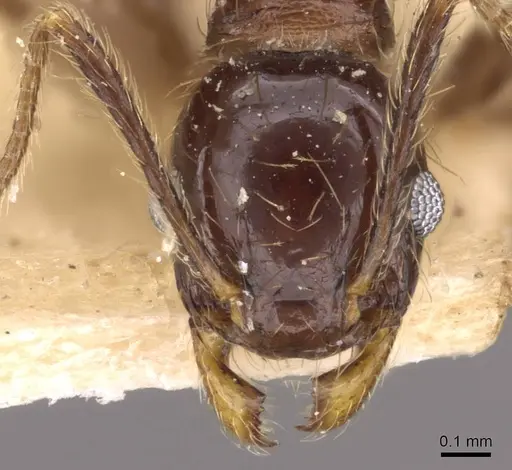
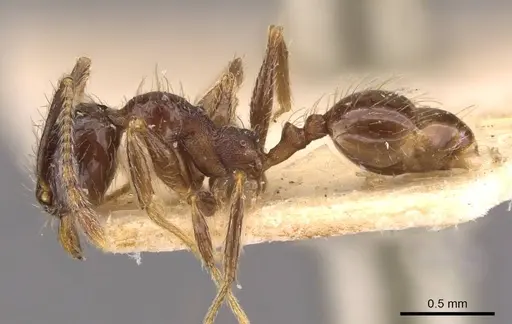
Pheidole laevinota is a small ant native to the subtropical regions of southern South America. Workers are polymorphic, with distinct major and minor castes. The species has a light brown body with darker appendages in majors. It inhabits subtropical evergreen forests in Argentina and Brazil at elevations between 750-900 meters . This species is part of the hyperdiverse Pheidole genus, which plays important roles in ecosystems as seed dispersers and predators of small invertebrates .
Quick Summary
- Difficulty: Medium
- Origin & Habitat: Subtropical evergreen forests of Argentina and Brazil at 750-900m elevation [1]
- Colony Type: Likely monogyne (single queen) based on typical Pheidole patterns, but unconfirmed for this species
- Size & Growth:
- Queen: Size data unavailable, no total length measurements found in research
- Worker: Size data unavailable, body length not specified, but majors and minors exist
- Colony: Up to 148 workers observed in studies [2]
- Growth: Moderate, estimated based on genus patterns
- Development: Estimated 6-8 weeks based on typical Pheidole development (Development may vary with temperature)
- Antkeeping:
- Temperature: Keep at room temperature (20-25°C) with a gentle gradient, based on subtropical habitat [1]
- Humidity: Keep nest substrate consistently moist but not waterlogged, as they inhabit subtropical forests [1]
- Diapause: Likely requires a mild winter rest period of 2-3 months at cooler temperatures, based on temperate/subtropical patterns
- Nesting: In nature, they nest in soil or under stones. In captivity, use test tube setups for founding, then transition to Y-tong or plaster nests
- Behavior: Pheidole are generally non-aggressive and shy. Majors have enlarged heads for seed crushing but are not highly defensive. Escape risk is moderate due to small size of minors
- Common Issues: small minors can escape through gaps larger than 0.5mm, ensure proper sealing., mold can develop if food is not removed promptly., test tube setups can flood if water reservoirs are overfilled., winter dormancy requirements are unconfirmed, observe colony behavior., colony growth may be slow, leading to overfeeding and mold.
Housing and Nest Setup
For founding colonies, use a standard test tube setup. Fill the tube with water and plug the wet end with cotton to maintain humidity. Cover the tube with a dark cloth to simulate natural conditions. Once the colony reaches 20-30 workers, transition to a small formicarium. Use Y-tong or plaster nests for established colonies. Ensure escape prevention by using fluon barriers on rim edges, as minor workers are small.
Feeding and Diet
Pheidole species are typically omnivorous with a preference for seeds and protein. In captivity, offer a varied diet including small seeds like millet or sesame, protein sources like fruit flies or mealworms, and sugar water or honey. Major workers have enlarged mandibles for seed crushing. Feed protein 2-3 times per week and keep sugar sources available. Remove uneaten food after 24-48 hours to prevent mold.
Temperature and Seasonal Care
Pheidole laevinota comes from subtropical forests, so keep temperatures around 20-25°C with a gentle gradient. During winter months, expect reduced activity and consider a cool period around 10-15°C for 2-3 months to simulate natural cycles, though this is unconfirmed for this species.
Colony Development and Growth
Pheidole colonies grow through stages: queen lays eggs, which hatch into larvae, then pupate before emerging as workers. First workers are smaller and help with colony maintenance. As the colony grows, major workers develop with enlarged heads. A mature colony may reach up to 148 workers based on studies [2]. Growth is moderate, taking 6-12 months to reach 50 workers under good conditions.
Frequently Asked Questions
Where is Pheidole laevinota found?
Pheidole laevinota is found in subtropical evergreen forests of Argentina and Brazil at elevations between 750-900 meters [1].
How big do Pheidole laevinota colonies get?
Up to 148 workers have been observed in studies [2].
Is Pheidole laevinota an invasive species?
No, Pheidole laevinota is native to South America and not noted as invasive in the research context.
What is the defense mechanism of Pheidole laevinota?
As a member of the Myrmicinae subfamily and Attini tribe, Pheidole laevinota likely has a sting as a primary defense mechanism, but this is general taxonomic knowledge and not specific to this species.
Do Pheidole laevinota ants need hibernation?
Likely yes, based on their subtropical range and typical Pheidole patterns, requiring a mild winter rest period of 2-3 months at cooler temperatures.
Report an Issue
The current care sheet is based fully on literature. See inconsistencies, or something that's incorrect? Please , it will be resolved after review from an admin. Contributing to the blogs tab also helps providing information, to make us be able to further improve the caresheets. Thank you for your support!
References

This caresheet is licensed under CC BY-SA 4.0 .
Community Blogs
CASENT0908204
View on AntWeb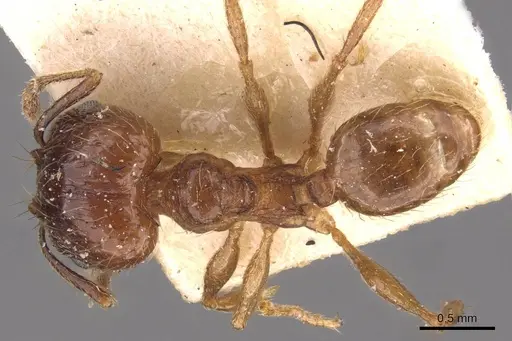
CASENT0908205
View on AntWeb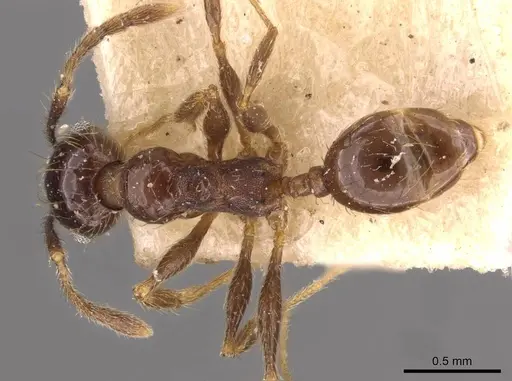
Literature
Loading distribution map...Loading products...