
Pheidole hirsuta
- Sci. Name
- Pheidole hirsuta
- Tribe
- Attini
- Subfamily
- Myrmicinae
- Author
- Emery, 1896
- Distribution
- Found in 3 countries
Introduction
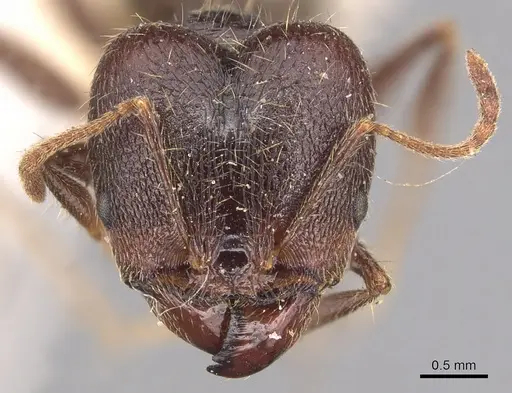
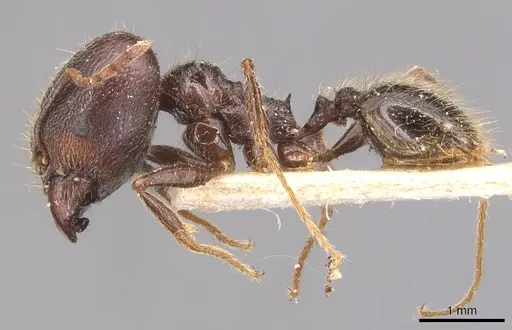
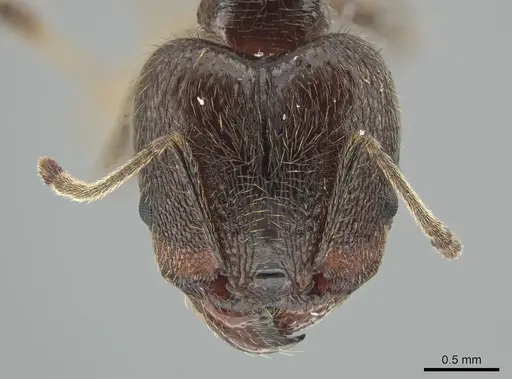
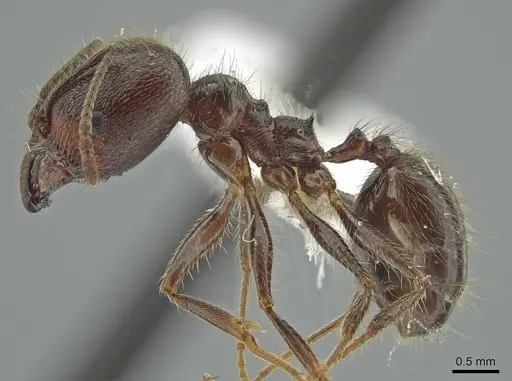
Pheidole hirsuta is a Neotropical ant species native to the lowlands of Costa Rica, Guatemala, and Panama . It belongs to the fallax group and has pronounced caste size differences, with majors having large heads and minors being smaller . The species name means 'hairy' . In the wild, these ants nest in the ground in tropical forests. Colonies contain many minor workers and larger major workers that serve as soldiers and help process food .
Quick Summary
- Difficulty: Medium
- Origin & Habitat: Lowland tropical forests of Costa Rica, Guatemala, and Panama [1][2].
- Colony Type: Unconfirmed, no specific data on queen number for this species. Based on Pheidole genus patterns, likely monogyne, but unconfirmed.
- Size & Growth:
- Queen: Size data unavailable, inferred from Pheidole genus patterns as ~8-10mm [2].
- Worker: Size data unavailable, inferred from Pheidole genus patterns, majors are larger than minors [2].
- Colony: Up to several thousand workers, inferred from Pheidole genus patterns [2].
- Growth: Moderate
- Development: Estimated 6-8 weeks at 25-28°C, inferred from tropical Pheidole patterns [2]. (Development is faster in warm conditions, first workers typically appear within 1-2 months.)
- Antkeeping:
- Temperature: Keep warm, roughly 24-28°C, inferred from tropical distribution [2].
- Humidity: Keep substrate moist but not waterlogged, inferred from lowland tropical habitat [2].
- Diapause: No, tropical species, no hibernation needed [2].
- Nesting: Ground-nesting, use Y-tong, plaster, or soil nests, inferred from genus patterns [2].
- Behavior: Calm and non-aggressive, moderate escape risk due to small size, inferred from Pheidole genus patterns [2].
- Common Issues: cold temperatures can slow or stop brood development, colonies can grow large quickly, plan for spacious housing early, ground-nesting requires appropriate substrate depth, tropical species may be sensitive to temperature drops
Housing and Nest Setup
Pheidole hirsuta is a ground-nesting species. For founding, a test tube setup can be used, but transfer to a proper nest once workers arrive. For established colonies, Y-tong, plaster, or soil nests work well, providing moisture retention [2]. Ensure chambers are sized for the ants, with passages wide enough for majors. Always provide an outworld connected to the nest for foraging [2].
Feeding and Diet
Pheidole ants are opportunistic omnivores. Offer sugar water or honey for carbohydrates, and small insects like fruit flies or mealworms for protein. Vary the diet for best health [2]. Remove uneaten food promptly to prevent mold.
Temperature and Humidity
As a tropical species, keep the nest area warm at 24-28°C. Use a heating cable to create a gradient. For humidity, keep the substrate moist but not waterlogged, and provide a water tube [2]. No diapause is needed.
Colony Development
Colonies grow through typical founding sequence. First workers appear after 6-8 weeks at optimal temperature. Majors appear later, triggered by colony size [2]. Colonies can reach several thousand workers over time.
Behavior and Temperament
This species is calm and non-aggressive. Workers are active foragers, and majors are not particularly defensive. Escape risk is moderate due to small size, use standard barriers [2].
Frequently Asked Questions
How long does it take for Pheidole hirsuta to get their first workers?
At optimal temperature, expect first workers in 6-8 weeks after egg-laying [2].
What do Pheidole hirsuta ants eat?
They are omnivorous, offer sugar water for carbohydrates and small insects for protein [2].
Are Pheidole hirsuta good for beginners?
They are medium-difficulty due to tropical care needs, stable warmth is required [2].
How big do Pheidole hirsuta colonies get?
Colonies can reach several thousand workers over 1-2 years [2].
Do Pheidole hirsuta need hibernation?
No, as a tropical species, they do not require hibernation [2].
When should I move Pheidole hirsuta from a test tube to a formicarium?
Move them once the colony has 50-100 workers and the test tube is crowded [2].
Can I keep multiple Pheidole hirsuta queens together?
Pheidole are typically monogyne, combining queens is not recommended [2].
What temperature is best for Pheidole hirsuta?
Keep them at 24-28°C, with a heating gradient [2].
Why aren't my Pheidole hirsuta making majors?
Majors appear later in colony development, triggered by size and resources [2].
Report an Issue
The current care sheet is based fully on literature. See inconsistencies, or something that's incorrect? Please , it will be resolved after review from an admin. Contributing to the blogs tab also helps providing information, to make us be able to further improve the caresheets. Thank you for your support!
References

This caresheet is licensed under CC BY-SA 4.0 .
Community Blogs
CASENT0635474
View on AntWeb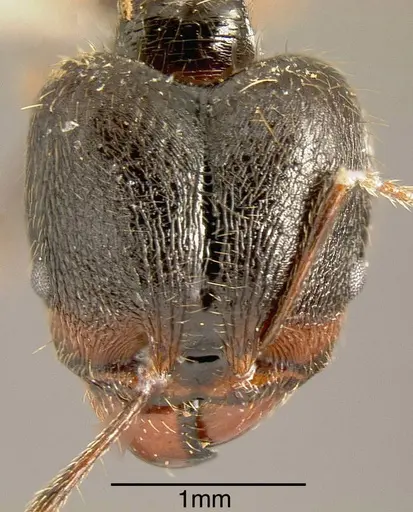
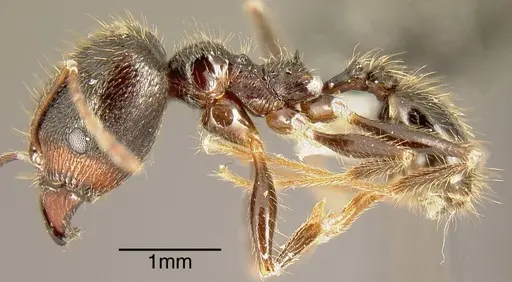
CASENT0635475
View on AntWeb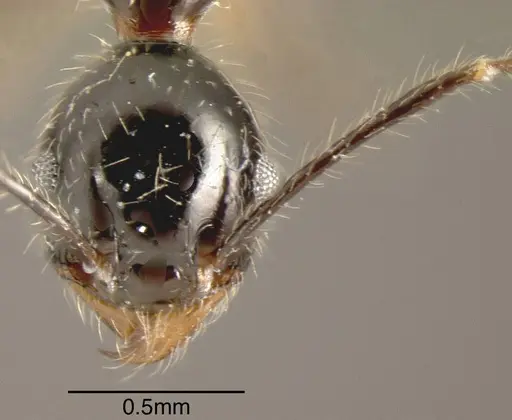
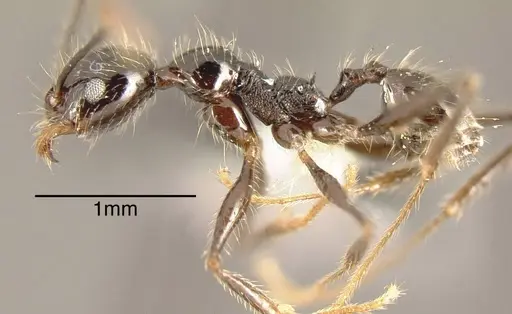
CASENT0904357
View on AntWeb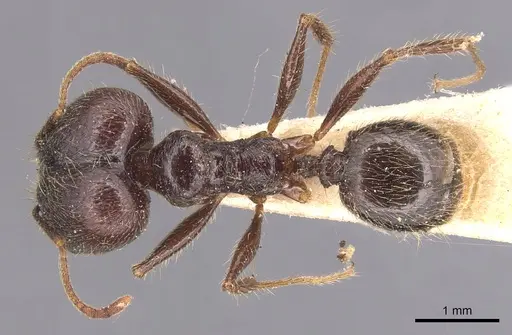
JTLC000006250
View on AntWeb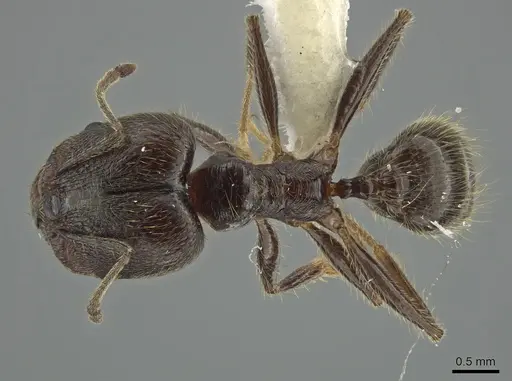
Literature
Loading distribution map...Loading products...