
Pheidole fortis
- Sci. Name
- Pheidole fortis
- Tribe
- Attini
- Subfamily
- Myrmicinae
- Author
- Eguchi, 2006
- Distribution
- Found in 1 countries
Introduction
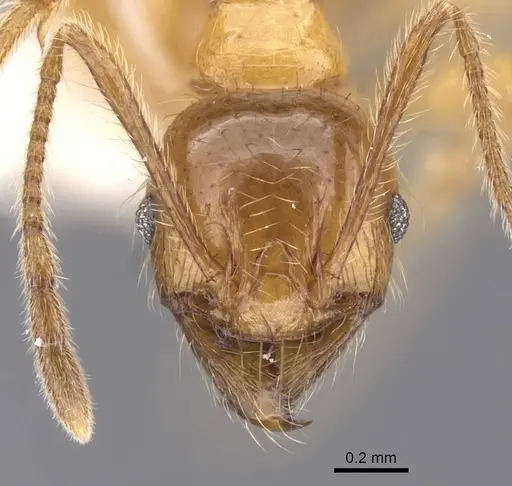
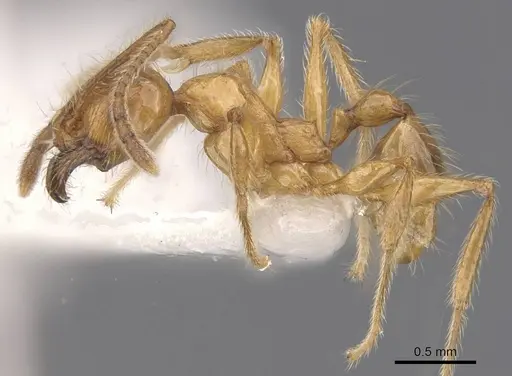
Pheidole fortis is a small ant from Southeast Asia, found in northern Vietnam, Thailand, and recently on Hainan Island, China . It lives in open forests and forest edges, where it nests directly in the soil . The major workers have a dense covering of short hairs on the head and fine ridges (rugulae) on the front of the head. Both majors and minors have a noticeably large postpetiole (the segment behind the waist), which helps tell them apart from similar species . Like most Pheidole, they have two worker castes – majors and minors – but specific details about their diet and behavior in the wild are not well studied. This makes them an interesting project for antkeepers who want to observe a less commonly kept species.
Quick Summary
- Difficulty: Easy
- Origin & Habitat: Northern Vietnam and Thailand, with recent records from Hainan Island, China. Inhabits open forests and forest edges, nesting in soil [1][3][4][2].
- Colony Type: Presumably monogyne (single queen) based on typical Pheidole genus patterns. Colony structure in this specific species has not been directly studied.
- Size & Growth:
- Queen: Size data unavailable – inferred from Pheidole genus (queens typically ~6-8mm).
- Worker: Size data unavailable – inferred from Pheidole genus (majors ~4-5mm, minors ~2mm).
- Colony: Estimated up to 2000 workers (based on typical Pheidole colonies).
- Growth: Moderate
- Development: Estimated 4-8 weeks at 24-28°C (based on typical Pheidole development patterns, not directly studied for this species). (Development speed likely depends on temperature. Tropical origin suggests no prolonged winter slowdown.)
- Antkeeping:
- Temperature: Keep warm, around 24-28°C. This range is typical for tropical Pheidole and matches the climate of their native Vietnam and Thailand [3][4].
- Humidity: As a soil-nesting species, keep the nest substrate consistently moist but not waterlogged. Aim for a humidity gradient – a drier foraging area and a moist nest.
- Diapause: Likely not needed. Since they come from a tropical region without a cold season, they probably do not require a true hibernation period. A slight temperature drop in winter (to ~20-22°C) is optional.
- Nesting: Soil-nesting species. Use a naturalistic setup with a soil substrate, a plaster nest, or a Y-tong (AAC) nest with soil chambers. They prefer tight, dark spaces that mimic their natural underground tunnels.
- Behavior: Generally peaceful toward keepers – they are not aggressive and will mostly flee when disturbed. Majors can give a mild pinch if handled, but it's harmless. Escape risk is HIGH because minors are very small (body length ~2mm) and can squeeze through tiny gaps. Use fine mesh or a tight seal on your setup.
- Common Issues: high escape risk due to tiny minor workers – use a well-sealed formicarium with very small ventilation holes., colonies may slow growth if temperatures drop below 20°C for long periods., soil nests can develop mold if overwatered – maintain a moisture gradient and good ventilation., wild-caught colonies may carry mites or nematodes – quarantine new catches and feed them clean food., major workers may not appear until colony reaches several dozen workers – this is normal for Pheidole and not a problem., small colony sizes initially require careful feeding – offer small portions of food to avoid mold.
Housing and Nest Setup
Because Pheidole fortis nests in soil, a naturalistic setup works best. For a founding queen, a standard test tube with water and a cotton plug provides a dark, secure space. Once the colony has 20-30 workers, move them to a formicarium with a soil substrate – a plaster nest with a soil chamber or a Y-tong nest with a layer of soil is ideal. They prefer tight, dark chambers that mimic their natural burrows. An outworld for foraging is essential, as they are active foragers. The outworld should have a sealed lid and very fine mesh ventilation because minors are tiny and can escape through gaps as small as 1mm [1][3][4]. Avoid using acrylic nests without a barrier, as smooth surfaces are hard for them to climb.
Feeding and Diet
No specific dietary data exists for Pheidole fortis, but like most Pheidole they are likely omnivorous. Offer a constant sugar source (sugar water, honey diluted with water) and provide protein 2-3 times a week: small insects like fruit flies, pinhead crickets, or pieces of mealworm. They will also accept seeds – a common food for many Pheidole. Remove uneaten prey after 24 hours to prevent mold. Majors, once present, help crush seeds and large prey. Since their natural diet is unknown, observe what they prefer and adjust accordingly.
Temperature and Seasonal Care
Pheidole fortis comes from tropical regions of Vietnam and Thailand, so it needs warmth. Keep the nest at 24-28°C for steady activity and brood development. A heat mat on one side of the nest provides a temperature gradient, letting the ants move to their preferred spot. They can tolerate temps down to about 20°C but become less active. Avoid prolonged heat above 32°C. True diapause (hibernation) is probably unnecessary since their native climate has no severe winter. A mild seasonal drop to 20-22°C in the coolest months might mimic natural conditions but is not required [3][4].
Colony Development and Growth
Development details for Pheidole fortis are not documented, but based on other tropical Pheidole, expect the following: after a claustral founding (queen seals herself in), eggs hatch into larvae within 1-2 weeks. Larvae pupate, and the first workers (nanitics) emerge 4-8 weeks after egg-laying at 24-28°C. These first workers are smaller than future generations. The colony grows slowly at first, then speeds up after the first workers start foraging. Major workers typically appear once the colony has 30-50 workers. A healthy colony might reach several hundred workers within a year.
Behavior and Temperament
Pheidole fortis is a peaceful, non‑aggressive ant. They rarely bite keepers – majors might give a very mild pinch if you handle them roughly, but it's harmless. They are active foragers that send out scouts to find food. The two-caste system is interesting: minors do most of the foraging and brood care, while majors specialize in crushing seeds, cutting large prey, and defending the nest. They do not mass‑raid like some ants. Because minors are very small (body length ~2mm), they can easily escape through small openings. Always use a tight seal and check your setup regularly for gaps.
Frequently Asked Questions
How long does it take for Pheidole fortis to get their first workers?
At warm temperatures (24-28°C), first workers typically appear in 4-8 weeks after the queen lays eggs. This is estimated from other tropical Pheidole species.
What do Pheidole fortis ants eat?
They are likely generalist omnivores. Offer sugar water or honey for energy, and small insects like fruit flies or pinhead crickets for protein. They will also accept seeds.
What temperature do Pheidole fortis need?
Keep them at 24-28°C. They come from tropical Vietnam and Thailand, so they need warmth. Avoid extended periods below 20°C.
Are Pheidole fortis good for beginners?
Yes, they are easy to keep. They are peaceful, accept a range of foods, and do not need hibernation. The main challenge is preventing escape due to their tiny size.
How big do Pheidole fortis colonies get?
Based on typical Pheidole, colonies can reach up to 2000 workers over several years. Majors appear after the colony has 30-50 workers.
Do Pheidole fortis need hibernation?
Probably not. As a tropical species, true diapause is unnecessary. A slight temperature drop in winter (to around 20-22°C) is optional and not needed for colony health.
When should I move my colony to a formicarium?
Move them when the colony has 20-30 workers and the test tube is getting crowded. A naturalistic soil nest or a plaster/Y-tong nest with soil works well for this species.
Why aren't my major workers appearing?
This is normal. Majors typically appear only after the colony has 30-50 workers. The colony focuses on producing minors first to boost growth.
Can I keep multiple Pheidole fortis queens together?
This has not been studied for this species. Based on typical Pheidole, single-queen colonies are the norm. Combining unrelated queens risks fighting, so it is not recommended.
Report an Issue
The current care sheet is based fully on literature. See inconsistencies, or something that's incorrect? Please , it will be resolved after review from an admin. Contributing to the blogs tab also helps providing information, to make us be able to further improve the caresheets. Thank you for your support!
References

This caresheet is licensed under CC BY-SA 4.0 .
Community Blogs
CASENT0911215
View on AntWeb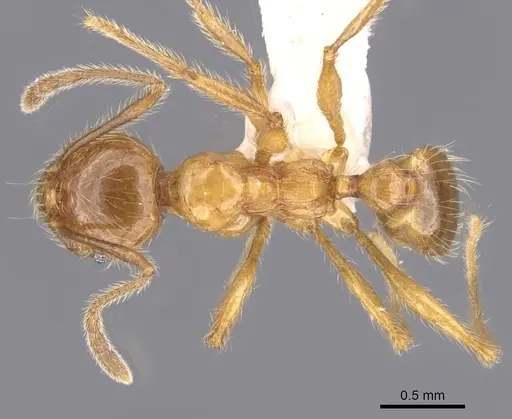
Literature
Loading distribution map...Loading products...