
Pheidole fabricator
- Sci. Name
- Pheidole fabricator
- Tribe
- Attini
- Subfamily
- Myrmicinae
- Author
- Smith, 1858
- Distribution
- Found in 1 countries
Introduction
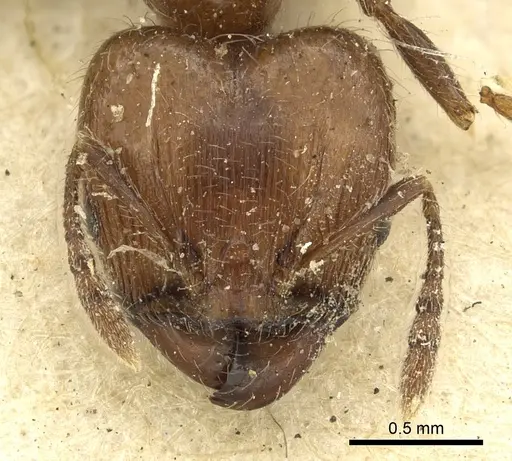
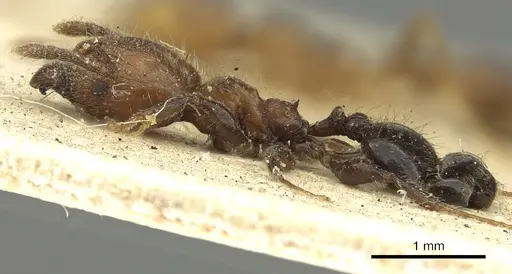
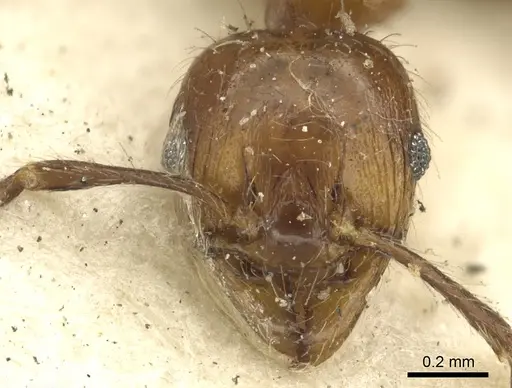
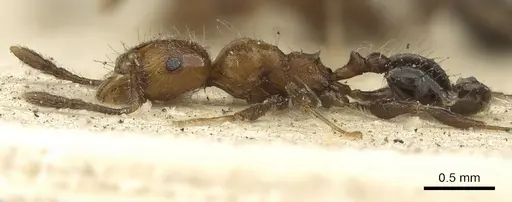
Pheidole fabricator is a small Neotropical ant in the tristis group, native to rainforests in Brazil, Colombia, and Venezuela . Major workers have a heart-shaped head with bidentate hypostoma, while minors have yellowish-brown genae and a brownish-yellow mesosoma . The species name means 'maker' in Latin, referring to its nest-building behavior. Colonies exhibit distinct major and minor worker castes, a trait common in the Pheidole genus.
Quick Summary
- Difficulty: Medium
- Origin & Habitat: Rainforest habitats in the Neotropical region, documented in Brazil (Rio de Janeiro, São Paulo, Santa Catarina), Colombia (Meta department), and Venezuela (Aragua at 1100m elevation) [1][2].
- Colony Type: Based on Pheidole genus patterns, likely monogyne with single queen colonies.
- Size & Growth:
- Queen: Size data unavailable, no total length measurements in research [2].
- Worker: No total body length data available. Major workers have head width 1.18mm, minor workers 0.52mm for identification [2].
- Colony: Unknown, no data on colony size in research.
- Growth: Moderate, inferred from genus patterns.
- Development: Unknown, no specific data, estimated 6-10 weeks based on related Pheidole species. (Development time is inferred from genus patterns, no direct study available for this species.)
- Antkeeping:
- Temperature: Keep warm, roughly 24-28°C, based on tropical rainforest habitat [1][2].
- Humidity: Keep substrate consistently moist but not waterlogged, as rainforest species [1][2].
- Diapause: No, tropical species do not require hibernation.
- Nesting: Y-tong (AAC) or plaster nests with moist substrate [3].
- Behavior: Based on Pheidole patterns, majors may defend the nest while minors handle foraging and brood care. Escape risk is high due to small size, minors can squeeze through tiny gaps.
- Common Issues: high humidity can lead to mold growth if ventilation is poor, balance moisture with adequate airflow., small minor workers are prone to escaping through fine gaps, use escape barriers rated for tiny ants., tropical species may struggle if temperatures drop below 22°C, monitor with a thermometer., colonies may decline if protein sources are insufficient, ensure regular insect feeding., wild-caught colonies may carry parasites that can devastate captive populations.
Housing and Nest Setup
Use Y-tong (AAC) or plaster nests that can hold moisture. Nest chambers should be sized for small minors, tight passages help them feel secure. A water reservoir connected to the nest helps maintain humidity. For the outworld, use a simple foraging area. Because minors are very small, escape prevention is critical, apply Fluon or similar barrier to the rim and use fine mesh on ventilation holes [3].
Feeding and Diet
Offer small insects like fruit flies, pinhead crickets, or mealworms twice weekly for protein. Provide sugar water or honey for carbohydrates. Remove uneaten prey after 24-48 hours to prevent mold [3].
Temperature and Humidity Management
Maintain warm conditions around 24-28°C based on rainforest habitat. Humidity should keep substrate moist but not waterlogged. Avoid drafts or air conditioning [1][2].
Colony Development and Castes
Colonies start with claustral founding, but this is unconfirmed. Growth is moderate, with major and minor castes developing. No specific timeline data exists [2].
Seasonal Care
As a tropical species, no hibernation is needed. Maintain stable conditions year-round. Nuptial flights may occur in warmer months, but timing is unknown [3].
Frequently Asked Questions
How long does it take for Pheidole fabricator to produce first workers?
No specific data, estimated 6-10 weeks based on related Pheidole species.
What do Pheidole fabricator ants eat?
They are omnivorous with a protein focus. Feed small insects like fruit flies or mealworms twice weekly, and provide sugar water [3].
What temperature do Pheidole fabricator ants need?
Keep them warm, roughly 24-28°C, based on their rainforest habitat [1][2].
Are Pheidole fabricator ants good for beginners?
They are rated medium difficulty due to humidity and temperature needs, and escape risk from small size. Not recommended for absolute beginners.
How big do Pheidole fabricator colonies get?
Colony size is unknown, no data available in research.
Do Pheidole fabricator ants need hibernation?
No, as a tropical species, they do not require hibernation.
When should I move Pheidole fabricator to a formicarium?
Move them once the colony outgrows their founding setup, typically when workers are active. Use Y-tong or plaster nests [3].
Can I keep multiple Pheidole fabricator queens together?
This species is likely monogyne, so multiple queens are not recommended and may fight.
Why are my Pheidole fabricator ants dying?
Common causes include temperatures below 22°C, improper humidity, insufficient protein, or parasites from wild-caught colonies. Check environmental factors first.
Report an Issue
The current care sheet is based fully on literature. See inconsistencies, or something that's incorrect? Please , it will be resolved after review from an admin. Contributing to the blogs tab also helps providing information, to make us be able to further improve the caresheets. Thank you for your support!
References

This caresheet is licensed under CC BY-SA 4.0 .
Community Blogs
CASENT0901611
View on AntWeb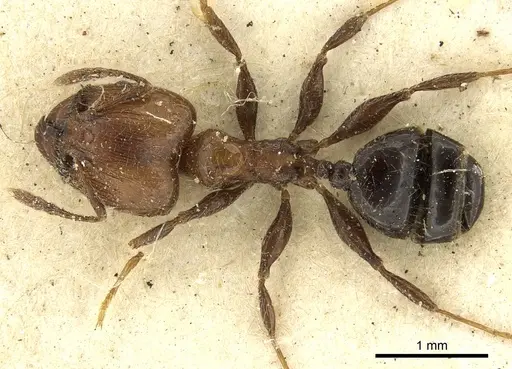
CASENT0901612
View on AntWeb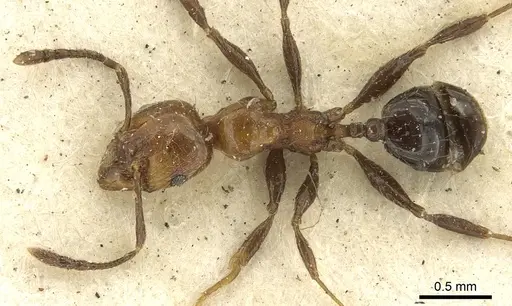
Literature
Loading distribution map...Loading products...