
Pheidole eriophora
- Sci. Name
- Pheidole eriophora
- Tribe
- Attini
- Subfamily
- Myrmicinae
- Author
- Wilson, 2003
- Distribution
- Found in 1 countries
Introduction
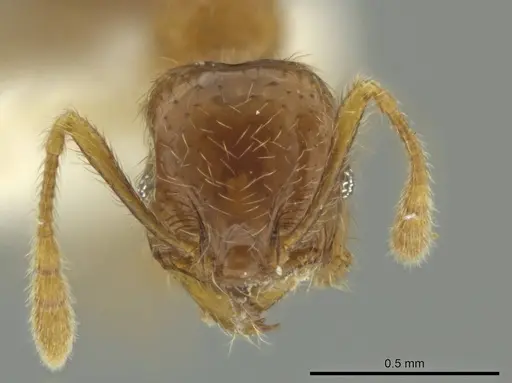
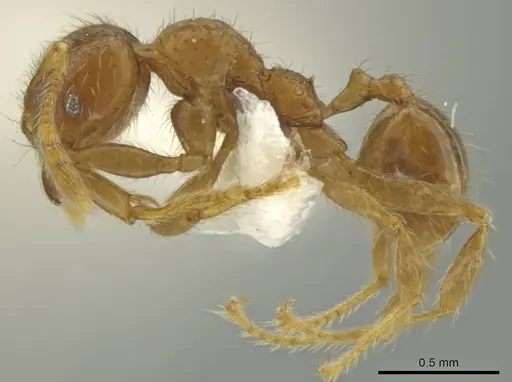
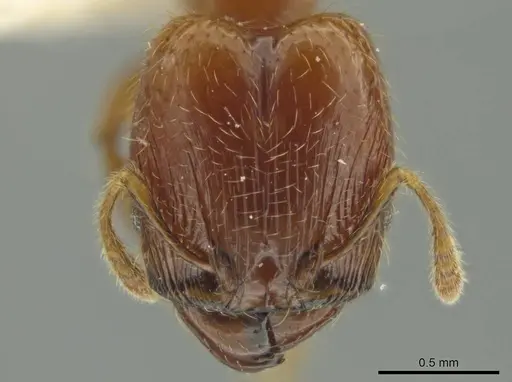
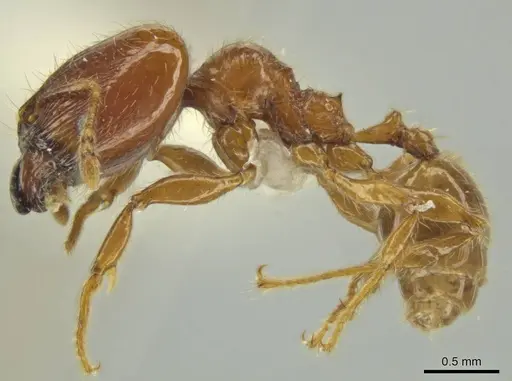
Pheidole eriophora is a small ant species native to montane rainforests in Colombia. First described by E.O. Wilson in 2003,it belongs to the 'carapuna complex' of Pheidole species. Major workers have a reddish-yellow coloration with a woolly appearance due to curved hairs, while minors are brownish-yellow. The species is only known from Valle del Cauca, Colombia, at 1700m elevation . The species name 'eriophora' means 'wool-bearing', referring to the curved hairs that give it a fuzzy look, and its restricted distribution makes it a rare species in the antkeeping hobby.
Quick Summary
- Difficulty: Medium
- Origin & Habitat: Montane rainforest in Valle del Cauca, Colombia at 1700m elevation. The type colony was collected in Pance, near Cali [1][2].
- Colony Type: Colony structure is unconfirmed for this species. Based on Pheidole genus patterns, likely monogyne (single queen colonies).
- Size & Growth:
- Queen: Size data unavailable, inferred from Pheidole genus as small ants.
- Worker: Size data unavailable, major and minor workers are small, but exact body length not provided in research.
- Colony: Unknown, no specific data on maximum colony size.
- Growth: Moderate, estimated based on genus patterns.
- Development: Unconfirmed, estimated 6-10 weeks based on typical Pheidole development patterns. (Development time is unconfirmed. Estimates based on related Neotropical Pheidole species suggest 6-10 weeks at optimal temperature.)
- Antkeeping:
- Temperature: Keep around 20-24°C. Based on montane habitat, they likely prefer cooler conditions.
- Humidity: Keep nest substrate consistently moist but not waterlogged. Based on rainforest habitat.
- Diapause: Unknown, may not require true hibernation due to tropical montane location.
- Nesting: Natural nesting is unconfirmed. In captivity, use test tubes for founding, then plaster or soil nests with chambers scaled to their small size.
- Behavior: Pheidole eriophora shows typical Pheidole behavior with majors handling defense and minors foraging. Defense mechanism is sting-based, as per subfamily Myrmicinae. Escape risk is moderate due to small size, standard escape prevention should be used.
- Common Issues: overheating can stress the colony, keep away from direct heat sources., slow founding requires patience during the claustral period., small size means escape prevention is critical., limited availability makes this species challenging to acquire.
Nest Preferences
Pheidole eriophora was collected in montane rainforest at 1700m elevation in Colombia [1]. The natural nesting behavior has not been documented, but most Pheidole species nest in soil or decaying wood in forest floor environments. For captive care, a test tube setup works well for founding colonies, queens typically seal themselves in a chamber and raise their first brood alone. Once established, transfer to a plaster or soil formicarium with appropriately sized chambers. The small size of both majors and minors means chambers should be modest in scale. Provide some substrate material they can tunnel into if using a naturalistic setup.
Feeding and Diet
As with most Pheidole species, these ants are omnivorous. The 'carapuna complex' species are all seed-eaters, so P. eriophora likely has similar dietary preferences [2]. In captivity, offer a varied diet: protein sources like small crickets, mealworms, or fruit flies every few days, along with sugar water or honey as an energy source. Seeds (millet, chia, or grass seeds) can be provided as enrichment. Remove uneaten food after 24-48 hours to prevent mold.
Temperature and Care
Being from a montane rainforest at 1700m elevation, Pheidole eriophora likely prefers cooler temperatures than typical tropical ants. Keep the nest area around 20-24°C, avoiding overheating. A temperature gradient is ideal, allow the ants to choose their preferred zone. Room temperature (around 21-23°C) is likely ideal. Use a heating cable only if room temperature falls below 18°C, and always place it on the outside of the nest to avoid overheating the chambers. [1]
Behavior and Colony Structure
Pheidole eriophora displays the classic Pheidole caste system with distinct major and minor workers. Major workers have enlarged heads with powerful mandibles for seed-cracking and colony defense, while smaller minors handle most daily tasks. The species name 'eriophora' refers to the distinctive curved hairs that give the ants a fuzzy, woolly appearance [2]. Colony foundation is likely claustral, the queen seals herself in a chamber and raises the first brood using stored fat reserves.
Distribution and Rarity
Pheidole eriophora is one of the rarest ants in the hobby due to its extremely limited distribution. It is only known from a single location in Valle del Cauca, Colombia, the Pance area near Cali at 1700m elevation [1][2]. This makes wild-caught colonies essentially unavailable outside of scientific collections. The species was only described in 2003 by E.O. Wilson as part of his work on New World Pheidole.
Frequently Asked Questions
How long does it take for Pheidole eriophora to produce first workers?
The development timeline is unconfirmed for this species. Based on typical Pheidole patterns, expect 6-10 weeks from egg to first worker at optimal temperature (around 22°C). The claustral founding period may take several months before the first nanitic workers emerge.
What do Pheidole eriophora ants eat?
Like most Pheidole species, they are omnivorous. Offer small insects (fruit flies, pinhead crickets, mealworms) as protein, sugar water or honey for energy, and seeds for enrichment. The 'carapuna complex' species are seed-eaters, so P. eriophora likely has similar preferences [2]. Remove uneaten food after 24-48 hours.
Are Pheidole eriophora good for beginners?
This species is not recommended for beginners. It has an extremely limited natural distribution, making wild colonies essentially unavailable. Additionally, being a montane species, they have specific temperature requirements that differ from common hobby species. They are best suited for experienced antkeepers interested in rare species.
What temperature do Pheidole eriophora ants need?
Keep them around 20-24°C. As a montane species from 1700m elevation in Colombia, they prefer cooler conditions than typical tropical ants. Avoid temperatures above 28°C, which may stress the colony.
How big do Pheidole eriophora colonies get?
Colony size is unconfirmed for this specific species. No specific data on maximum colony size is available in the research.
Can I keep multiple queens together?
The colony structure is unconfirmed for this species. Most Pheidole are monogyne (single queen), but polygyny has been documented in some species. Without specific data on P. eriophora, it is not recommended to attempt combining unrelated queens.
What makes Pheidole eriophora different from other Pheidole?
P. eriophora belongs to the 'carapuna complex', a group of similar species including P. boltoni, P. carapuna, and P. jivaro. It is distinguished by its woolly appearance (curved hairs), reddish-yellow coloration, and extremely restricted distribution in Colombian montane rainforest [2].
Do Pheidole eriophora need hibernation?
Diapause requirements are unknown. Being from a tropical montane location (1700m elevation in Colombia), they likely experience seasonal temperature variations but not true winters. They may slow down during cooler months but probably do not require a formal hibernation period.
Where can I get Pheidole eriophora ants?
This species is essentially unavailable in the antkeeping hobby. It is only known from a single location in Colombia and has never been widely collected. Wild colonies are not available, and captive breeding programs for this rare species are extremely uncommon [1][2].
Report an Issue
The current care sheet is based fully on literature. See inconsistencies, or something that's incorrect? Please , it will be resolved after review from an admin. Contributing to the blogs tab also helps providing information, to make us be able to further improve the caresheets. Thank you for your support!
References

This caresheet is licensed under CC BY-SA 4.0 .
Community Blogs
CASENT0644197
View on AntWeb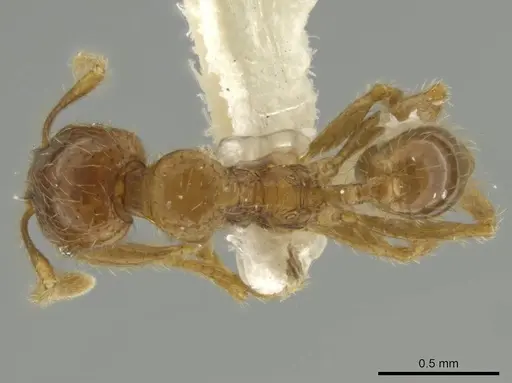
JTLC000016370
View on AntWeb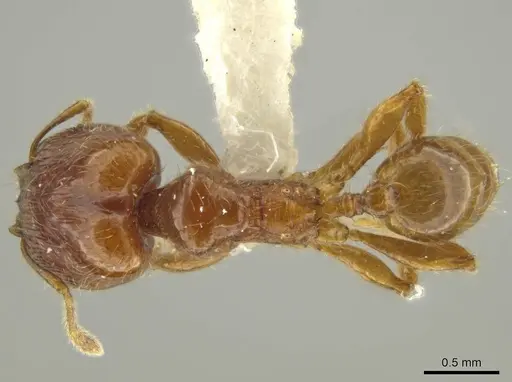
Literature
Loading distribution map...Loading products...