
Pheidole elecebra
- Sci. Name
- Pheidole elecebra
- Tribe
- Attini
- Subfamily
- Myrmicinae
- Author
- Wheeler, 1904
- Distribution
- Found in 1 countries
Introduction
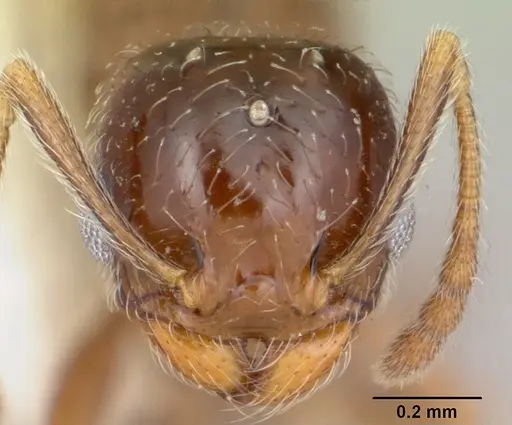
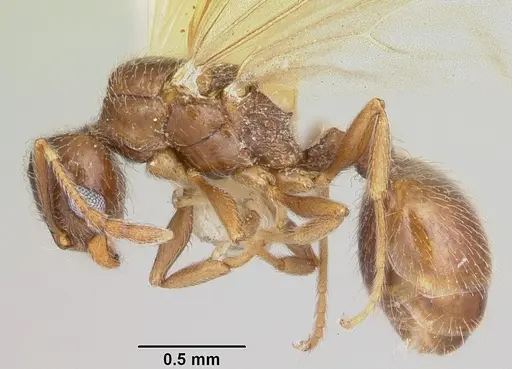
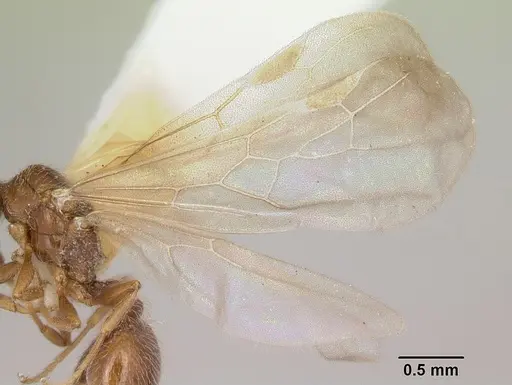
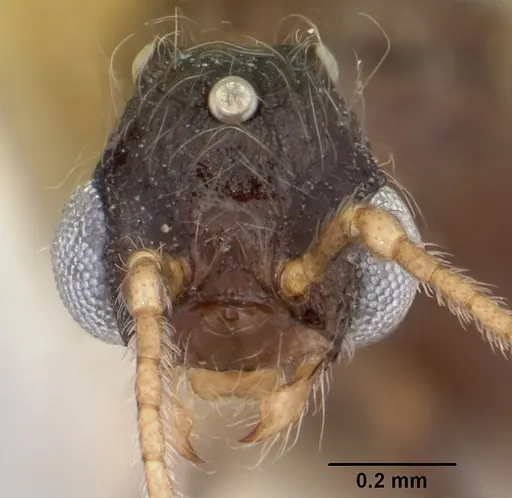
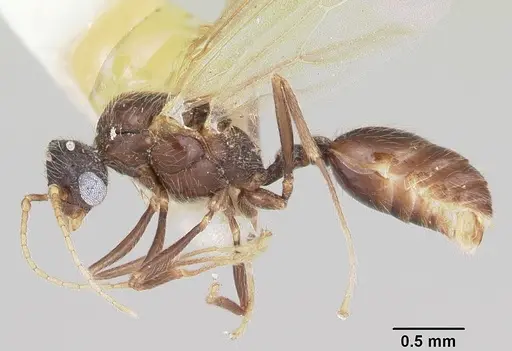
Pheidole elecebra is a workerless social parasite found only in the mountains of Colorado. Queens are small with distinctive horn-like extensions on their waist segments and live exclusively inside colonies of their host, Pheidole ceres . This light brown species has lost the ability to produce workers and relies entirely on host workers for survival . It inhabits pinyon-cedar-oak woodlands at elevations between 2000-2200 meters and is listed as Vulnerable by the IUCN . Unlike most ants, Pheidole elecebra forms no independent colonies. A colony consists solely of parasite queens and males living among host workers, and recent findings show they can coexist with a healthy host queen producing both host and parasite brood .
Quick Summary
- Difficulty: Expert
- Origin & Habitat: Endemic to Colorado, USA, in pinyon-cedar-oak woodland at 2000-2200m elevation [1][3]
- Colony Type: Workerless inquiline parasite living in nests of Pheidole ceres. Colonies contain only parasite queens and males, all labor is performed by host workers. Multiple parasite queens may coexist with or without a host queen present [1]
- Size & Growth:
- Queen: Size data unavailable for total body length, head measurements from AntWiki are 0.58mm HW and 0.60mm HL, but these are not body size [1]
- Worker: No workers produced [1][2]
- Colony: Dependent on host colony, observed up to 600 host workers [1]
- Growth: Unknown
- Development: Not applicable, species produces no workers (Development timeline for reproductives is unknown and entirely dependent on host Pheidole ceres colony conditions)
- Antkeeping:
- Temperature: Unknown, inferred to match host Pheidole ceres, likely 20-25°C active season
- Humidity: Unknown, inferred to match host, moderate humidity typical of woodland habitats
- Diapause: Yes, inferred from Colorado mountain climate and host seasonal cycle
- Nesting: Must be housed within established Pheidole ceres colonies, cannot be kept independently [1]
- Behavior: Completely parasitic and dependent on host workers for all care, foraging, and brood rearing. Queens are extremely small, creating high escape risk even through minute gaps [1]. Non-aggressive toward hosts but may suppress host reproduction. Defense mechanism is sting-based, as typical for subfamily Myrmicinae.
- Common Issues: requires an established healthy colony of the host species Pheidole ceres to survive, cannot be kept independently., host colony may collapse if the parasite suppresses the host queen's reproduction, as parasite produces no workers to replace dying host workers., extremely small queen size means standard escape prevention is inadequate, requires specialized fine mesh or barriers., IUCN vulnerable status and limited range make wild collection unethical and potentially restricted.
Workerless Parasite Biology
Pheidole elecebra is a permanent social parasite that has lost the worker caste entirely [1][2]. Queens possess enormous curved horn-like lateral extensions on their postpetiolar nodes, distinguishing them from their hosts [1]. They live exclusively within Pheidole ceres nests, producing only reproductive offspring and relying on host workers for all colony tasks [1].
Wild colonies show complex host relationships. Early observations suggested the parasite sterilizes the host queen, but later findings prove coexistence is possible, with host and parasite brood developing together [1]. This flexibility allows the parasite to balance exploitation with colony survival.
Host Colony Requirements
Keeping Pheidole elecebra requires a healthy colony of its exclusive host, Pheidole ceres. This Colorado mountain species needs habitat matching its natural pinyon-cedar-oak woodland, including appropriate temperature and humidity cycles [1][3]. The host colony must be large and stable to support parasite brood.
Since Pheidole elecebra produces no workers, the host colony's lifespan limits the parasite's persistence. If the parasite suppresses host reproduction, the colony declines as host workers age without replacement. Successful maintenance may require a large host colony or conditions allowing host queen reproduction alongside the parasite.
Captive Maintenance Challenges
Maintaining Pheidole elecebra in captivity is undocumented and extremely challenging. Introducing a parasite queen to a host colony risks aggression or rejection, as the chemical integration mechanisms are unknown [1]. Queens' tiny size requires specialized housing with fine mesh to prevent escape. This species demands expert-level micro-ant keeping skills and a supply of host colonies.
Conservation and Legal Status
Pheidole elecebra is listed as Vulnerable on the IUCN Red List and has a restricted range in Colorado, USA [1]. It is recorded only at 2000-2200m elevation in the Colorado Springs area [1][3]. Collection is harmful to wild populations and may be illegal in protected areas. This species is not suitable for the pet trade and should be left to professionals.
Frequently Asked Questions
Can I keep Pheidole elecebra without a host colony?
No. Pheidole elecebra is a workerless parasite that cannot survive without an established colony of its host species, Pheidole ceres. The queens produce no workers and rely entirely on host workers for food, nest maintenance, and raising their young [1][2].
What host species does Pheidole elecebra need?
Pheidole elecebra is an obligate parasite of Pheidole ceres. It has only been found living within nests of this specific host species in the mountains of Colorado [1][3].
How big are Pheidole elecebra queens?
Size data is unavailable for total body length. Head measurements from AntWiki are 0.58mm HW and 0.60mm HL, but these are not representative of full body size. Queens are recognizable by horn-like extensions on their waist segments [1].
Do Pheidole elecebra ants have workers?
No, Pheidole elecebra is a workerless species. Only queens and males are produced. The species has evolutionarily lost the worker caste and depends completely on the host species' workers for all colony labor [1][2].
Can I collect Pheidole elecebra from the wild?
Collection is strongly discouraged. The species is listed as Vulnerable by the IUCN and is endemic to a very small area in Colorado. Their extreme rarity and specialized biology make them unsuitable for private collection, and collection may be illegal in protected areas [1].
How do I introduce a Pheidole elecebra queen to a host colony?
Introduction protocols are unconfirmed. The chemical integration mechanisms are unknown, and attempted introductions risk the parasite queen being killed by host workers. This species requires expert-level care and is not recommended for captive keeping [1].
Why are Pheidole elecebra listed as Vulnerable?
They have an extremely restricted range limited to specific elevations in Colorado, making them vulnerable to habitat loss and climate change. Their dependence on a single host species also increases extinction risk [1][3].
Report an Issue
The current care sheet is based fully on literature. See inconsistencies, or something that's incorrect? Please , it will be resolved after review from an admin. Contributing to the blogs tab also helps providing information, to make us be able to further improve the caresheets. Thank you for your support!
References

This caresheet is licensed under CC BY-SA 4.0 .
Community Blogs
CASENT0103151
View on AntWeb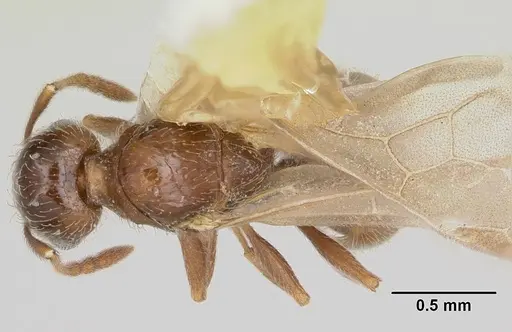
CASENT0104988
View on AntWeb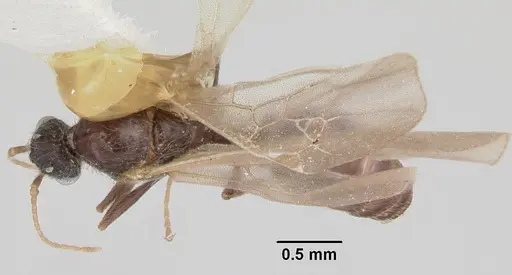
Literature
Loading distribution map...Loading products...