
Pheidole dasypyx
- Sci. Name
- Pheidole dasypyx
- Tribe
- Attini
- Subfamily
- Myrmicinae
- Author
- Wilson, 2003
- Distribution
- Found in 1 countries
Introduction
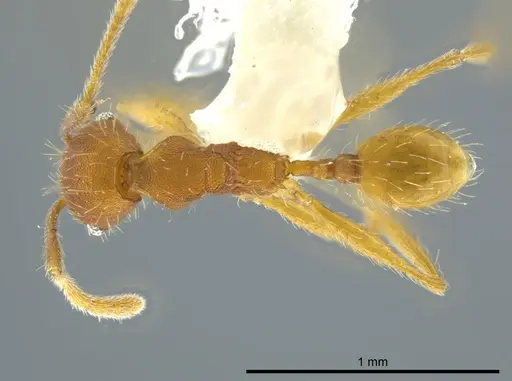
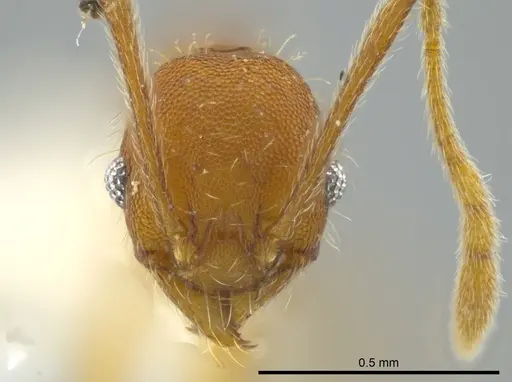
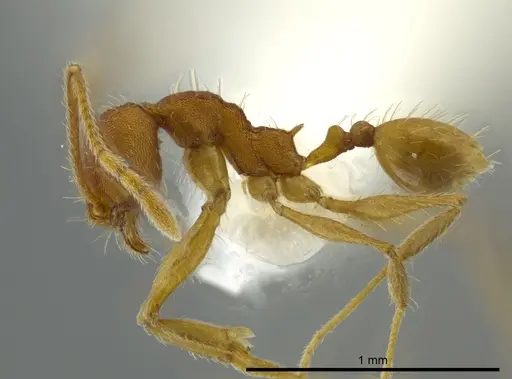
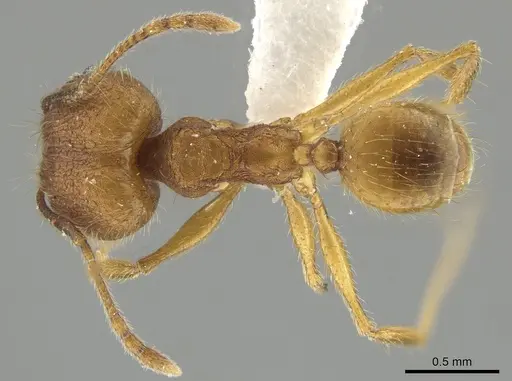
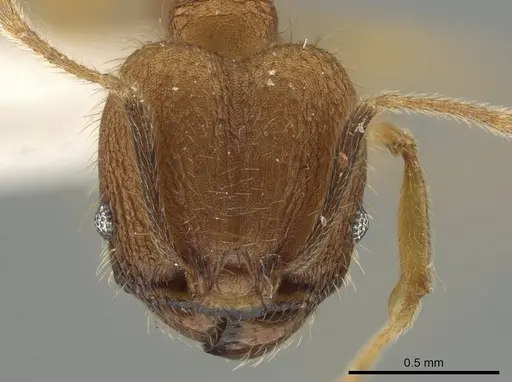
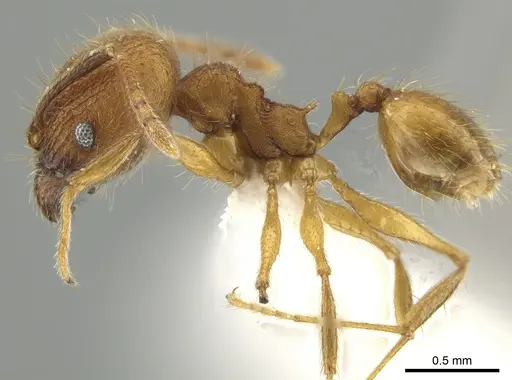
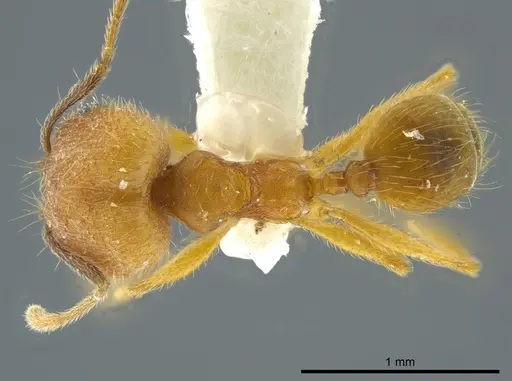
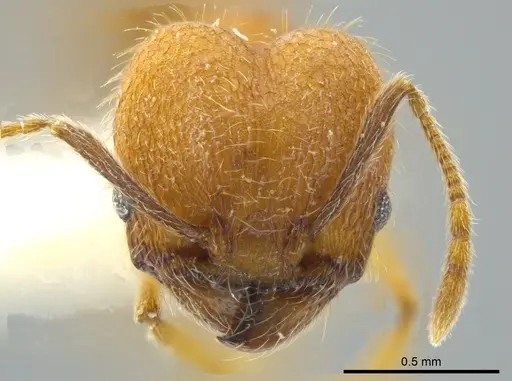
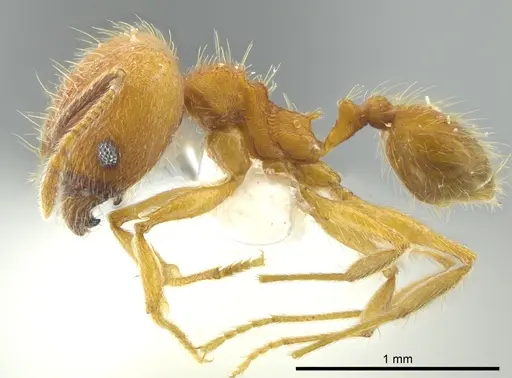
Pheidole dasypyx is a small yellow ant species native to the Neotropical region, found in Costa Rica and Panama . It was described by Wilson in 2003 and belongs to the punctatissima group . Both major and minor workers are yellow, with majors having distinctive features like a 3-lobed promesonotal profile and dense pilosity on the gaster, which gives the species its name meaning 'hairy rump' . This species has limited biological data, with most information coming from the original description and genetic studies . As a tropical litter ant, it likely inhabits moist forest floor environments, but specific care details are unconfirmed, requiring keepers to observe their colony closely.
Quick Summary
- Difficulty: Medium
- Origin & Habitat: Tropical Central America, Costa Rica and Panama, documented from Barro Colorado Island in Panama, found in rainforest litter environments [1].
- Colony Type: Colony structure is unconfirmed. Based on Pheidole genus patterns, likely single-queen (monogyne) colonies with major and minor worker castes [1].
- Size & Growth:
- Queen: Size data unavailable, no queen measurements published. Inferred from Pheidole genus patterns, queens are typically around 5-7 mm.
- Worker: Size data unavailable, head measurements are not body size. Inferred from Pheidole genus, majors are ~1-2 mm, minors are ~0.5-1 mm in total length.
- Colony: Unknown, no colony size data exists. Related tropical Pheidole species may reach several hundred to a few thousand workers.
- Growth: Unknown, no development data exists. Tropical Pheidole species generally develop faster than temperate species.
- Development: Unconfirmed, no direct measurements. Based on typical tropical Pheidole patterns, estimate 4-8 weeks at optimal temperature. (Development timeline is unconfirmed, tropical Pheidole species typically have faster development.)
- Antkeeping:
- Temperature: Based on tropical origin, keep warm at 24-28°C with a slight gradient. Room temperature (22-25°C) may be suitable, but avoid below 20°C [1].
- Humidity: Keep nest substrate consistently moist but not waterlogged, as this is a tropical litter species [1].
- Diapause: No, tropical species from Costa Rica and Panama do not require winter dormancy [1].
- Nesting: Inferred from genus patterns, likely nests in moist soil or rotting wood. In captivity, use Y-tong or plaster nests with moisture retention [1].
- Behavior: Pheidole species are generally non-aggressive, with majors handling defense and seed processing. This species is small, so escape risk is low with standard barriers. Activity level is moderate once established [1].
- Common Issues: humidity control is critical, drying out can cause brood abandonment, lack of biological data requires careful observation and experimentation, small initial colonies are vulnerable to stress, minimize disturbance, tropical species may not tolerate temperature drops, avoid cold drafts
Nest Preferences and Setup
In the wild, Pheidole dasypyx likely nests in moist soil or rotting wood in rainforest litter [1]. For captivity, use test tube setups for founding colonies, then move to Y-tong or plaster nests with good moisture retention once the colony grows [1]. Provide a humidity gradient so ants can choose their preferred zone.
Feeding and Diet
Pheidole species are generalist foragers. Offer protein sources like small insects 2-3 times per week and constant sugar water or honey water [1]. Seeds may be accepted once the colony is established.
Temperature and Seasonal Care
As a tropical species, maintain warm temperatures between 24-28°C year-round, with no diapause needed [1]. Avoid temperature fluctuations near vents or windows.
Colony Structure and Castes
This species has major and minor worker castes, typical of Pheidole genus. Majors handle defense and seed processing, while minors forage and care for brood [1].
Observations and Unknown Biology
Little is known about this species' biology beyond morphology and genetics [2][3]. Keepers must experiment with care conditions and document observations.
Frequently Asked Questions
How long does it take for Pheidole dasypyx to produce first workers?
Unconfirmed, but based on tropical Pheidole patterns, estimate 4-8 weeks at 26°C [1].
What do Pheidole dasypyx ants eat?
Generalist diet: small insects for protein 2-3 times per week and constant sugar water [1].
What temperature do Pheidole dasypyx ants need?
Keep warm at 24-28°C, avoiding below 20°C [1].
How big do Pheidole dasypyx colonies get?
Colony size is unknown, but related species may reach several hundred to a few thousand workers.
Can I keep multiple Pheidole dasypyx queens together?
Colony structure is unconfirmed, most Pheidole are single-queen, so it's safest to start with one queen.
Do Pheidole dasypyx need hibernation?
No, as a tropical species, no winter dormancy is needed [1].
Is Pheidole dasypyx good for beginners?
Rated Medium difficulty due to lack of documented care, requires observation and experimentation.
What humidity do Pheidole dasypyx ants need?
High humidity is critical, keep nest substrate moist but not waterlogged [1].
When should I move Pheidole dasypyx to a formicarium?
Move from test tube to Y-tong or plaster nest when the colony has 20-30 workers or the test tube shows stress.
Report an Issue
The current care sheet is based fully on literature. See inconsistencies, or something that's incorrect? Please , it will be resolved after review from an admin. Contributing to the blogs tab also helps providing information, to make us be able to further improve the caresheets. Thank you for your support!
References

This caresheet is licensed under CC BY-SA 4.0 .
Community Blogs
Literature
Loading distribution map...Loading products...