
Pheidole coracina
- Sci. Name
- Pheidole coracina
- Tribe
- Attini
- Subfamily
- Myrmicinae
- Author
- Wilson, 2003
- Distribution
- Found in 2 countries
Introduction
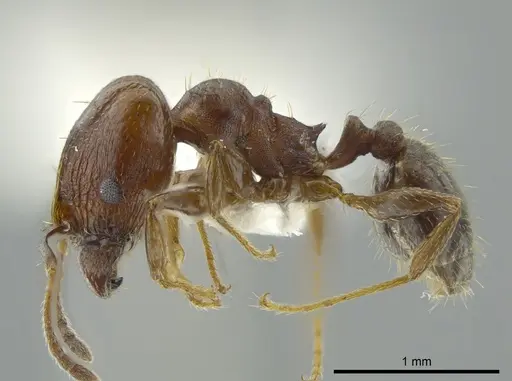
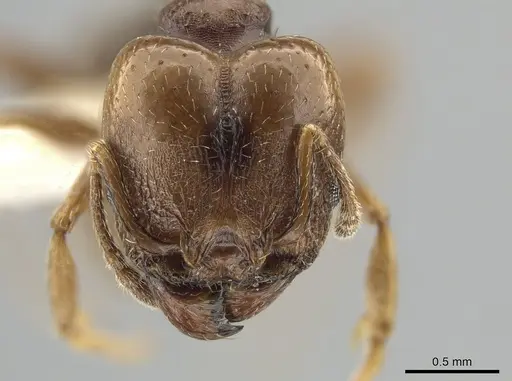
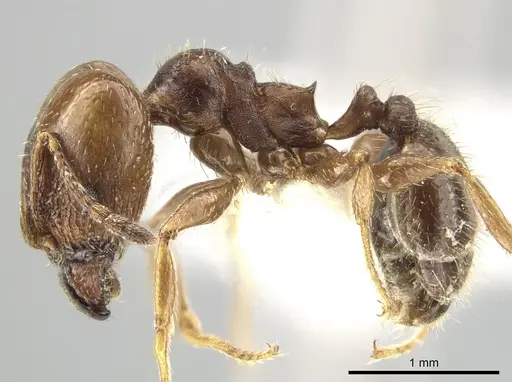
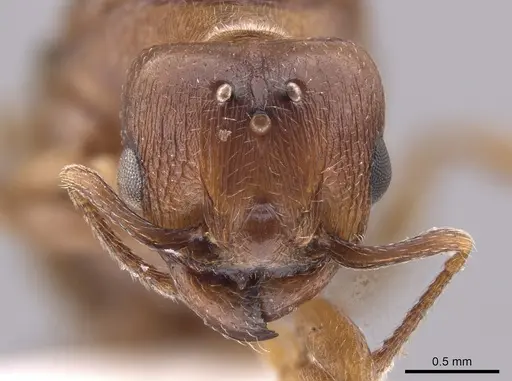
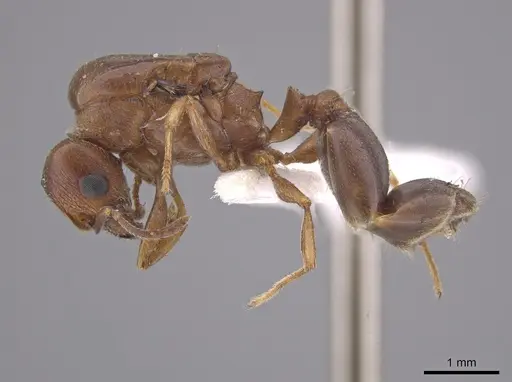
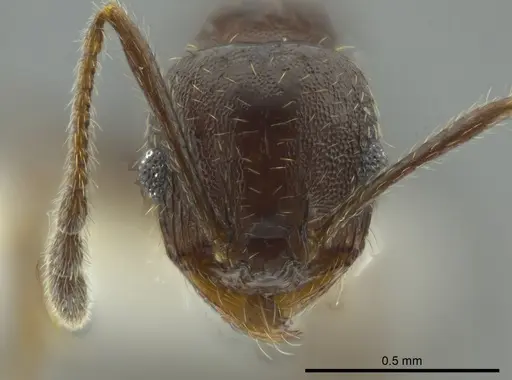
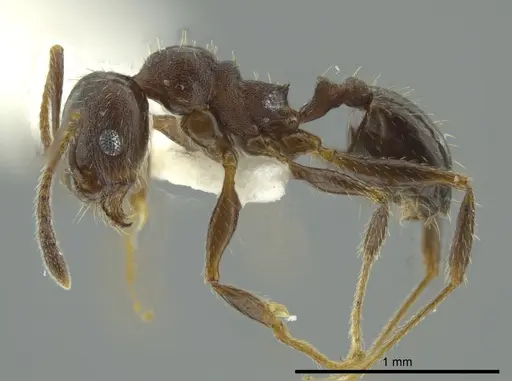
Pheidole coracina is a small ant species native to central Mexico, described by Wilson in 2003 . It belongs to the crassicornis group within the genus Pheidole, with minor workers that are blackish-brown and major workers that have a light reddish-brown body and a dark spot on the head . This species is only known from its type locality in San Luis Potosí, Mexico . The biology of Pheidole coracina is completely undocumented in scientific literature, so keepers must rely on general Pheidole care principles while observing their colony's specific needs .
Quick Summary
- Difficulty: Hard
- Origin & Habitat: Central Mexico, specifically San Luis Potosí, in arid to semi-arid tropical environments [1].
- Colony Type: Unconfirmed, no specific data on queen number or social structure [1].
- Size & Growth:
- Queen: Size data unavailable, no total length measurements provided. Based on Pheidole genus patterns, queens are typically 5-8 mm.
- Worker: Size data unavailable, no total length measurements provided. Minor and major workers exist, but body sizes are not specified.
- Colony: Unknown, no data on maximum colony size for this species.
- Growth: Moderate, inferred from typical Pheidole development patterns.
- Development: Estimated 6-8 weeks at optimal temperature, based on genus-level data for similar Pheidole species. (Development time is inferred from related species, specific data for P. coracina does not exist.)
- Antkeeping:
- Temperature: Keep at 22-26°C, based on general preferences of Mexican ant species [1]. Provide a temperature gradient for self-regulation.
- Humidity: Maintain moderate humidity, allow substrate to dry partially between waterings, reflecting seasonal rainfall patterns in their habitat [1].
- Diapause: Unconfirmed, likely a brief winter slowdown period based on central Mexico's climate, but not directly studied.
- Nesting: Standard test tube setups work for founding colonies. For established colonies, use Y-tong, soil, or naturalistic nests with dry and moist areas [1].
- Behavior: Based on Pheidole genus patterns, workers are active foragers with majors defending the colony. They are not aggressive toward keepers, but escape risk is moderate due to their small size.
- Common Issues: biology is undocumented, observe your colony closely for specific needs., no specific care data exists, start with general Pheidole advice and adjust based on colony health., this species is rare in the hobby due to limited wild distribution.
Housing and Nest Setup
For founding colonies, use a test tube setup with a water reservoir. Once the colony has 20-30 workers, move to Y-tong, soil, or naturalistic nests. Provide dry areas for food storage and moist areas for brood, as this species comes from arid regions [1]. Include an outworld for foraging and use standard barriers to prevent escapes [1].
Feeding and Diet
Offer a varied diet: protein sources like small insects (fruit flies, mealworms) and carbohydrates like honey water or sugar water. Pheidole species may also accept seeds. Feed protein 2-3 times per week and keep sugar water available [1]. Remove uneaten prey after 24-48 hours to prevent mold.
Temperature and Seasonal Care
Maintain temperatures between 22-26°C for optimal development. Avoid prolonged cold or heat. A brief winter slowdown at 15-18°C for 2-3 months may be beneficial, but monitor colony activity.
Colony Development and Growth
Pheidole colonies have dimorphic workers: minors handle foraging and brood care, while majors defend and process food. First workers may appear in 6-8 weeks at optimal temperature. Growth is slow initially and accelerates as majors develop.
Handling and Temperament
These ants are not aggressive but may bite if provoked. Escape risk is moderate, use fluon barriers and tight lids. Observe the division of labor between majors and minors.
Frequently Asked Questions
How long does it take for Pheidole coracina to produce first workers?
Based on typical Pheidole development, expect first workers in about 6-8 weeks at 22-26°C, but this is unconfirmed for this species.
What do I feed Pheidole coracina?
Offer protein like small insects and carbohydrates like honey water. Pheidole species may also eat seeds [1].
Are Pheidole coracina ants dangerous?
No, they are not dangerous. Major workers can deliver mild bites, but they are not aggressive toward keepers.
How big do Pheidole coracina colonies get?
Colony size is unknown for this species. No data on maximum size exists.
Do Pheidole coracina ants need hibernation?
Unconfirmed, a brief winter slowdown may be beneficial based on their climate, but it is not strictly required.
Can I keep multiple Pheidole coracina queens together?
This is unconfirmed. Most Pheidole are single-queen colonies, so housing multiple foundresses is not recommended without specific data.
What size nest do Pheidole coracina need?
For founding, a test tube works well. For established colonies, use standard-sized nests like Y-tong or soil setups [1].
Why is my Pheidole coracina colony growing slowly?
Slow growth is normal during founding. Ensure proper temperature, feeding, and humidity, then be patient.
Do Pheidole coracina major workers serve a special purpose?
Yes, in Pheidole species, majors defend the colony and process large food items.
Where is Pheidole coracina found in the wild?
Only known from San Luis Potosí, Mexico, making it rare in the hobby [1].
Report an Issue
The current care sheet is based fully on literature. See inconsistencies, or something that's incorrect? Please , it will be resolved after review from an admin. Contributing to the blogs tab also helps providing information, to make us be able to further improve the caresheets. Thank you for your support!
References

This caresheet is licensed under CC BY-SA 4.0 .
Community Blogs
CASENT0627917
View on AntWeb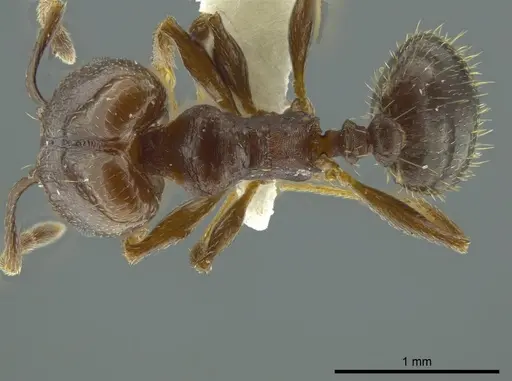
CASENT0643971
View on AntWeb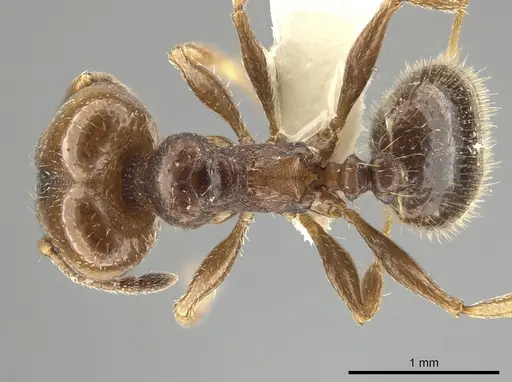
JTLC000010483
View on AntWeb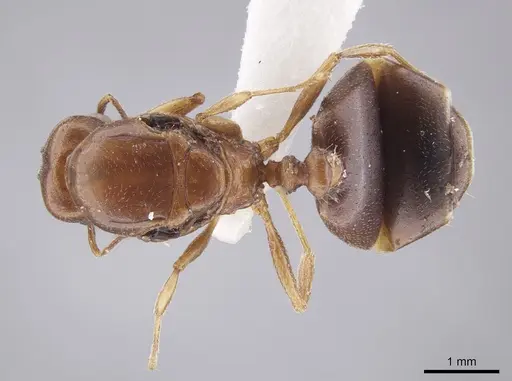
JTLC000016348
View on AntWeb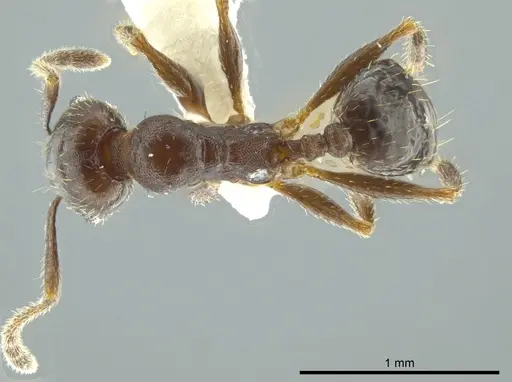
Literature
Loading distribution map...Loading products...