
Pheidole colaensis
- Sci. Name
- Pheidole colaensis
- Tribe
- Attini
- Subfamily
- Myrmicinae
- Author
- Mann, 1921
- Distribution
- Found in 1 countries
Introduction
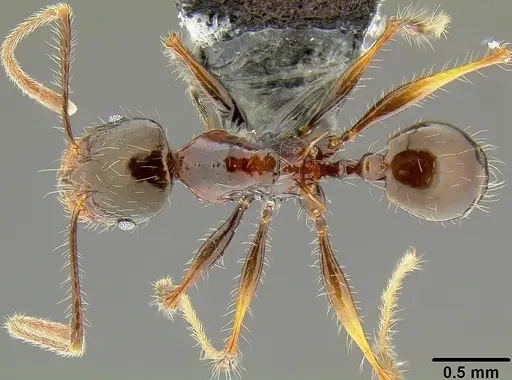
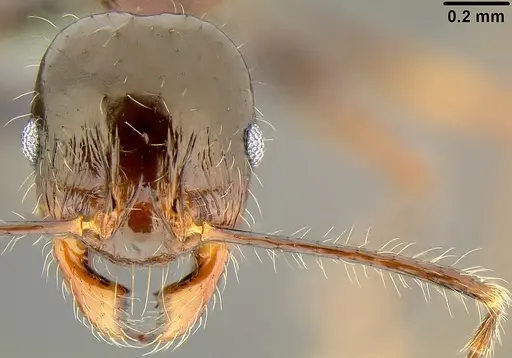
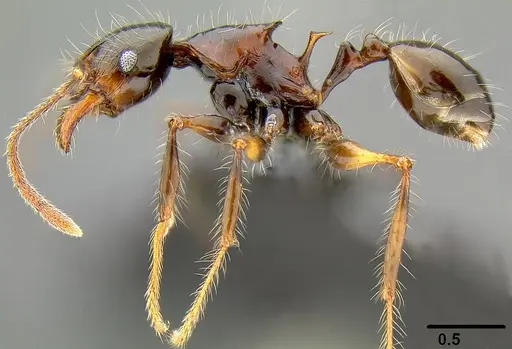
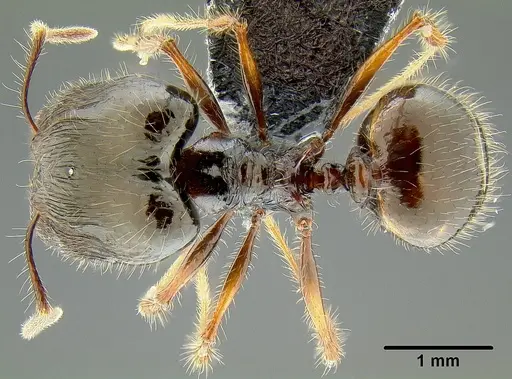
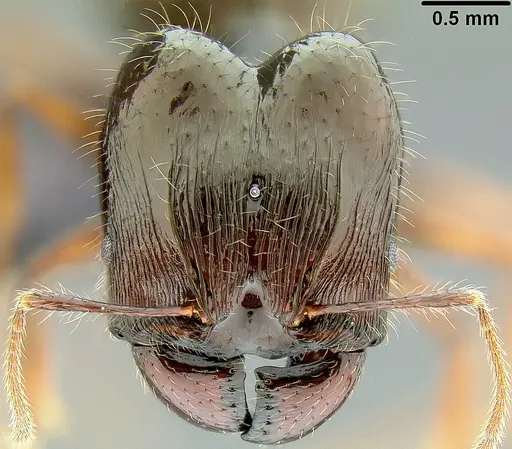
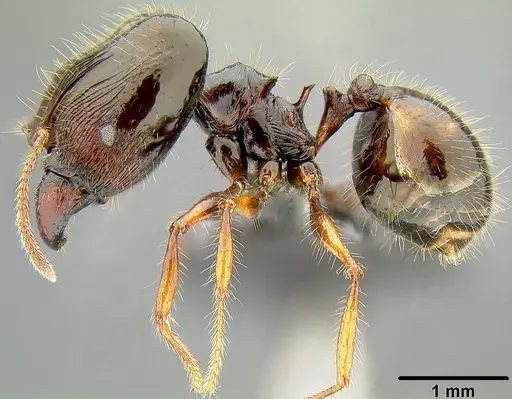
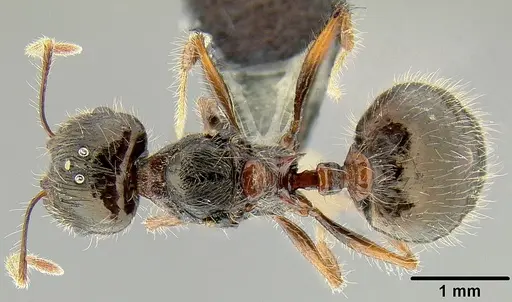
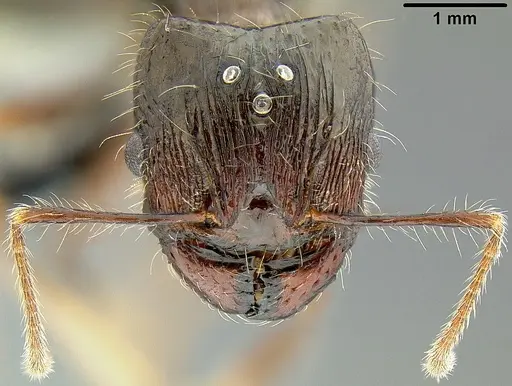
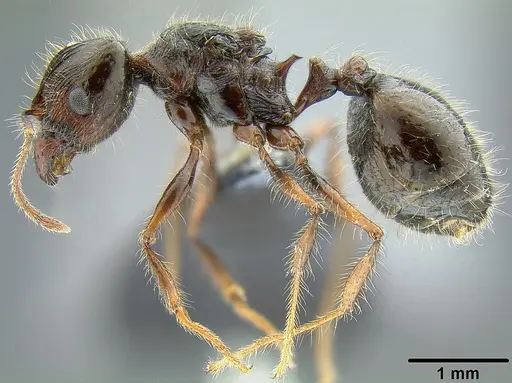
Pheidole colaensis is a small ant species endemic to Fiji, belonging to the roosevelti group. Majors are 5.78-7.06 mm total length with a distinctive shiny appearance and reduced sculpture - they're the only species in their group where the major's posterolateral lobes are completely smooth and free of sculpturing . Minors are much smaller at 3.34-3.90 mm total length and workers are entirely smooth and shining except for weak carinae below the eyes . Queens are notably small at 6.44-6.77 mm total length with reduced mesosomas . This species is restricted to high elevation ranges of Viti Levu (800-1300 m) where it is locally abundant . The most striking feature is their nesting behavior - they build distinctive turret entrances made of soil pellets rising 3-5 cm above ground, leading to chambers over one meter deep that contain hundreds or thousands of workers .
Quick Summary
- Difficulty: Medium
- Origin & Habitat: Endemic to Fiji, specifically Viti Levu island at high elevations (800-1300 m). Found in tropical forest clearings and along roadsides, often in damp areas. The species is locally abundant where it occurs and is restricted to just a few high elevation ranges [2][1].
- Colony Type: Polygynous, multiple dealate (wingless) queens have been recovered from nest excavations, suggesting colonies with multiple reproductive queens [1][2]. This is unusual among Pheidole species which are typically single-queen.
- Size & Growth:
- Queen: 6.44-6.77 mm [1]
- Worker: Minors 3.34-3.90 mm, majors 5.78-7.06 mm [1]
- Colony: Up to thousands of workers [2]
- Growth: Unknown, no specific data available for this species
- Development: Unknown, no specific development data exists for Pheidole colaensis (Development time may vary based on temperature and colony conditions.)
- Antkeeping:
- Temperature: Keep at warm temperatures, roughly 24-28°C, as they are from tropical highlands. Avoid extreme heat above 32°C.
- Humidity: Provide a humidity gradient, keep the nest substrate consistently moist but not waterlogged, as they nest in soil.
- Diapause: No, they are from tropical Fiji with year-round warm temperatures [1][2].
- Nesting: This species nests deep in soil with chambers over one meter deep. In captivity, provide a spacious nest with deep chambers or a naturalistic setup with substantial substrate depth (at least 10-15 cm). A Y-tong or plaster nest works well, or a naturalistic terrarium with soil. They build distinctive turret-like nest entrances in the wild [2][1].
- Behavior: Minors are active foragers that search the leaf litter some distance from their nest [2]. Majors are scarce and timid, they rarely leave the nest and are not aggressive defenders [2]. Workers are not particularly aggressive and the colony is relatively peaceful. Escape risk is moderate, minors at 3-4 mm can squeeze through small gaps but are not as tiny as some Pheidole species. Use standard barrier methods. They are seed collectors and will also forage for small insects.
- Common Issues: deep nesting requirement means they need spacious setups, shallow nests will limit colony growth., polygynous structure means multiple queens may be present, do not remove extra queens unless fighting occurs., high elevation origin means they may not tolerate prolonged heat above 30°C., colonies can reach thousands of workers requiring large enclosures., wild-caught colonies may be difficult to establish due to stress from collection and transport.
Housing and Nest Setup
Pheidole colaensis requires deeper nesting space than many common ant species. In the wild, their nests extend over one meter deep with multiple chambers [2]. For captive colonies, use a Y-tong nest with deep chambers, a plaster nest with substantial depth, or a naturalistic terrarium setup with at least 10-15 cm of soil substrate. They build distinctive turret entrances in the wild (3-5 cm soil pellet towers), so a naturalistic setup allows them to exhibit more natural behaviors. A test tube setup works for founding colonies but be prepared to move them to a larger setup once the colony reaches 20-30 workers. Provide a water tube for humidity and ensure the nest can maintain moisture without flooding.
Feeding and Diet
Minors actively forage in leaf litter in the wild [2], so they likely scavenge for protein sources. Feed a mix of small seeds (millet, sesame, chia) and protein sources like small mealworms, fruit flies, or other tiny insects. Sugar water or honey can be offered occasionally but protein should form the bulk of their diet. Feed every 2-3 days for established colonies, removing uneaten food within 24 hours to prevent mold. A varied diet helps promote healthy colony growth.
Temperature and Humidity
As a high-elevation tropical species from Fiji (800-1300 m), P. colaensis prefers warm but moderate temperatures, aim for 24-28°C. They likely experience cooler temperatures than lowland Fiji ants due to their elevation. Avoid prolonged temperatures above 32°C or below 20°C. For humidity, maintain a gradient, keep the nest substrate consistently damp but not waterlogged. A water tube connected to the nest provides a steady moisture source. Mist the outworld occasionally but avoid creating standing water. Good ventilation helps prevent mold while maintaining humidity. [1][2]
Colony Structure and Social Organization
This is one of the more unusual aspects of P. colaensis, it is polygynous, meaning colonies have multiple queens [1][2]. Multiple dealate queens have been found in nest excavations, suggesting they remain in the colony after mating rather than being expelled. This is relatively rare among Pheidole which are typically single-queen species. When keeping this species, you may encounter multiple queens in your colony. Do not automatically remove extra queens unless they are fighting, in polygynous species, multiple queens can coexist peacefully. Colonies can grow very large, reaching up to thousands of workers [2], so be prepared for substantial growth and eventual need for larger housing.
Behavior and Temperament
P. colaensis has a distinctive temperament, minor workers are active foragers that search the leaf litter some distance from their nest, while major workers are scarce and timid, rarely leaving the nest [2]. Unlike some Pheidole species with aggressive majors, these ants are relatively peaceful. Majors serve more as reserves and are not aggressive defenders. Workers are not particularly defensive and rarely bite. The colony is best described as docile. Activity levels are moderate, you will see regular foraging activity from minors but not the frantic pace of some tropical species. They are primarily diurnal foragers.
Seasonal Care
Being from tropical Fiji with year-round warm temperatures, P. colaensis does not require hibernation or a diapause period. Maintain consistent temperatures year-round. The high elevation habitat (800-1300 m) may experience slightly cooler conditions than lowland Fiji, but temperatures remain warm throughout the year. No special winter preparations are needed, just maintain normal care routines. However, avoid placing the colony near air conditioning vents or cold drafts in winter. [1][2]
Frequently Asked Questions
How long does it take for Pheidole colaensis to produce first workers?
No specific development data exists for this species. Based on typical Pheidole patterns, first workers may emerge in 6-8 weeks at warm temperatures, but this is an estimate and may vary.
Can I keep multiple Pheidole colaensis queens together?
Yes, this species appears to be naturally polygynous, meaning multiple queens can coexist in a single colony. Multiple dealate queens have been found in wild nests. Do not remove extra queens unless they are actively fighting.
What do Pheidole colaensis eat?
They are opportunistic foragers. Feed small seeds (millet, sesame) and protein sources like small insects (mealworms, fruit flies). Remove uneaten food within 24 hours. Sugar water can be offered occasionally but protein is more important for colony growth.
Are Pheidole colaensis good for beginners?
They are moderate difficulty. The main challenges are their deep nesting requirement and the need for a spacious setup as colonies grow very large. They are peaceful and do not require special temperature control beyond typical room temperature. However, their specific high-elevation habitat needs mean they may not tolerate extreme heat.
When should I move Pheidole colaensis to a formicarium?
Move from test tube to a larger nest once the colony reaches 20-30 workers or shows signs of crowding. Given their deep-nesting nature in the wild, provide a spacious setup early if possible. A Y-tong or plaster nest with deep chambers works well.
How big do Pheidole colaensis colonies get?
Colonies can reach up to thousands of workers [2]. Wild colonies contain chambers over one meter deep with large worker populations. Be prepared for substantial colony growth and ensure you can provide adequate housing as the colony expands.
Do Pheidole colaensis need hibernation?
No, being from tropical Fiji with year-round warm temperatures, they do not require hibernation or winter dormancy. Maintain consistent temperatures throughout the year.
Why are my Pheidole colaensis majors hiding?
This is normal behavior, in this species, major workers are scarce and timid, rarely leaving the nest [2]. They serve as reserves within the colony rather than active foragers. Don't be concerned if you rarely see majors outside the nest.
What temperature range is best for Pheidole colaensis?
Keep them at warm temperatures, roughly 24-28°C. As a high-elevation tropical species, they prefer warmth but not extreme heat. Avoid temperatures above 32°C or below 20°C for extended periods.
Report an Issue
The current care sheet is based fully on literature. See inconsistencies, or something that's incorrect? Please , it will be resolved after review from an admin. Contributing to the blogs tab also helps providing information, to make us be able to further improve the caresheets. Thank you for your support!
References

This caresheet is licensed under CC BY-SA 4.0 .
Community Blogs
Literature
Loading distribution map...Loading products...