
Pheidole carinata
- Sci. Name
- Pheidole carinata
- Tribe
- Attini
- Subfamily
- Myrmicinae
- Author
- Wilson, 2003
- Distribution
- Found in 2 countries
Introduction
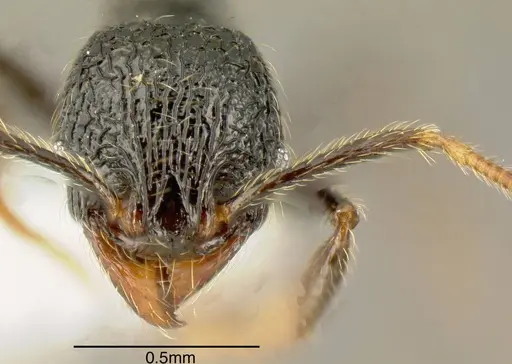
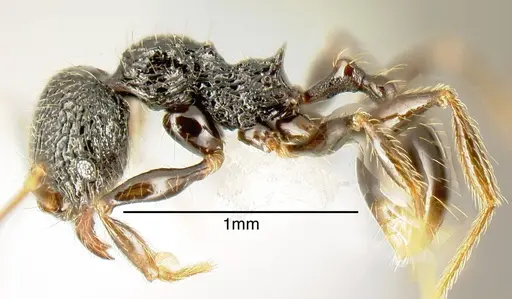
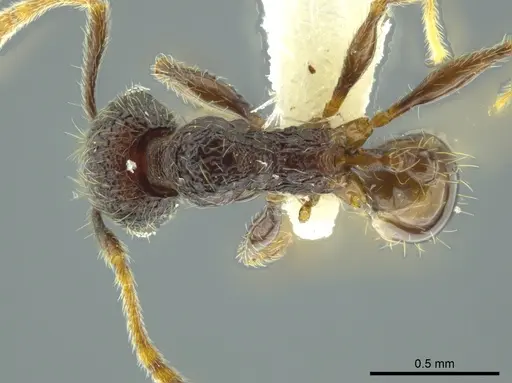
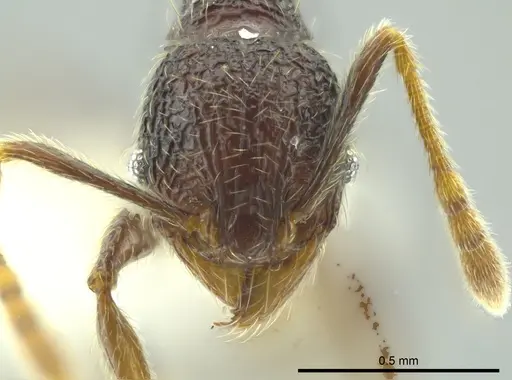
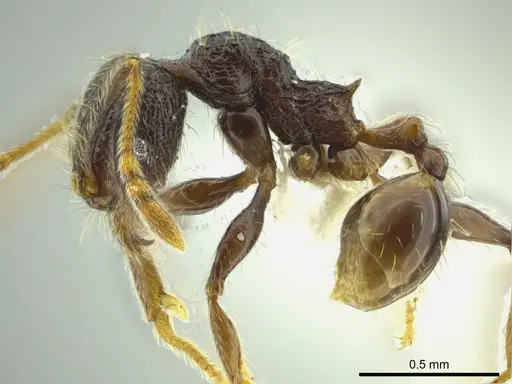
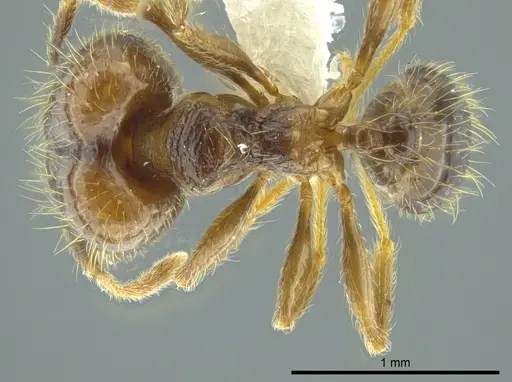
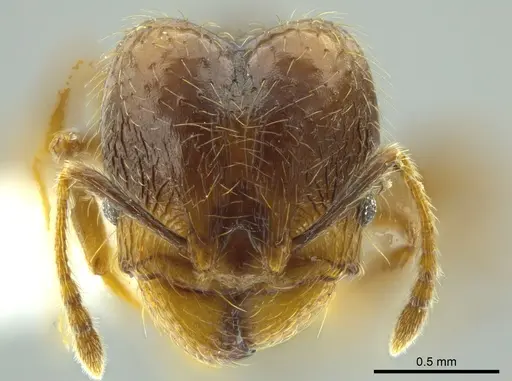
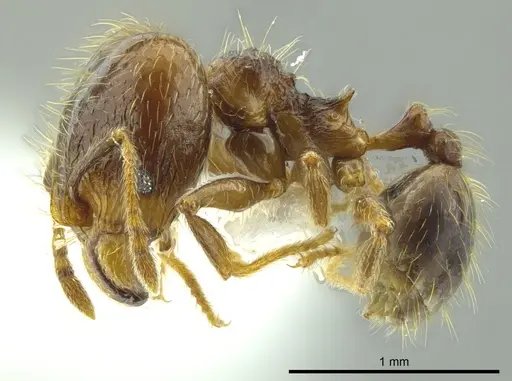
Pheidole carinata is a Neotropical ant from the flavens group, native to cloud forests in Costa Rica and recently documented in French Guiana. Majors have a square head shape and rugoreticulate mesosoma, while minors show rugoreticulation on the posterior head and mesonotum. The species is brown in color, with majors often having a bicolorous head. It inhabits leaf litter in cool, damp cloud forests at elevations around 1560m . This ant was first described from Costa Rica and later found in French Guiana, showing a disjunct distribution .
Quick Summary
- Difficulty: Medium
- Origin & Habitat: Cloud forests of Costa Rica (Monteverde, Puntarenas) at 1560m elevation, with populations in French Guiana. They live in leaf litter on the forest floor, preferring cool, damp, shaded microhabitats [1][2][3].
- Colony Type: Colony structure is unconfirmed. Based on Pheidole genus patterns, likely monogyne (single queen), but no specific data exists for this species [1].
- Size & Growth:
- Queen: Undescribed, estimated 5-7mm based on Pheidole genus patterns [1]
- Worker: Size data unavailable, inferred from Pheidole genus (~2-3 mm) [1]
- Colony: Up to 500 workers
- Growth: Moderate
- Development: Estimated 6-8 weeks at optimal temperature (Development time is inferred from genus patterns, direct measurements are not available for this species.)
- Antkeeping:
- Temperature: Keep at 20-24°C. As a cloud forest species from 1560m elevation, they prefer cooler conditions. Avoid temperatures above 26°C [1].
- Humidity: Keep the nest substrate consistently moist but not waterlogged. This species naturally inhabits damp leaf litter, so provide humid conditions with some drier areas [1][3].
- Diapause: Unknown, cloud forest species may slow down during cooler periods but true hibernation is unlikely.
- Nesting: Leaf-litter specialists. In captivity, use moist substrate (soil/peat mix) or test tube setups with access to a humid forager area. Y-tong nests with tight chambers work well [1].
- Behavior: Pheidole carinata is generally peaceful and non-aggressive. They possess a sting but are not medically significant to humans. Major workers defend the colony and help process food. Minors are tiny, so escape risk is high, use fine barriers. They are active foragers seeking seeds and small insects [1].
- Common Issues: high humidity maintenance is critical, drying out kills colonies quickly, sensitive to overheating due to cloud forest origin, keep away from direct heat sources, wild-caught colonies may contain parasites that can decimate the colony
Natural History and Distribution
Pheidole carinata is endemic to Central America, originally described from Costa Rica's Monteverde cloud forest at 1560m elevation. Recent surveys have documented the species in French Guiana, representing a range extension. This ant lives exclusively in leaf litter on the forest floor, foraging among decaying leaves and understory vegetation. The cloud forest environment provides consistently cool temperatures and high humidity year-round. The species is part of the flavens group, characterized by distinctive sculpturing patterns and well-developed major workers [1][2][3].
Housing and Nest Setup
This species does well in naturalistic setups that mimic leaf-litter habitat. Use a moist substrate mixture (soil, peat, and rotting leaves) in a shallow container or formicarium. Test tube setups work for founding colonies, provide a water reservoir and keep the tube in a humid environment. For established colonies, a Y-tong nest with tight chambers or a plaster nest with good moisture retention works well. Always provide a humid outworld for foraging. Because minors are tiny, ensure escape prevention is adequate with fine barriers [1].
Feeding and Diet
Pheidole carinata is omnivorous with a preference for protein. They readily accept small insects (fruit flies, pinhead crickets, mealworms), seeds, and sugar sources like honey or sugar water. In the wild, they forage for dead insects and seeds in leaf litter. Feed small protein items 2-3 times per week and provide a constant sugar water source. Remove uneaten food promptly to prevent mold [1].
Temperature and Seasonal Care
As a cloud forest species from 1560m elevation, Pheidole carinata prefers cooler temperatures. Keep the nest area at 20-24°C, avoiding anything above 26°C. Room temperature is often ideal. If additional heat is needed, use a low-output heating cable on one side of the nest only. They do not require true hibernation but may show reduced activity during cooler periods. High humidity is essential, so balance ventilation to prevent mold and drying [1][3].
Colony Dynamics and Castes
Pheidole carinata exhibits the typical Pheidole caste system with distinct major and minor workers. Major workers have the square head shape and rugoreticulate mesosoma, while minors are smaller with distinctive sculpturing. The caste ratio in established colonies heavily favors minors. Majors function in defense and food processing, while minors handle foraging and brood care. Colony growth is moderate, expect several months from founding to first workers, then gradual expansion over time [1].
Frequently Asked Questions
How long does it take for Pheidole carinata to produce first workers?
Expect 6-8 weeks from egg to first worker at optimal temperature (around 22°C). This is an estimate based on related small Pheidole species, as specific development data for this species is not available [1].
What temperature is best for Pheidole carinata?
Keep them at 20-24°C. This cloud forest species from 1560m elevation prefers cooler conditions than typical tropical ants. Avoid temperatures above 26°C, which can stress or kill the colony [1].
What do I feed Pheidole carinata?
They are omnivorous. Offer small insects (fruit flies, pinhead crickets, small mealworms) 2-3 times per week as protein, and provide a constant source of sugar water or honey. They also accept seeds. Remove uneaten food promptly to prevent mold [1].
Is Pheidole carinata good for beginners?
This species is rated as Medium difficulty. While not the easiest, experienced beginners can succeed with them. The main challenges are maintaining high humidity and keeping temperatures cool. Their moderate growth rate and peaceful temperament make them manageable once basic conditions are met [1].
How big do Pheidole carinata colonies get?
Based on typical leaf-litter Pheidole patterns, colonies likely reach up to several hundred workers over time. The exact maximum is unknown as this species is rarely kept in captivity. Colonies will have both major and minor workers [1].
Do I need to hibernate Pheidole carinata?
True hibernation is not required. As a cloud forest species, they may slow down during cooler periods but do not enter full diapause. Simply maintain stable temperatures in the 20-24°C range year-round.
What humidity level does Pheidole carinata need?
High humidity is essential, keep the nest substrate consistently moist but not waterlogged. This species naturally inhabits damp leaf litter, so drying out is a serious risk. Use a humid outworld and consider covering part of the nest to retain moisture [1][3].
Can I keep multiple queens together?
Not recommended without specific data. Most Pheidole are monogyne (single queen), and combining unrelated queens typically leads to fighting. If you obtain a queen, house her alone until workers emerge [1].
When should I move Pheidole carinata to a formicarium?
Keep founding colonies in test tubes or small setups until they have 20-30 workers. Once the colony outgrows the tube or shows interest in additional space, transfer to a naturalistic setup or formicarium with moist substrate [1].
Report an Issue
The current care sheet is based fully on literature. See inconsistencies, or something that's incorrect? Please , it will be resolved after review from an admin. Contributing to the blogs tab also helps providing information, to make us be able to further improve the caresheets. Thank you for your support!
References

This caresheet is licensed under CC BY-SA 4.0 .
Community Blogs
Literature
Loading distribution map...Loading products...