
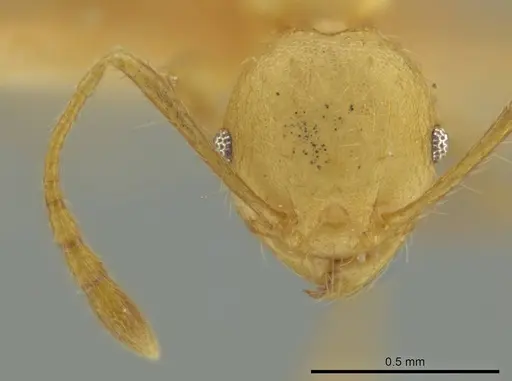
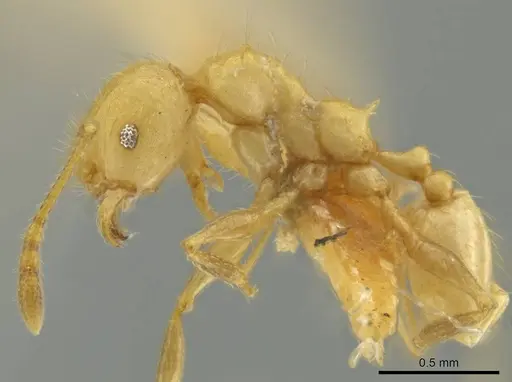
Pheidole caltrop
- Sci. Name
- Pheidole caltrop
- Tribe
- Attini
- Subfamily
- Myrmicinae
- Author
- Wilson, 2003
- Distribution
- Found in 4 countries
Introduction
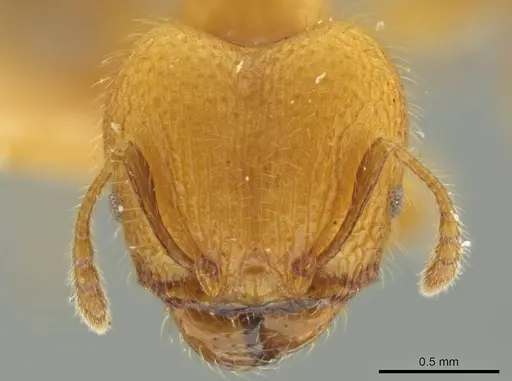
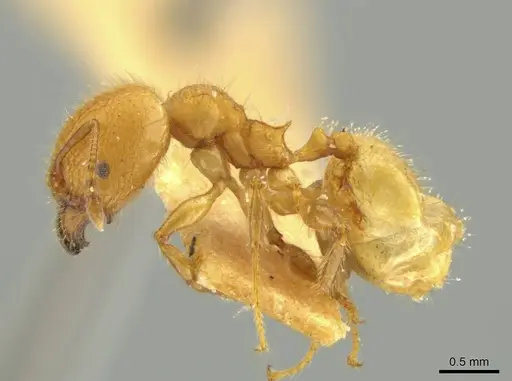
Pheidole caltrop is a member of the big-headed ant genus Pheidole. The genus contains over 1,000 species found across tropical and subtropical regions worldwide. Workers show strong size dimorphism, with small minors handling daily tasks and larger majors serving as soldiers or seed processors. Specific details about this species exact range and habitat remain unstudied. Based on typical Pheidole patterns, colonies likely nest in soil or rotting wood in forest or grassland environments . The most notable feature is the dramatic size difference between minor and major workers. Majors develop from specialized larvae and possess enlarged heads with powerful mandibles. This caste system allows the colony to process hard seeds and defend against predators effectively. Colony structure and founding behavior are unconfirmed for this specific species .
Quick Summary
- Difficulty: Medium
- Origin & Habitat: Distribution and habitat details are unknown. Based on genus patterns, Pheidole species typically inhabit tropical and subtropical regions, nesting in soil, under stones, or in decaying wood [2].
- Colony Type: Single-queen colonies are typical for the genus, though multiple-queen structures occasionally occur. Colony structure for this specific species remains unconfirmed [1].
- Size & Growth:
- Queen: ~6-9mm, inferred from Pheidole genus patterns
- Worker: ~2-5mm, inferred from Pheidole genus patterns
- Colony: Up to several thousand workers, inferred from typical Pheidole colony sizes
- Growth: Moderate
- Development: Estimated 6-8 weeks based on related Pheidole species (Development speed depends on stable warmth. Cooler temperatures will slow growth.)
- Antkeeping:
- Temperature: Keep warm and stable, roughly low-to-mid 20s°C. Pheidole species thrive in consistent warmth. Use a heating cable on one side of the nest if room temperatures drop below this range [2].
- Humidity: Keep the nest substrate consistently moist but not waterlogged. Provide a humidity gradient so workers can choose their preferred moisture level [2].
- Diapause: Unknown. If the species originates from a tropical region, it likely does not require winter diapause. Temperate species typically need 3-4 months of cooler temperatures around 10-15°C from November to February [2].
- Nesting: Use Y-tong (AAC), plaster, or 3D-printed nests with medium-sized chambers. Ensure passages are wide enough for major workers to pass through without getting stuck [2].
- Behavior: Workers are generally active foragers. Minors handle brood care and general tasks, while majors defend the colony and process hard food. Escape risk is high due to minor workers being under 4mm. Always apply a slip-proof barrier like Fluon to nest entrances and test tube rims. The colony possesses a functional sting typical of Myrmicinae ants, though it is not medically significant to humans.
- Common Issues: colonies stall if kept too cold or in fluctuating temperatures, major workers get stuck in narrow nest connections or tubing, sick workers leaving the nest to die is normal colony hygiene, mold develops quickly if you overfeed or keep the nest too wet, wild-caught colonies often carry parasites that can wipe out the colony
Nest Setup
Set up a Y-tong (AAC), plaster, or 3D-printed nest with medium-sized chambers. Pheidole workers prefer compact spaces that feel secure. Avoid large open areas that stress the colony. Make sure all passages and tubes are wide enough for major workers to pass through. Their enlarged heads can easily get stuck in narrow connections. Provide a small outworld for foraging and waste disposal. Keep the nest away from direct sunlight and drafts [2].
Feeding and Diet
Feed small protein sources like fruit flies, pinhead crickets, or soft insects two to three times per week. Major workers can handle larger prey and hard seeds that minors cannot process. Provide a constant sugar source such as sugar water or diluted honey. Remove uneaten protein within 24 to 48 hours to prevent mold. Pheidole species are opportunistic feeders and will accept a variety of carbohydrate and protein sources as the colony grows [2].
Temperature and Humidity
Maintain a stable temperature in the low-to-mid 20s°C. Pheidole colonies develop fastest in consistent warmth. Place a heating cable on one side of the nest to create a gentle gradient. Watch worker activity to adjust heat as needed. Keep the nest substrate consistently moist but not waterlogged. Provide a humidity gradient so workers can move to drier or moister areas based on their needs. Avoid spraying water directly into the nest chambers [2].
Escape Prevention and Handling
Escape risk is high because minor workers measure under 4mm. Always apply a slip-proof barrier like Fluon or talc to all nest entrances, test tube rims, and outworld edges. Check barriers daily and reapply as needed. Handle the colony gently and avoid sudden movements or loud noises. Pheidole workers will bite and sting if the nest is disturbed, though the sting is not medically significant to humans. Keep the setup in a quiet, low-traffic area [2].
Frequently Asked Questions
How long does it take for Pheidole caltrop to raise first workers?
Expect first workers in approximately 6 to 8 weeks under optimal warmth. Development speed depends on stable temperatures. Cooler conditions will slow growth. This timeline is estimated based on related Pheidole species [2].
What do Pheidole caltrop ants eat?
They eat small insects and sugar sources. Offer fruit flies, pinhead crickets, or soft protein two to three times per week. Provide constant access to sugar water or diluted honey. Major workers can process hard seeds and larger prey items. Remove uneaten food within 24 to 48 hours to prevent mold [2].
Can I keep multiple Pheidole caltrop queens together?
Not recommended unless you have specific evidence this species accepts multiple queens. Most Pheidole species form single-queen colonies. Combining unrelated queens usually results in fatal fighting. Only attempt multi-queen setups if you know the species accepts it [2].
What temperature do Pheidole caltrop ants need?
Keep them warm and stable, roughly low-to-mid 20s°C. Pheidole species thrive in consistent warmth. Use a heating cable on one side of the nest if room temperatures drop below this range. Avoid placing the nest in direct sunlight or near drafts [2].
Are Pheidole caltrop good for beginners?
They are moderate difficulty. The main challenges are providing consistent warmth and preventing escapes. Minor workers are under 4mm and can slip through tiny gaps. Always use slip-proof barriers and check them daily. If you have kept other Pheidole or similar ants successfully, this species should be manageable [2].
When should I move Pheidole caltrop to a larger nest?
You can keep them in a test tube setup through the founding stage and early colony growth. Move to a larger nest once the colony reaches 50 to 100 workers and the test tube shows signs of crowding or waste buildup. Larger colonies need more chamber space and wider passages for major workers [2].
How big do Pheidole caltrop colonies get?
Based on typical Pheidole patterns, colonies can reach up to several thousand workers. Major workers typically appear once the colony grows beyond a few hundred workers. Exact colony sizes for this specific species remain unstudied [1].
Do Pheidole caltrop need hibernation?
This depends on the species origin. If from a tropical region, they likely do not require winter diapause. Temperate species typically need 3 to 4 months of cooler temperatures around 10 to 15°C from November to February. The exact diapause needs for this species are unknown [2].
Why are my Pheidole caltrop dying?
Common causes include temperatures that are too cold or fluctuating, overly wet or dry nest conditions, mold from overfeeding, disturbance during the founding stage, or parasites from wild-caught colonies. Review your temperature, humidity, and feeding practices to identify the issue [2].
Report an Issue
The current care sheet is based fully on literature. See inconsistencies, or something that's incorrect? Please , it will be resolved after review from an admin. Contributing to the blogs tab also helps providing information, to make us be able to further improve the caresheets. Thank you for your support!
References

This caresheet is licensed under CC BY-SA 4.0 .
Community Blogs
JTLC000016334
View on AntWeb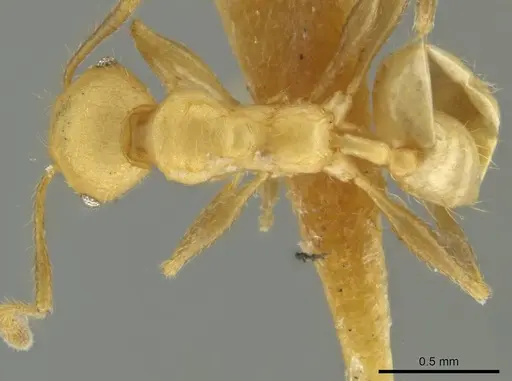
JTLC000016335
View on AntWeb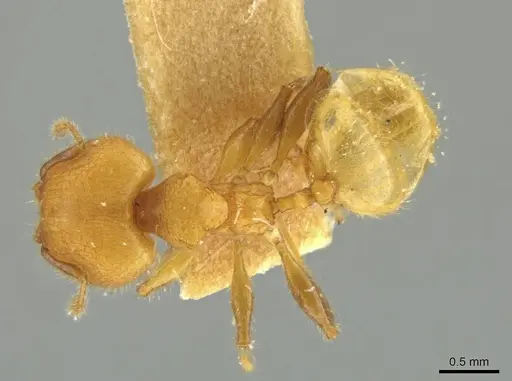
Literature
Loading distribution map...Loading products...