
Pheidole bigote
- Sci. Name
- Pheidole bigote
- Tribe
- Attini
- Subfamily
- Myrmicinae
- Author
- Longino, 2009
- Distribution
- Found in 3 countries
Introduction
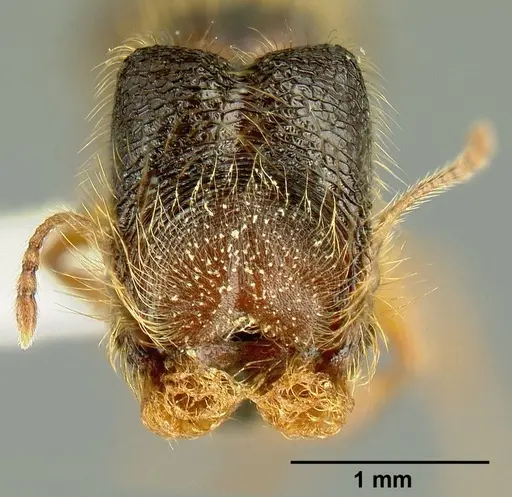
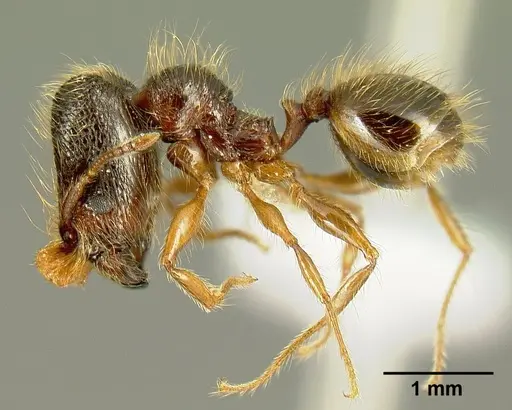
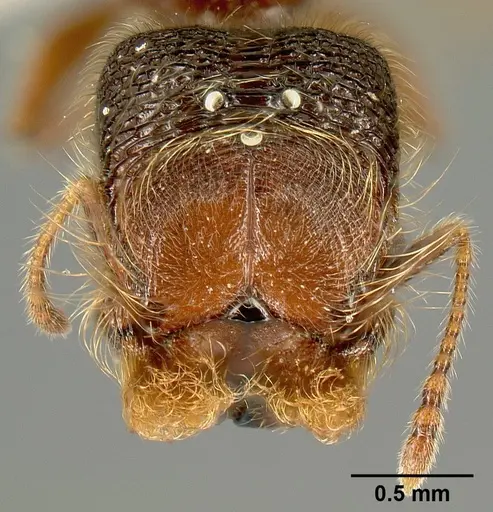
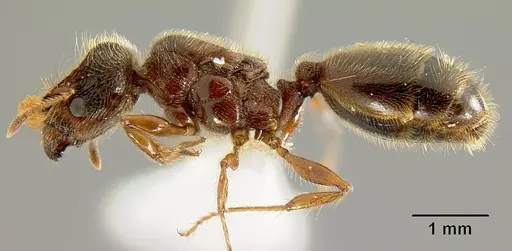
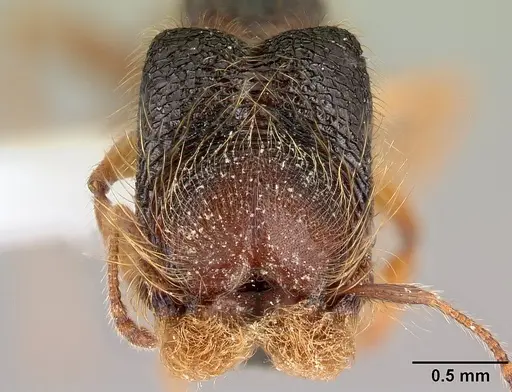
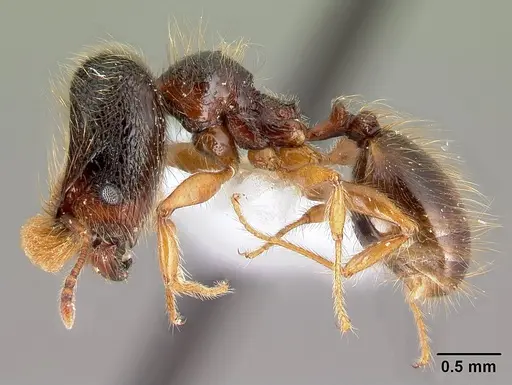
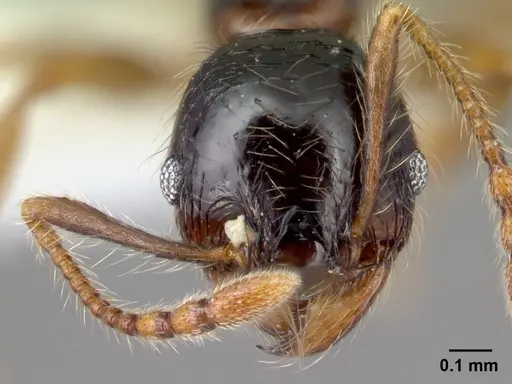
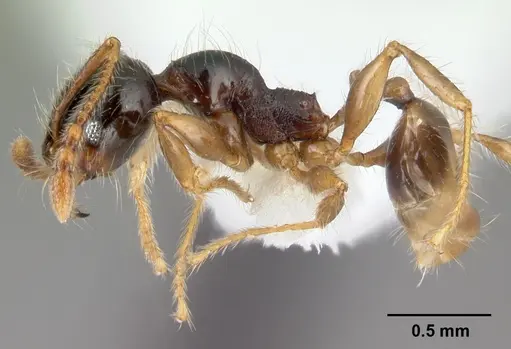
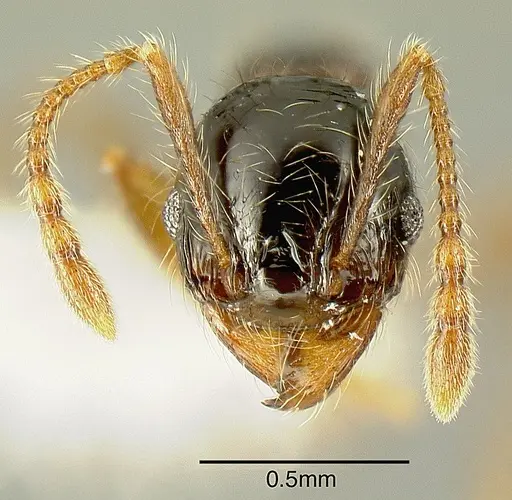
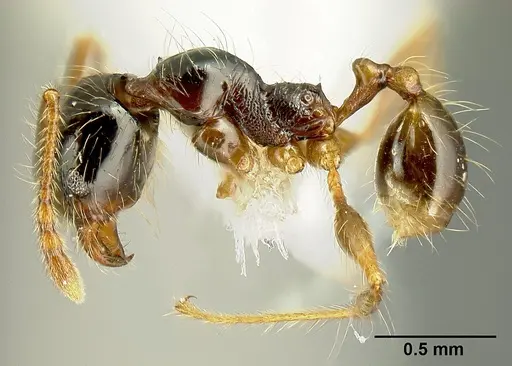
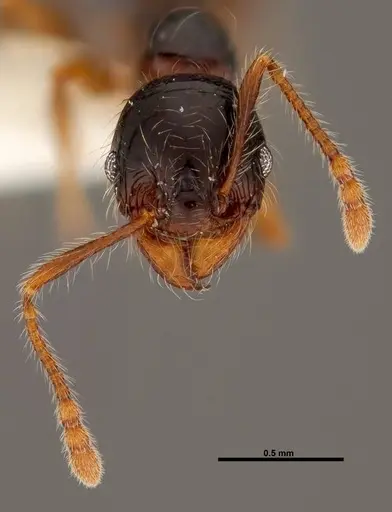
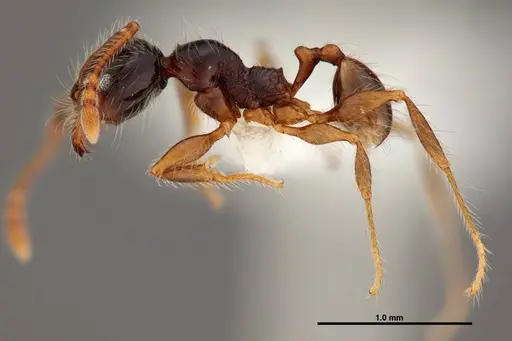
Pheidole bigote is a small dimorphic ant native to the lowland rainforests of Chiapas, Mexico and Guatemala . The species name comes from the Spanish word 'bigote' (mustache) due to the pompon-like tufts of yellow setae on the clypeus of major workers . Body size data is unavailable, but minor workers are notably smaller than majors . What makes this species unusual is the extreme specialization of its major workers, with unique facial structures not seen in other Pheidole .
Quick Summary
- Difficulty: Unknown, too little data to assess
- Origin & Habitat: Lowland rainforest in Chiapas, Mexico and Izabal, Guatemala. Nests in clay banks at the edge of small streams in wet forest areas [1][2].
- Colony Type: Single-queen colonies (monogyne). Only one colony has been documented, with a single queen found in the lowest chamber [1].
- Size & Growth:
- Queen: size data unavailable
- Worker: size data unavailable
- Colony: Unknown, only a single colony has ever been documented [1].
- Growth: Unknown
- Development: Unknown, no direct data exists. (Based on typical Pheidole patterns in tropical conditions, development may take 4-8 weeks at warm temperatures, but this is an estimate.)
- Antkeeping:
- Temperature: Keep warm, roughly 24-28°C, based on natural habitat in lowland rainforest [1].
- Humidity: Keep substrate consistently moist but not waterlogged, as the natural nest is near water and prone to flooding [1].
- Diapause: Unknown, likely no true diapause given tropical origin.
- Nesting: Prefer compact, moisture-retaining substrates like clay or plaster, with horizontal chambers connected by narrow tunnels, as in natural nests [1].
- Behavior: Behavior is largely unknown, but as a dimorphic Pheidole, minor workers may forage while majors stay in the nest. Escape risk is moderate due to small worker size, use standard barriers [1].
- Common Issues: escape prevention is important, minor workers are tiny and can slip through small gaps, no captive breeding data exists, this species may be difficult to establish from wild-caught queens, high humidity requirements may promote mold growth if ventilation is poor, the nest location near water suggests they need very moist conditions, too-dry conditions could kill the colony, almost no information exists about their diet, offering a variety of protein and sugar sources is recommended
Nest Preferences and Housing
In the wild, Pheidole bigote nests in clay banks at the edge of small streams. The clay is stiff and plastic, like modeling clay, allowing chambers to be carved out. The nest has small entrance holes leading to horizontal chambers at descending levels, with the deepest chamber 12cm below the surface [1]. For captive care, use a naturalistic setup with moist, compact substrate like clay or plaster, and design horizontal chambers connected by narrow tunnels to mimic their natural architecture.
Feeding and Diet
The diet is essentially unknown, no observations of feeding behavior exist. The nest excavation found no seeds, suggesting this species does not store seeds despite being in the seed-harvesting tribe Attini [1]. For captive care, offer varied protein sources like small insects and sugar sources like honey water, similar to other small Pheidole species.
Temperature and Care
No specific temperature data exists, but the species originates from warm, humid lowland rainforest. Aim for temperatures around 24-28°C with a gentle gradient [1]. Humidity should be high, keep the nest substrate consistently moist but not saturated, as the natural nest is prone to flooding.
Colony Structure and Behavior
Pheidole bigote is dimorphic, with minor and major workers. Major workers have unique pompon-like tufts and a facial excavation, but their function is unknown [1][4]. Only one colony has been documented, confirming monogyne structure with a single queen. Workers were observed clustering with brood and foraging at bait during day and night [1].
Frequently Asked Questions
How do I keep Pheidole bigote ants?
This species has no established care protocols. Based on its natural habitat, provide high humidity, warm temperatures (24-28°C), and a nest with moist, compact substrate. Start with a small colony or queen if available [1].
What do Pheidole bigote ants eat?
Their diet is unconfirmed. The only documented nest had no seeds, so they are not seed-harvesters. Offer small protein sources and sugar water, and observe what they accept [1].
How long does it take for Pheidole bigote to develop from egg to worker?
No development data exists. Based on typical Pheidole patterns, it may take 4-8 weeks at warm temperatures, but this is an estimate.
Are Pheidole bigote good for beginners?
No, this species is not recommended for beginners due to lack of captive data and specialized habitat needs [1].
How big do Pheidole bigote colonies get?
Unknown, only a single colony has been documented. Colony size was not reported [1].
Do Pheidole bigote need hibernation?
Unlikely, they originate from tropical lowland rainforest where temperatures remain warm year-round, so true diapause is probably not required [1].
What makes Pheidole bigote major workers special?
Major workers have unique pompon-like tufts of yellow setae on the clypeus and a deep facial excavation, features not seen in other Pheidole species [1][4].
Can I keep multiple Pheidole bigote queens together?
Unknown, only one colony with a single queen has been documented. Without more data, do not attempt combining unrelated queens [1].
When was Pheidole bigote discovered?
This species was described in 2009 by John Longino based on a nest excavation in Chiapas, Mexico [1][4].
Report an Issue
The current care sheet is based fully on literature. See inconsistencies, or something that's incorrect? Please , it will be resolved after review from an admin. Contributing to the blogs tab also helps providing information, to make us be able to further improve the caresheets. Thank you for your support!
References

This caresheet is licensed under CC BY-SA 4.0 .
Community Blogs
CASENT0603300
View on AntWeb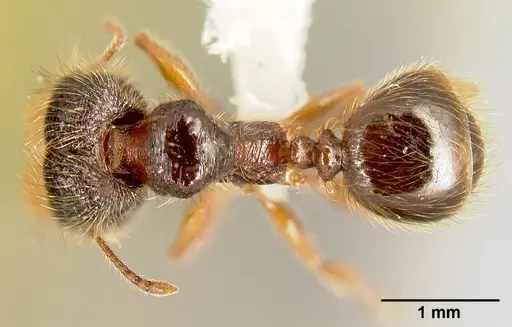
CASENT0603302
View on AntWeb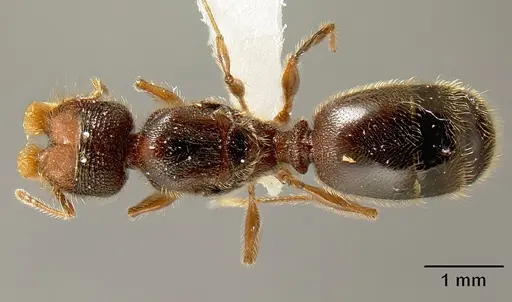
CASENT0608810
View on AntWeb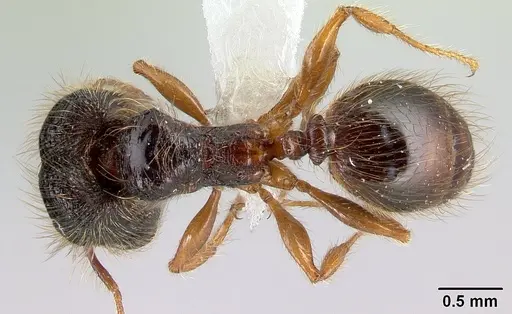
CASENT0608824
View on AntWeb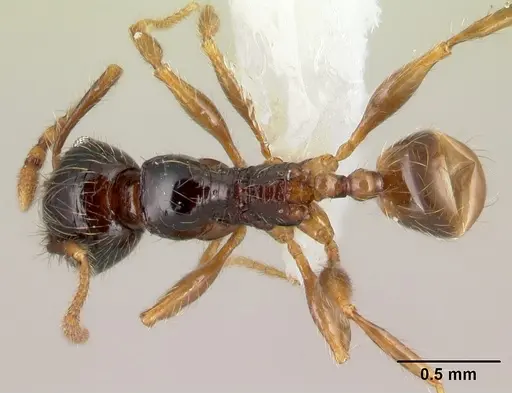
JTLC000014969
View on AntWeb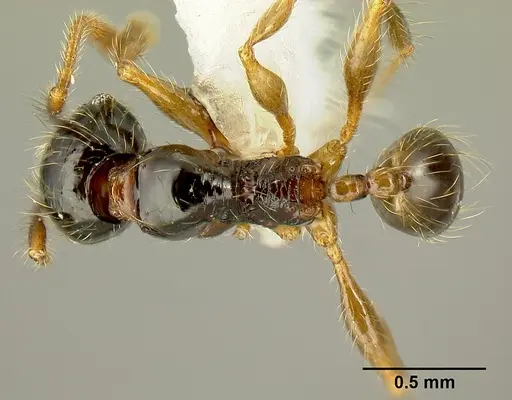
JTLC000014973
View on AntWeb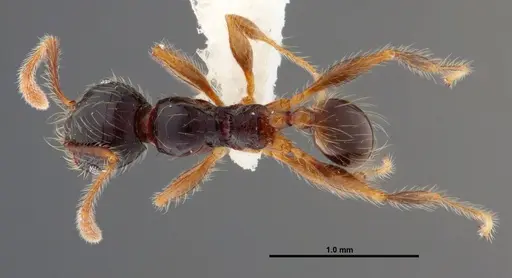
Literature
Loading distribution map...Loading products...