
Pheidole barumtaun
- Sci. Name
- Pheidole barumtaun
- Tribe
- Attini
- Subfamily
- Myrmicinae
- Author
- Donisthorpe, 1938
- Distribution
- Found in 1 countries
Introduction
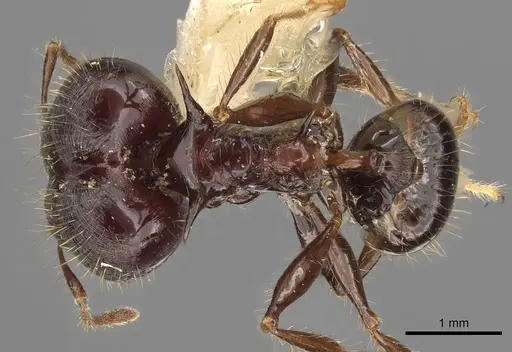
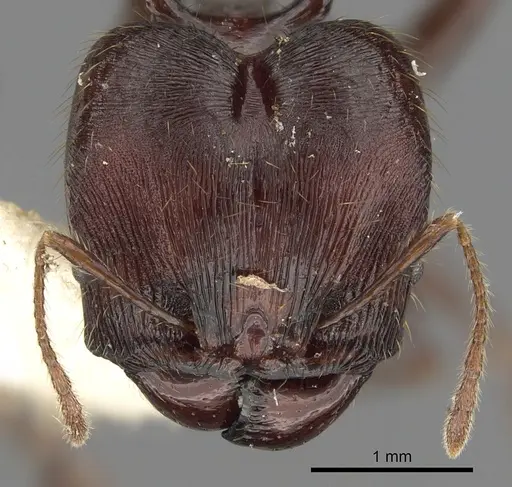
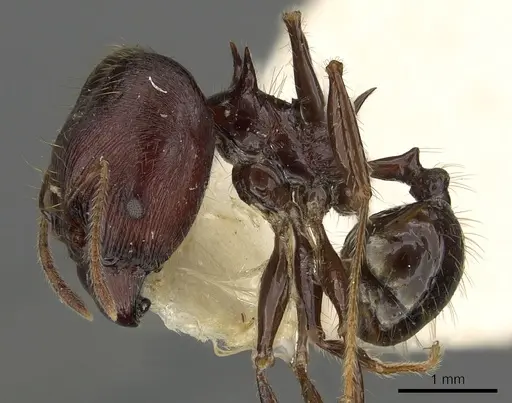
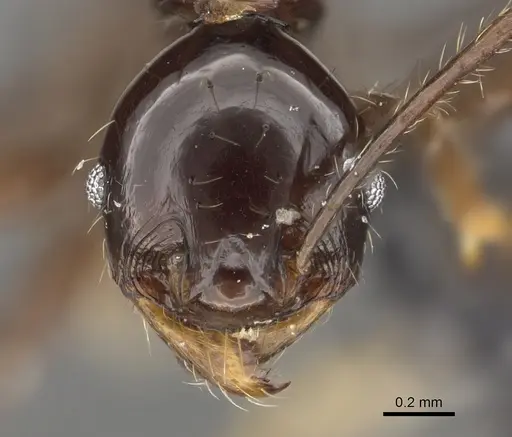
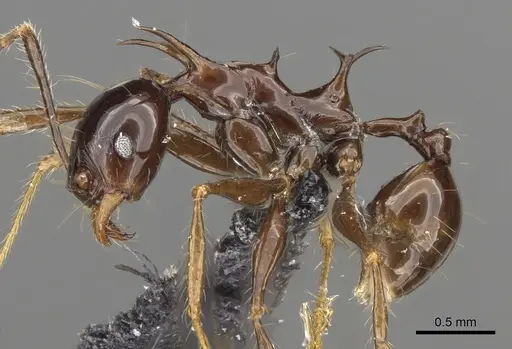
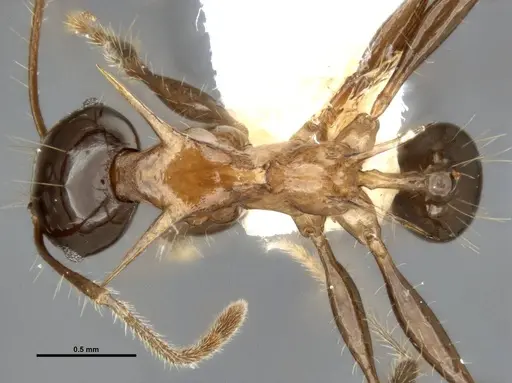
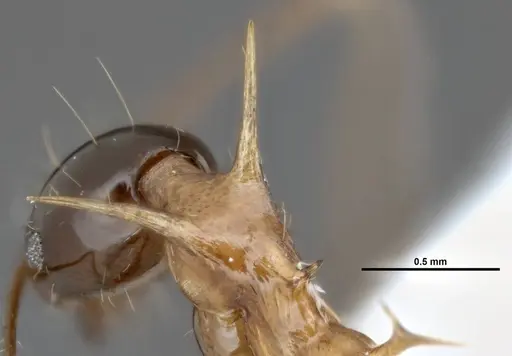
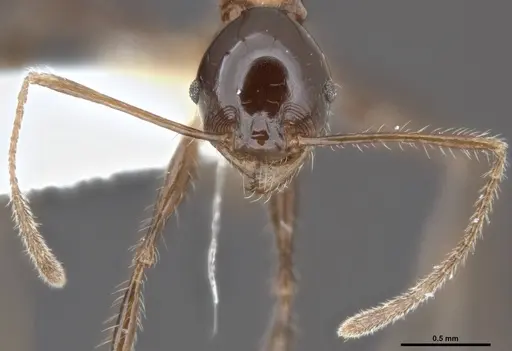
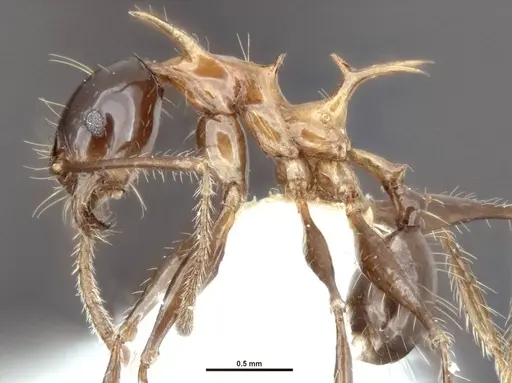
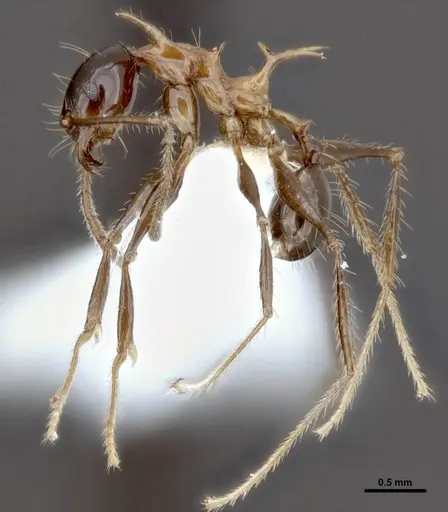
Pheidole barumtaun is a species of big-headed ant from the mountains of New Guinea. Major workers have enlarged heads and long spines on their thorax, while minor workers are much smaller. The ants are reddish brown to tricolored, with dark heads and gasters contrasting with yellowish mesosomas. They nest in rotten wood and forage in vegetation, which is unusual for Pheidole species . This species is notable for its spiny morphology and tendency to nest and forage in vegetation rather than on the ground .
Quick Summary
- Difficulty: Medium
- Origin & Habitat: Native to the Cyclops Mountains of Papua, Indonesia at 1070-1370m elevation in primary montane forest [1]. Found in microhabitats including under loose bark of logs, in living bark of recently felled trees, and in Pandanus plants [2].
- Colony Type: Unconfirmed, no specific data on queen number, but based on typical Pheidole patterns, likely monogyne
- Size & Growth:
- Queen: Size data unavailable, no total length measurements provided
- Worker: Size data unavailable, measurements provided are for head width, not full body length [1]
- Colony: Unknown
- Growth: Moderate, inferred from Pheidole genus patterns
- Development: 6-8 weeks at optimal temperatures, inferred from tropical Pheidole species (Development time is typical for tropical ants)
- Antkeeping:
- Temperature: Keep at 24-28°C, based on tropical montane habitat [1]
- Humidity: Keep nest substrate consistently moist but not waterlogged, with some drier areas, based on humid montane forest habitat [1]
- Diapause: No, tropical species do not require hibernation
- Nesting: Prefer nests in rotten wood or wood-based substrates, based on natural nesting behavior [1][2]
- Behavior: Pheidole species have distinct major and minor worker castes. Major workers defend the colony and process food, while minors handle foraging and brood care. This species is not aggressive toward keepers, but majors can sting if threatened. Escape risk is moderate due to their size.
- Common Issues: tropical species require constant warmth to maintain brood development, nesting in wood requires appropriate nest materials like Y-tong or rotten wood, montane origin may mean they prefer slightly cooler temperatures than lowland tropical species
Nest Preferences and Housing
In the wild, Pheidole barumtaun nests in rotting wood and decaying plant matter in montane forest environments. They have been found under loose bark of logs, in living bark of recently felled trees, and in Pandanus plants [1][2]. For captive care, a naturalistic setup with rotten wood pieces works best, or a Y-tong nest with wood shavings as substrate. Include some climbing structures in the outworld to mimic their vegetation-foraging behavior [1].
Feeding and Diet
Like other Pheidole species, these ants are likely omnivorous with a preference for protein. They may accept small insects and sugar sources, but specific diet data is not available for this species.
Temperature and Seasonal Care
Being from the mountains of New Guinea at 1070-1370m elevation, this species prefers warm but not hot conditions. Aim for 24-28°C, warm enough for active brood development but not so hot that the colony is stressed [1]. Since they come from a tropical environment, they do not require diapause.
Colony Structure and Behavior
Pheidole barumtaun follows the typical Pheidole social structure with distinct major and minor worker castes. Major workers have enlarged heads for processing food, while minor workers handle foraging and brood care. When a colony discovers food, minor workers recruit nestmates using chemical trails.
Growth and Development
First workers emerge in about 6-8 weeks at optimal temperatures. A founding colony remains small initially, then growth accelerates once majors emerge.
Frequently Asked Questions
How long does it take for Pheidole barumtaun to produce first workers?
Expect 6-8 weeks from egg to first worker at optimal temperatures around 24-28°C.
What do Pheidole barumtaun ants eat?
They are likely omnivorous. Feed small insects like fruit flies or mealworms as protein 2-3 times per week, and keep a sugar source like honey or sugar water available constantly.
What temperature do Pheidole barumtaun ants need?
Keep them at 24-28°C. This is a tropical montane species from New Guinea that prefers warmth but not extreme heat [1].
Do Pheidole barumtaun ants need hibernation?
No, they do not require hibernation. Being a tropical species, maintain warm temperatures year-round.
What size colony do Pheidole barumtaun reach?
Colony size is not documented for this specific species.
Can I keep multiple Pheidole barumtaun queens together?
Colony type is unconfirmed, but based on typical Pheidole patterns, they are likely monogyne (single queen). Combining multiple unrelated queens is not recommended as they may fight.
What type of nest is best for Pheidole barumtaun?
They naturally nest in rotting wood, so a Y-tong nest with wood substrate or a naturalistic setup with rotten wood pieces works best [1][2].
Are Pheidole barumtaun ants good for beginners?
They are moderate difficulty. The main challenges are providing appropriate wood-based nesting and maintaining warm temperatures year-round.
How do I differentiate major and minor workers?
Major workers have enlarged heads and long spines, while minor workers are much smaller. Both have spiny thoraxes [1].
Report an Issue
The current care sheet is based fully on literature. See inconsistencies, or something that's incorrect? Please , it will be resolved after review from an admin. Contributing to the blogs tab also helps providing information, to make us be able to further improve the caresheets. Thank you for your support!
References

This caresheet is licensed under CC BY-SA 4.0 .
Community Blogs
Literature
Loading distribution map...Loading products...