
Bearded Big-headed Ant
Pheidole barbata
- Sci. Name
- Pheidole barbata
- Tribe
- Attini
- Subfamily
- Myrmicinae
- Author
- Wheeler, 1908
- Common Name
- Bearded Big-headed Ant
- Distribution
- Found in 2 countries
Introduction
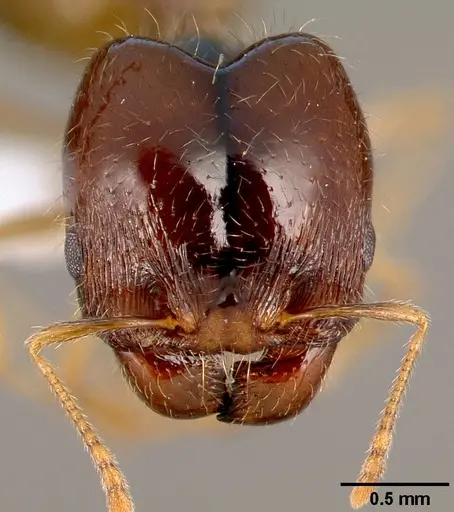
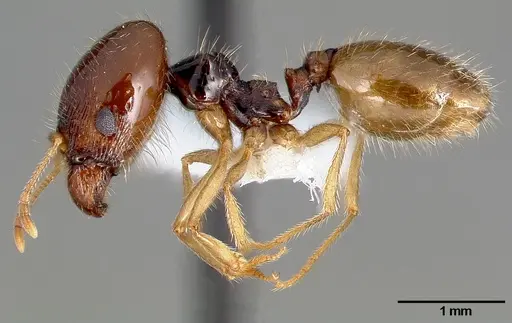
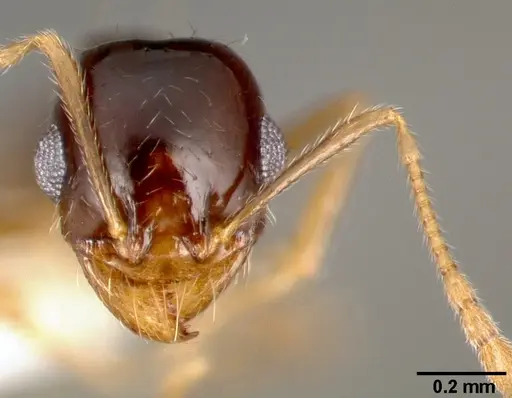
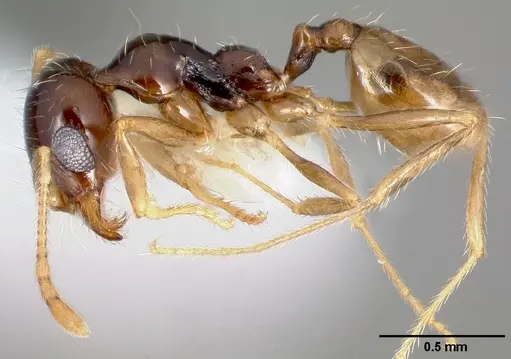
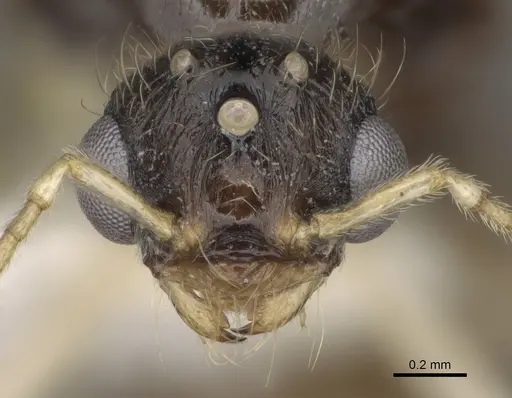
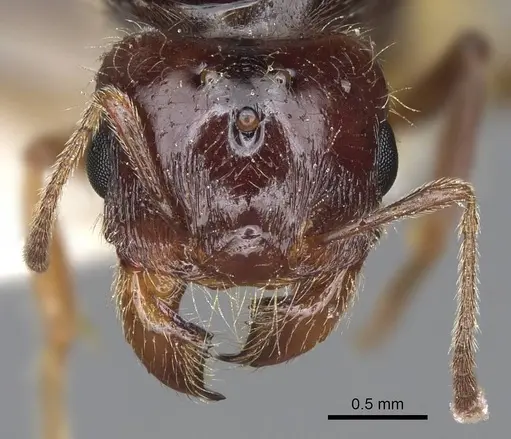
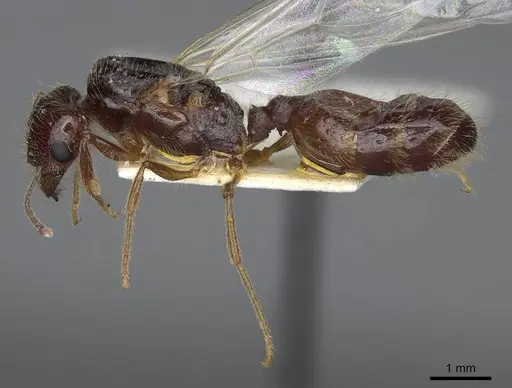
Pheidole barbata is a small harvester ant native to the desert regions of the southwestern United States and northern Mexico. This species is easily recognized by its two-worker caste system: minor workers handle all foraging duties while major workers (often called soldiers) remain in the nest specialized for seed milling and defense . Both castes have large forward-set eyes and lack propodeal spines. The minor workers have long coarse hairs on the underside of their head, giving the species its name 'barbata' meaning 'bearded' . Colonies are small, typically containing fewer than 100 workers . This desert species nests in light, sandy soil and builds low craters 5-10 cm in diameter around the nest entrance, sometimes surrounded by a chaff ring . As harvester ants, they collect and process seeds, supplementing with insect prey. Foraging is solitary with limited recruitment, so you won't see large trails . This native North American species has been introduced to the Hawaiian Islands, so it is considered invasive outside its natural range .
Quick Summary
- Difficulty: Expert
- Origin & Habitat: Desert regions of western Arizona, southern Nevada, and southeastern California in the United States, extending into northern Mexico (Baja California). Found in light sandy soil, sand dunes, and hard-packed sand along arroyo edges [2][3][5].
- Colony Type: Single-queen colonies (monogyne) assumed, but no nest queen has ever been found in excavations [2]. Colonies contain distinct major and minor worker castes, with majors serving as specialists for seed milling and defense rather than foraging [3].
- Size & Growth:
- Queen: size data unavailable (no queen measurements documented)
- Worker: size data unavailable (only head width measurements exist, not total body length). Inferred from Pheidole genus: minors ~2-3 mm, majors ~4-6 mm, but not confirmed.
- Colony: Up to 84 workers (11 majors and 73 minors documented, likely an underestimate) [2]
- Growth: Moderate
- Development: 6-10 weeks (estimated based on typical Pheidole development) (Development time is estimated from related Pheidole species, specific timing for P. barbata has not been directly studied)
- Antkeeping:
- Temperature: Keep at 24-28°C. As a desert species from the southwestern US, they prefer warm conditions with a mild thermal gradient. Room temperature in this range is typically suitable [2][6].
- Humidity: Low to moderate. This is a desert species, keep the nest area relatively dry, similar to their natural sandy habitat. Provide a small water source but avoid damp conditions [2][6].
- Diapause: Yes. As a temperate species from the southwestern US, they require a winter dormancy period. Reduce temperature to 10-15°C for 3-4 months during winter (November to February) [2].
- Nesting: Y-tong (AAC) or plaster nests work well for this species. The sandy soil preference suggests a dry, well-drained nest environment. Avoid overly humid or wet setups. A test tube setup with sand substrate works for founding colonies [2].
- Behavior: Peaceful and non-aggressive toward keepers. Majors serve as defenders and seed processors but rarely leave the nest, all foraging is done by minor workers [3]. They possess a functional stinger but it is not medically significant to humans. Escape risk is high because minors are tiny (
- Common Issues: desert species prone to mold in overly humid setups, keep nesting area dry, small colony size means slow development, don't expect rapid growth, majors remain in nest so don't be alarmed when foragers are all small workers, limited recruitment means they won't form large foraging trails, this is normal behavior, winter dormancy is essential, skipping hibernation can weaken or kill colonies, WARNING: Pheidole barbata is an invasive species in the Hawaiian Islands. It is NOT recommended to keep this species in countries where it is not native. Extreme precautions must be taken to prevent escape. Do not release under any circumstances.
Housing and Nest Setup
Pheidole barbata does well in Y-tong (AAC) or plaster nests, which provide the dry, well-drained conditions this desert species prefers. The nest should be kept relatively dry, think sandy desert conditions, not tropical rainforest. A test tube setup with a sand layer also works well for founding colonies. Avoid setups that retain excessive moisture, as this species is prone to mold problems in humid conditions. Provide an outworld area for foraging that is easy to clean. Because majors remain in the nest, ensure chambers are spacious enough for the colony to move around comfortably. Since minors are very small ( [6][2]
Feeding and Diet
As a harvester ant, Pheidole barbata naturally collects and processes seeds. In captivity, offer a mix of seeds (grass seeds, millet, cracked sunflower seeds) alongside protein sources. They will readily accept small insects like fruit flies, pinhead crickets, and mealworms. Sugar water or honey can be offered occasionally, though seeds and protein should form the bulk of their diet. Minor workers do all the foraging, so you'll see only small workers collecting food. Majors stay in the nest to mill seeds, they have specialized mandibles for this task [3][1]. Feed every 2-3 days, removing uneaten food promptly to prevent mold. Fresh water should always be available.
Temperature and Seasonal Care
Keep your colony at 24-28°C, which mimics their warm desert habitat in the southwestern US. A mild thermal gradient is beneficial, some keepers use a heating cable on one side of the nest, but room temperature in this range is often sufficient. During winter, this species requires a diapause (hibernation) period. Reduce temperatures to 10-15°C for 3-4 months, typically from November through February. This rest period is essential for colony health and mimics the natural seasonal cycle in their desert habitat. Do not skip hibernation, as it can weaken or kill the colony over time [2][6].
Colony Structure and Behavior
This species exhibits a clear division of labor between its two worker castes. Minor workers (the small foragers you see) handle all foraging, brood care, and most colony tasks. Major workers (the larger 'soldiers') remain in the nest where they specialize in milling seeds with their powerful mandibles and serve as defenders [3][1]. This is different from many ants where majors only appear in larger colonies, P. barbata has majors from the start. Colonies are relatively small, typically under 100 workers. They use solitary foraging with limited recruitment, meaning you won't see massive foraging trails like some ant species. This is normal behavior for the species, not a sign of problems [3].
Growth and Development
Colony growth is moderate. Founding colonies start with a single queen who seals herself in (likely claustral founding based on typical Pheidole) and raises the first brood alone on stored fat reserves. However, specific founding behavior for P. barbata has not been documented. The first workers (nanitics) are typically smaller than mature workers. Development from egg to worker takes approximately 6-10 weeks in warm conditions, though this is estimated from related Pheidole species as specific timing for P. barbata has not been documented. Majors appear relatively early compared to some species. Colonies remain small, even mature colonies rarely exceed 100 workers. This slower growth is normal for the species and keepers should not expect rapid expansion. [2]
Frequently Asked Questions
How long does it take for Pheidole barbata to raise first workers?
Expect 6-10 weeks from egg to first worker at optimal temperature (24-28°C). This is an estimate based on typical Pheidole development, as specific timing for P. barbata has not been documented. The queen will seal herself in a chamber and raise the first brood alone.
Can I keep multiple Pheidole barbata queens together?
This species is likely single-queen (monogyne) based on typical Pheidole patterns, but it has not been confirmed. Combining unrelated queens will likely result in fighting, it's safest to keep only one queen per colony.
What do Pheidole barbata eat?
They are seed harvesters, so offer seeds (grass seeds, millet, cracked sunflower seeds) alongside protein (small insects like fruit flies, mealworms). They will also occasionally accept sugar water or honey. Seeds should make up a significant portion of their diet.
Do Pheidole barbata need hibernation?
Yes. As a temperate species from the southwestern US, they require a winter dormancy period. Reduce temperatures to 10-15°C for 3-4 months during winter (November to February). Skipping hibernation can weaken or kill the colony.
Why are my Pheidole barbata majors staying in the nest?
This is completely normal behavior. In P. barbata, minor workers do all the foraging while major workers (soldiers) remain in the nest as specialists for seed milling and defense. This division of labor is characteristic of the species.
How big do Pheidole barbata colonies get?
Colonies are relatively small, typically reaching up to about 100 workers (documented colonies show up to 11 majors and 73 minors). This is smaller than many common ant species, so don't expect massive colonies.
Are Pheidole barbata good for beginners?
No, this species is rated Expert due to its invasive potential. It has been introduced to the Hawaiian Islands and should not be kept in regions where it is not native. If you live in its native southwestern US, it could be a good beginner species, but extreme caution is needed to prevent escape. Outside its native range, do not keep this species.
What humidity level do Pheidole barbata need?
Keep humidity low to moderate. This is a desert species adapted to dry conditions. The nest area should be relatively dry, think sandy desert rather than tropical rainforest. Provide a water source but avoid damp setups that can cause mold.
When should I move Pheidole barbata to a formicarium?
Wait until the colony has at least 30-50 workers before moving from a test tube to a formicarium. This species does well in Y-tong or plaster nests. Make sure any new setup maintains the dry conditions they prefer.
Why is my Pheidole barbata colony growing so slowly?
Slow growth is normal for this species. Colonies typically max out around 100 workers, and development takes 6-10 weeks per generation. Ensure proper temperatures (24-28°C), proper diet, and that you're not overfeeding (which causes mold). If the queen is alive and healthy, patience is key.
Report an Issue
The current care sheet is based fully on literature. See inconsistencies, or something that's incorrect? Please , it will be resolved after review from an admin. Contributing to the blogs tab also helps providing information, to make us be able to further improve the caresheets. Thank you for your support!
References

This caresheet is licensed under CC BY-SA 4.0 .
Community Blogs
CASENT0005747
View on AntWeb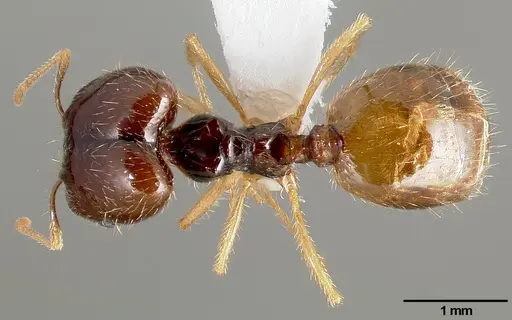
CASENT0005748
View on AntWeb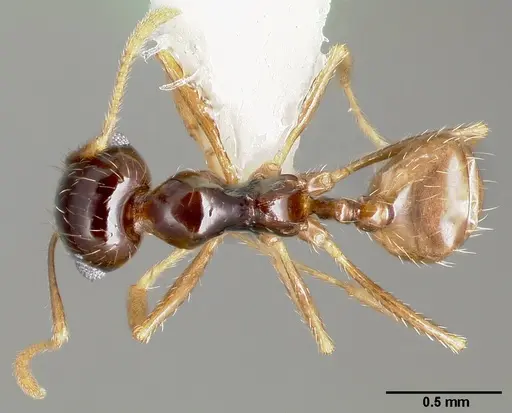
CASENT0862453
View on AntWeb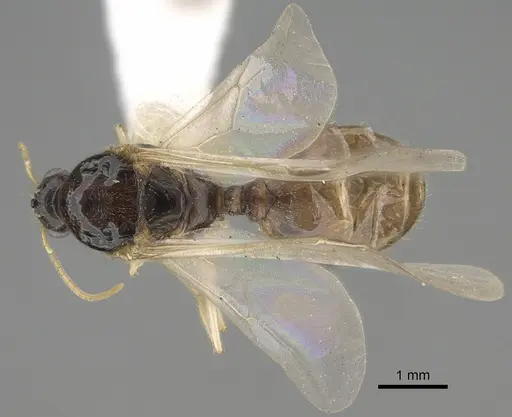
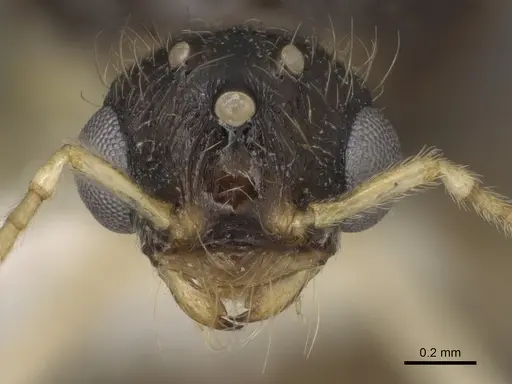
CASENT8368323
View on AntWeb
Literature
Loading distribution map...Loading products...