
Pheidole azteca
- Sci. Name
- Pheidole azteca
- Tribe
- Attini
- Subfamily
- Myrmicinae
- Author
- Wilson, 2003
- Distribution
- Found in 2 countries
Introduction
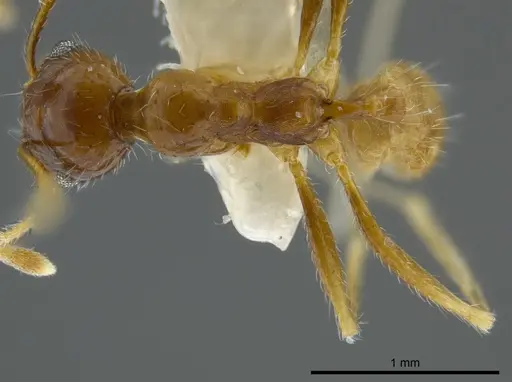
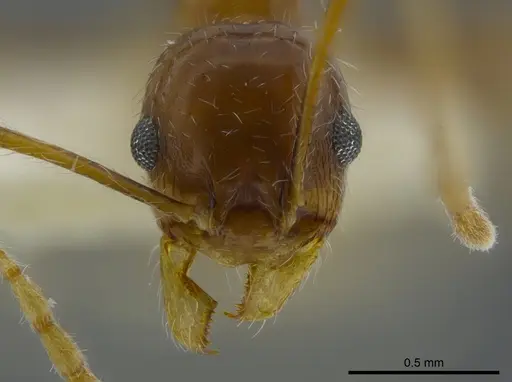
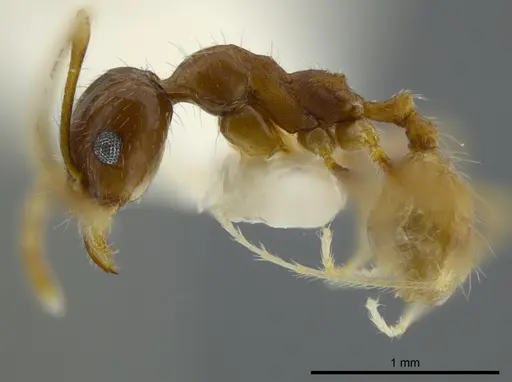
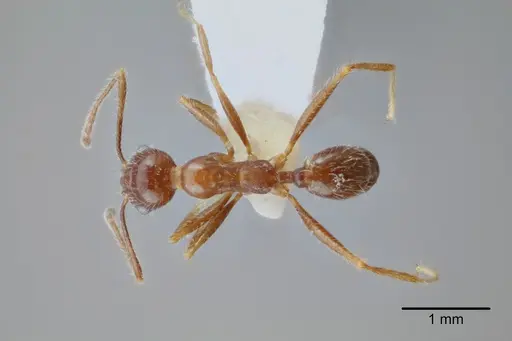
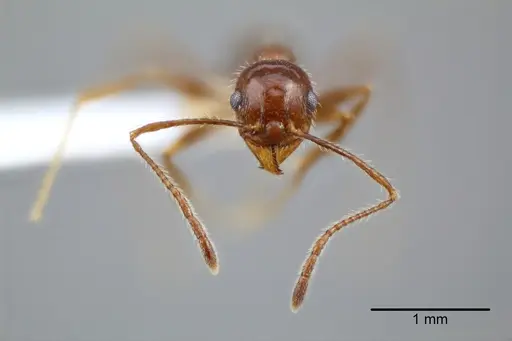
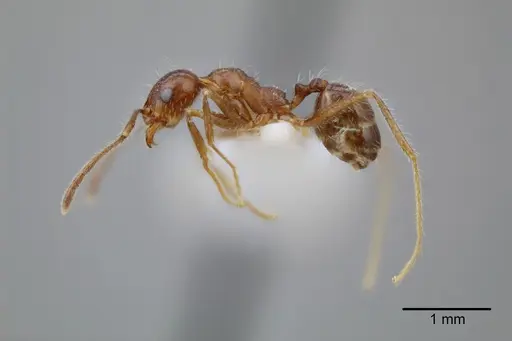
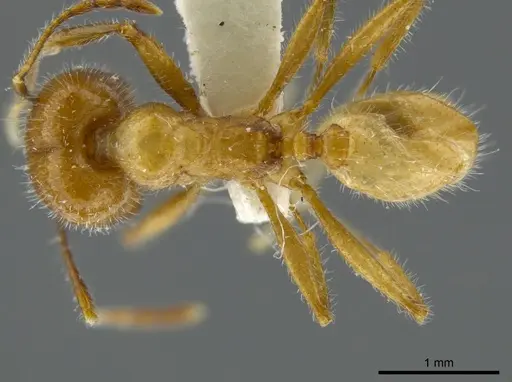
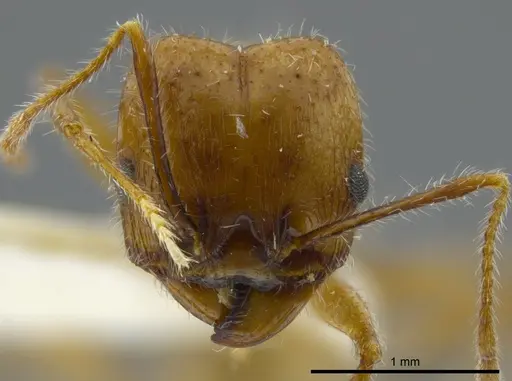
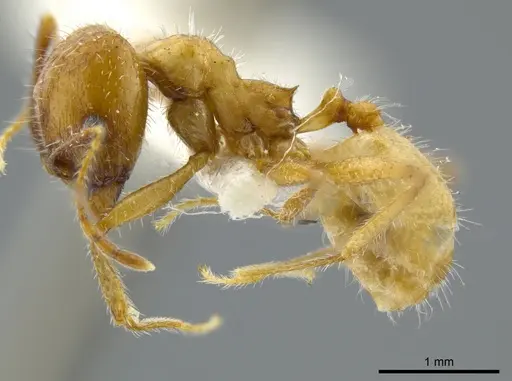
Pheidole azteca is a small ant native to central Mexico, described by Wilson in 2003 . It belongs to the pilifera group, with majors having a quadrate head and reduced propodeal spines, and minors with rudimentary spines . The species is endemic to Mexico, found in the Mexican Transition Zone at elevations of 1,300-1,455m . This ant is known only from a few locations in Mexico City, Puebla, and Tlaxcala, making it a rare species with limited biological data .
Quick Summary
- Difficulty: Medium
- Origin & Habitat: Central Mexico (Mexico City, Puebla, Tlaxcala) in the Mexican Transition Zone. Found in riparian forests, pine and yucca forests, and abandoned agricultural fields at 1,300-1,455m elevation [1][2].
- Colony Type: Likely monogyne based on typical Pheidole genus patterns, but unconfirmed for this specific species.
- Size & Growth:
- Queen: Size data unavailable, no total length measurements provided
- Worker: Size data unavailable, no total length measurements provided
- Colony: Unknown
- Growth: Unknown, estimated moderate based on genus patterns
- Development: Estimated 6-8 weeks at optimal temperature based on typical Pheidole development (Development timeline is not directly studied for this species. Estimates based on genus-level patterns.)
- Antkeeping:
- Temperature: Keep at moderate temperatures, roughly 22-26°C, based on their highland habitat [1].
- Humidity: Keep nest substrate consistently moist but not waterlogged, as they are found in riparian forests and other habitats [1].
- Diapause: Based on central Mexican origin, likely requires winter diapause at cooler temperatures for 2-3 months.
- Nesting: Y-tong or plaster nests work well, with narrow chambers suitable for their small size.
- Behavior: Typical Pheidole temperament, defensive when threatened but not aggressive toward humans. Majors may block nest entrances with their large heads. Their small size means escape prevention is critical, use fine mesh barriers and tight-fitting lids.
- Common Issues: very small size makes escape prevention critical, they can squeeze through standard gaps., limited distribution data means exact care requirements are estimated from genus patterns., no documented colony founding behavior, founding type is unconfirmed., winter dormancy requirements are unconfirmed but likely necessary for central Mexican origin.
Nest Preferences
Pheidole azteca has been collected from diverse habitats including riparian forests, pine and yucca forests, and abandoned agricultural fields at elevations of 1,300-1,455m [1]. In captivity, they adapt well to Y-tong (AAC) nests, plaster nests, or naturalistic setups with soil. The key is providing appropriately scaled chambers, their small size means narrower passages work better than wide tunnels. A water tube should be attached for humidity, but avoid oversaturating the nest. They do well with some dry areas where they can cache seeds away from moisture.
Feeding and Diet
Based on typical Pheidole patterns, this species is likely omnivorous with a preference for seeds and protein. In captivity, offer a mix of grass seeds (millet, chia, flax), small protein sources (crushed insects, mealworms, bloodworms), and occasional sugar water or honey. Feed protein 2-3 times per week and keep seeds available constantly. Remove uneaten prey after 48 hours to prevent mold.
Temperature and Seasonal Care
This species comes from central Mexican highlands with moderate temperatures. Keep nest areas at 22-26°C, with a slight gradient allowing workers to choose their preferred temperature. A heating cable placed on top of the nest helps maintain warmth. For winter, provide a 2-3 month dormancy period at 15-18°C, mimicking the cool winters in their native range [1]. Reduce feeding during this period and keep the nest slightly cooler.
Behavior and Colony Structure
Pheidole azteca exhibits the typical division of labor seen in the genus. Minor workers handle most tasks: foraging, caring for brood, and tending the queen. Major workers specialize in seed crushing and colony defense, their enlarged heads contain powerful muscles for breaking hard seed coats. When threatened, majors may block nest entrances with their large heads. Colonies are likely monogyne with a single founding queen. Workers are not aggressive toward humans and rarely sting, making them manageable for keepers.
Frequently Asked Questions
How long does it take for Pheidole azteca to produce first workers?
The exact timeline is unconfirmed, but based on typical Pheidole development, expect first workers (nanitics) in 6-8 weeks at optimal temperature (around 24°C). The queen will remain sealed in her founding chamber until workers emerge.
What do Pheidole azteca ants eat?
Like other Pheidole species, they are likely omnivorous. Offer grass seeds (millet, chia), small insects (bloodworms, mealworms), and occasional sugar water. Majors specialize in cracking seeds that minors cannot process.
Can I keep multiple Pheidole azteca queens together?
Not recommended. Pheidole azteca is likely monogyne (single queen). Combining unrelated queens has not been documented for this species and typically results in fighting.
What temperature do Pheidole azteca ants need?
Keep them at moderate temperatures, roughly 22-26°C, based on their highland habitat [1]. A heating cable on one side of the nest creates a gradient.
Do Pheidole azteca need hibernation?
Likely yes. Central Mexican ants experience seasonal temperature drops. Provide a winter rest at 15-18°C for 2-3 months during the colder months.
How big do Pheidole azteca colonies get?
Colony size is unconfirmed for this species. Based on typical Pheidole patterns, colonies may reach several thousand workers over several years, but no specific data is available.
Are Pheidole azteca good for beginners?
They are moderately difficult. The main challenges are their small size (escape prevention is critical), limited known biology requiring estimated care, and likely need for winter dormancy. Experienced antkeepers should have success.
When should I move Pheidole azteca to a formicarium?
Wait until the colony has a reasonable number of workers, such as 20-30. Before that, keep them in the founding test tube setup. When moving, ensure the new nest has appropriately sized chambers and a connected outworld.
Why are my Pheidole azteca dying?
Common causes include: escape through tiny gaps (use fine mesh), improper humidity (too wet causes mold, too dry kills brood), temperature stress (too cold slows development, too hot dries the nest), and overfeeding leading to mold. Check these parameters first.
Report an Issue
The current care sheet is based fully on literature. See inconsistencies, or something that's incorrect? Please , it will be resolved after review from an admin. Contributing to the blogs tab also helps providing information, to make us be able to further improve the caresheets. Thank you for your support!
References

This caresheet is licensed under CC BY-SA 4.0 .
Community Blogs
Literature
Loading distribution map...Loading products...