
Pheidole avia
- Sci. Name
- Pheidole avia
- Tribe
- Attini
- Subfamily
- Myrmicinae
- Author
- Forel, 1908
- Distribution
- Found in 1 countries
Introduction
Pheidole avia is a Neotropical ant species native to the Atlantic Forest in southern Brazil. First described in 1908,it was elevated to full species status in 2003 . This species is only known from the type locality in Alto da Serra, São Paulo, making it rare and poorly studied. Research confirms it is exclusive to forest habitats and has not been recorded in grassland areas .
Quick Summary
- Difficulty: Hard
- Origin & Habitat: Pheidole avia is known only from the Atlantic Forest in southern Brazil, specifically from the type locality at Alto da Serra in São Paulo state. Research confirms this species is exclusive to forest habitats and has not been recorded in grassland areas [2]. The Atlantic Forest is a humid, tropical to subtropical environment [1].
- Colony Type: Unconfirmed, colony structure has not been documented for this species. Most Pheidole species are monogyne (single queen colonies), but this has not been confirmed for P. avia.
- Size & Growth:
- Queen: Size data unavailable, no total length measurements provided.
- Worker: Size data unavailable, no total length measurements provided. Based on typical Pheidole species, workers are likely 2-4mm in total length [1].
- Colony: Unknown, no colony size data available.
- Growth: Unknown, no development data exists for this species.
- Development: Estimated 6-10 weeks based on typical Pheidole development patterns [1]. (Development timeline is inferred from genus patterns and may vary with temperature.)
- Antkeeping:
- Temperature: Based on Atlantic Forest origin, likely prefers warm conditions around 22-28°C. Provide a temperature gradient [2].
- Humidity: Keep nest substrate moderately moist but not waterlogged, as Atlantic Forest is humid [2].
- Diapause: Unknown, no research on seasonal behavior. Southern Brazil has mild winters, so a short rest period at reduced temperatures may be beneficial, but this is inferred [1].
- Nesting: No specific nesting data. Based on typical Pheidole behavior and forest habitat, likely nest in soil or under stones. Use moist substrate or Y-tong/plaster nest [1].
- Behavior: Behavior is unstudied. Pheidole ants are generally non-aggressive with division of labor between majors and minors. Defense mechanism includes a sting, as typical for Myrmicinae, but not medically significant. Escape risk is moderate due to small size of minors [1].
- Common Issues: this species has no documented captive history, expect a learning curve., biology is completely unknown so care recommendations are based on genus-level patterns., wild-caught colonies may have parasites given the lack of captive breeding history., slow growth is typical for Pheidole, beginners may lose patience., humidity control is critical to prevent mold in forest-dwelling species.
Species Overview and Identification
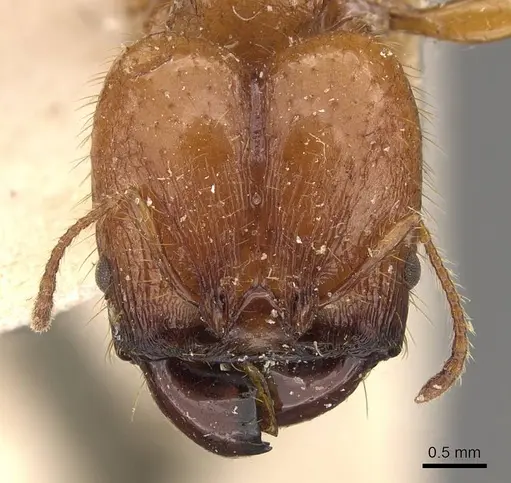
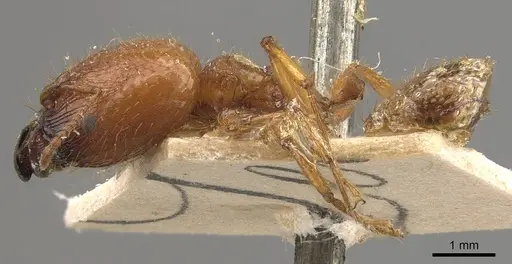
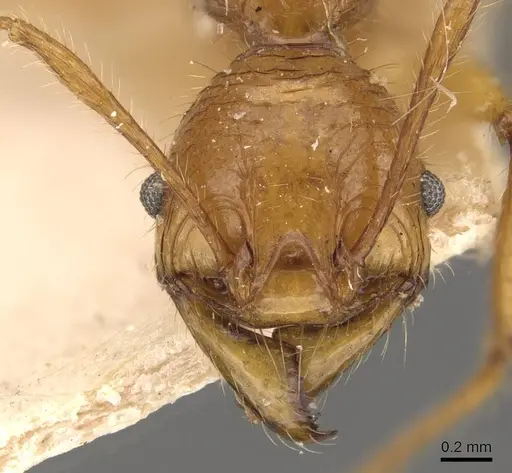
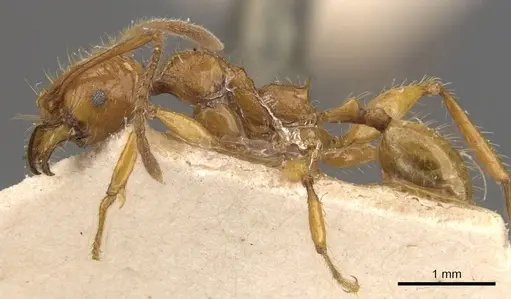
Pheidole avia is a distinctive species within the genus Pheidole, known for its pronounced major worker caste. The major workers have sharp postpetiolar cornicles and are reddish yellow in color. Minor workers are smaller and plain yellow. This species was originally described as a subspecies of Pheidole guilelmimuelleri in 1908 before being elevated to full species status by Wilson in 2003 [1]. It is similar to several other South American Pheidole species.
Distribution and Habitat
Pheidole avia is known only from the type locality of Alto da Serra in São Paulo state, Brazil, part of the Atlantic Forest biome. Research confirms this species is exclusive to forest habitats and has not been recorded in grassland areas [2]. The Atlantic Forest region experiences a humid subtropical climate.
Nest Preferences and Housing
No specific nesting data exists for Pheidole avia. Based on typical Pheidole behavior and forest habitat, they likely nest in soil or under stones. For captive care, a naturalistic setup with moist substrate or a Y-tong/plaster nest works well to maintain humidity [1].
Feeding and Diet
The diet of Pheidole avia has not been documented. Pheidole species are typically seed-harvesting ants, so in captivity, offer seeds as a staple along with protein sources like small insects [1].
Temperature and Seasonal Care
No specific temperature data exists for this species. Based on its origin in the Atlantic Forest, it likely prefers warm conditions around 22-28°C. Provide a temperature gradient [2]. Regarding winter dormancy, a short rest period at reduced temperatures may be beneficial, but this is inferred [1].
Behavior and Colony Dynamics
The behavior of Pheidole avia has not been specifically studied. Pheidole ants in general have clear division of labor between major and minor workers. Defense includes a sting, but it is not medically significant. Escape prevention should be moderate due to the small size of minors [1].
Frequently Asked Questions
How long does it take for Pheidole avia to develop from egg to worker?
The development timeline is unconfirmed for this species. Based on typical Pheidole patterns, estimated 6-10 weeks at warm temperatures [1].
What do Pheidole avia ants eat?
While not documented for this species, Pheidole ants are typically seed-harvesting. In captivity, offer seeds and protein sources like small insects [1].
Are Pheidole avia ants good for beginners?
This species is not recommended for beginners due to the complete lack of documented captive care information. Biology is entirely unknown, so you'll be pioneering husbandry techniques.
What temperature should I keep Pheidole avia at?
Based on their Atlantic Forest origin, aim for temperatures around 22-28°C with a gradient [2].
Do Pheidole avia ants need hibernation?
Diapause requirements are unknown. Southern Brazil has mild winters, so a short rest period at reduced temperatures may be beneficial, but this is inferred [1].
How big do Pheidole avia colonies get?
Colony size is undocumented for this species. Most Pheidole species can grow to several hundred to a few thousand workers, but specific maximums for P. avia are unknown.
Can I keep multiple Pheidole avia queens together?
Colony structure is unconfirmed. Most Pheidole species are monogyne, but without specific data, it is not recommended to combine unrelated queens.
What type of nest should I use for Pheidole avia?
No specific nesting data exists, but based on their forest habitat, a naturalistic setup with moist substrate or a Y-tong/plaster nest works well [1].
Why is so little known about Pheidole avia?
Pheidole avia is known only from its type locality in Brazil and has rarely been collected or studied since its original description in 1908 [1].
Report an Issue
The current care sheet is based fully on literature. See inconsistencies, or something that's incorrect? Please , it will be resolved after review from an admin. Contributing to the blogs tab also helps providing information, to make us be able to further improve the caresheets. Thank you for your support!
References

This caresheet is licensed under CC BY-SA 4.0 .
Community Blogs
CASENT0908174
View on AntWeb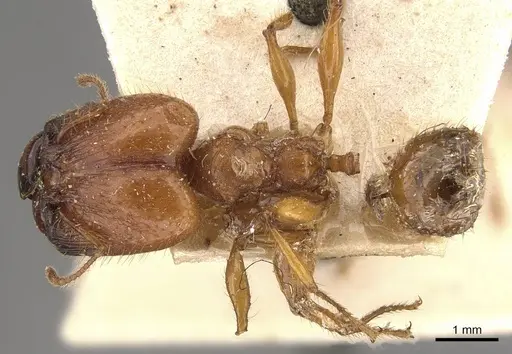
CASENT0908175
View on AntWeb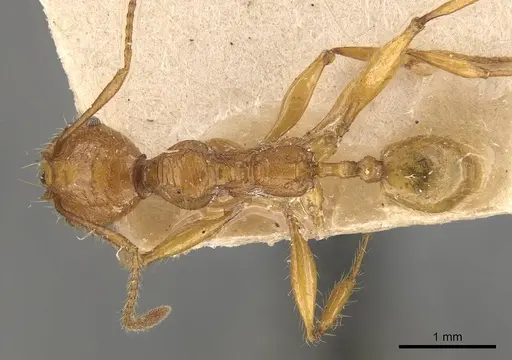
Literature
Loading distribution map...Loading products...