
Pheidole antipodum
- Sci. Name
- Pheidole antipodum
- Tribe
- Attini
- Subfamily
- Myrmicinae
- Author
- Smith, 1858
- Distribution
- Found in 1 countries
Introduction
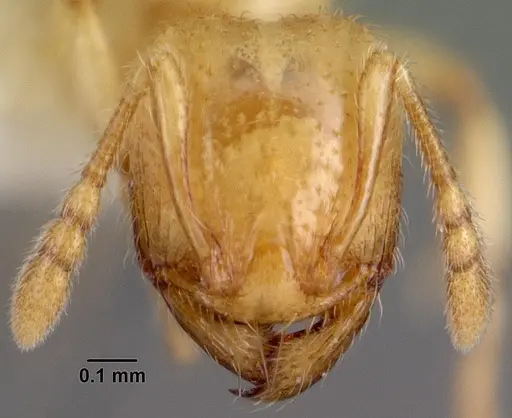
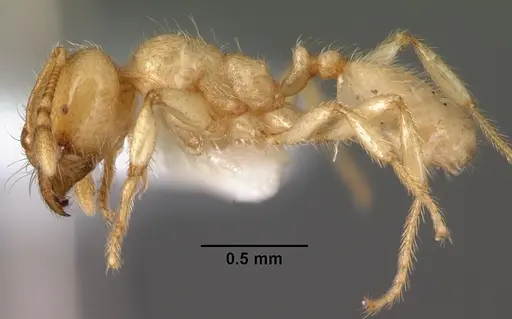
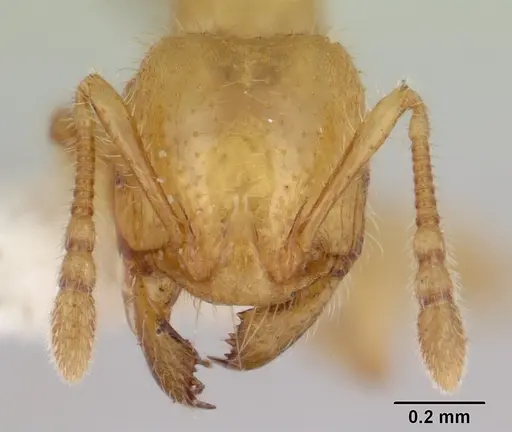
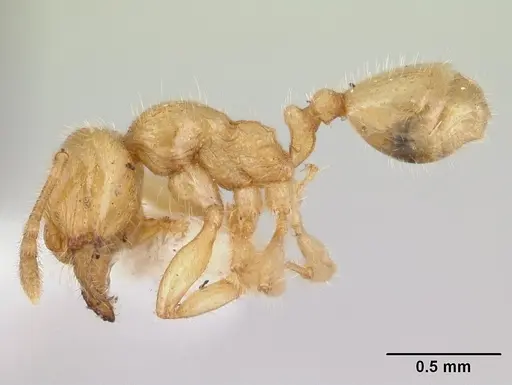
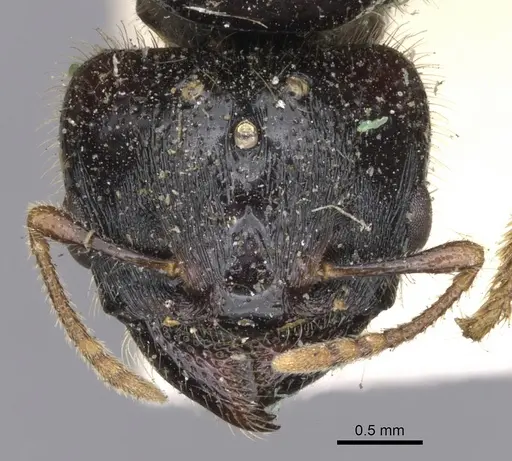
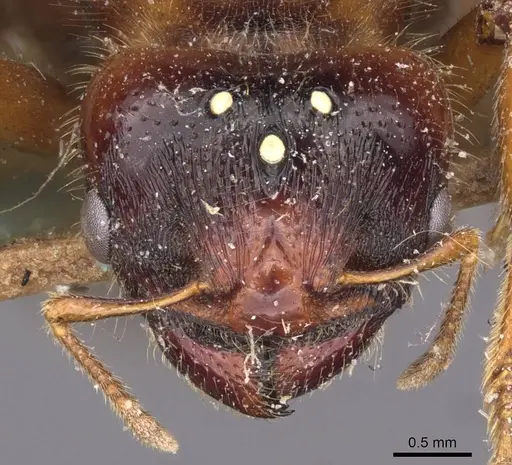
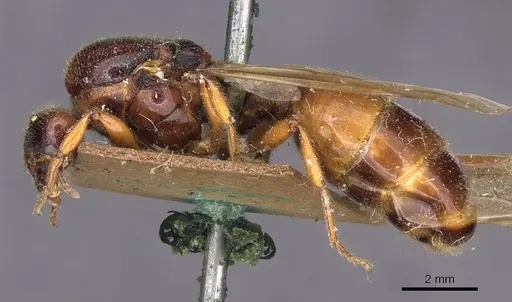
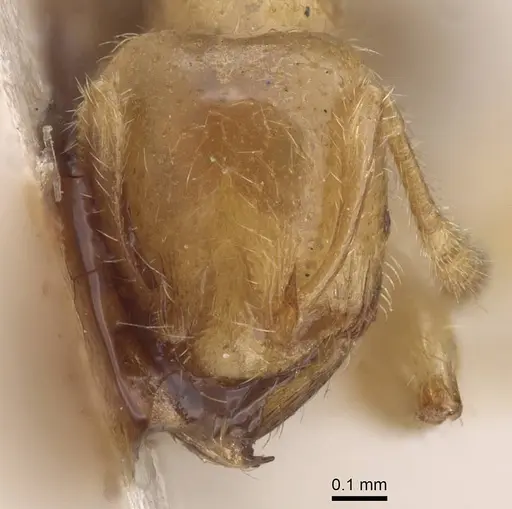
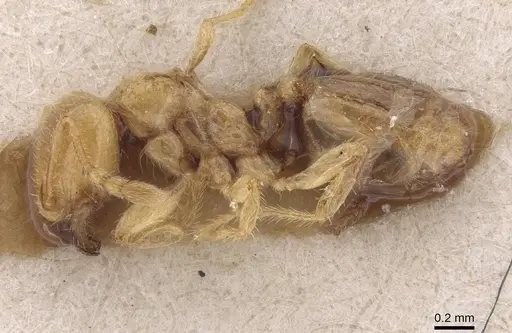
Pheidole antipodum is an Australian ant species with highly polymorphic workers, ranging from 3-9 mm in total length . It is endemic to drier regions of Australia, including Western Australia, NSW, NT, SA, and Victoria . These ants nest under rocks and are specialist predators on termites . Unlike many Pheidole species, P. antipodum is largely subterranean with poorly developed eyes, and colonies are often found in association with termite colonies .
Quick Summary
- Difficulty: Medium
- Origin & Habitat: Endemic to Australia, found in drier areas across WA, NSW, NT, SA, and Victoria. Nests in open soil or under rocks in both laterite and sandy soils. Often associated with termite colonies [2][1].
- Colony Type: Unconfirmed, based on Pheidole genus patterns, likely monogyne (single queen colonies) [1].
- Size & Growth:
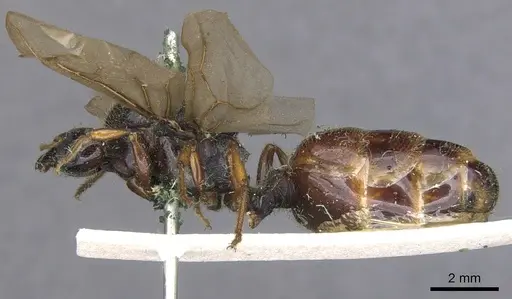
- Queen: 12.8 mm [1]
- Worker: 3-9 mm [1]
- Colony: Up to hundreds of workers [1]
- Growth: Moderate, inferred from typical Pheidole development
- Development: 6-8 weeks at optimal temperature (estimated based on genus patterns) (Development time is typical for Pheidole genus, exact timeline for this species unconfirmed)
- Antkeeping:
- Temperature: Keep at 24-28°C as a starting point. Australian species from warmer regions suggest they tolerate higher temperatures[2].
- Humidity: Keep nest substrate consistently moist but not waterlogged. Provide a gradient with some drier areas[1].
- Diapause: Unknown for this species.
- Nesting: Y-tong or plaster nests work well. Provide narrow chambers and a layer of substrate in the outworld to mimic natural under-rock nesting [1].
- Behavior: These ants are subterranean and reclusive. They are specialist termite predators [1]. Major workers defend the colony aggressively with their large mandibles. Escape risk is moderate due to small minor workers, use standard barrier precautions.
- Common Issues: specialized diet requirements make them difficult to feed, they need live termite prey or equivalent small insects, and may reject standard ant foods, subterranean lifestyle means they may be less visible than surface-nesting species, which can make it hard to monitor colony health, colonies grow slowly initially, beginners may lose patience and overfeed before the colony is established enough to handle it, small eyes and reclusive nature means they may not readily forage in open spaces, requiring careful outworld design, founding colonies are fragile, queens need darkness and minimal disturbance until first workers emerge
Nest Preferences and Housing
Pheidole antipodum naturally nests under rocks deeply embedded in soil [1]. Use Y-tong or plaster nests with dark, humid chambers scaled to their size. Major workers are up to 9 mm, minors around 3 mm. Add a layer of soil or small stones in the outworld to encourage natural foraging. Test tubes work for founding colonies, move to a proper nest once the colony reaches 20-30 workers. Keep the nest area dark and quiet during founding [1].
Feeding and Diet
They are specialist termite predators, so live prey is essential [1]. Offer small live insects like fruit flies, pinhead crickets, or termitarians. Sugar water or honey can be supplementary, but protein from insects should form the main diet. Feed every 2-3 days, removing uneaten prey after 24 hours to prevent mold [1].
Temperature and Seasonal Care
Maintain temperatures between 24-28°C for optimal development [2]. Use a heating cable on one side of the nest to create a gradient. Room temperature around 22-24°C may be acceptable if stable. Avoid temperatures below 15°C or above 35°C. True hibernation is unlikely, watch for seasonal slowdowns in winter.
Behavior and Colony Dynamics
Colonies are organized with minor workers handling foraging and brood care, and major workers specializing in defense [1]. During nuptial flights, workers defend the nest entrance and control alates by climbing on them. Colonies grow gradually at first, then accelerate once established. These ants are not aggressive toward keepers but will bite if handled roughly [1].
Frequently Asked Questions
How long does it take for Pheidole antipodum to produce first workers?
Expect 6-8 weeks from egg to first worker at optimal temperature (24-28°C). This is typical for Pheidole species, though exact timing for this species is unconfirmed. The queen is likely claustral, raising the first brood alone without foraging.
What do Pheidole antipodum ants eat?
They are specialist termite predators, so live prey is essential [1]. Offer small live insects like fruit flies or pinhead crickets. Sugar water can be supplementary, but protein should form the main diet.
Are Pheidole antipodum good for beginners?
They are rated as medium difficulty. The main challenge is their specialized diet and subterranean nature, which require patience and live prey [1].
How big do Pheidole antipodum colonies get?
Wild colonies reach up to hundreds of workers [1]. In captivity, expect similar sizes for mature colonies.
Can I keep multiple Pheidole antipodum queens together?
This species is likely monogyne, so multiple queens would fight. Keeping multiple queens is not recommended without specific research.
What temperature do Pheidole antipodum need?
Keep them at 24-28°C [2]. A heating cable on one side of the nest creates a gradient. Avoid temperatures below 15°C or above 35°C.
Do Pheidole antipodum need hibernation?
True hibernation is not required for this species. Australian ants from warm regions may have reduced activity in winter.
When should I move Pheidole antipodum to a formicarium?
Move them once the colony reaches 20-30 workers and the test tube becomes crowded. Use Y-tong or plaster nests with dark chambers [1].
Why are my Pheidole antipodum not foraging?
They are naturally reclusive and subterranean. Try dimming the outworld lighting, offering prey at night, or placing food closer to the nest entrance. Verify temperature is in their preferred range [1].
Report an Issue
The current care sheet is based fully on literature. See inconsistencies, or something that's incorrect? Please , it will be resolved after review from an admin. Contributing to the blogs tab also helps providing information, to make us be able to further improve the caresheets. Thank you for your support!
References

This caresheet is licensed under CC BY-SA 4.0 .
Community Blogs
CASENT0010804
View on AntWeb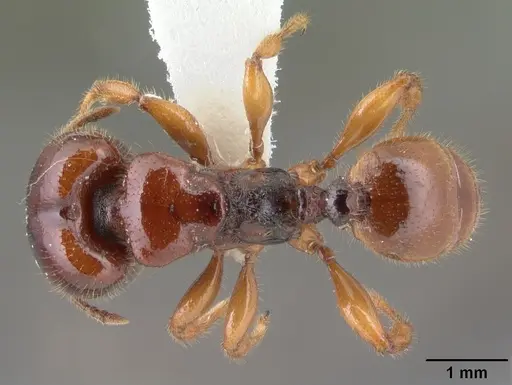
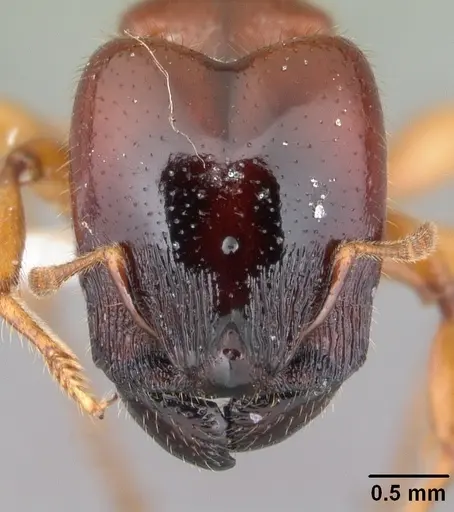
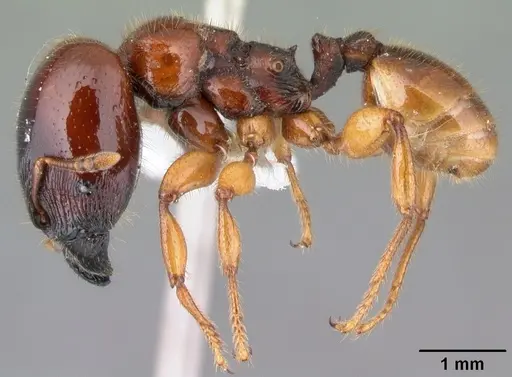
CASENT0010924
View on AntWeb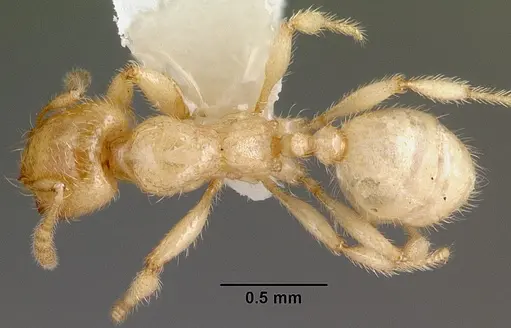
CASENT0106219
View on AntWeb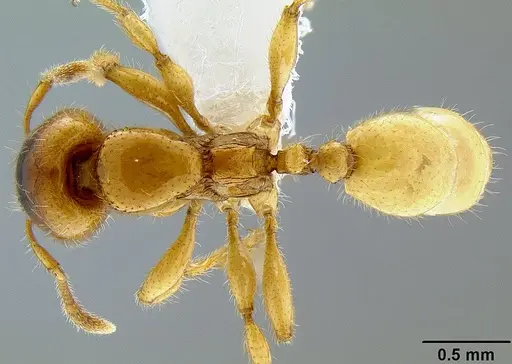
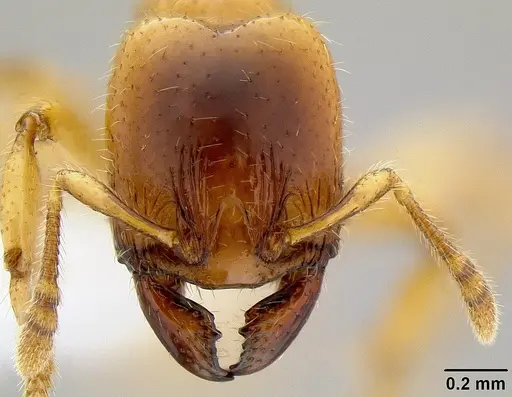
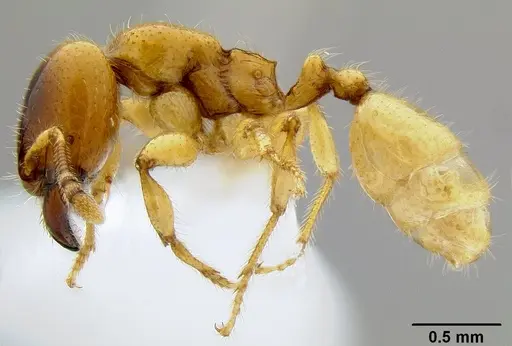
CASENT0178578
View on AntWeb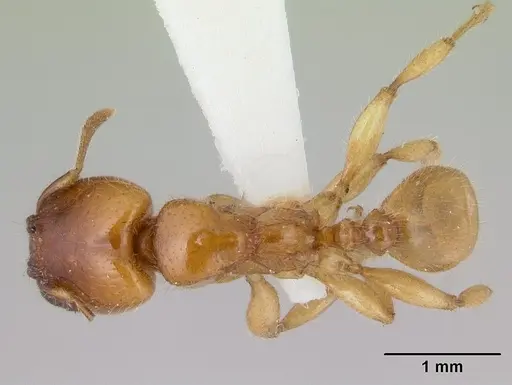
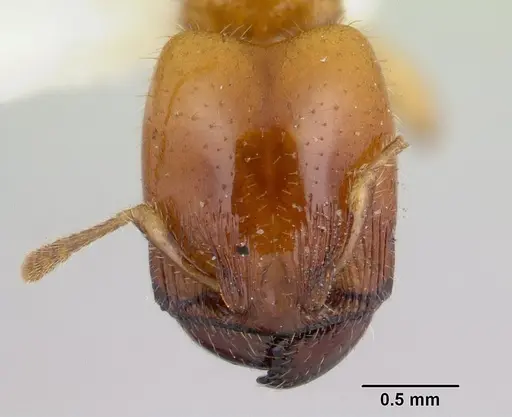
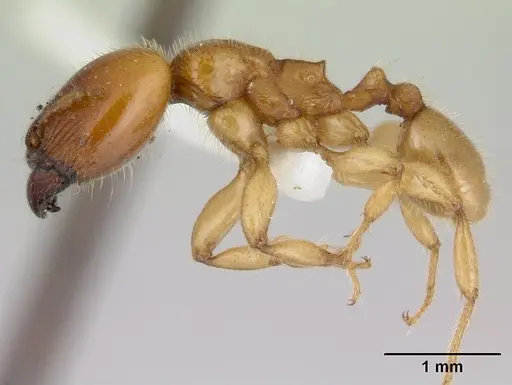
CASENT0178579
View on AntWeb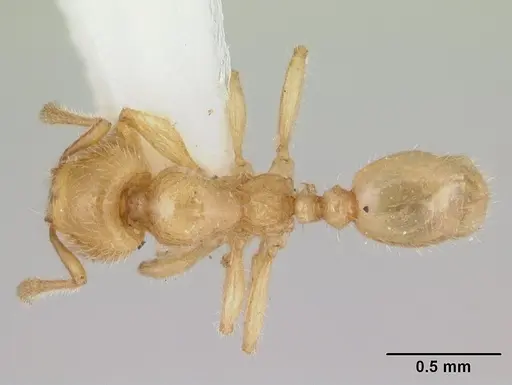
CASENT0901259
View on AntWeb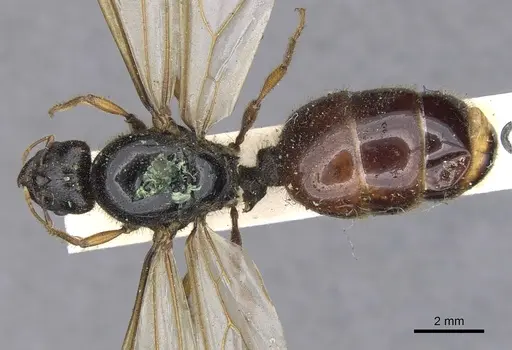
CASENT0907772
View on AntWeb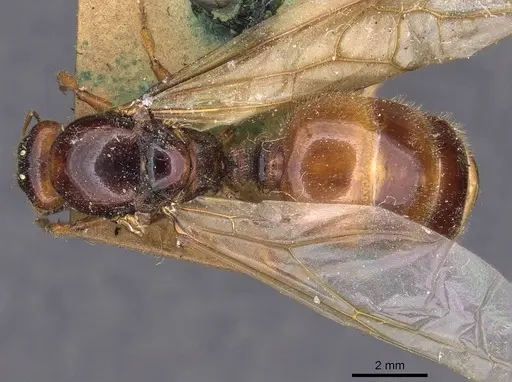
CASENT0915459
View on AntWeb
Literature
Loading distribution map...Loading products...