
Pheidole angulicollis
- Sci. Name
- Pheidole angulicollis
- Tribe
- Attini
- Subfamily
- Myrmicinae
- Author
- Eguchi, 2001
- Distribution
- Found in 1 countries
Introduction
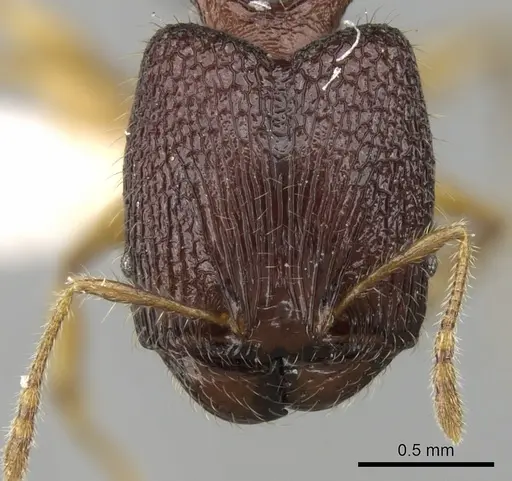
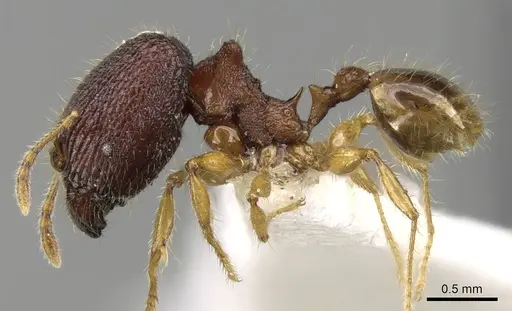
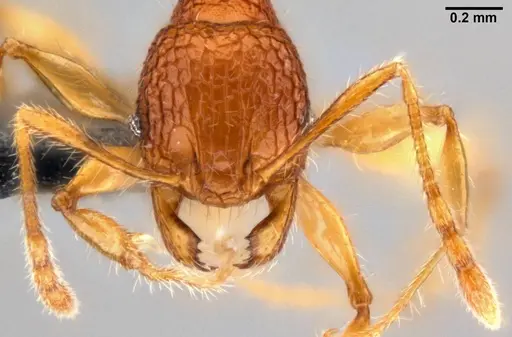
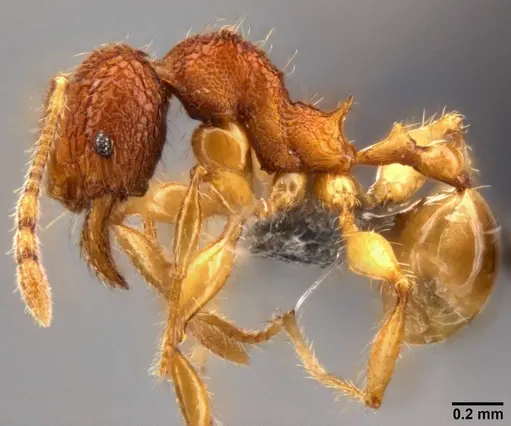
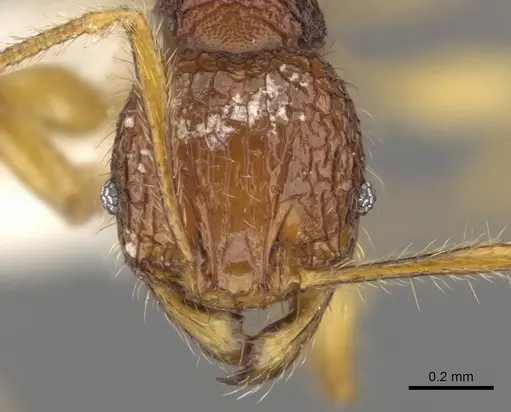
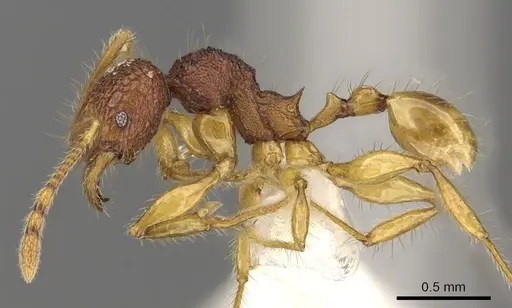
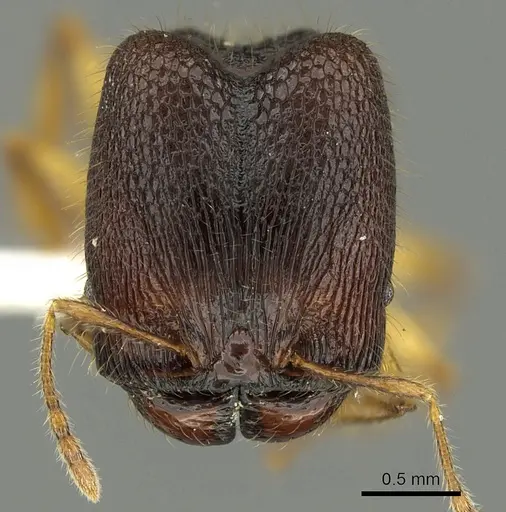
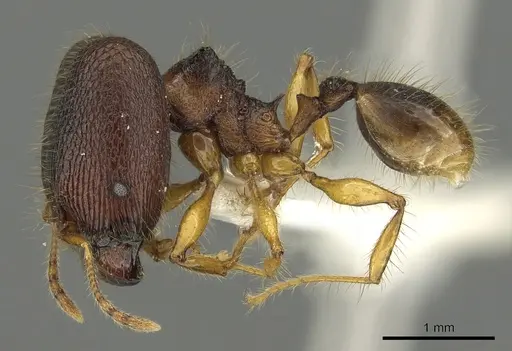
Pheidole angulicollis is a small ant species native to Borneo, Indonesia, and Malaysia. Majors measure 2.6-3.6 mm in total length, while minors are 1.3-2.4 mm. The body is reddish-brown with darker heads on majors. This species inhabits well-developed forests in lowlands and hill areas, nesting in soil under stones at elevations around 1000 meters . Colonies consist of a single queen along with major and minor workers, as observed in a collection from Mahua Waterfall area .
Quick Summary
- Difficulty: Medium
- Origin & Habitat: Borneo, Indonesia, and Malaysia, well-developed forests in lowlands and hill areas, nesting in soil under stones [1]
- Colony Type: Likely monogyne with major and minor worker castes, based on a colony with one dealate queen [1]
- Size & Growth:
- Antkeeping:
- Temperature: Keep warm, around 24-28°C, based on tropical habitat inference
- Humidity: Keep nest substrate consistently moist but not waterlogged, as they nest in soil
- Diapause: No, tropical species do not require hibernation
- Nesting: In nature, nest in soil under stones. In captivity, use soil-based nests or Y-tong/plaster nests with small chambers [1]
- Behavior: Docile and not aggressive toward keepers. Major workers have stingers but rarely use them on humans. Escape risk is moderate due to small size, ensure tight-fitting lids and fine mesh barriers[1]
- Common Issues: high humidity needs mean mold can develop if ventilation is poor, ensure adequate airflow, small size makes escape prevention important, use fine mesh and tight-fitting lids, wild-caught colonies may harbor parasites that can cause colony failure in captivity, slow initial growth during founding phase can lead to overfeeding by impatient keepers, tropical species may struggle if temperatures drop below 22°C for extended periods
Nest Preferences and Housing
Pheidole angulicollis naturally nests in soil under stones in Bornean forest habitats. In captivity, replicate this with a soil-filled container with flat stones on top for cover, or use a Y-tong or plaster nest with small chambers. Provide appropriately sized passages and chambers for these small ants. Keep the nest area dark to mimic underground conditions [1].
Feeding and Diet
This species is omnivorous. Offer protein sources like small insects twice weekly and a constant sugar source such as honey water. Seeds are part of their natural diet, provide small seeds for majors to process. Remove uneaten food after 24-48 hours to prevent mold.
Temperature and Seasonal Care
As a tropical species, keep temperatures around 24-28°C for optimal brood development. Use a heating cable on one side of the nest to create a gentle gradient. Avoid temperatures below 22°C for extended periods.
Behavior and Colony Structure
Colonies have distinct worker castes: majors with large heads and horns, and smaller minors. Minors handle foraging and brood care, while majors specialize in seed processing and defense. The queen is likely monogyne, and colonies start with her sealing herself in a chamber to raise the first brood [1].
Growth and Development
After egg-laying, larvae appear in 1-2 weeks and pupae shortly after. First workers emerge 4-8 weeks later, depending on temperature. The founding phase is critical, avoid disturbing the queen. Major workers typically appear when the colony reaches a certain size.
Frequently Asked Questions
How long does it take for Pheidole angulicollis to produce first workers?
Expect first workers to emerge 4-8 weeks after egg-laying, assuming temperatures around 24-28°C. Timing depends on temperature and feeding. Be patient during the founding phase.
What do Pheidole angulicollis ants eat?
They are omnivorous. Offer protein like small insects twice weekly and a constant sugar source. Remove uneaten food after 24-48 hours.
Can I keep multiple Pheidole angulicollis queens together?
No, this species is likely monogyne, meaning colonies have a single queen. Combining unrelated queens may result in fighting [1].
What temperature do Pheidole angulicollis need?
Keep them warm at 24-28°C. Avoid temperatures below 22°C for extended periods.
Are Pheidole angulicollis good for beginners?
They are rated as medium difficulty due to specific humidity and temperature needs. Beginners should have some antkeeping experience.
When should I move Pheidole angulicollis to a formicarium?
Keep founding colonies in a test tube setup until they reach 20-30 workers, then transfer to a more spacious nest.
Do Pheidole angulicollis need hibernation?
No, as a tropical species, they do not require hibernation.
How big do Pheidole angulicollis colonies get?
Colony size is not documented, but may reach hundreds of workers based on typical Pheidole patterns.
Why are my Pheidole angulicollis dying?
Common causes include temperatures below 22°C, improper humidity, disturbance during founding, or parasites from wild-caught colonies. Ensure stable warm conditions and adequate moisture.
Report an Issue
The current care sheet is based fully on literature. See inconsistencies, or something that's incorrect? Please , it will be resolved after review from an admin. Contributing to the blogs tab also helps providing information, to make us be able to further improve the caresheets. Thank you for your support!
References

This caresheet is licensed under CC BY-SA 4.0 .
Community Blogs
CASENT0281626
View on AntWeb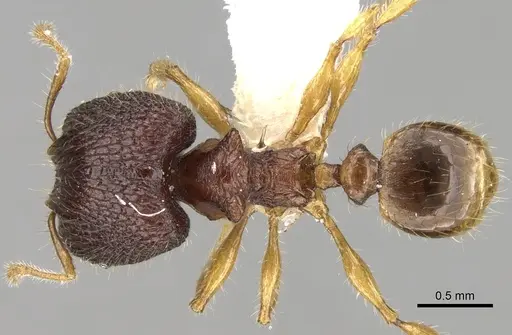
CASENT0282600
View on AntWeb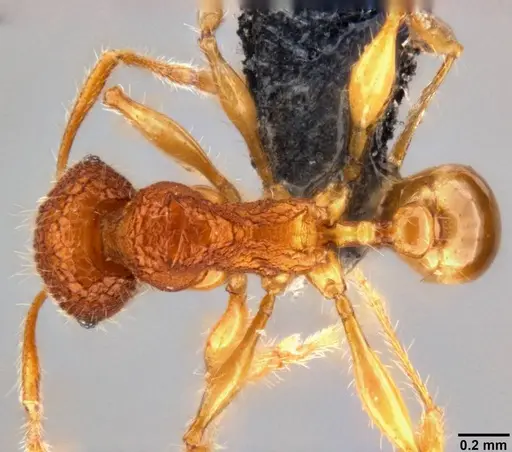
CASENT0901622
View on AntWeb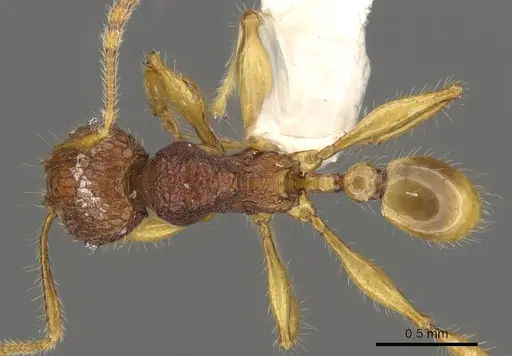
CASENT0901623
View on AntWeb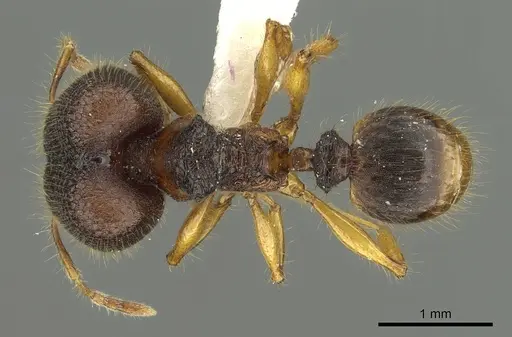
Literature
Loading distribution map...Loading products...