
Pheidole albipes
- Sci. Name
- Pheidole albipes
- Tribe
- Attini
- Subfamily
- Myrmicinae
- Author
- Wilson, 2003
- Distribution
- Found in 2 countries
Introduction
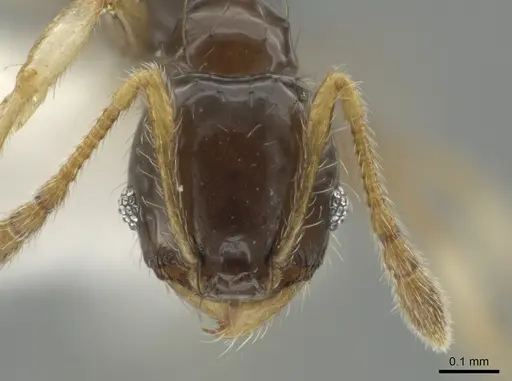
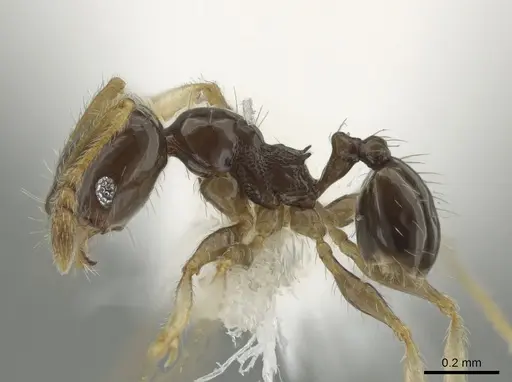
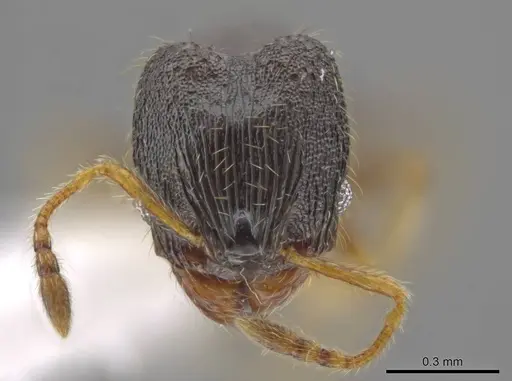
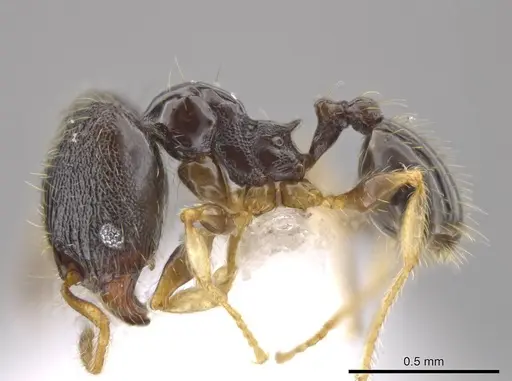
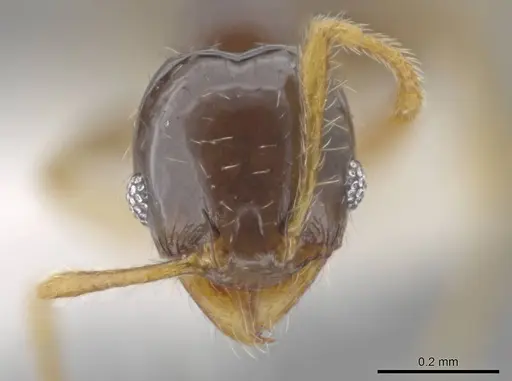
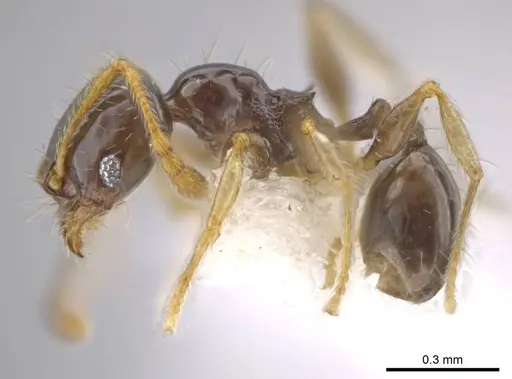
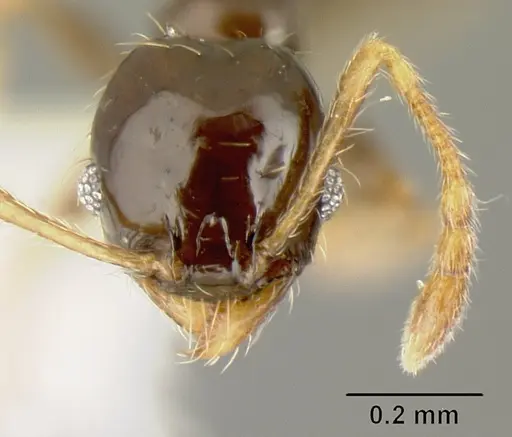
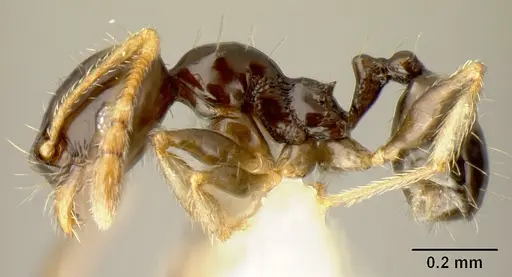
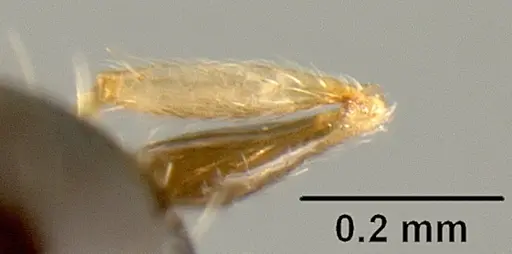
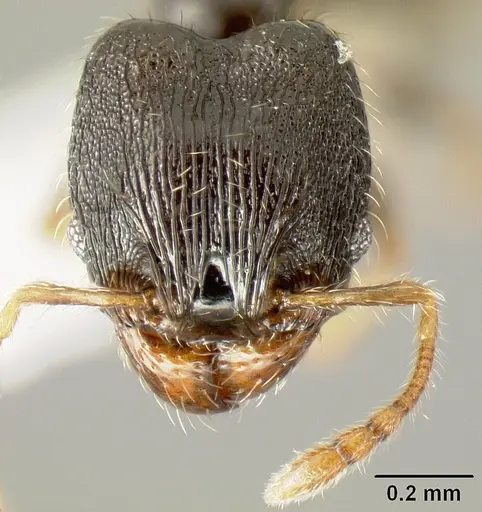
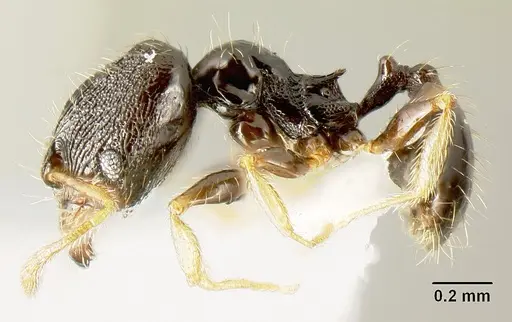
Pheidole albipes is a small ant species native to southern Mexico and Guatemala, found in degraded lowland forest at elevations around 450 meters . Workers are dimorphic with majors and minors, but specific body sizes are unknown. The species has pale yellow tibiae and tarsi that contrast with a reddish-brown body . In the wild, colonies nest in small rotting tree branches in ground leaf litter or under the bark of large rotten logs, making them adaptable to naturalistic captive setups .
Quick Summary
- Difficulty: Easy
- Origin & Habitat: Southern Mexico (Veracruz, Oaxaca, Chiapas, Puebla) and Guatemala in lowland forest, nesting in rotting wood and leaf litter [1][2].
- Colony Type: Based on Pheidole genus patterns, likely monogyne (single-queen colonies).
- Size & Growth:
- Queen: Size data unavailable, no total length measurements provided.
- Worker: Size data unavailable, no total length measurements provided.
- Colony: Estimated up to 2000 workers based on genus patterns.
- Growth: Moderate
- Development: Estimated 6-10 weeks at optimal temperature, based on related Pheidole species. (Development time varies with temperature, warmer conditions speed up development.)
- Antkeeping:
- Temperature: Keep warm, roughly 24-28°C, based on tropical habitat inference.
- Humidity: Keep substrate consistently moist but not waterlogged, based on forest floor habitat.
- Diapause: Unknown, tropical species may not require diapause, but no specific data.
- Nesting: Prefer naturalistic setups with rotting wood and damp substrate, mimicking wild nesting sites [2].
- Behavior: Generally peaceful and not aggressive toward keepers. Major workers have powerful mandibles for seed-cracking and defense, while minors handle foraging and brood care. They possess a sting as per subfamily Myrmicinae, but no specific data on severity for this species. Escape risk is moderate due to small size, use standard barrier precautions.
- Common Issues: mold growth in nest due to excessive moisture, ensure proper ventilation and avoid over-misting., colonies can stall if temperatures drop too low, keep warm year-round., major workers may kill minor workers if space is too confined, provide adequate nesting space., seed husks accumulating in foraging area, clean regularly to prevent mold., queen death during founding is common, ensure founding setup has stable humidity and temperature.
Housing and Nest Setup
Pheidole albipes adapts well to various captive setups. Test tube colonies work for founding queens, use a water tube with cotton separation and provide a small foraging area once workers emerge. For established colonies, Y-tong nests or naturalistic setups with damp soil and rotting wood pieces mimic their natural habitat [2]. Maintain moderate humidity without waterlogging, the nest substrate should feel damp but never show standing water. Always provide a small water tube.
Feeding and Diet
Pheidole species are primarily granivorous, provide small seeds like sesame, chia, or millet. They also need protein from small insects like fruit flies or pinhead crickets. Offer seeds continuously and protein prey 2-3 times per week. Remove uneaten food to prevent mold [3].
Temperature and Seasonal Care
As a tropical species, Pheidole albipes requires warm conditions year-round. Maintain temperatures around 24-28°C for optimal growth. Use a heating cable on top of the nest to create a gentle gradient. They do not require hibernation, but slightly cooler temperatures in winter may slow activity naturally [2].
Colony Development and Growth
A newly mated queen may seal herself in a chamber to raise the first brood on stored reserves. First workers (nanitics) emerge after an estimated 6-10 weeks at optimal temperature. Once workers appear, the colony grows moderately, producing both majors and minors. Majors handle seed-cracking and defense, while minors manage foraging and brood care [3].
Behavior and Observation
Pheidole albipes is calm and observable. Minor workers are active foragers, while majors use their mandibles for defense. They possess a sting but are not aggressive toward humans. Escape risk is moderate, use standard barriers due to their small size [2].
Frequently Asked Questions
How long does it take for Pheidole albipes to get their first workers?
Expect an estimated 6-10 weeks from egg to first worker at optimal temperature (24-28°C), based on related Pheidole species.
Can I keep multiple Pheidole albipes queens together?
This species is likely monogyne, so only one queen per colony. Combining unrelated queens may result in fighting.
What do Pheidole albipes eat?
They are primarily granivorous, feed small seeds like sesame or millet, and provide protein from small insects like fruit flies.
What temperature do Pheidole albipes need?
Keep them warm at roughly 24-28°C, based on their tropical habitat.
Are Pheidole albipes good for beginners?
Yes, they are considered easy to keep, peaceful, adaptable, and with moderate care requirements.
When should I move Pheidole albipes to a formicarium?
Move to a formicarium once the colony reaches around 30-50 workers and the test tube setup becomes crowded, ensuring proper humidity.
Do Pheidole albipes need hibernation?
Unknown, as a tropical species, they may not require diapause, but no specific data exists.
How big do Pheidole albipes colonies get?
Estimated up to 2000 workers based on genus patterns, but specific size data is unavailable.
Why are the legs of Pheidole albipes pale?
This is their natural coloration, the species name 'albipes' means 'white-footed', with pale yellow tibiae and tarsi contrasting the body [2].
Report an Issue
The current care sheet is based fully on literature. See inconsistencies, or something that's incorrect? Please , it will be resolved after review from an admin. Contributing to the blogs tab also helps providing information, to make us be able to further improve the caresheets. Thank you for your support!
References

This caresheet is licensed under CC BY-SA 4.0 .
Community Blogs
CASENT0611235
View on AntWeb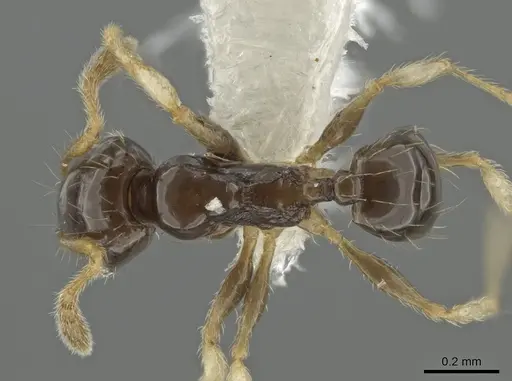
CASENT0611412
View on AntWeb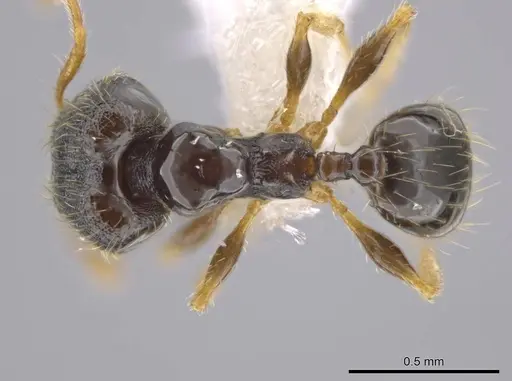
CASENT0614168
View on AntWeb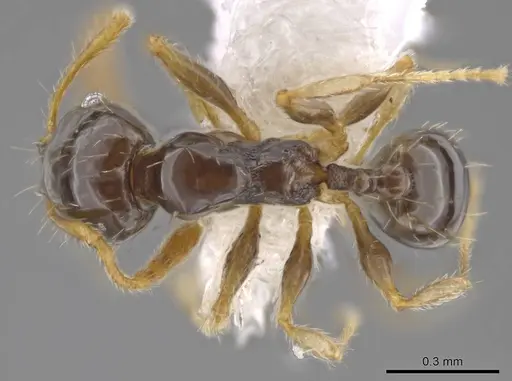
JTLC000009724
View on AntWeb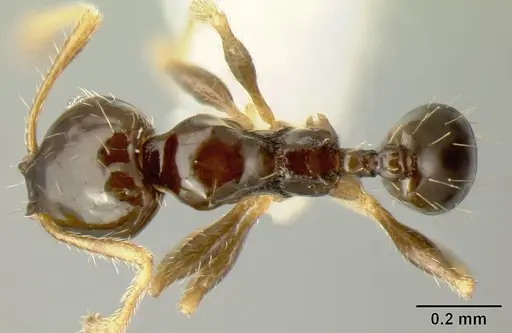
JTLC000010035
View on AntWeb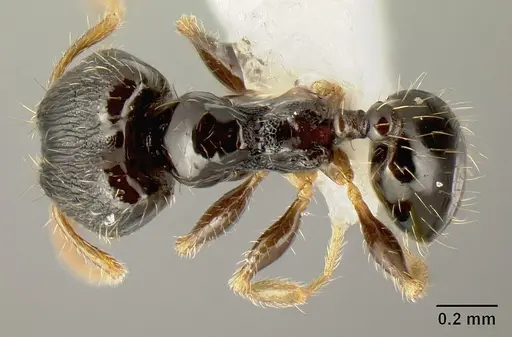
Literature
Loading distribution map...Loading products...