
Pheidole acantha
- Sci. Name
- Pheidole acantha
- Tribe
- Attini
- Subfamily
- Myrmicinae
- Author
- Eguchi, 2001
- Distribution
- Found in 1 countries
Introduction
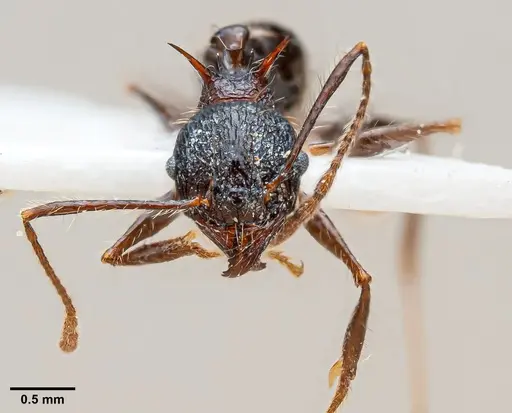
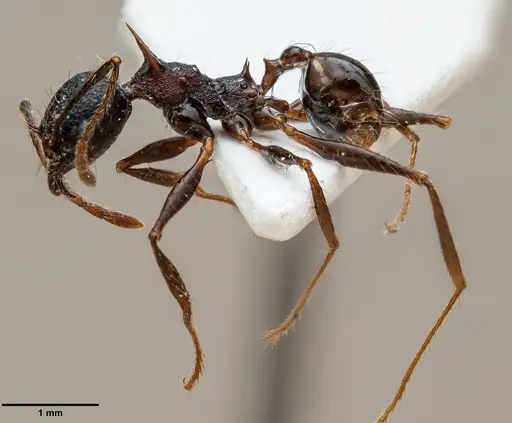
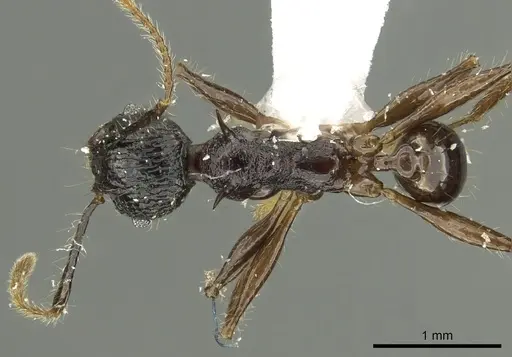
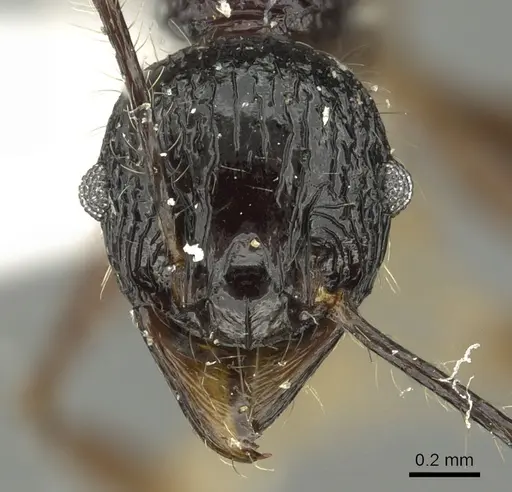
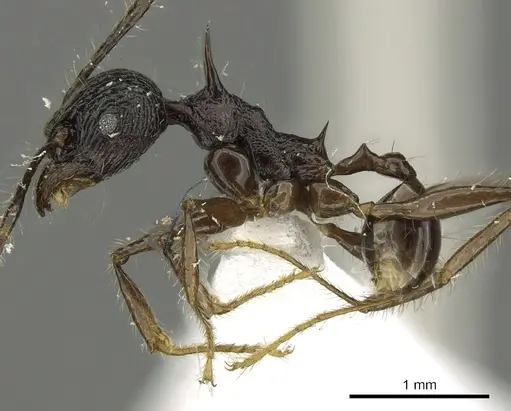
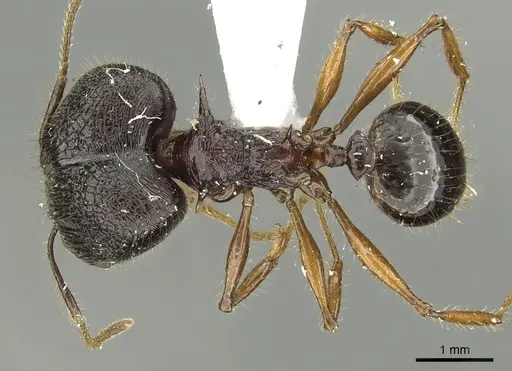
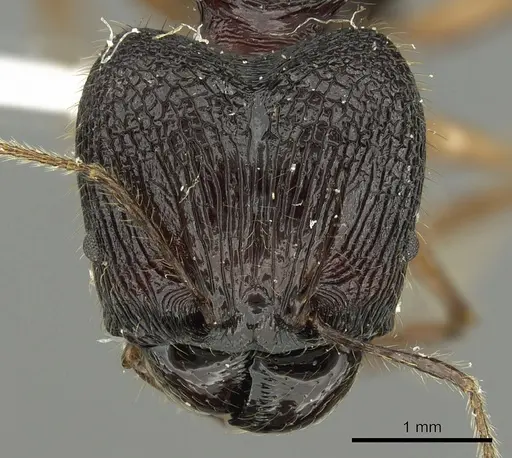
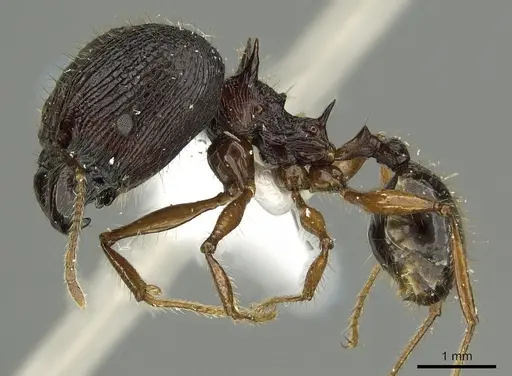
Pheidole acantha is a small ant species in the Pheidole quadricuspis group, native to Borneo. Majors have a total length of 4.3-5.3 mm, minors 2.8-3.3 mm, with brown to dark reddish-brown coloration . They inhabit well-developed forests on Mt. Kinabalu at 1500-1800 m elevation, nesting in rotting wood . This species is distinguished by majors having a promesonotal dome with a conspicuous transverse ridge on the posterior slope, and minors having fewer than 10 standing hairs on the mesosoma dorsum . A notable feature is their adaptation to high-altitude environments, requiring cooler temperatures than many tropical ants .
Quick Summary
- Difficulty: Medium
- Origin & Habitat: Borneo (Sabah, Malaysia) at 1500-1800m elevation in well-developed rainforest, nesting in rotting wood [1][2]
- Colony Type: Unconfirmed, no specific data on queen number from research
- Size & Growth:
- Queen: size unknown, inferred from Pheidole genus (~6-8 mm)
- Worker: Major: ~4.3-5.3 mm, Minor: ~2.8-3.3 mm [1]
- Colony: Unknown, typical Pheidole colonies can reach several hundred workers
- Growth: Moderate
- Development: Estimated 6-10 weeks at optimal temperature (Development time is estimated from genus-level data as species-specific research is unavailable)
- Antkeeping:
- Temperature: Keep cool, roughly 22-24°C, based on high-altitude origin [1]
- Humidity: Keep nest substrate consistently moist but not waterlogged, as they nest in rotting wood [2]
- Diapause: Unknown, no data on hibernation requirements
- Nesting: Prefer Y-tong, plaster, or naturalistic nests with rotting wood pieces, mimicking their natural habitat [1][2]
- Behavior: This species has a sting as a defense mechanism, but it is less medically significant to humans. Minors are small (2.8-3.3 mm) and can escape through small gaps, so use standard escape prevention. They are generalist foragers and not particularly aggressive toward keepers.
- Common Issues: overheating due to high-altitude origin, keep below 26°C, humidity management to prevent mold in rotting wood nests, slow founding phase typical of Pheidole, colonies may take time to establish, wild-caught colonies may carry parasites that affect survival in captivity
Housing and Nest Preferences
You should replicate their natural rotting wood nests in captivity using Y-tong nests, plaster nests, or naturalistic setups with wood pieces [1][2]. They prefer tight chambers and narrow passages that match their natural hollows in decaying logs. Keep the nest area consistently humid but never waterlogged, these forest floor ants need moisture to prevent their brood from drying out. A water tube attached to the nest works well for maintaining humidity. Because they come from high elevations (1500-1800m), avoid placing their setup in warm rooms or near heat sources that would push temperatures above 26°C [1].
Feeding and Diet
You can offer a variety of foods as they are generalist foragers. Provide protein sources like small insects (fruit flies, small mealworms) and seeds, particularly oily seeds which majors can process with their powerful mandibles. They will also collect honeydew and sugar water. Feed protein 2-3 times per week and keep sugar water available at all times. Remove uneaten prey after 24-48 hours to prevent mold. Their forest floor lifestyle means they likely forage actively in the leaf litter layer, so provide an outworld space for normal exploration [2].
Temperature and Seasonal Care
Keep the nest area at 22-24°C, ideally toward the cooler end, as they are adapted to high-altitude conditions [1]. Room temperature is often suitable, but avoid using heating cables or mats unless your room stays below 20°C. Watch for workers clustering away from heat sources, if they consistently avoid a warm area, reduce temperature. They likely experience less seasonal temperature variation than temperate species, so no true hibernation is needed, but activity may slow during cooler periods.
Colony Development and Growth
Pheidole colonies grow through the production of major and minor workers. The first generation (nanitics) is typically smaller but develops quickly. Expect 6-10 weeks from egg to first worker based on typical Pheidole development patterns. Colonies may remain small for the first few months as the queen lays eggs slowly while establishing the first worker cohort. Once workers establish, growth accelerates as more foragers means more food collection. Major workers appear later in colony development and require more resources to produce.
Behavior and Defense
This species has a sting as a defense mechanism, but it is less medically significant to humans than fire ants. Minor workers handle most daily tasks including foraging, brood care, and nest maintenance, while major workers serve as colony defenders and seed processors. Majors have enlarged heads with powerful mandibles suited for cracking seeds and deterring predators. They are not particularly aggressive toward keepers but will defend the nest if threatened. The minor workers are small (2.8-3.3 mm) and can squeeze through small gaps, use standard escape prevention with smooth surfaces and barrier gel.
Frequently Asked Questions
How long does it take for Pheidole acantha to produce first workers?
Expect 6-10 weeks from egg to first worker at optimal temperature (22-24°C). This is based on typical Pheidole development patterns since species-specific data is not available. The founding queen may take longer to lay her first eggs, so be patient during the founding phase.
What temperature is best for Pheidole acantha?
Keep them at 22-24°C, as they come from high-altitude Borneo (1500-1800m) and are adapted to cooler conditions [1]. Avoid overheating, if workers avoid a warm area of the nest, reduce temperature.
What do Pheidole acantha ants eat?
They are generalist foragers. Offer small insects (fruit flies, small mealworms) as protein 2-3 times per week, keep sugar water or honey available at all times, and they will also collect seeds. Remove uneaten prey after 24-48 hours to prevent mold.
Can I keep multiple Pheidole acantha queens together?
Not recommended, as colony type is unconfirmed and Pheidole species are typically single-queen colonies. Combining unrelated queens has not been documented for this species and would likely result in aggression.
What size colony does Pheidole acantha reach?
Colony size is not documented specifically, but typical Pheidole colonies can reach several hundred workers. Growth is moderate, expect several months to establish a small colony.
What type of nest is best for Pheidole acantha?
Y-tong nests, plaster nests, or naturalistic setups with rotting wood pieces work well. They prefer tight, humid chambers that mimic their natural rotting wood nests [1][2].
Does Pheidole acantha need hibernation?
Unknown, being from a tropical highland environment, they likely do not require true hibernation. They may have reduced activity during cooler periods, but no diapause period is documented. Keep them at stable temperatures year-round.
Why are my Pheidole acantha workers dying?
Common causes include: overheating (keep below 26°C), too low humidity (they need damp rotting wood conditions), mold from overwatering or uneaten food, or parasites from wild-caught colonies. Check temperature and humidity first, then review feeding practices.
Are Pheidole acantha good for beginners?
Medium difficulty, they require attention to temperature (preferring cooler conditions than most tropical ants) and humidity. Their high-altitude origin makes them somewhat specialized. If you can maintain 22-24°C and provide proper humidity, they are manageable for intermediate antkeepers.
Report an Issue
The current care sheet is based fully on literature. See inconsistencies, or something that's incorrect? Please , it will be resolved after review from an admin. Contributing to the blogs tab also helps providing information, to make us be able to further improve the caresheets. Thank you for your support!
References

This caresheet is licensed under CC BY-SA 4.0 .
Community Blogs
Literature
Loading distribution map...Loading products...