
Pheidole aberrans
- Sci. Name
- Pheidole aberrans
- Tribe
- Attini
- Subfamily
- Myrmicinae
- Author
- Mayr, 1868
- Distribution
- Found in 5 countries
Introduction
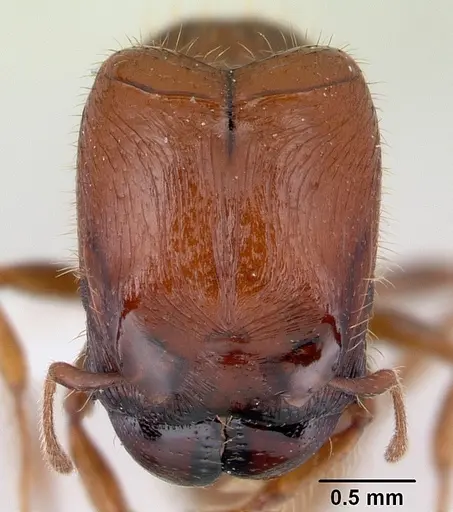
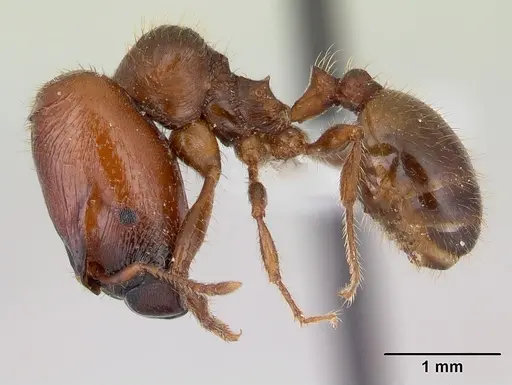
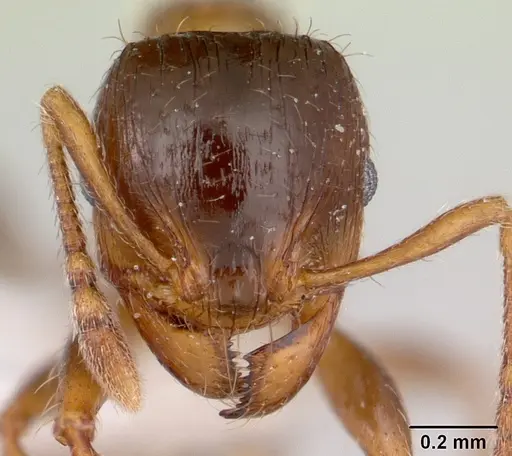
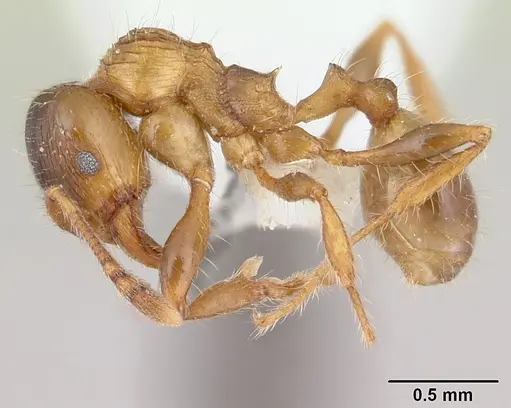
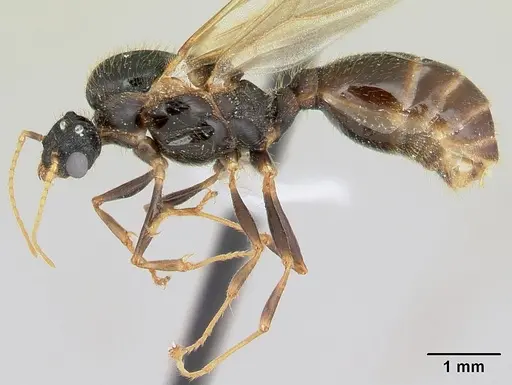
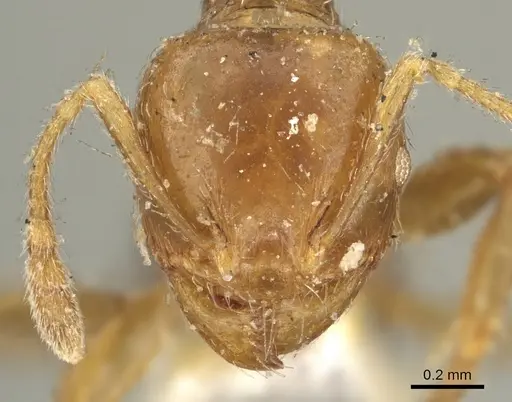
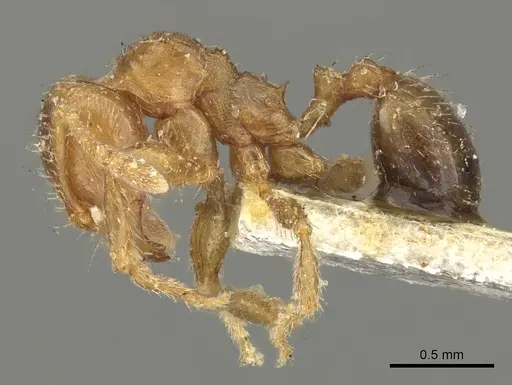
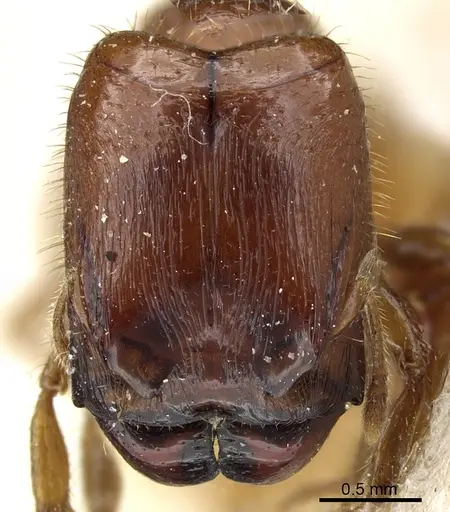
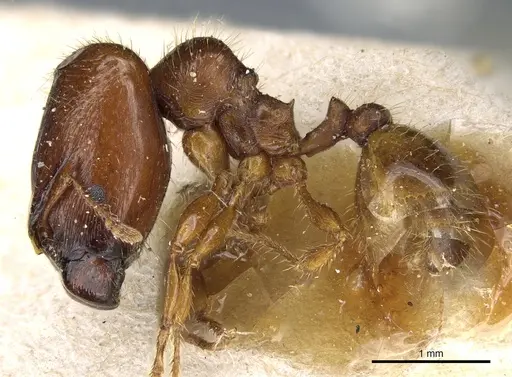
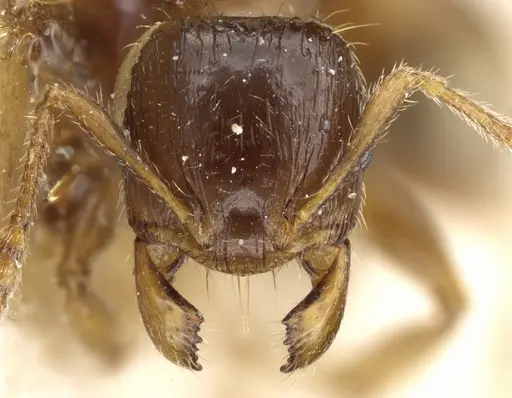
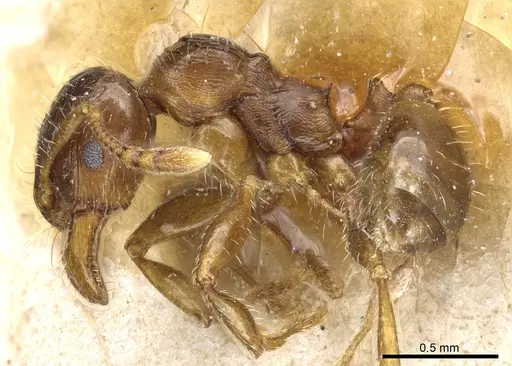
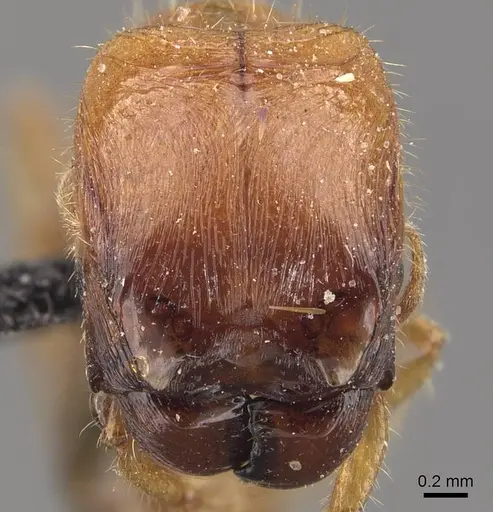
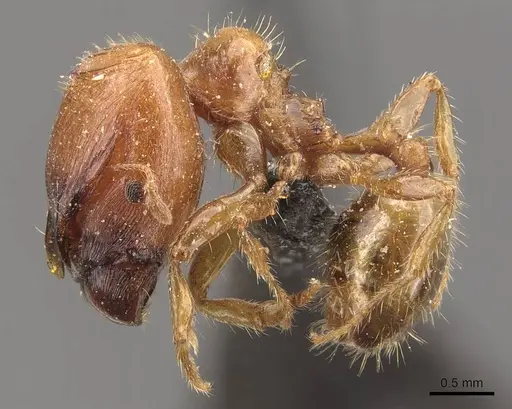
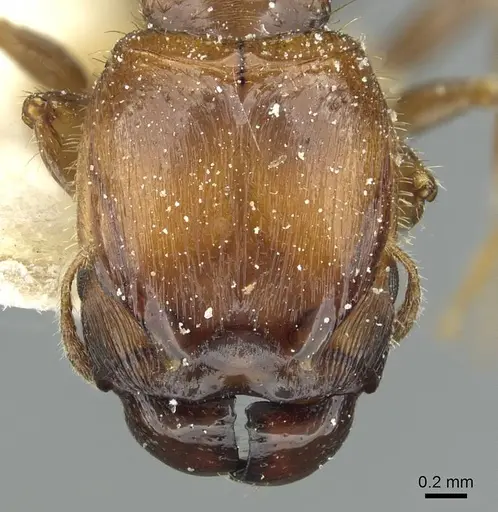
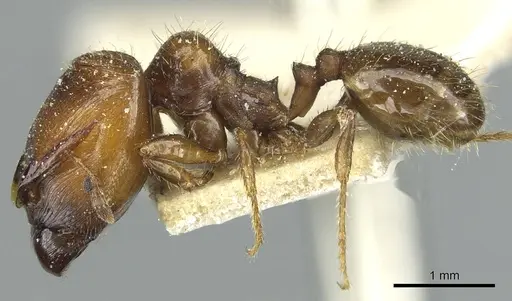
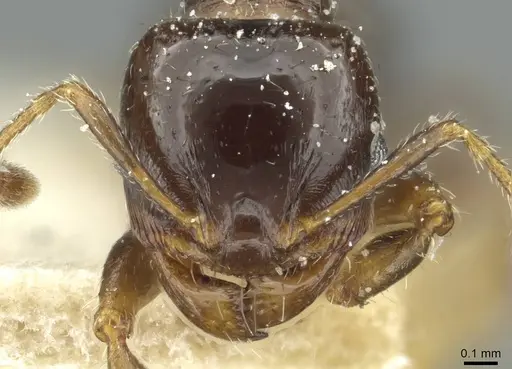
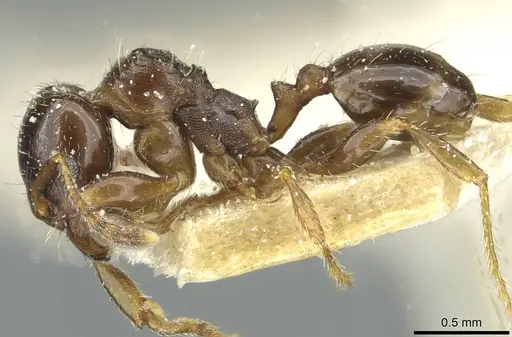
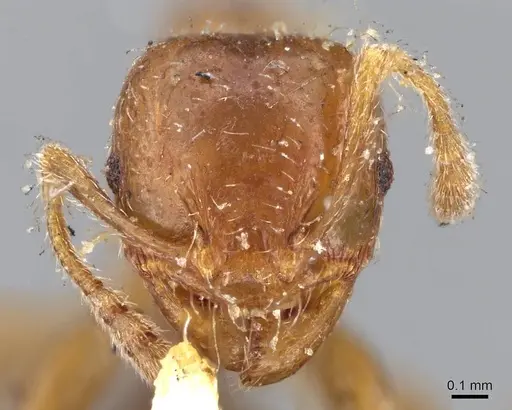
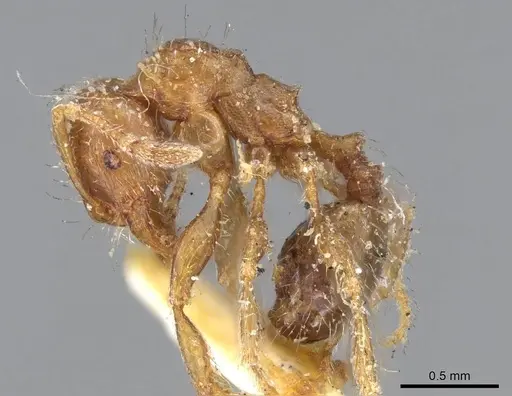
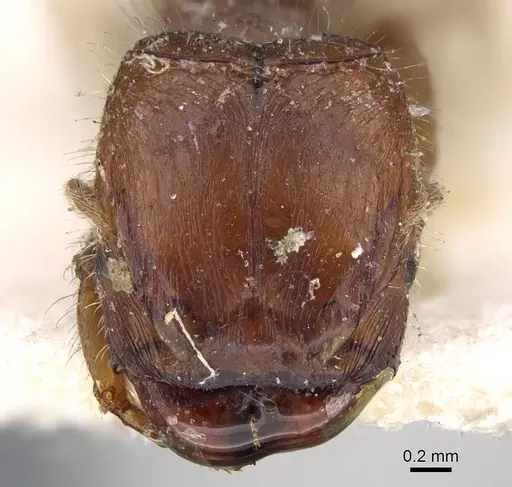
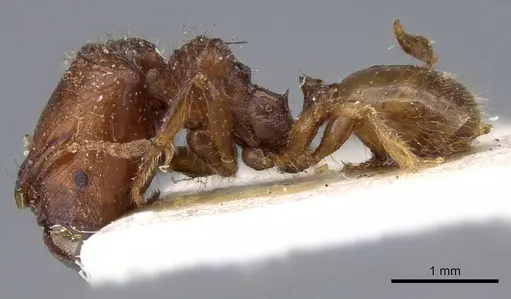
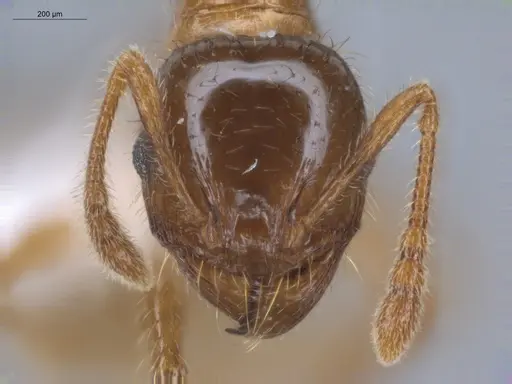
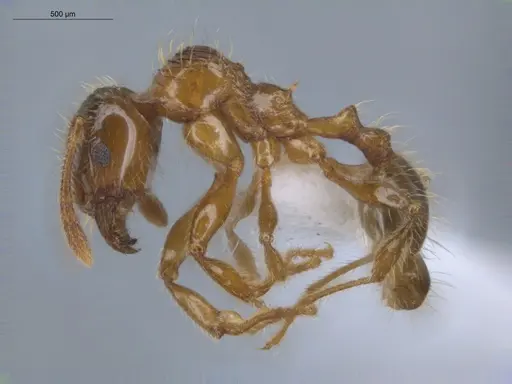
Pheidole aberrans is a small Neotropical ant native to South America. Majors have reddish-brown coloration with a uniquely shaped head, while minors are smaller. The species is found in Argentina, Brazil, Bolivia, Peru, Paraguay, and French Guiana, typically nesting in open ground . A key feature is that major workers have a thoracic crop, allowing them to store liquids as repletes, and they rarely forage outside the nest .
Quick Summary
- Difficulty: Easy
- Origin & Habitat: Native to the Neotropical region, Argentina, Brazil, Bolivia, Peru, Paraguay, and French Guiana. Found in diverse habitats including cactus scrub, overgrazed pasture, residential backyards, roadsides, and vineyards. Nests are excavated in open ground [1]. Shows positive association with summer months [3].
- Colony Type: Based on typical Pheidole patterns, likely single-queen (monogyne) colonies. Colonies contain both major and minor workers, with majors serving as repletes for liquid food storage [2].
- Size & Growth:
- Queen: Size data unavailable
- Worker: Size data unavailable
- Colony: Colony size unknown
- Growth: Moderate
- Development: Unknown, no specific data on development time for Pheidole aberrans (Direct measurements for Pheidole aberrans are not available)
- Antkeeping:
- Temperature: Keep at 24-28°C. This species is found in warm regions and shows positive association with summer sampling [3]. A heating cable can create a gradient.
- Humidity: Keep nest substrate moderately moist. They naturally nest in soil chambers [1]. Provide a water tube for moisture.
- Diapause: Unknown, no specific data on hibernation requirements.
- Nesting: Y-tong or plaster nests work well. They excavate soil chambers, so a nest with multiple chambers mimics this [1]. Use tight-fitting lids for small minors.
- Behavior: Relatively calm. Majors stay in nest as repletes [2], minors forage. Ground-dwelling, explore outworld. Associate with mealybugs for honeydew. Escape prevention important for small minors.
- Common Issues: small minor workers can escape through standard test tube openings, use fine mesh barriers, colonies may be slow to establish in captivity due to limited major recruitment outside nest, overfeeding can lead to mold in the nest, remove uneaten food promptly, wild-caught colonies may have parasites that affect survival in captivity, lack of major workers foraging means food discovery may be slower, place food directly in the nest chamber initially
Housing and Nest Setup
Use Y-tong or plaster nests for Pheidole aberrans, as they maintain humidity well. Their natural nests have horizontal chambers connected by vertical galleries [1], so a nest with multiple chambers works well. Start with a test tube setup for founding colonies, then move to a formicarium when the colony has 30-50 workers. Ensure all connections are tight since minor workers are small. Provide a water tube for constant humidity. Place the nest in a quiet location away from direct sunlight and vibrations.
Feeding and Diet
In the wild, this species associates with mealybugs in vineyards and collects honeydew, along with protein from small insects. In captivity, offer sugar water or honey water as a constant energy source. For protein, provide small insects like fruit flies, small crickets, or mealworm pieces. They are not aggressive foragers, so place food near the nest entrance initially until workers discover it. The unique thoracic crop in major workers means they can store significant amounts of liquid food, you may notice majors becoming engorged after sugar feeding. Minor workers do the majority of foraging, so ensure the outworld is accessible to them. [2]
Temperature and Seasonal Care
Keep the nest at 24-28°C for optimal colony development. This species is found in warm regions of South America and shows positive association with summer sampling in studies. A heating cable placed on one side of the nest creates a temperature gradient that allows ants to regulate their position. Room temperature in the low-to-mid 20s°C is often suitable. There is no specific data on diapause requirements, but based on their subtropical distribution, they likely maintain activity year-round with possibly reduced foraging in cooler months. If your room temperature drops below 20°C in winter, consider mild heating. [3]
Colony Structure and Castes
Pheidole aberrans has dimorphic workers, majors and minors. The majors have a distinctive large head with bilaterally symmetrical frontal lobes and a thoracic crop that allows them to store liquids. This makes them function as repletes, similar to how honey ants store nectar. Interestingly, majors are rarely recruited out of the nest for foraging, the smaller minor workers handle most food collection and exploration. This division of labor means you may see fewer majors outside the nest, which is normal for this species. Colonies likely start with a single queen based on typical Pheidole patterns. [2]
Behavior and Observation
This is a rewarding species to observe because of the clear division of labor between castes. Minor workers actively explore the outworld and discover food, then recruit nestmates through chemical trails. When they return with liquid food, majors in the nest may engorge as they store the liquid in their thoracic crop. The species is ground-dwelling and prefers to nest in soil-like substrates. They are not particularly aggressive and can be housed in standard ant setups. Watch for their association with vineyards in the wild, they are known to tend mealybugs for honeydew, so sugar sources are definitely accepted. [2]
Frequently Asked Questions
Do Pheidole aberrans majors forage?
No, majors rarely leave the nest. They serve as repletes, specialized workers that store liquid food in their thoracic crop. Minor workers handle all foraging and food collection.
What do Pheidole aberrans eat?
They accept sugar sources (honey water, sugar water) and protein (small insects like fruit flies, crickets, mealworms). In the wild, they tend mealybugs in vineyards for honeydew.
Report an Issue
The current care sheet is based fully on literature. See inconsistencies, or something that's incorrect? Please , it will be resolved after review from an admin. Contributing to the blogs tab also helps providing information, to make us be able to further improve the caresheets. Thank you for your support!
References

This caresheet is licensed under CC BY-SA 4.0 .
Community Blogs
CASENT0178005
View on AntWeb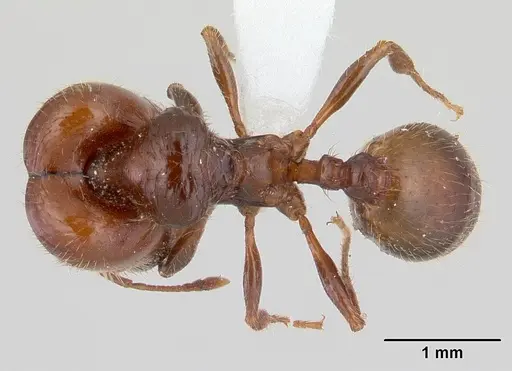
CASENT0178006
View on AntWeb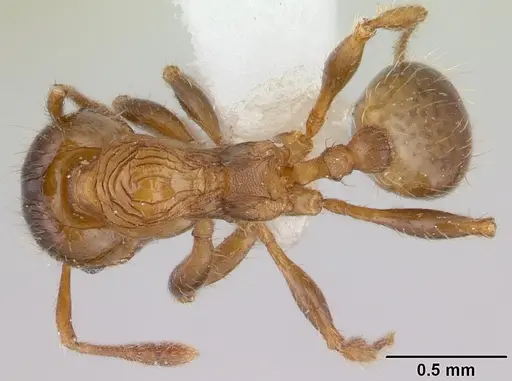
CASENT0178007
View on AntWeb
CASENT0901605
View on AntWeb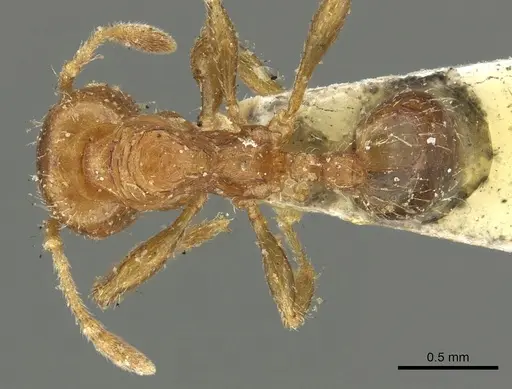
CASENT0904309
View on AntWeb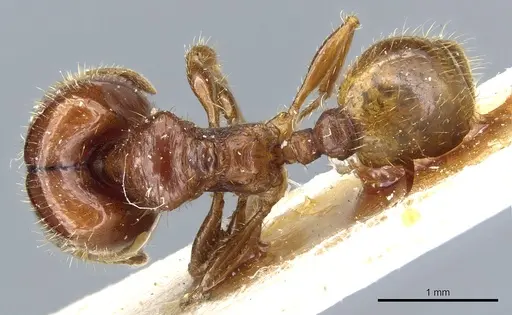
CASENT0904310
View on AntWeb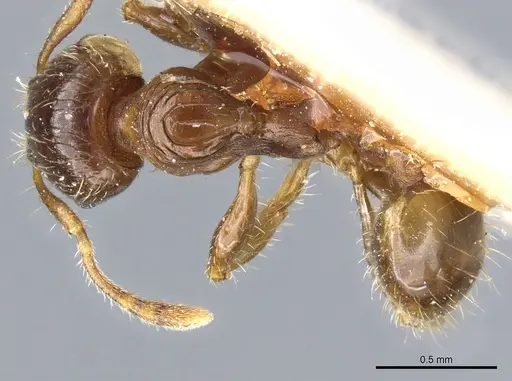
CASENT0908302
View on AntWeb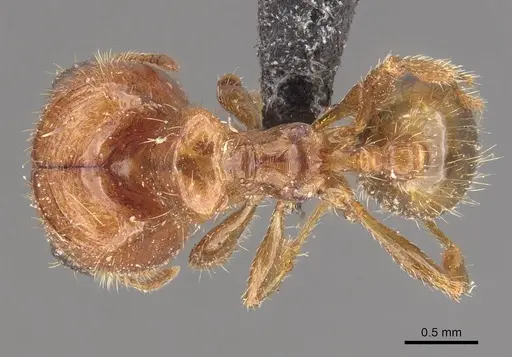
CASENT0913252
View on AntWeb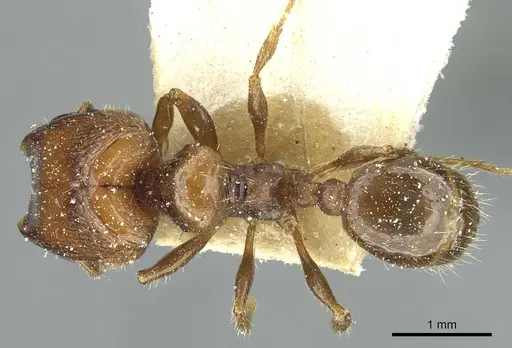
CASENT0913253
View on AntWeb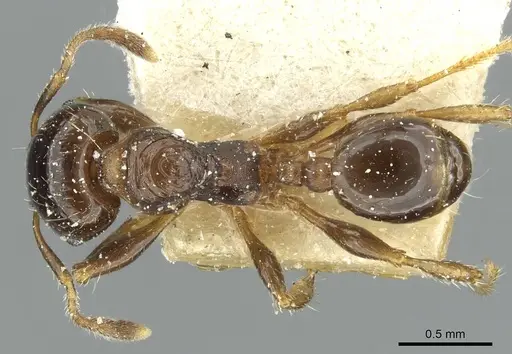
CASENT0919766
View on AntWeb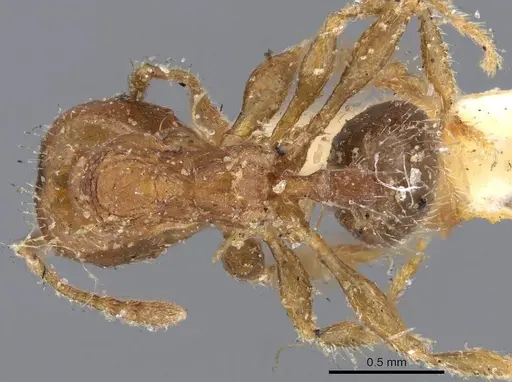
CASENT0919767
View on AntWeb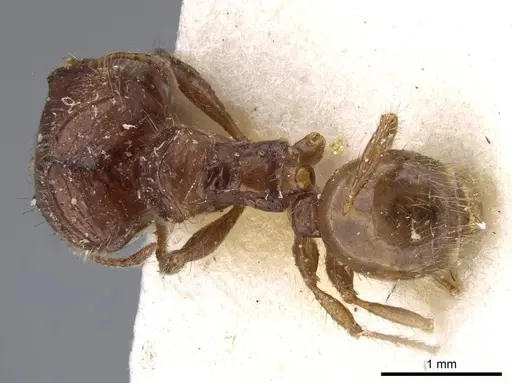
ECOFOG-BUG-1033-03
View on AntWeb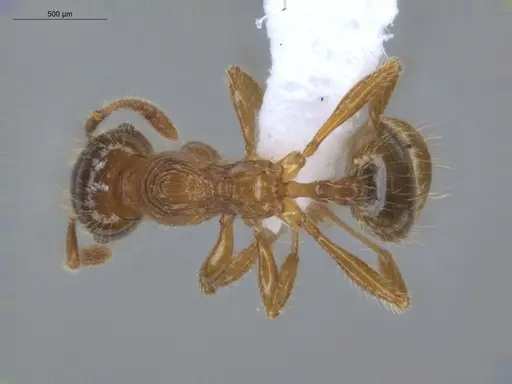
Literature
Loading distribution map...Loading products...