
Parasyscia ganeshaiahi
- Sci. Name
- Parasyscia ganeshaiahi
- Subfamily
- Dorylinae
- Author
- Aswaj <i>et al.</i>, 2021
- Distribution
- Found in 1 countries
Introduction
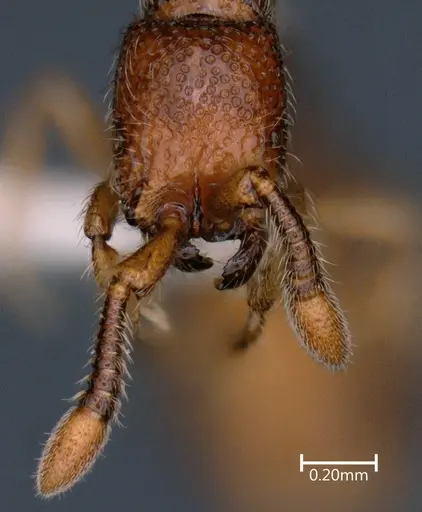
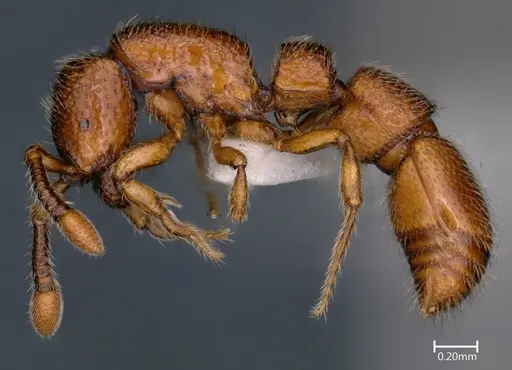
Parasyscia ganeshaiahi is a tiny doryline ant with a yellowish-brown body, reddish-brown antennae and mandibles, and 11-segmented antennae . Workers measure 2.82mm in total length . This species is found in India (Arunachal Pradesh) and China (Hainan) . It inhabits shaded, humid leaf litter in high-canopy forests, as seen in the Eaglenest Wildlife Sanctuary at 1400m elevation . The most unusual feature is its 11-segmented antennae, as most doryline ants have only 10 segments, making it distinct from relatives .
Quick Summary
- Difficulty: Expert
- Origin & Habitat: Found in the Eaglenest Wildlife Sanctuary in Arunachal Pradesh, India at 1400m elevation, with records also in Hainan Province, China. They live in shaded, humid leaf litter in high-canopy forest (90% canopy cover) with low light penetration. Soil pH was 6.83 and temperature was 17°C at the time of collection [1][2][3].
- Colony Type: Unknown, this species was only recently described in 2021 and colony structure has not been documented. Only the worker holotype has been studied.
- Size & Growth:
- Antkeeping:
- Temperature: Keep cool, around 18-22°C. The type specimen was collected at 17°C, suggesting they prefer cooler conditions [1].
- Humidity: High humidity is essential. They live in damp leaf litter under dense forest canopy. Keep the nest substrate consistently moist but not waterlogged [1].
- Diapause: Unknown, no research on seasonal behavior.
- Nesting: These tiny ants live in leaf litter and soil. In captivity, a small test tube setup or a miniature naturalistic setup with damp soil works well. The key is maintaining high humidity while ensuring excellent escape prevention [1].
- Behavior: No specific behavioral studies exist for this species. As a doryline ant, they are likely predatory on other small invertebrates [1]. Their small eyes suggest they rely less on vision. Escape prevention is critical due to their tiny size.
- Common Issues: escape prevention is critical, at 2.82mm they can squeeze through gaps that seem sealed, humidity management is challenging, too wet causes mold, too dry kills them, this species may be extremely difficult to establish in captivity given how recently it was discovered, no information on what foods they accept, feeding may be experimental
Discovery and Taxonomy
Parasyscia ganeshaiahi was described in 2021 [1]. It was found in the Eaglenest Wildlife Sanctuary in Arunachal Pradesh, India [1]. The species was named to honor Prof. K.N. Ganeshaiah [1]. What makes this species particularly interesting is its 11-segmented antennae, most doryline ants have only 10 segments [1]. The type specimen was collected using a Winkler extractor from sifted leaf litter [1].
Habitat and Distribution
This species is known from two geographically separated areas: the type locality in Arunachal Pradesh, India (around 1400m elevation) and multiple locations in Hainan Province, China [1][3]. The Indian collection site had 90% canopy cover with very low light penetration [1]. The soil at collection had a pH of 6.83 and temperature of 17°C [1]. This suggests they prefer montane forest conditions [1].
Identification and Morphology
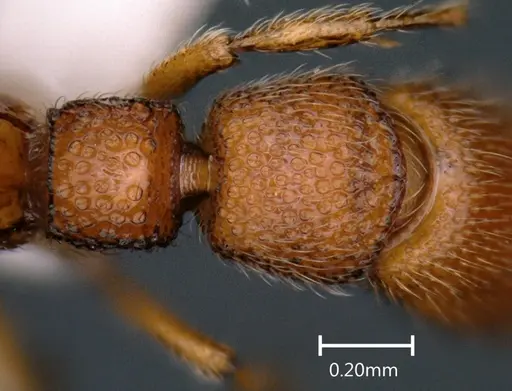
Workers are tiny at only 2.82mm total length [1]. They have a distinctive rectangular head that is longer than wide [1]. Their eyes are relatively large for the genus (EI 11) [1]. The body is covered with numerous distinct foveolae [1]. Body coloration is mainly yellowish brown, with antennal segments III-X and mandibles reddish brown [1].
Housing and Escape Prevention
Given their minute size of 2.82mm, excellent escape prevention is essential [1]. Use tightly sealed test tubes or mini formicariums with fine mesh barriers [1]. A small test tube setup with a cotton plug works well for founding colonies [1].
Feeding and Diet
As a doryline ant, this species is likely predatory on other small invertebrates [1]. In captivity, you should start with tiny live prey such as springtails or fruit fly larvae [1].
Temperature and Environmental Needs
Based on collection data showing the type specimen was found at 17°C, these ants prefer cool, stable temperatures [1]. Aim for 18-22°C in captivity [1]. Humidity should be high, these ants lived in damp leaf litter [1].
Frequently Asked Questions
How long does it take for Parasyscia ganeshaiahi to develop from egg to worker?
This is unknown, no research has documented the development timeline for this species. As a recently described species (2021), no one has successfully bred them in captivity yet [1].
What do Parasyscia ganeshaiahi ants eat?
No feeding observations exist for this species. As a doryline ant, they are likely predatory on small invertebrates. In captivity, you should offer tiny live prey like springtails or fruit fly larvae [1].
Are Parasyscia ganeshaiahi ants dangerous?
At 2.82mm, these ants are far too small to sting humans effectively. Their mandibles could theoretically bite, but the tiny size makes any bite harmless [1].
Can beginners keep Parasyscia ganeshaiahi?
This species is not recommended for beginners. It was only described in 2021,meaning almost no captive husbandry information exists. Their tiny size makes escape prevention challenging, and their environmental requirements are specific [1].
Do Parasyscia ganeshaiahi need hibernation?
Unknown, no research exists on their seasonal behavior. However, their high-elevation habitat in India suggests they experience cooler winters [1].
What temperature should I keep Parasyscia ganeshaiahi at?
Keep them cool, around 18-22°C. The type specimen was collected at 17°C in a shaded forest environment [1]. Avoid temperatures above 25°C.
How big do Parasyscia ganeshaiahi colonies get?
Unknown, only a single worker (the holotype) has ever been documented. No colony size data exists [1].
What is the best nest type for Parasyscia ganeshaiahi?
A small test tube setup works well for this tiny species. The key requirements are maintaining high humidity while ensuring excellent escape prevention [1]. A naturalistic setup with damp soil and leaf litter also mimics their natural habitat.
Can I keep multiple Parasyscia ganeshaiahi queens together?
Unknown, no research exists on colony structure for this species. The colony type (single queen vs multiple queen) has not been documented [1].
Why are my Parasyscia ganeshaiahi dying?
Without any established husbandry protocols, colony failures are likely. Common causes may include escape through tiny gaps, improper temperature, humidity issues, or unsuitable food [1].
Report an Issue
The current care sheet is based fully on literature. See inconsistencies, or something that's incorrect? Please , it will be resolved after review from an admin. Contributing to the blogs tab also helps providing information, to make us be able to further improve the caresheets. Thank you for your support!
References

This caresheet is licensed under CC BY-SA 4.0 .
Community Blogs
NBAIRHYM-FOR1721-1
View on AntWeb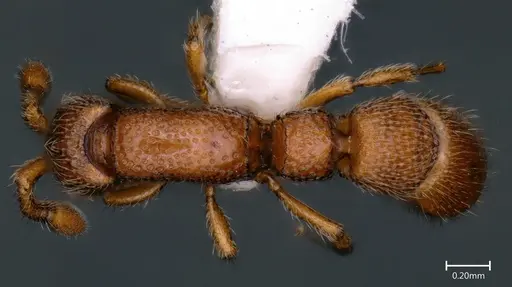
Literature
Loading distribution map...Loading products...