
Paraparatrechina splendida
- Sci. Name
- Paraparatrechina splendida
- Tribe
- Lasiini
- Subfamily
- Formicinae
- Author
- LaPolla & Cheng, 2010
- Distribution
- Found in 2 countries
Introduction
Paraparatrechina splendida is a tiny rainforest ant native to Central Africa, specifically Gabon and Uganda . Workers measure 1.4-2.6 mm in total length . They have a dark brown body with bluish-purple iridescence, and their head is longer than broad with long antennae scapes . They inhabit rainforest environments . This species is the largest and darkest Afrotropical Paraparatrechina, and only the worker caste has been described, making it poorly known in antkeeping .
Quick Summary
- Difficulty: Hard
- Origin & Habitat: Rainforest habitats in Gabon and Uganda [1][2][3]
- Colony Type: Unknown, only workers have been collected, no queen or colony structure documented
- Size & Growth:
- Antkeeping:
- Temperature: Based on their rainforest origin, keep warm at approximately 24-28°C [3]
- Humidity: Keep substrate consistently moist but not waterlogged, based on rainforest habitat [3]
- Diapause: Unknown, no data on overwintering, as a tropical species, likely no diapause needed
- Nesting: Likely nest in rotting wood or debris, use humid nests like Y-tong or plaster [3]
- Behavior: Temperament not documented, their tiny size makes escape risk high, so use fine mesh barriers [1][2]
- Common Issues: tiny size makes escape likely without fine mesh barriers., no breeding stock available, this species is not established in the antkeeping hobby., humidity requirements are critical, dry conditions will kill colonies., limited biological data makes care recommendations uncertain., only worker caste known, cannot establish breeding colonies.
Appearance and Identification
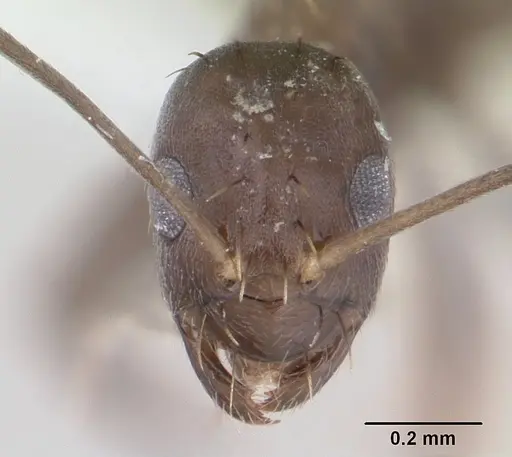
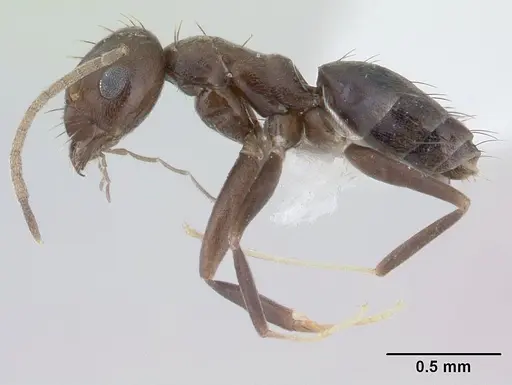
Paraparatrechina splendida workers are tiny ants measuring 1.4-2.6 mm in total length [1][2]. They have a dark brown body with bluish-purple iridescence, and their head is distinctly longer than broad [1][2]. The antennae scapes are long, surpassing the head margin by about the length of the first five funicular segments [1][2]. The body is covered in short white pubescence, and the legs are dark brown with lighter tarsi [1][2]. This is the largest and darkest Afrotropical Paraparatrechina species, closely related to Paraparatrechina concinnata [1][2].
Natural Habitat and Distribution
This species is found in rainforest habitats in Gabon and Uganda [1][2][3]. Most collections come from rainforest environments, indicating a preference for humid, shaded forest floor conditions [3]. The type locality is in the Monts Doudou reserve in Gabon at 375 meters elevation [1][2].
Temperature and Humidity Requirements
As a rainforest species, Paraparatrechina splendida requires warm and humid conditions. Keep the nest at approximately 24-28°C, based on their tropical habitat [3]. Humidity should be maintained with consistently moist substrate, but not waterlogged, to mimic rainforest floor conditions [3]. A temperature gradient can be created using a heating cable on one side of the nest.
Feeding and Diet
The specific diet of Paraparatrechina splendida has not been documented in scientific literature [1]. Based on related Paraparatrechina species, they are likely generalist foragers that collect honeydew and small insects. In captivity, offer sugar water or honey for energy, and small protein sources like fruit flies or springtails.
Nesting and Housing
Only workers have been collected, so nesting preferences are inferred from habitat data. They likely nest in rotting wood or debris on the rainforest floor [3]. For captive care, use a humid nest setup such as Y-tong (AAC) or plaster nests with small chambers. Escape prevention is critical due to their tiny size, use fine mesh barriers [1][2].
Current Availability and Collection
Paraparatrechina splendida is not established in the antkeeping hobby. Only the worker caste has been described, and no queens have been documented [1][2]. This species was first described in 2010,and biological studies beyond morphology are lacking [1][2].
Frequently Asked Questions
Can I keep Paraparatrechina splendida as a pet ant?
This species is not available in the antkeeping hobby. Only the worker caste has been described, and no queens have been documented, making captive keeping currently impossible [1].
How big do Paraparatrechina splendida ants get?
Workers are tiny at just 1.4-2.6 mm in total length [1][2]. Their small size means escape prevention must be excellent.
What do Paraparatrechina splendida ants eat?
Their specific diet has not been studied. Based on related species, they likely are generalists that feed on honeydew and small insects [1].
Do Paraparatrechina splendida ants need hibernation?
As a tropical rainforest species from Central Africa, they likely do not require true hibernation. However, their exact seasonal requirements are unknown [1].
Are Paraparatrechina splendida ants aggressive?
Their temperament is not documented in scientific literature. Given their tiny size, they are probably not aggressive toward humans, but may defend their nest if threatened.
What temperature should I keep Paraparatrechina splendida at?
Based on their rainforest origin, keep them warm at approximately 24-28°C [3].
Why is Paraparatrechina splendida not available in ant shops?
This species was only scientifically described in 2010 and only the worker caste is known. No queens have been documented, so breeding colonies cannot be established [1].
How do I identify Paraparatrechina splendida?
They are tiny (1.4-2.6 mm) dark brown ants with bluish-purple iridescence. They have a distinctly long head and very long antennae scapes [1][2].
Report an Issue
The current care sheet is based fully on literature. See inconsistencies, or something that's incorrect? Please , it will be resolved after review from an admin. Contributing to the blogs tab also helps providing information, to make us be able to further improve the caresheets. Thank you for your support!
References

This caresheet is licensed under CC BY-SA 4.0 .
Community Blogs
CASENT0178763
View on AntWeb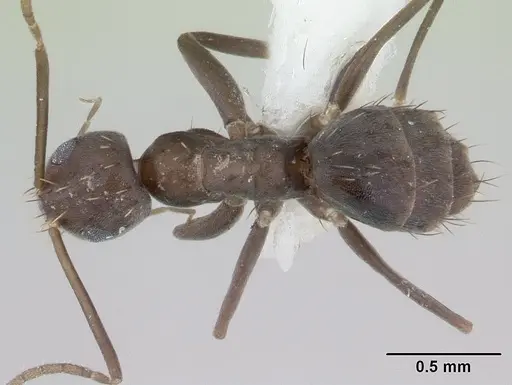
CASENT0362200
View on AntWeb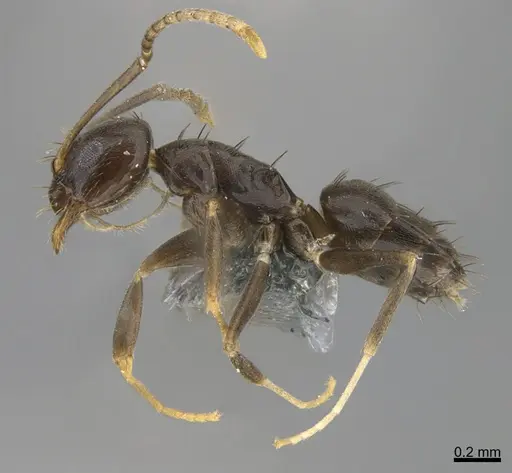
Literature
Loading distribution map...Loading products...