
Paraparatrechina sakurae
- Sci. Name
- Paraparatrechina sakurae
- Tribe
- Lasiini
- Subfamily
- Formicinae
- Author
- Ito, 1914
- Distribution
- Found in 3 countries
Introduction
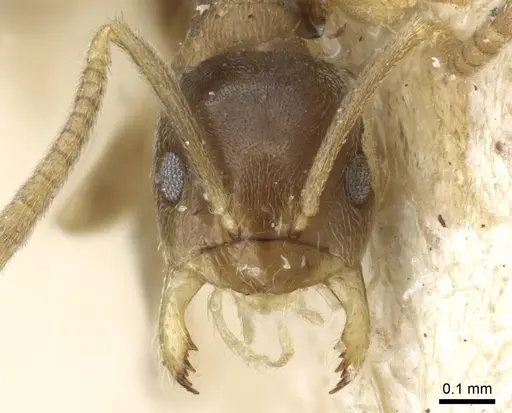
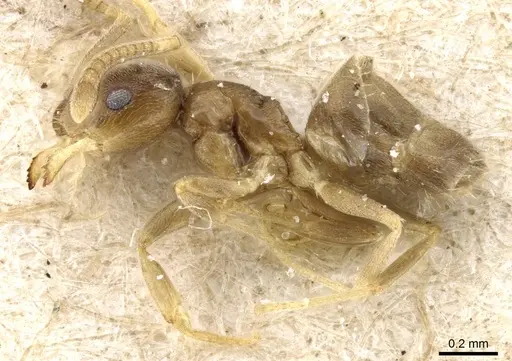
Paraparatrechina sakurae is a tiny ant species native to East Asia, with workers measuring 1-1.5 mm . Workers have a brown body with yellowish-brown antennae and legs, and are identified by short antennal funiculi where the 2nd to 4th segments are wider than long . This species is called 'sakura-ari' (Cherry Blossom Ant) in Japan because it forages actively during cherry blossom season . P. sakurae nests in rotting wood, leaf-litter, and under stones in drier habitats than related species . It is widely distributed across Japan, the Korean Peninsula, and parts of China , and can coexist with invasive Argentine ants .
Quick Summary
- Difficulty: Easy
- Origin & Habitat: Native to East Asia, found across Japan (Hokkaido to Kyushu and Ryukyu Islands), the Korean Peninsula, and parts of China [1]. Nests in rotting wood, leaf-litter, and under stones in drier habitats [1].
- Colony Type: Colony structure is unconfirmed in research. Based on typical Paraparatrechina patterns, likely single-queen colonies. Nuptial flights occur in October and November [1].
- Size & Growth:
- Antkeeping:
- Temperature: Keep at room temperature, roughly 20-26°C, based on their active period from April to December [2].
- Humidity: Keep nest substrate moderately moist but not wet, as they nest in drier habitats [1].
- Diapause: Yes, they show very low foraging activity from December through March [2]. Keep them cool (around 10-15°C) for 2-3 months during winter.
- Nesting: Ground nester that naturally nests in rotting wood, leaf-litter, and under stones [1]. In captivity, use naturalistic setups with soil and rotting wood, or Y-tong (AAC) or plaster nests with moderate humidity [1][5].
- Behavior: These are small, non-aggressive ants that forage in intervals between more dominant species [2]. Workers are 1-1.5 mm [1], making escape prevention critical. Use fine mesh and tight-fitting lids to prevent escapes.
- Common Issues: tiny size means escapes are likely without fine mesh barriers., colonies are small and grow slowly, beginners may lose patience., winter dormancy is required, colonies may fail if kept warm year-round., very small workers can drown in water sources easily, provide shallow water., wild-caught colonies may have Wolbachia infection but this does not affect captive care [6][7].
Housing and Nest Setup
Paraparatrechina sakurae is a ground-nesting species that naturally nests in rotting wood, leaf-litter, and under stones [1]. For captivity, a naturalistic setup with soil substrate mixed with rotting wood pieces works well. You can also use Y-tong (AAC) nests or plaster nests with moderate humidity [1][5]. Because these ants are tiny (workers are 1-1.5 mm), escape prevention is critical [1]. Use tight-fitting lids and fine mesh barriers. Keep the nest moderately humid but not wet, allowing the substrate to dry out partially between waterings.
Feeding and Diet
In the wild, P. sakurae forages on sweet baits like honey and cheese [2]. They also consume honeydew and small insects. For captive colonies, offer sugar water or honey as a constant energy source. Provide protein from small prey like fruit flies or pinhead crickets. Because of their small size, prey items should be appropriately sized. These ants may be outcompeted by larger ants if housed in shared setups, so keep them separate [2].
Temperature and Seasonal Care
P. sakurae is active from April through December in its native Japan, with very low foraging activity during winter months [2]. Keep colonies at room temperature (20-26°C) during the active season. During winter (December to February), reduce temperatures to around 10-15°C to simulate dormancy. The species can tolerate a wide altitudinal range (574-3,494 m) [6], suggesting adaptability to various temperature conditions.
Behavior and Colony Dynamics
These ants are small and relatively docile, foraging in intervals between more dominant species [2]. They can coexist with invasive Argentine ants [3][4]. Workers are 1-1.5 mm [1], so escape prevention is essential. Colonies remain small, and workers are tiny, requiring fine mesh barriers.
Reproduction and Nuptial Flights
Nuptial flights occur in October and November in their native range [1]. After mating, queens likely seek nesting sites in rotting wood, leaf-litter, or under stones to begin founding colonies. Founding behavior is unconfirmed in research.
Frequently Asked Questions
How long does it take for Paraparatrechina sakurae to produce first workers?
Development time is not specifically documented for this species [1].
Can I keep Paraparatrechina sakurae in a test tube setup?
Yes, test tubes work well, but because workers are extremely tiny (1-1.5 mm), you must use excellent escape prevention with fine mesh and tight-fitting cotton [1].
Do Paraparatrechina sakurae ants need hibernation?
Yes, they require a winter dormancy period. In the wild, they show very low activity from December through March [2]. Keep them cool (around 10-15°C) for 2-3 months during winter.
What do Paraparatrechina sakurae eat?
They accept sweet foods like honey and sugar water, and small protein sources like fruit flies or tiny insects. In studies, they are attracted to both honey and cheese baits [2].
Are Paraparatrechina sakurae good for beginners?
They are considered easy to keep due to simple temperature requirements [2], but their tiny size makes escape prevention challenging [1].
How big do Paraparatrechina sakurae colonies get?
Colony size is not documented in the research [1].
When do Paraparatrechina sakurae nuptial flights occur?
Nuptial flights occur in October and November in their native Japan [1].
Why is this species called Cherry Blossom Ant?
Their Japanese name 'sakura-ari' comes from their active foraging season coinciding with cherry blossom time in Japan [2].
Can Paraparatrechina sakurae live with other ant species?
They are not aggressive and would likely be outcompeted by larger ant species. Keep them in separate setups. They are one of the few native Japanese ants that can coexist with invasive Argentine ants [3][4].
Report an Issue
The current care sheet is based fully on literature. See inconsistencies, or something that's incorrect? Please , it will be resolved after review from an admin. Contributing to the blogs tab also helps providing information, to make us be able to further improve the caresheets. Thank you for your support!
References

This caresheet is licensed under CC BY-SA 4.0 .
Community Blogs
CASENT0905670
View on AntWeb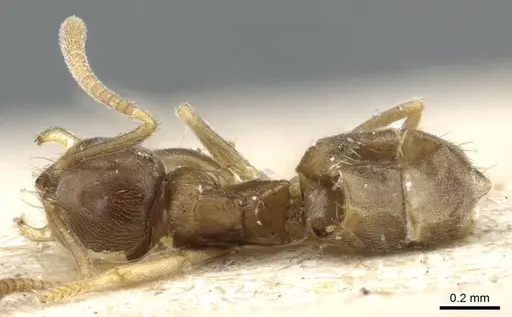
Literature
Loading distribution map...Loading products...