
Paraparatrechina malaccana
- Sci. Name
- Paraparatrechina malaccana
- Tribe
- Lasiini
- Subfamily
- Formicinae
- Author
- Viehmeyer, 1916
- Distribution
- Found in 1 countries
Introduction
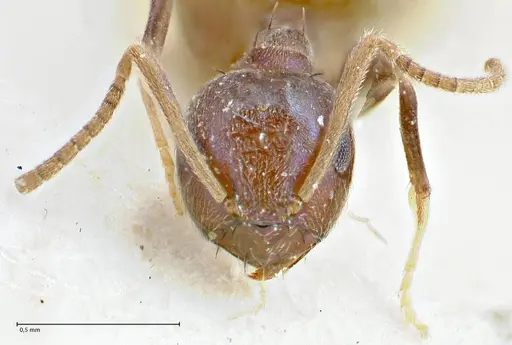
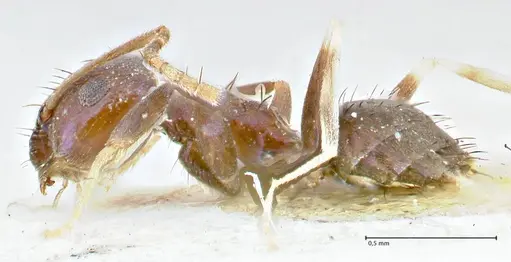
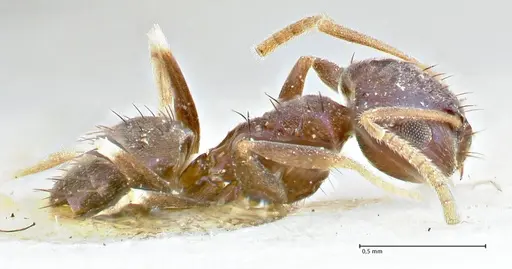
Paraparatrechina malaccana is a small ant native to the forests of Malaysia and Singapore. Workers have a rounded head with widely spaced eyes positioned above the midline, a bluish-green sheen on the head, and a brownish body with faint metallic purple or violet reflections. The mid and hind tibiae, tarsi, and distal ends of the femora are pale whitish, contrasting with the darker body . This species was originally described as a subspecies of P. butteli but has been raised to full species status based on specimen comparisons . These ants are primarily arboreal and forest-dwelling, found in both young and mature secondary forests across Singapore's nature reserves. They forage on shrubs and foliage, and can be collected by beating vegetation .
Quick Summary
- Difficulty: Medium
- Origin & Habitat: Native to Malaysia and Singapore in the Indomalaya region. Found in secondary forests, both young and mature, where they forage on shrubs and foliage [1].
- Colony Type: Colony structure is unconfirmed. Based on related Paraparatrechina patterns, likely monogyne (single queen) colonies, but this requires confirmation.
- Size & Growth:
- Queen: Size data unavailable, no queen specimens documented in literature.
- Worker: Size data unavailable, no body size measurements provided in research.
- Colony: Unknown, no colony size data exists.
- Growth: Unknown, no data on growth rate.
- Development: Unknown, no data on development timeline. (Development has not been studied for this species.)
- Antkeeping:
- Temperature: Keep warm and stable, roughly low-to-mid 20s°C, based on their tropical forest habitat. A gentle temperature gradient is ideal.
- Humidity: Keep nest substrate consistently moist but not waterlogged, based on their humid forest environment.
- Diapause: Likely no diapause required, as a tropical species from Singapore, but this is unconfirmed.
- Nesting: Based on arboreal foraging habits, they likely nest in decaying wood, under bark, or in hollow stems. In captivity, use Y-tong or plaster nests with small chambers and climbing structures.
- Behavior: These are small, active ants with a generally peaceful temperament. They are arboreal foragers, spending time on vegetation rather than the ground. They are not aggressive toward humans, but their small size means escape prevention is critical.
- Common Issues: escape prevention is critical due to their small size, use fine mesh barriers and apply fluon, humidity control is important, too dry can cause desiccation, too wet can lead to mold, arboreal nature requires climbing structures in the setup to mimic natural foraging, lack of documented care data makes growth expectations uncertain
Housing and Nest Setup
Paraparatrechina malaccana is a small ant, so your housing must account for their size. Use Y-tong or plaster nests with small chambers. Because they are arboreal by nature, include climbing structures like twigs or mesh in the outworld to allow foraging on vegetation [1]. Test tube setups work for founding colonies, but be prepared to move them once the colony grows. Escape prevention is critical, use fine mesh barriers (at least 0.5mm) and apply fluon to edges.
Feeding and Diet
Based on related Paraparatrechina patterns, these ants are likely generalist feeders. Offer sugar water, honey, or diluted syrup as a constant carbohydrate source. For protein, provide small live prey like fruit flies or pinhead crickets. Feed small amounts and remove uneaten food to prevent mold.
Temperature and Humidity
Being from tropical forests, these ants need warm conditions. Maintain temperatures around 22-26°C with a gentle gradient. For humidity, keep the nest substrate moist but not waterlogged, as their natural habitat is humid [1]. Monitor for mold and ensure good ventilation.
Behavior and Observation
Paraparatrechina malaccana is an arboreal species, meaning they spend time on vegetation rather than the ground [1]. In your setup, you will see them climbing on branches or mesh. They are active foragers and not aggressive toward humans, but their small size means they can escape easily.
Growth and Development
There is no specific data on development for this species. Based on related Formicinae patterns, founding may involve claustral behavior, but this is unconfirmed. Patience is key, as growth may be slow without documented timelines.
Frequently Asked Questions
How long does it take for Paraparatrechina malaccana to produce first workers?
The exact timeline is unknown, as no data exists on development for this species.
What do Paraparatrechina malaccana ants eat?
They are likely generalist feeders. Offer sugar water, honey, or syrup for carbohydrates, and small live prey for protein.
Are Paraparatrechina malaccana ants difficult to keep?
They are rated as medium difficulty. Main challenges include escape prevention due to small size, lack of documented care data, and arboreal nature requiring appropriate setup.
Do Paraparatrechina malaccana ants need hibernation?
Likely no, as a tropical species from Singapore, but this is unconfirmed.
What size colony do Paraparatrechina malaccana reach?
Colony size is unknown, as no data exists in the literature.
Can I keep multiple Paraparatrechina malaccana queens together?
The colony structure is unconfirmed. It is unknown whether they are monogyne or can form multi-queen colonies. Combining unrelated queens is not recommended due to lack of data.
What nest type is best for Paraparatrechina malaccana?
A Y-tong or plaster nest with small chambers works well. Include climbing structures to accommodate their arboreal foraging behavior [1].
Where is Paraparatrechina malaccana found in the wild?
They are native to Malaysia and Singapore, found in secondary forests foraging on shrubs and foliage [1].
Why are my Paraparatrechina malaccana escaping?
Their small size means they can squeeze through gaps. Use fine mesh barriers (0.5mm or smaller) and apply fluon to all edges.
Report an Issue
The current care sheet is based fully on literature. See inconsistencies, or something that's incorrect? Please , it will be resolved after review from an admin. Contributing to the blogs tab also helps providing information, to make us be able to further improve the caresheets. Thank you for your support!
References

This caresheet is licensed under CC BY-SA 4.0 .
Community Blogs
FOCOL2717
View on AntWeb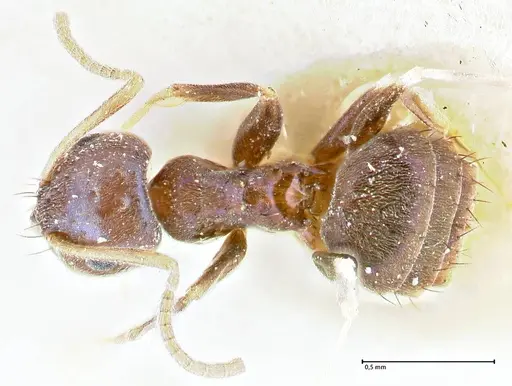
Literature
Loading distribution map...Loading products...