
Paraparatrechina illusio
- Sci. Name
- Paraparatrechina illusio
- Tribe
- Lasiini
- Subfamily
- Formicinae
- Author
- LaPolla & Fisher, 2014
- Distribution
- Found in 2 countries
Introduction
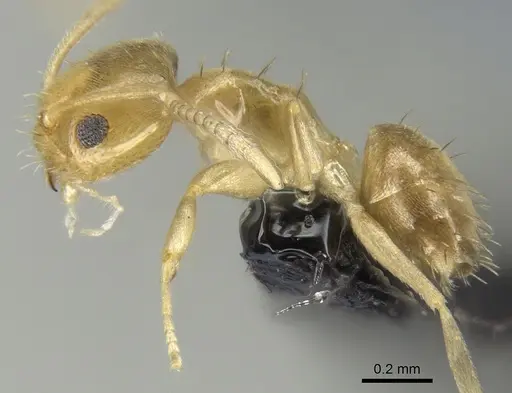
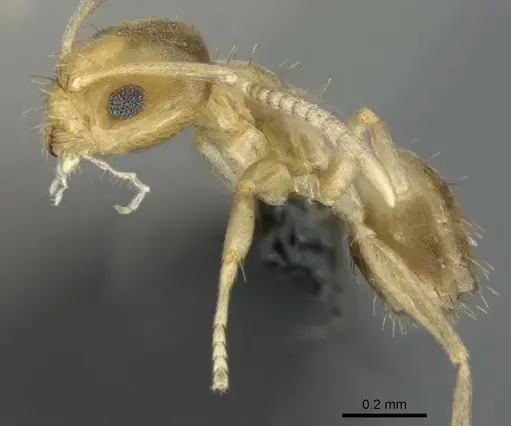
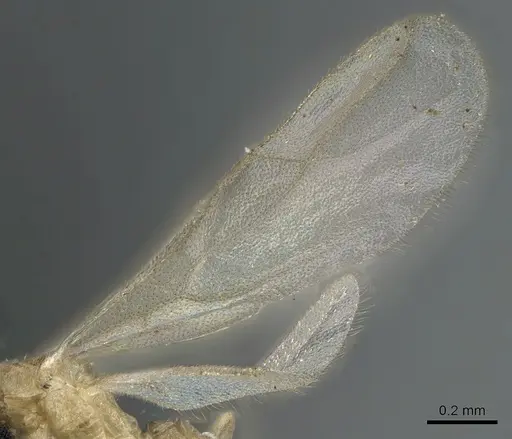
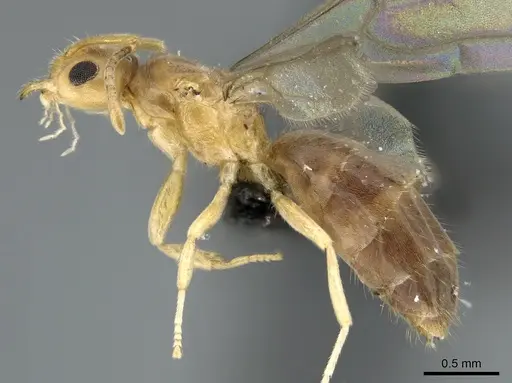
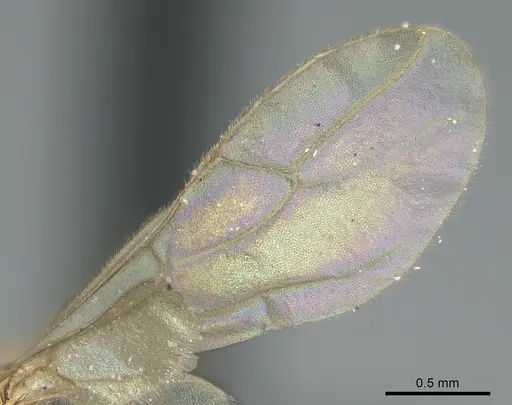
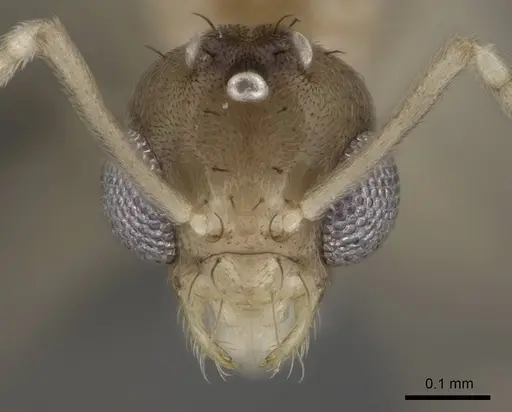
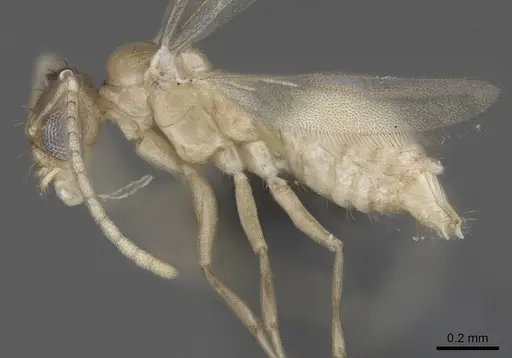
Paraparatrechina illusio is a tiny yellow ant species endemic to the Seychelles islands, described in 2014 . Workers are 1.20-1.67 mm long, yellow to brownish-yellow with lighter legs and antennae, and have short, silky pubescence on the gaster that appears in neat rows . Queens are larger at 2.92-3.23 mm with a darker yellowish-brown gaster . This species is found only in Seychelles, in mixed palm forests and coastal scrub habitats . This ant is notable for being restricted to a small island chain, making it a unique choice for antkeepers interested in rare species.
Quick Summary
- Difficulty: Medium
- Origin & Habitat: Endemic to the Seychelles islands, found in mixed palm forests and coastal scrub habitats at elevations from 5m to 280m [1][2].
- Colony Type: Colony structure is unconfirmed, no research exists on queen number or social structure.
- Size & Growth:
- Antkeeping:
- Temperature: Temperature needs are unclear, start around 24-28°C and observe, based on tropical habitat patterns [1].
- Humidity: Keep substrate consistently moist but not waterlogged, based on coastal scrub habitat [1].
- Diapause: Unknown, no data on diapause for this species.
- Nesting: Prefer small chambers and narrow passages due to tiny size. Use Y-tong, plaster, or soil nests with appropriate scaling.
- Behavior: These ants are active and small. Escape prevention is critical due to their tiny size, use fine mesh and tight lids [1].
- Common Issues: escape prevention is critical due to their very small size, they can slip through gaps that larger ants cannot, lack of available care information makes this a species for experienced keepers willing to experiment, slow colony growth may frustrate beginners, these are tiny ants with likely modest colony sizes, humidity control is important, too dry and they may desiccate, too wet and mold becomes a problem
Appearance and Identification
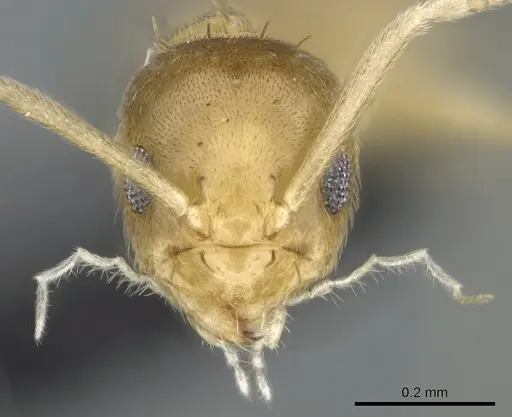
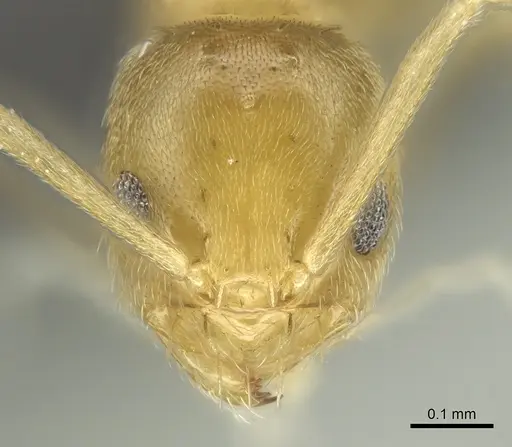
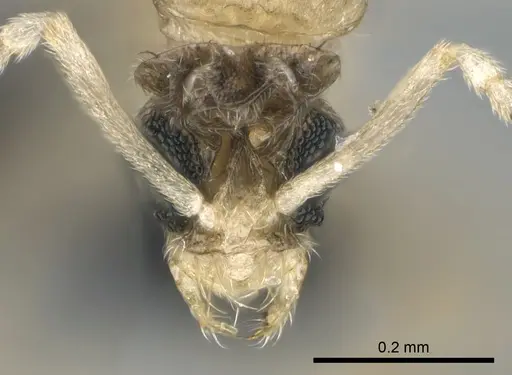
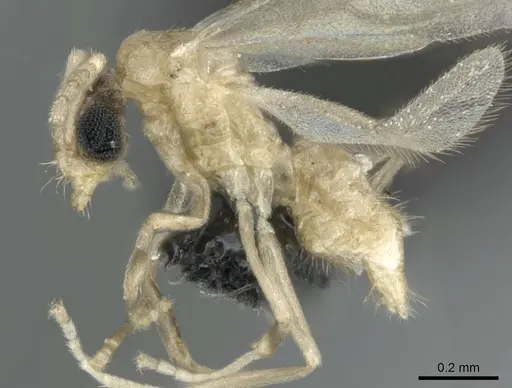
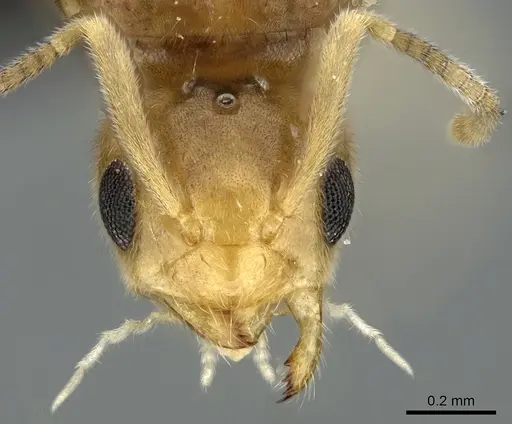
Paraparatrechina illusio workers are tiny at 1.20-1.67 mm, yellow to brownish-yellow with lighter legs and antennae [1]. Their most distinctive feature is the short, silky pubescence on the gaster that appears in neat rows [1]. The head is subquadrate with a nearly straight posterior margin, and scapes surpass the posterior margin by 2-3 funicular segments [1]. Queens are larger at 2.92-3.23 mm with a darker gaster [1]. Males are similar in size to workers at 1.55 mm and have large eyes that occupy most of the lateral head region [1].
Natural Habitat and Distribution
This species is endemic to the Seychelles islands, found on Praslin Island (280m elevation in mixed palm forest), Conception Island (65m in mixed forest), Curieuse Island (5m in coastal scrub), and Silhouette Island (20m in coastal scrub) [1][2]. The Seychelles provide a tropical climate with consistent warmth and humidity year-round. In captivity, aim to replicate these conditions with stable temperatures and moderate humidity.
Feeding and Diet
While no specific dietary studies exist for Paraparatrechina illusio, typical Formicinae ants feed on honeydew, nectar, and small insects. In captivity, offer sugar water or honey as a constant energy source, and protein like fruit flies or springtails. Prey must be small due to their tiny size. Remove uneaten food to prevent mold.
Nest Setup and Housing
Due to their very small size, use nests with small chambers and narrow passages, such as Y-tong, plaster, or soil nests. Standard formicarium tunnels may be too large. Excellent escape prevention is essential, use fine mesh (0.5mm or smaller) and tight lids. Provide a water tube with cotton plug for humidity.
Temperature and Seasonal Care
As a tropical species from Seychelles, keep temperatures warm around 24-28°C. A heating cable on one side of the nest creates a gradient. Avoid temperatures below 20°C. No hibernation is needed, but slight cooling in cooler months may be acceptable.
Colony Development and Growth
No specific development timeline exists. Based on typical Formicinae patterns, eggs may develop into workers in several weeks at optimal temperature. Colony growth is likely moderate, with modest colony sizes. Be patient with founding colonies, queen-only colonies may take months before workers emerge.
Frequently Asked Questions
How long does it take for Paraparatrechina illusio to have first workers?
The exact timeline is unknown. Based on typical Formicinae development, expect several weeks from egg to worker at warm temperatures. Founding colonies require patience.
What do Paraparatrechina illusio ants eat?
They likely accept sugar sources like honey water and small protein like fruit flies or springtails. Offer sugar water constantly and protein a few times per week.
Can I keep Paraparatrechina illusio in a test tube?
Test tubes can work for founding colonies, but ensure the water reservoir is not too large and cotton is tightly packed. Move to a small formicarium once the colony has 20-30 workers.
What temperature do Paraparatrechina illusio need?
Keep them warm at 24-28°C. Based on their tropical habitat, consistent warmth is important.
Are Paraparatrechina illusio good for beginners?
This is not ideal for beginners due to limited care information and need for excellent escape prevention. Better suited for experienced keepers.
How big do Paraparatrechina illusio colonies get?
Colony size is unknown, but given their tiny worker size, colonies likely remain modest.
Do Paraparatrechina illusio need hibernation?
No data exists, but as a tropical species, hibernation is unlikely. Maintain warm temperatures year-round.
Why are my Paraparatrechina illusio escaping?
Their tiny size (1.20-1.67 mm workers) means they can slip through small gaps. Use fine mesh and tight lids to prevent escapes.
When should I move my colony to a formicarium?
Move from test tube to a small formicarium once the colony reaches 20-40 workers, with chambers scaled to their tiny size.
Report an Issue
The current care sheet is based fully on literature. See inconsistencies, or something that's incorrect? Please , it will be resolved after review from an admin. Contributing to the blogs tab also helps providing information, to make us be able to further improve the caresheets. Thank you for your support!
References

This caresheet is licensed under CC BY-SA 4.0 .
Community Blogs
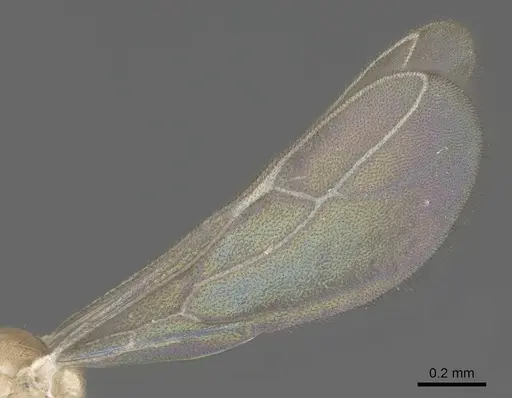
CASENT0159099
View on AntWeb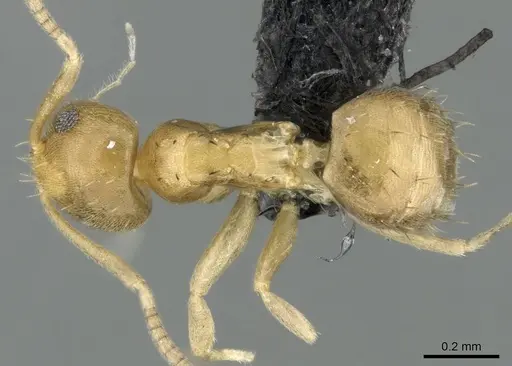
CASENT0159242
View on AntWeb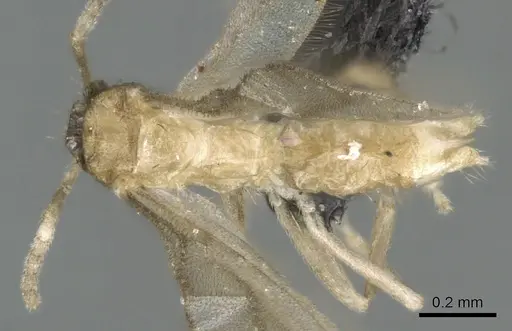
CASENT0160097
View on AntWeb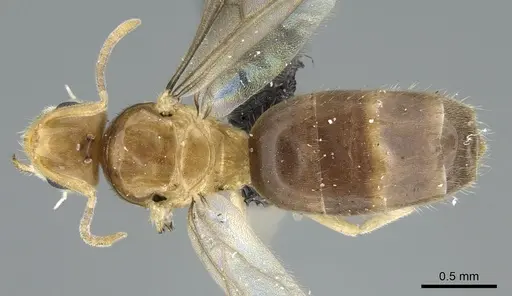
CASENT0914145
View on AntWeb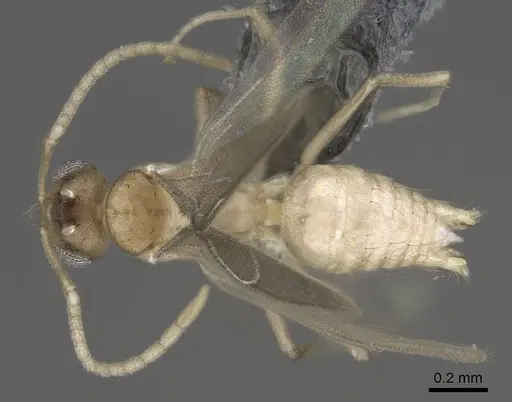
Literature
Loading distribution map...Loading products...