
Paramycetophylax bruchi
- Sci. Name
- Paramycetophylax bruchi
- Tribe
- Attini
- Subfamily
- Myrmicinae
- Author
- Santschi, 1916
- Distribution
- Found in 1 countries
Introduction
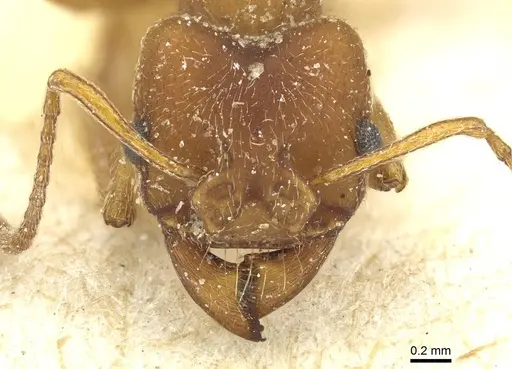
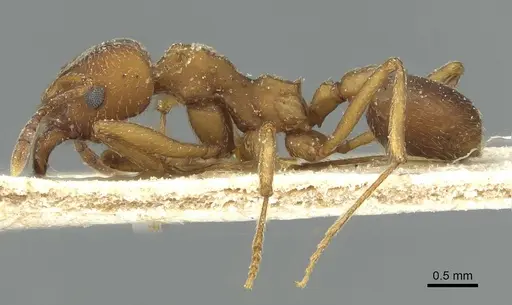
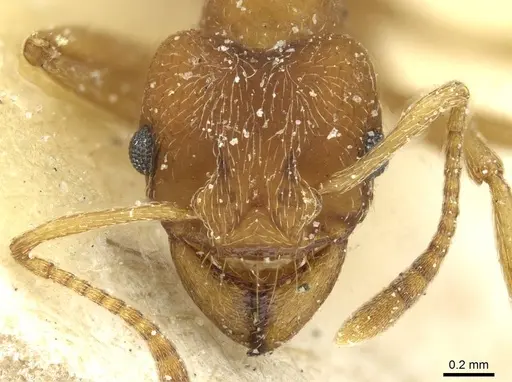
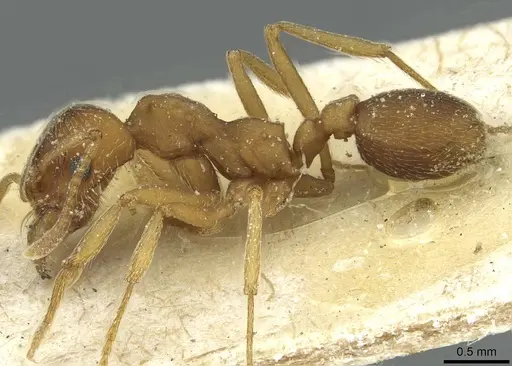
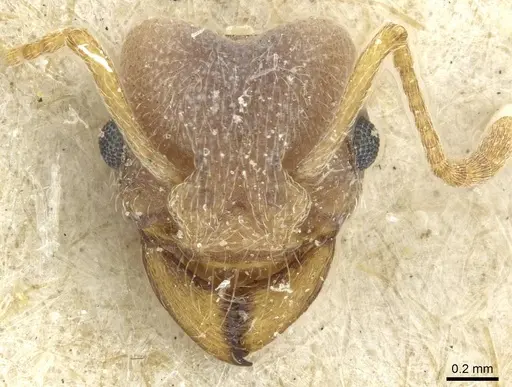
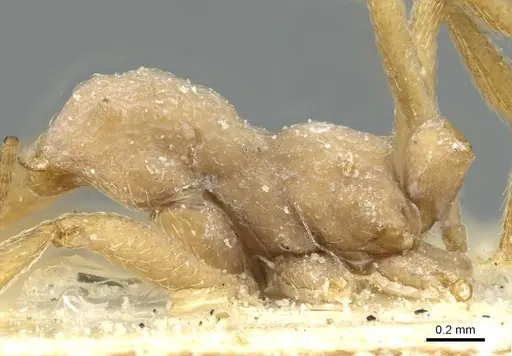
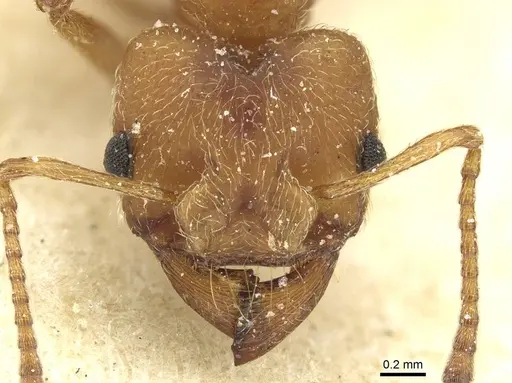
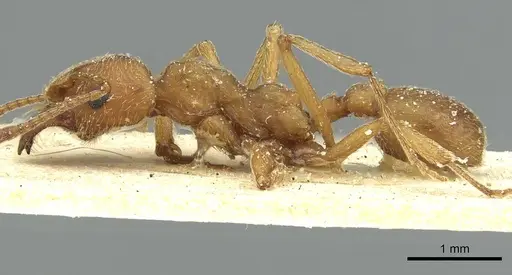
Paramycetophylax bruchi is a small fungus-growing ant found only in Argentina, and it's the only species in its genus. Workers measure 3.9–5.8 mm and are yellow to reddish-brown, with wide triangular frontal lobes and short pronotal spines. The most unusual feature is their psammophore – a brush of long stiff hairs on the face that helps them move sand when digging deep nests . These ants belong to the Attini tribe, famous for farming fungus. But unlike many attines, P. bruchi is a leaf-cutter: workers collect fresh leaflets from Prosopis trees to feed their fungal garden . They nest in sandy soil in completely bare, vegetation-free areas, with fungus chambers buried 60–100 cm underground .
Quick Summary
- Difficulty: Hard
- Origin & Habitat: Continental Argentina – arid inland habitats with sandy soil, nesting in spots completely clear of plants [1][2]
- Colony Type: Unconfirmed – no direct data on colony structure for this species. Related fungus-growers are monogynous, but that hasn’t been verified here.
- Size & Growth:
- Queen: 7.09 mm total length [1]
- Worker: 3.9–5.8 mm total length [1][2]
- Colony: Unknown – described as forming small colonies [2]
- Growth: Moderate
- Development: Unknown – no specific data for this species. Based on related Attini, expect 6–10 weeks at warm temperatures. (Development timeline hasn’t been studied directly. Related fungus-growers usually take 6–10 weeks from egg to worker at optimal warmth.)
- Antkeeping:
- Temperature: No specific data exists. Being from temperate Argentina, they likely tolerate 18–28°C. Aim for 22–26°C during the active season and provide a temperature gradient if possible.
- Humidity: Moderate to low – they come from arid sandy areas. Keep the nest substrate lightly moist, but let it partly dry between waterings. Avoid soggy conditions that harm the fungus.
- Diapause: Unknown – no hibernation data. Argentina has distinct seasons, so a cool winter rest (15–18°C) might help, but this is just a guess.
- Nesting: Deep sandy setups work best. Provide at least 10–15 cm of fine sand/soil mix to let them dig deep fungus chambers. A plaster nest with deep chambers can work too. Keep the nest dark – their fungus needs darkness.
- Behavior: Generally peaceful and not aggressive toward keepers. They spend most of their time tending the fungal garden. Workers have a functional stinger, but it’s not medically significant. Escape risk is moderate: they are small (under 6 mm) and can slip through tiny gaps, so seal your setup well.
- Common Issues: fungus garden failure is the biggest risk – if the fungal culture dies, the colony starves. Keep the fungus dark, humid, and stable., deep nesting requirement: they need vertical space (10–15+ cm of substrate). Shallow setups stress them and may stop colony growth., overwatering is dangerous – these ants come from arid habitats and too much moisture kills both the fungus and the colony., slow growth compared to typical ants – fungus-growers develop slowly, so patience is needed., limited availability – this species is rarely found outside Argentina, making it hard to obtain.
Fungus-Farming Biology
Paramycetophylax bruchi belongs to the lower agriculture system of the Attini, meaning they grow fungus on fresh plant material [4]. Workers collect whole leaflets from Prosopis flexuosa (a legume tree) and bring them to the nest as substrate for their fungal cultivar [3]. This is the same basic method as the famous leaf‑cutter ants (Atta, Acromyrmex), but P. bruchi is smaller and simpler. In your setup, provide fresh plant material – small pieces of leaves, flower petals, or soft vegetation. The key is keeping the fungus healthy: it needs darkness, moderate humidity, and a steady supply of fresh leaves. Replace old material every few days to stop mold.
Nest Setup and Deep Chamber Requirements
In the wild, P. bruchi builds its fungus chambers 60–100 cm deep in sandy soil, sometimes even deeper depending on seasonal temperature swings [2]. This is critical for captive care: they need much deeper nesting space than most ants. A setup with at least 10–15 cm of substrate depth is essential. Use fine sandy soil or a sand/soil mix that holds its shape. The deep chambers provide the darkness the fungus needs, buffer temperature swings, and give the colony room to expand. A naturalistic setup with a deep soil container works best. Avoid shallow acrylic nests – these ants will struggle in setups that don’t allow deep tunneling.
Feeding and Nutrition
Unlike typical ants that eat sugars and proteins, P. bruchi and their fungus are mostly herbivorous. The ants feed fresh plant material to the fungus, and the fungus produces special food structures (gongylidia) that the ants eat. In captivity, offer small pieces of fresh leaves, flower petals, or soft plant matter. Avoid dried or wilted material. Some keepers report success with lettuce, rose petals, or grass. Remove uneaten plant material after 2–3 days to prevent mold. While the fungus is their main food, you can also offer a little sugar water or honey occasionally – acceptance varies. Never feed insects as a primary food, that’s for predatory ants, not fungus farmers. [3]
Temperature and Seasonal Care
No specific thermal requirements have been documented for P. bruchi. They come from temperate Argentina with distinct seasons, so they likely tolerate a range of 18–28°C. Aim for 22–26°C during the active season (spring through fall). During winter, a cooler period around 15–18°C might mimic their natural cycle and benefit colony health – but this is an educated guess, not a confirmed requirement. Provide a temperature gradient so the ants can choose. A heating cable on one side of the nest can help maintain warmth without drying out the fungus. Avoid temperatures above 30°C or below 15°C for long stretches.
Colony Founding and Development
Colony founding hasn’t been directly studied in P. bruchi. We don’t know if queens are claustral or semi‑claustral. Based on their position in the Attini tree (a basal lineage), the queen probably seals herself in a chamber and raises the first workers using stored reserves, but this is just inference. Wild colonies are described as small, likely reaching only a few dozen to perhaps 100 workers at maximum [2]. Growth is slower than typical ants because the colony must first build its fungal garden before workers can be produced in quantity. Expect the founding stage to last several months before the first tiny workers (nanitics) appear, and several more months before the colony becomes established.
Frequently Asked Questions
What do Paramycetophylax bruchi ants eat?
They are fungus farmers – they don’t eat typical ant food. Offer fresh plant material like small leaf pieces, flower petals, or soft vegetation. The ants feed this to their fungal garden, then eat the gongylidia (special food structures) the fungus produces. Remove uneaten plant material within 2–3 days to prevent mold.
How deep should the nest be for Paramycetophylax bruchi?
Very deep – at least 10–15 cm. In the wild, their fungus chambers are 60–100 cm underground. Shallow setups will stress them and the fungus may not thrive. A deep naturalistic soil setup is ideal.
Are Paramycetophylax bruchi good for beginners?
No – this is a challenging species for experienced keepers. They need deep nesting space, a healthy fungal culture to survive, and very specific humidity. Their limited availability also makes them hard to find. Start with easier ants like Lasius, Camponotus, or Messor first.
How long does it take for first workers to appear?
The exact timeline is unknown for this species. Based on related Attini, expect 6–10 weeks from egg to worker at warm temperatures (24–26°C), though founding colonies may take several months to establish their first workers. Patience is key with fungus‑growing ants.
Can I keep multiple queens together?
Probably not – P. bruchi is thought to be monogynous (one queen per colony), though this hasn’t been confirmed. Multiple unrelated queens kept together will likely fight. If you get a queen, house her alone in a founding setup.
What temperature should I keep them at?
Aim for 22–26°C during the active season. A slight drop in winter (around 15–18°C) might help, but it’s not confirmed. Avoid temperatures above 30°C or below 15°C.
Why is my fungus garden dying?
Fungus gardens often fail from too much light, improper moisture, mold from old plant material, or too much disturbance. Keep the fungus chamber dark, maintain light moisture without soaking, remove old leaves promptly, and avoid poking the garden once it’s established.
How big do colonies get?
Colonies stay small – likely under 100 workers. They are described as having small colonies in the wild, much smaller than the massive colonies of leaf‑cutter ants (Atta, Acromyrmex).
Where is Paramycetophylax bruchi found in the wild?
Only in continental Argentina, in arid inland habitats with sandy soil. They nest in places completely bare of vegetation, building deep fungus chambers in the sand.
Report an Issue
The current care sheet is based fully on literature. See inconsistencies, or something that's incorrect? Please , it will be resolved after review from an admin. Contributing to the blogs tab also helps providing information, to make us be able to further improve the caresheets. Thank you for your support!
References

This caresheet is licensed under CC BY-SA 4.0 .
Community Blogs
CASENT0912502
View on AntWeb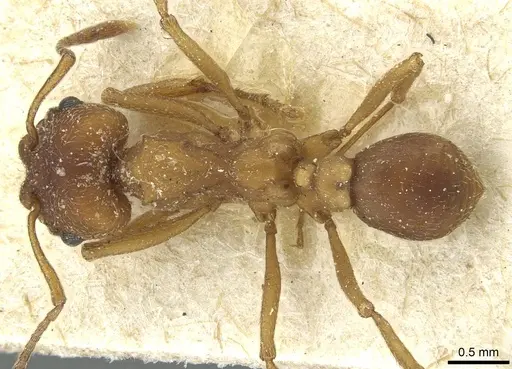
CASENT0912503
View on AntWeb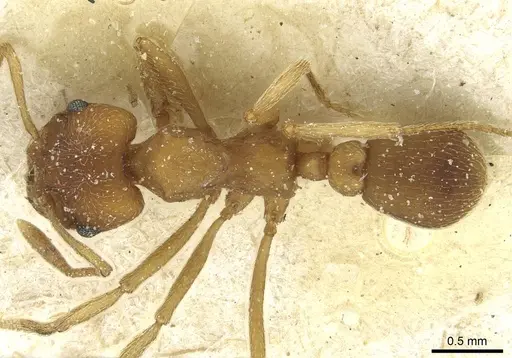
CASENT0912505
View on AntWeb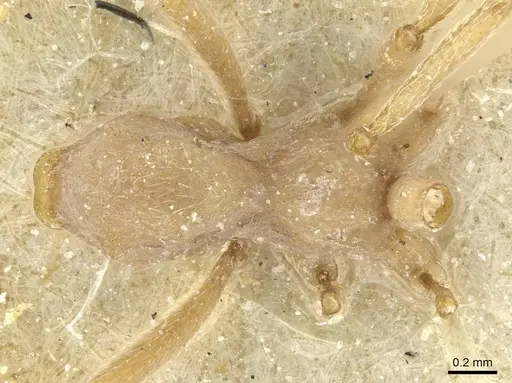
CASENT0912506
View on AntWeb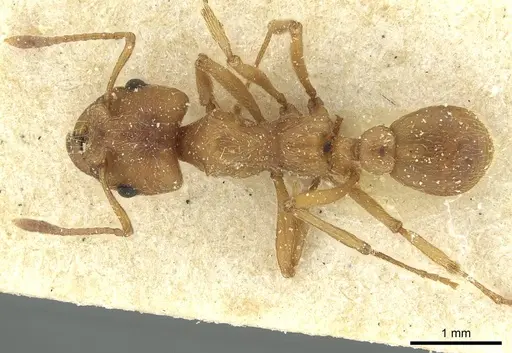
Literature
Loading distribution map...Loading products...