
Pachycondyla purpurascens
- Sci. Name
- Pachycondyla purpurascens
- Tribe
- Ponerini
- Subfamily
- Ponerinae
- Author
- Forel, 1899
- Distribution
- Found in 4 countries
Introduction
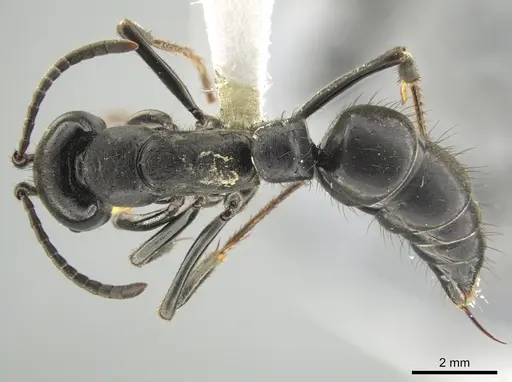
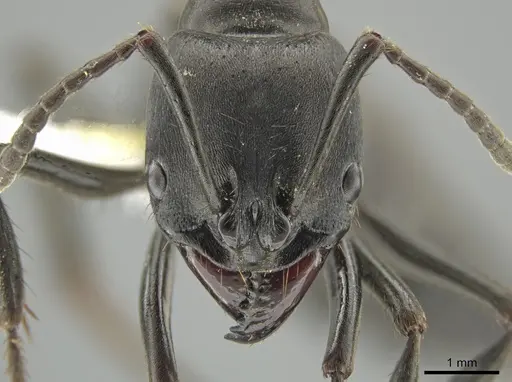
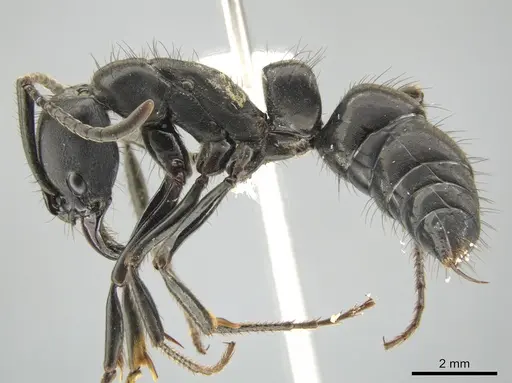
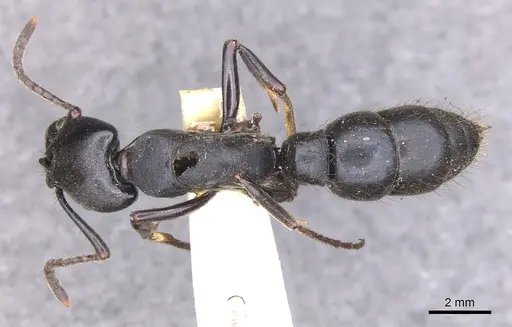
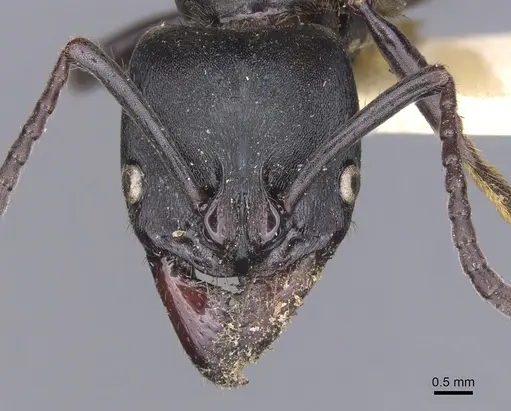
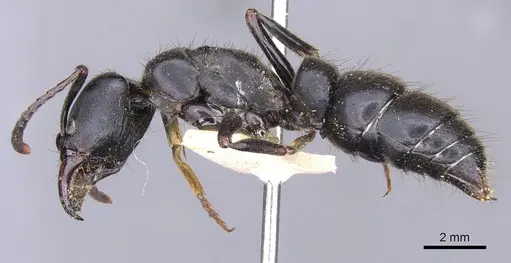
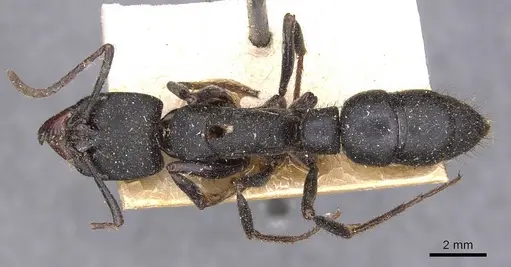
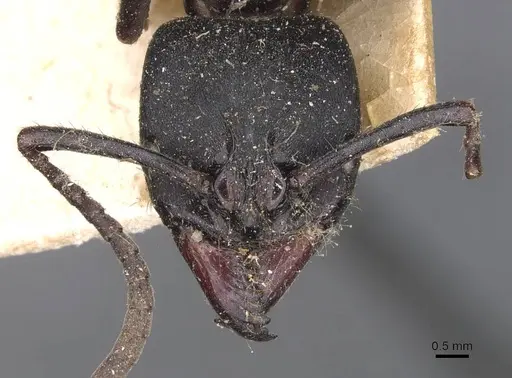
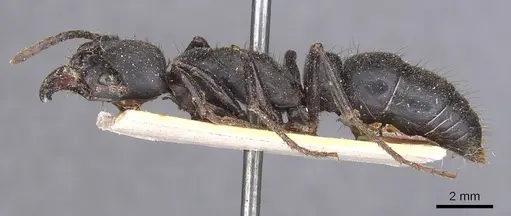
Pachycondyla purpurascens is a large ant species native to the Neotropical region, ranging from Costa Rica through Panama, Colombia, Peru, Venezuela, and Bolivia . Workers reach 17 mm in length and are black with dark purple metallic reflections . They inhabit wet mountain forests and cloud forests at elevations of 800-1500 meters . This species is confirmed predatory, with workers observed capturing ants from the genus Gnamptogenys .
Quick Summary
- Difficulty: Medium
- Origin & Habitat: Wet mountain forest and cloud forest in Central and South America, at 800-1500 meters elevation [4]. Found in Costa Rica, Panama, Colombia, Peru, Venezuela, Trinidad, and Bolivia [1][2].
- Colony Type: Unconfirmed, no direct evidence on queen number, but based on Pachycondyla patterns, likely monogyne (single queen).
- Size & Growth:
- Queen: Size data unavailable, no total length measurements in context.
- Worker: 17 mm [3]
- Colony: Colony size data unavailable
- Growth: Moderate
- Development: Estimated 8-12 weeks at optimal temperature, based on typical Ponerinae patterns. (Development times are not specifically documented for this species.)
- Antkeeping:
- Behavior: Workers are predatory with a functional stinger [5]. They forage individually and can be defensive. Escape prevention is recommended due to climbing ability.
- Common Issues: predatory diet requires live prey, which may be challenging to provide., high humidity needs can lead to mold if ventilation is poor., colony growth is slow compared to common hobby species., founding behavior is unconfirmed, making queen establishment difficult.
Housing and Nest Setup
Pachycondyla purpurascens is a ground-nesting species that excavates nests in soil banks or uses pre-existing cavities [6][4]. For captivity, provide a deep soil layer (at least 5-7 cm) or a Y-tong/plaster nest with moist substrate. These ants prefer tight, enclosed chambers rather than open spaces. Maintain high humidity with consistent moisture in the nest substrate, and ensure adequate ventilation to prevent mold [4].
Feeding and Diet
This species is confirmed predatory, workers hunt live prey such as insects [5]. In captivity, offer appropriately sized live prey like mealworms, small crickets, or roach nymphs 2-3 times per week. Protein is essential for brood development, sugar water can be offered as a supplement but should not replace prey. Remove uneaten prey within 24 hours to avoid mold.
Temperature and Humidity
Keep temperatures around 22-26°C with stable conditions [4]. Humidity should be high, maintain a moist nest substrate that feels damp but not waterlogged. Avoid dry conditions, as this species is adapted to cloud forest environments [4].
Behavior and Temperament
Workers are active predators with a functional stinger that can penetrate human skin, causing moderate pain [5]. They forage individually and defend their nest vigorously. As ground-nesting ants, they may be nocturnal or crepuscular. Handle with care due to their size and sting capability.
Colony Founding
The founding behavior of Pachycondyla purpurascens has not been documented in scientific literature. Based on typical Ponerinae patterns, queens may be semi-claustral, requiring hunting during founding, but this is unconfirmed. If you obtain a founding queen, provide a moist chamber and offer small live prey.
Frequently Asked Questions
How long does it take for Pachycondyla purpurascens to produce first workers?
Egg-to-worker development is estimated to take 8-12 weeks at optimal temperature, based on typical Ponerinae patterns. Specific timing for this species is not documented.
Can I keep Pachycondyla purpurascens in a test tube?
Test tubes are not ideal. This species prefers to excavate nests in soil, so a naturalistic setup with deep substrate or a Y-tong/plaster nest is better [4].
Do Pachycondyla purpurascens ants sting?
Yes, they have a functional stinger and can deliver a painful sting [5]. Handle with care and use standard escape prevention.
What do Pachycondyla purpurascens eat?
They are confirmed predators that hunt live prey [5]. Feed them insects like mealworms or crickets, and offer sugar water as a supplement.
Are Pachycondyla purpurascens good for beginners?
No, this is a medium-difficulty species due to predatory diet, high humidity needs, and unconfirmed founding behavior.
How big do Pachycondyla purpurascens colonies get?
Colony size data is unavailable from current research.
Do Pachycondyla purpurascens need hibernation?
No, as a tropical species, diapause is not required.
When should I move Pachycondyla purpurascens to a formicarium?
Wait until the colony has several workers and is actively foraging. Use a nest with diggable substrate [4].
Can I keep multiple Pachycondyla purpurascens queens together?
Not recommended, as colony structure is unconfirmed and Pachycondyla species are typically monogyne.
Why is my Pachycondyla purpurascens colony dying?
Common causes include dry conditions, lack of live prey, or improper temperatures. Ensure high humidity, provide prey, and maintain stable 22-26°C [4].
What temperature range is best for Pachycondyla purpurascens?
Keep them at 22-26°C with stable conditions [4].
Is Pachycondyla purpurascens invasive anywhere?
No, this is a native Neotropical species with no documented invasive populations [1][2].
Report an Issue
The current care sheet is based fully on literature. See inconsistencies, or something that's incorrect? Please , it will be resolved after review from an admin. Contributing to the blogs tab also helps providing information, to make us be able to further improve the caresheets. Thank you for your support!
References

This caresheet is licensed under CC BY-SA 4.0 .
Community Blogs
Literature
Loading distribution map...Loading products...