
Orectognathus versicolor
- Sci. Name
- Orectognathus versicolor
- Tribe
- Attini
- Subfamily
- Myrmicinae
- Author
- Donisthorpe, 1940
- Distribution
- Found in 1 countries
Introduction
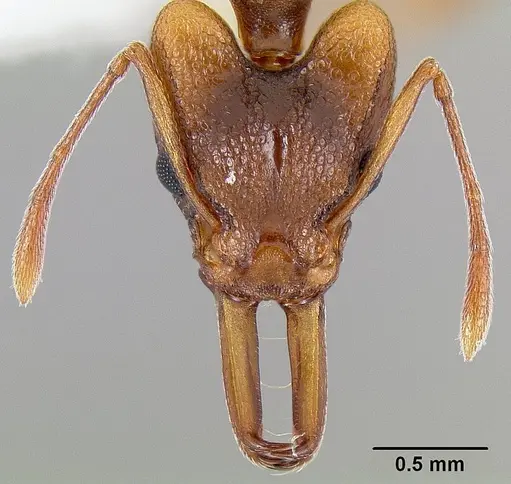
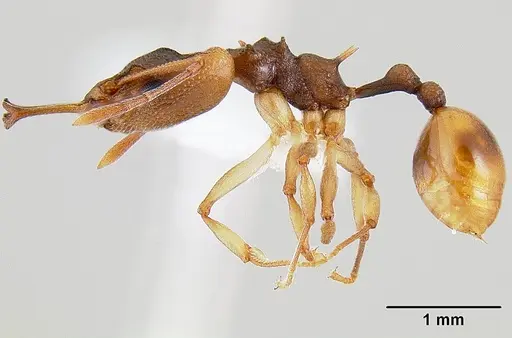
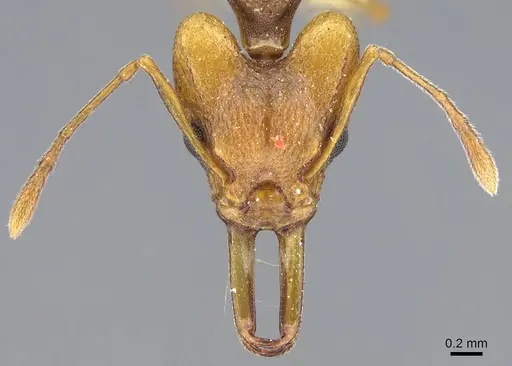
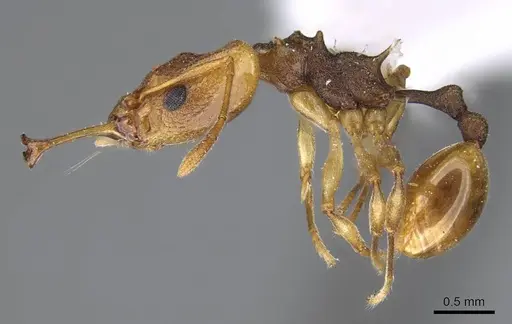
Orectognathus versicolor is a small dacetine ant native to the rainforests of Queensland, Australia . These ants are trap-jaw ants, meaning they have specialized mandibles that can snap shut with incredible speed to capture prey or defend the nest . Workers are polymorphic, meaning they come in different sizes - minor workers handle most foraging duties while major workers (soldiers) guard the nest entrance . The species gets its name 'versicolor' from the variable coloration workers can display. Colonies are relatively small, typically reaching around 100 workers at maximum size . This species is rarely kept in captivity due to its specific habitat requirements.
Quick Summary
- Difficulty: Medium
- Origin & Habitat: Queensland, Australia, found in rainforest habitats at elevations between 600-1200m in the Eungella region [1][2]
- Colony Type: Colony structure is unconfirmed, likely single-queen based on typical dacetine patterns but not directly documented
- Size & Growth:
- Queen: size data unavailable, inferred from Orectognathus genus (~5-7 mm)
- Worker: ~2-4 mm (inferred from Orectognathus genus), workers are polymorphic with two physical castes [5]
- Colony: Up to approximately 100 workers [5]
- Growth: Moderate
- Development: Estimated 8-12 weeks based on related Attini development patterns (Development time has not been directly studied for this species)
- Antkeeping:
- Temperature: Keep around 22-26°C, they occur at elevations of 600-1200m in Queensland rainforests [1]
- Humidity: High humidity required (70-80%), rainforest origin means they need consistently moist conditions [1]
- Diapause: Unknown, subtropical species may have reduced activity in cooler months but true hibernation is unlikely
- Nesting: Likely nests in soil or rotting wood in rainforest [1]. In captivity, a Y-tong or plaster nest with good moisture retention works well. Provide a shallow setup as they are small ants.
- Behavior: These are trap-jaw ants with specialized defensive behaviors. Major workers stand guard at nest entrances and will snap their mandibles at intruders to defend the colony [4][6]. They are predatory and will accept a wide variety of food items including small insects [4]. They have a functional stinger but it is not medically significant, their primary defense is the mandible strike. They are not aggressive toward keepers but will defend their nest. Escape prevention is critical due to their small size, use fine mesh barriers.
- Common Issues: high humidity requirements can lead to mold if ventilation is poor, predatory diet means they need live prey, not suitable for keepers who want low-maintenance setups, small colony size makes them vulnerable to stress and slow to recover from setbacks, their small size increases escape risk, fine mesh barriers and tight seals are essential, founding behavior is unconfirmed, so egg-laying success may be variable
Housing and Nest Setup
Orectognathus versicolor is a small ant that requires careful attention to nest design. In the wild, they likely nest in soil or rotting wood in rainforest environments [1]. For captivity, a Y-tong or plaster nest works well because these materials hold moisture effectively. The nest chambers should be appropriately scaled to their tiny size, small passages and tight chambers help them feel secure. Because they come from a humid rainforest environment, the nest material should retain moisture without becoming waterlogged. A water tube attached to the nest provides a moisture source. The outworld should be simple, a small foraging area where you can offer prey items. Escape prevention is important since these ants are very small, use tight-fitting lids and consider applying Fluon to the edges of the setup.
Feeding and Diet
As dacetine ants, Orectognathus versicolor are predatory and will accept a wide variety of food items [4]. Their trap-jaw mandibles are designed for capturing small arthropods. In captivity, you should offer small live prey such as fruit flies, pinhead crickets, small mealworms, and other tiny insects. They will also accept protein-rich foods like boiled egg or cat food, though live prey is preferred to trigger their natural hunting behavior. Their diet should be protein-focused. Feed them small prey items 2-3 times per week, removing any uneaten food after 24 hours to prevent mold.
Temperature and Humidity
These ants come from the Queensland rainforest at elevations of 600-1200m, so they need warm and humid conditions but not excessively hot [1]. Maintain temperatures around 22-26°C. A heating cable on one side of the nest can create a temperature gradient, allowing the ants to choose their preferred spot. Humidity is critical, aim for 70-80% relative humidity within the nest. The substrate or nest material should feel consistently damp but never waterlogged. Mist the nest occasionally if it starts drying out, but avoid creating standing water. Good ventilation is also important to prevent mold growth while maintaining humidity. If you see excessive condensation or mold, improve airflow slightly.
Colony Structure and Development
Orectognathus versicolor has polymorphic workers, meaning the colony produces different sizes with two physical castes [5]. Minor workers do most of the foraging and brood care, while major workers (soldiers) specialize in defense, they wait at nest entrances and use their powerful mandibles to snap at intruders [4][6]. This defensive behavior is actually a co-option of the trap-jaw mechanism, originally evolved for prey capture but now used for colony defense. Colonies remain relatively small, with a maximum of around 100 workers [5]. This is typical for dacetine ants, they maintain compact colonies rather than large supercolonies. The queen is likely larger than workers but exact size is unknown. Development from egg to worker likely takes 8-12 weeks under optimal conditions, but this has not been directly studied for this species.
Behavior and Temperament
The most notable behavior of Orectognathus versicolor is their trap-jaw defense. Major workers position themselves at nest entrances and will strike at threats, this includes other ants that might try to invade the nest [6]. The strike is powerful enough to fling attackers away, significantly improving survival rates during predator-prey encounters. They have a functional stinger but it is not medically significant, their primary defense is the mandible strike. Despite this defensive behavior, they are not dangerous to humans, their mandibles are too small to penetrate skin effectively. In the foraging arena, workers will actively hunt small prey items, using their snap-jaws to secure food. They are not aggressive toward keepers and will typically retreat into the nest when the setup is opened. However, their small size means they can escape through tiny gaps, so excellent escape prevention is essential.
Frequently Asked Questions
How long does it take for Orectognathus versicolor to produce first workers?
The exact timeline is unconfirmed, but based on typical Attini development patterns, expect 8-12 weeks from egg to first worker at optimal temperature (around 24°C). This is slower than many common ant species, so patience is required.
What do Orectognathus versicolor ants eat?
They are predatory ants that accept a wide variety of food items [4]. Offer small live prey like fruit flies, pinhead crickets, and small insects. They will also take protein sources like boiled egg or cat food, but live prey triggers their natural hunting behavior.
Are Orectognathus versicolor good for beginners?
This species is not recommended for beginners. They require high humidity, warm temperatures, and a protein-rich diet of live prey. Their small size also makes escape prevention challenging. They are better suited for keepers with some experience with exotic ant species.
How big do Orectognathus versicolor colonies get?
Colonies remain relatively small, typically reaching around 100 workers at maximum size [5]. This is typical for dacetine ants, they maintain compact colonies rather than growing into large supercolonies.
What temperature should I keep Orectognathus versicolor at?
Keep them warm at 22-26°C. As a subtropical rainforest species from Queensland, Australia, they occur at higher elevations so they don't need extreme heat. A heating cable on part of the nest can help maintain appropriate temperatures.
Do Orectognathus versicolor need hibernation?
Hibernation is not required. As a subtropical species from Queensland, they do not experience true winter conditions in their native habitat. They may have reduced activity in cooler months but should be kept at warm temperatures year-round.
Can I keep multiple queens together?
The colony structure is unconfirmed for this species. Based on typical dacetine patterns, they likely have single-queen colonies. Combining unrelated queens has not been documented and is not recommended.
When should I move Orectognathus versicolor to a formicarium?
Keep them in a test tube setup for the founding stage. Once the colony has a stable population of workers and is consistently producing brood, you can move them to a proper nest setup like a Y-tong or plaster formicarium with moisture retention.
Why are my Orectognathus versicolor workers dying?
Common causes include: low humidity (they need 70-80%), temperatures outside their 22-26°C range, mold from poor ventilation, or lack of appropriate prey. They are sensitive to dry conditions. Check that the nest substrate is consistently moist but not waterlogged.
Report an Issue
The current care sheet is based fully on literature. See inconsistencies, or something that's incorrect? Please , it will be resolved after review from an admin. Contributing to the blogs tab also helps providing information, to make us be able to further improve the caresheets. Thank you for your support!
References

This caresheet is licensed under CC BY-SA 4.0 .
Community Blogs
CASENT0106002
View on AntWeb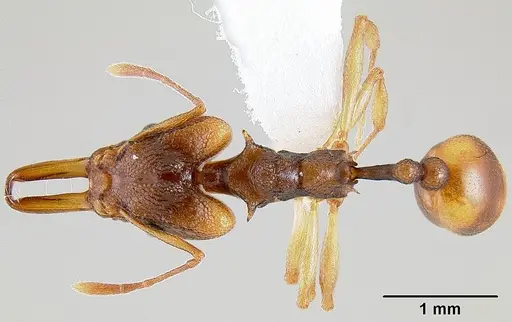
CASENT0914676
View on AntWeb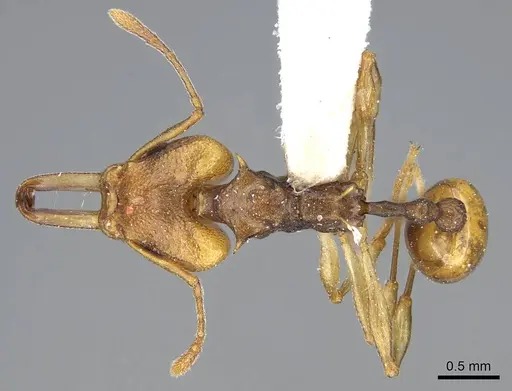
Literature
Loading distribution map...Loading products...