
Orectognathus mjobergi
- Sci. Name
- Orectognathus mjobergi
- Tribe
- Attini
- Subfamily
- Myrmicinae
- Author
- Forel, 1915
- Distribution
- Found in 1 countries
Introduction
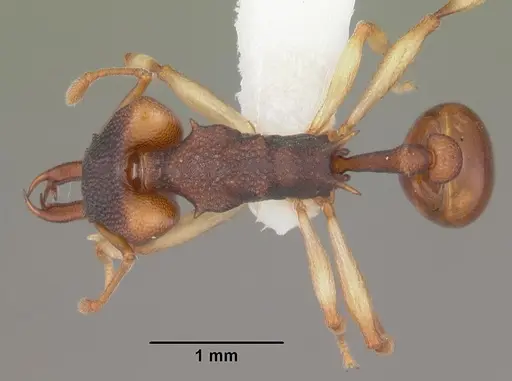
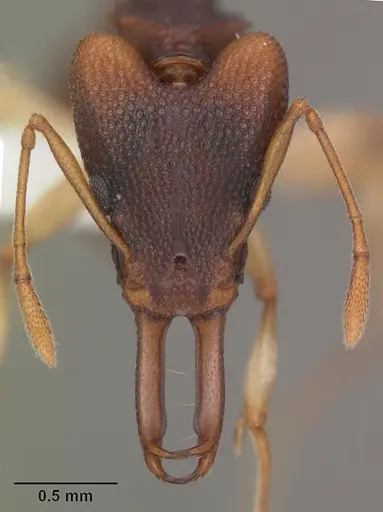
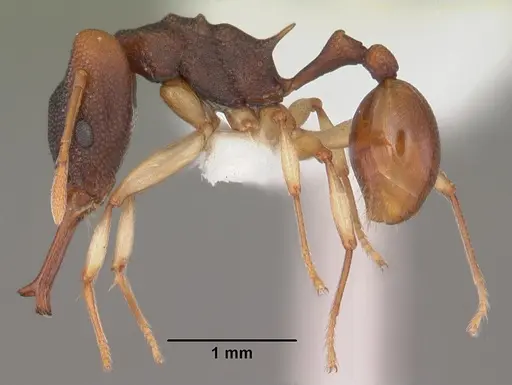
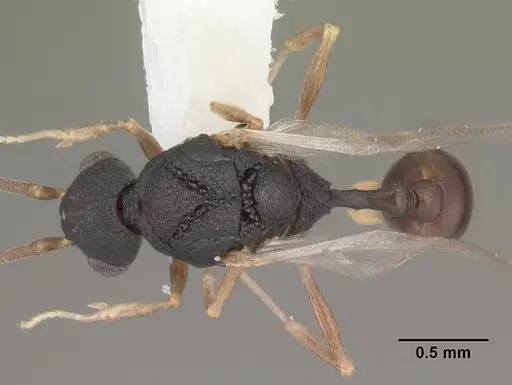
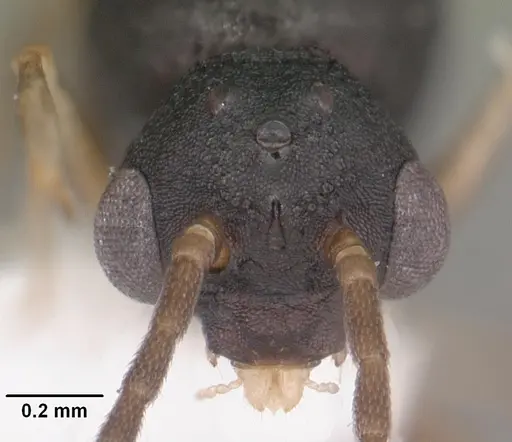
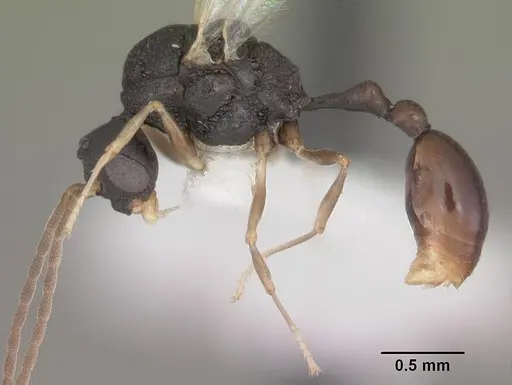
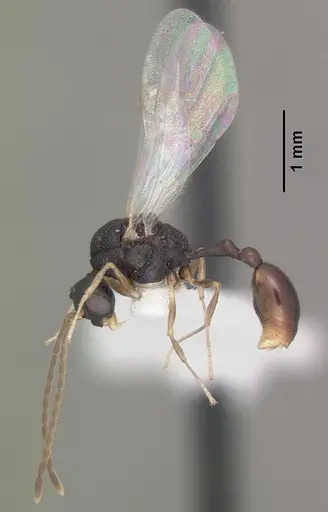
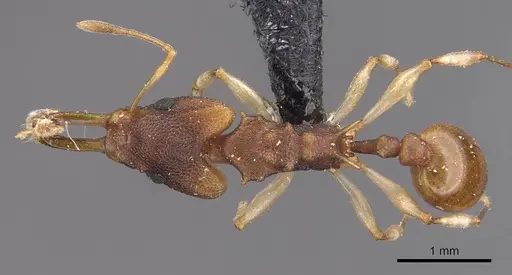
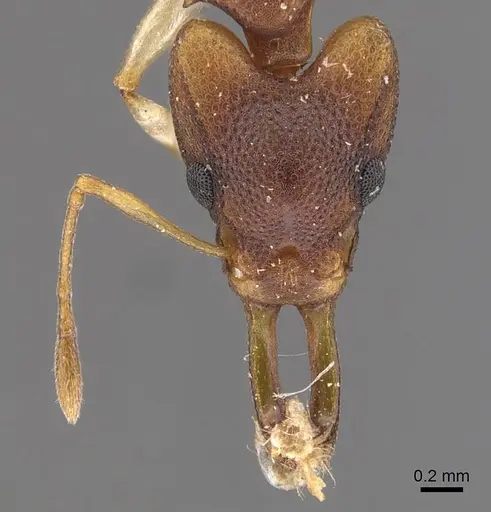
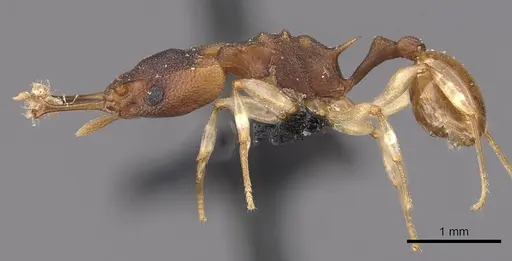
Orectognathus mjobergi is a small myrmicine ant native to the rainforests of Queensland, Australia . Workers are very small, with the genus characterized by large eyes and elongated mandibles adapted for capturing tiny prey . The species was described by Forel in 1915 and is found in subtropical rainforest habitats, often at elevations around 600 meters in the Eungella region . This ant is a specialized micro-predator, hunting small arthropods like springtails and mites in leaf litter . Colonies are typically small, making them a challenging species for antkeepers due to their specific care needs.
Quick Summary
- Difficulty: Expert
- Origin & Habitat: Subtropical rainforest in Queensland, Australia, found at elevations around 600 meters in the Eungella region [1].
- Colony Type: Unconfirmed, no specific data on queen number or social structure.
- Size & Growth:
- Queen: size data unavailable
- Worker: size data unavailable
- Colony: Up to 100 workers, estimated based on typical small colony sizes for rainforest ants [1]
- Growth: Unknown
- Development: Unconfirmed, estimated 6-10 weeks based on related Myrmicinae patterns (Development data is lacking, estimates are inferred from tribe Attini patterns.)
- Antkeeping:
- Temperature: Keep warm and stable, roughly 22-26°C, mimicking subtropical rainforest conditions [1].
- Humidity: Keep the nest substrate consistently moist but not waterlogged, as these ants inhabit damp forest floors [1].
- Diapause: Unconfirmed, likely not required for subtropical species, but a brief cool period in winter may be considered if activity reduces.
- Nesting: Prefer moist substrate like soil or peat, with decaying wood or stones, Y-tong or plaster nests with tight chambers work well [1].
- Behavior: These ants are secretive and slow-moving, foraging individually through leaf litter [1]. They are not aggressive but pose a high escape risk due to their very small size [1].
- Common Issues: escape risk is high due to tiny size, use fine mesh barriers [1], specialized diet of live micro-prey may be difficult to maintain, high humidity needs can lead to mold if ventilation is poor, slow growth may lead to keeper impatience
Nest Preferences
In the wild, Orectognathus mjobergi nests in moist leaf litter, decaying wood, or under stones in rainforest environments [1]. For captivity, use a naturalistic setup with moist soil or peat substrate, or a Y-tong/plaster nest with small chambers to maintain humidity [1]. Avoid dry conditions, as these ants require high moisture levels.
Feeding and Diet
These ants are micro-predators that hunt tiny arthropods like springtails and mites [1]. In captivity, offer live small prey such as springtails or fruit flies, sugar sources are not primary food. Feed small amounts every few days and remove uneaten prey to prevent mold.
Temperature and Care
Maintain temperatures around 22-26°C to mimic their natural habitat [1]. Use a gentle gradient if needed, but avoid extremes above 30°C or below 18°C. High humidity is essential, so keep substrate moist and provide a water source.
Behavior and Temperament
Workers are secretive and forage individually, not forming trails [1]. They are harmless to humans but escape easily due to their small size, use fine mesh and barriers [1].
Colony Founding
Founding behavior is unconfirmed. If you obtain a queen, provide a small, humid chamber and leave her undisturbed. Do not offer food until workers emerge, as claustral founding is typical for related species but not documented here.
Growth and Development
Development data is lacking, estimates suggest 6-10 weeks from egg to worker at optimal conditions [1]. Growth is likely slow, with colonies remaining small. Be patient and avoid forcing development with excessive heat.
Frequently Asked Questions
How long does it take for Orectognathus mjobergi to produce first workers?
Unconfirmed, but estimated 6-10 weeks based on related Myrmicinae patterns [1].
What do Orectognathus mjobergi ants eat?
They are micro-predators that need live small prey like springtails or fruit flies [1].
Can I keep Orectognathus mjobergi in a test tube?
Yes, for founding colonies if kept humid, but monitor for mold and provide ventilation [1].
Are Orectognathus mjobergi good for beginners?
No, due to specialized diet, high humidity needs, and escape risk, expert-level care required.
What temperature do Orectognathus mjobergi need?
Aim for 22-26°C, mimicking subtropical rainforest conditions [1].
How big do Orectognathus mjobergi colonies get?
Up to 100 workers estimated, based on typical small colony sizes [1].
Do Orectognathus mjobergi need hibernation?
Unconfirmed, likely not required, but a brief cool period in winter may be considered.
When should I move Orectognathus mjobergi to a formicarium?
Wait until the colony has several workers and the setup shows issues like condensation, use small, humid nests [1].
Why are my Orectognathus mjobergi dying?
Common causes include escape, starvation from lack of live prey, mold from high humidity, or temperature extremes [1].
Can I keep multiple Orectognathus mjobergi queens together?
Not recommended, as no data supports this, likely monogyne but unconfirmed.
What humidity do Orectognathus mjobergi need?
High humidity, keep substrate moist but not waterlogged, with ventilation to prevent mold [1].
Report an Issue
The current care sheet is based fully on literature. See inconsistencies, or something that's incorrect? Please , it will be resolved after review from an admin. Contributing to the blogs tab also helps providing information, to make us be able to further improve the caresheets. Thank you for your support!
References

This caresheet is licensed under CC BY-SA 4.0 .
Community Blogs
Literature
Loading distribution map...Loading products...