
Opisthopsis manni
- Sci. Name
- Opisthopsis manni
- Tribe
- Camponotini
- Subfamily
- Formicinae
- Author
- Wheeler, 1918
- Distribution
- Found in 2 countries
Introduction
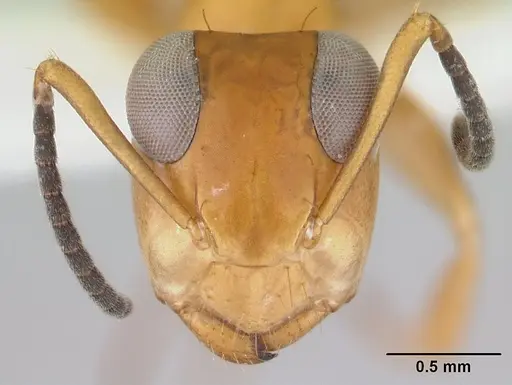
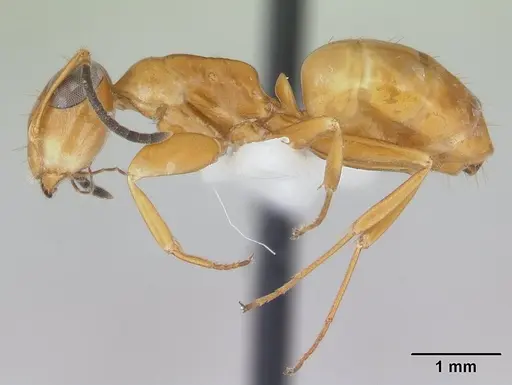
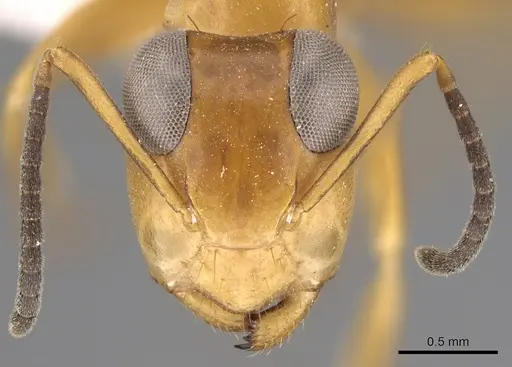
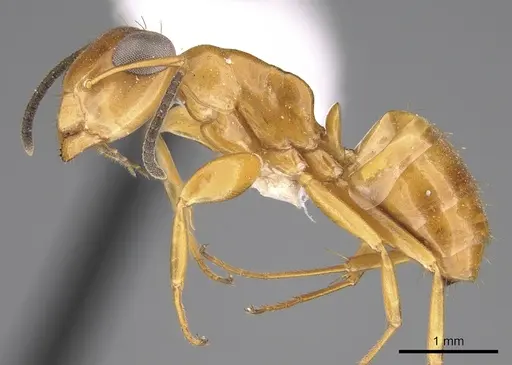
Opisthopsis manni is a Formicinae ant native to the Solomon Islands and New Guinea. Workers have large eyes, a characteristic of the genus Opisthopsis, and inhabit tropical rainforests, nesting in rotting wood or under bark . This species has a restricted distribution and is relatively rare in antkeeping. It is an active forager in tropical forests .
Quick Summary
- Difficulty: Medium
- Origin & Habitat: Solomon Islands (Makira, Guadalcanal, Malaupaina, Malaita, San Cristoval, Three Sisters, Russell) and New Guinea, in tropical rainforest environments, nesting in rotting wood or under bark [1][2].
- Colony Type: Unconfirmed, no specific data on queen number, but based on Formicinae patterns, likely monogyne.
- Size & Growth:
- Queen: Size data unavailable, no total length measurements provided.
- Worker: Size data unavailable, original description does not specify total length.
- Colony: Estimated up to several hundred workers based on related Formicinae.
- Growth: Moderate.
- Development: Estimated 6-8 weeks at optimal temperatures, based on related species. (Development timeline is inferred from related Formicinae, specific data for O. manni is not available.)
- Antkeeping:
- Temperature: Keep at 24-28°C based on tropical habitat.
- Humidity: Keep nest substrate consistently moist but not waterlogged, based on tropical rainforest habitat.
- Diapause: No, tropical species do not require hibernation.
- Nesting: Prefer Y-tong, plaster, or naturalistic setups with rotting wood, based on AntWiki and context [3][1].
- Behavior: Workers are active foragers with moderate aggression, using chemical trails. Escape risk is moderate due to medium size, ensure secure barriers.
- Common Issues: temperatures below 22°C can weaken the colony, keep warm, drying out of nest substrate is a common cause of decline, monitor moisture regularly, poor nutrition can lead to colony health issues, provide balanced diet
Housing and Nest Setup
Use Y-tong (AAC) nests, plaster nests, or naturalistic setups with rotting wood pieces on a moist substrate. This mimics their natural preference for enclosed spaces in rotting wood [3][1]. Keep nest chambers humid but not saturated. Place the nest in a quiet area away from direct sunlight. The outworld should include a shallow water dish and foraging areas. Avoid air-conditioned rooms to maintain stable temperatures.
Feeding and Diet
Offer sugar water, honey, or diluted maple syrup constantly for energy. Provide protein sources like fruit flies, small crickets, or mealworms 2-3 times per week, removing uneaten prey within 24 hours. Fresh water should always be accessible.
Temperature and Seasonal Care
Maintain nest temperatures between 24-28°C year-round. Use a heating cable on one side of the nest to create a gradient. Avoid temperatures below 22°C for extended periods. No hibernation is needed for this tropical species.
Frequently Asked Questions
How long does it take for Opisthopsis manni to produce first workers?
Expect first workers approximately 6-8 weeks after queen lays eggs at optimal temperatures, based on related Formicinae species.
What temperature do Opisthopsis manni ants need?
Keep them at 24-28°C based on their tropical habitat.
Can I keep multiple Opisthopsis manni queens together?
Not recommended, as this species is likely monogyne and unrelated queens may fight.
How big do Opisthopsis manni colonies get?
Colonies likely reach up to several hundred workers based on related Formicinae.
Do Opisthopsis manni need hibernation?
No, being a tropical species, they do not require hibernation.
What do Opisthopsis manni ants eat?
They are omnivorous, offering sugar sources constantly and protein 2-3 times per week.
Is Opisthopsis manni good for beginners?
This species is rated Medium difficulty due to specific temperature and humidity requirements.
When should I move Opisthopsis manni to a formicarium?
Wait until the colony has at least 20-30 workers, but this is an estimate based on general antkeeping practices.
Why is my Opisthopsis manni colony declining?
Common causes include temperatures too low, humidity too low, or poor nutrition, check your setup first.
Report an Issue
The current care sheet is based fully on literature. See inconsistencies, or something that's incorrect? Please , it will be resolved after review from an admin. Contributing to the blogs tab also helps providing information, to make us be able to further improve the caresheets. Thank you for your support!
References

This caresheet is licensed under CC BY-SA 4.0 .
Community Blogs
CASENT0178501
View on AntWeb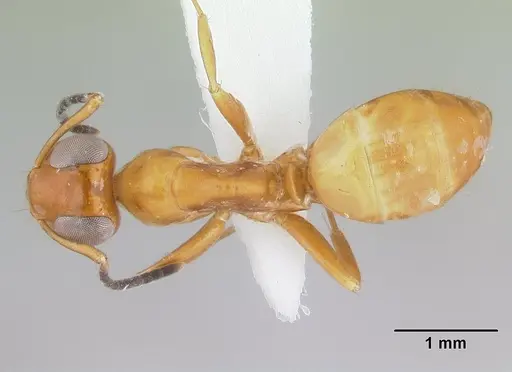
CASENT0281143
View on AntWeb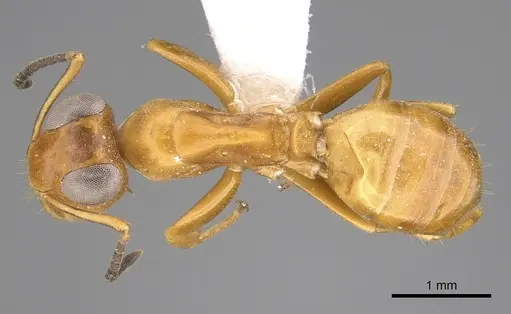
Literature
Loading distribution map...Loading products...