
Ooceraea fuscior
- Sci. Name
- Ooceraea fuscior
- Subfamily
- Dorylinae
- Author
- Mann, 1921
- Distribution
- Found in 2 countries
Introduction
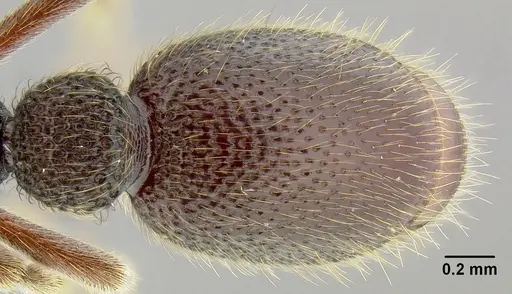
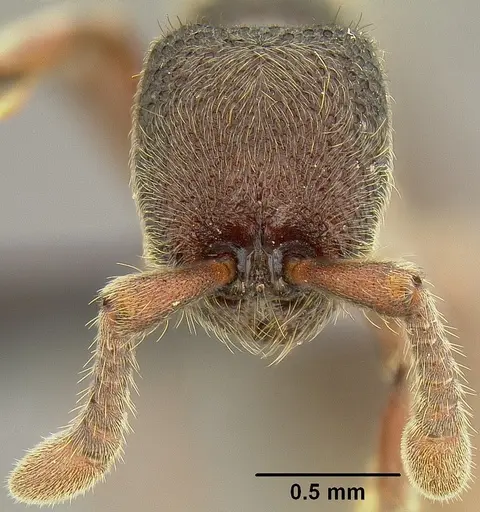
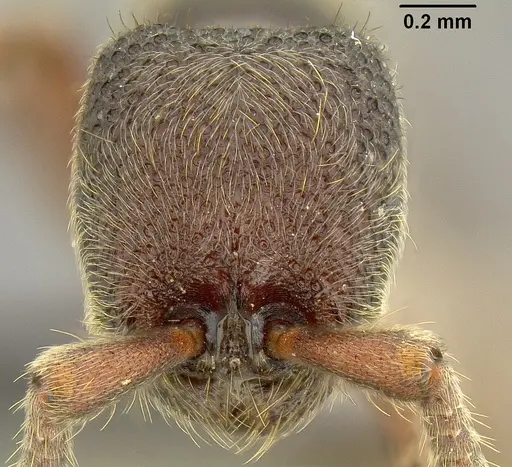
Ooceraea fuscior is a Dorylinae ant endemic to the Fiji Islands. Workers are dark reddish brown with a robust, foveate body and smooth, shiny spaces between the pits. They have 9-segmented antennae and reduced eyes composed of a single ommatidium . This cryptic species is typically found beneath stones in moist forests, and when disturbed, workers roll up and feign death (thanatosis) .
Quick Summary
- Difficulty: Hard
- Origin & Habitat: Endemic to Fiji Islands: recorded from Kadavu, Taveuni, and Vanua Levu. Inhabits moist forest floors, nesting under stones after rainfall [1].
- Colony Type: Unconfirmed, colony structure not documented.
- Size & Growth:
- Queen: Size data unavailable, not described in literature.
- Worker: Size data unavailable, no body length (TL) recorded, head width exceeds 0.70 mm [1].
- Colony: Unknown, colony size not documented.
- Growth: Unknown
- Development: Unknown, not studied. (Development timeline has not been directly studied.)
- Antkeeping:
- Temperature: Unknown, as a tropical Fiji endemic, likely warm conditions (low-to-mid 20s °C), but no specific data. Provide a temperature gradient and observe colony behavior.
- Humidity: High humidity required, natural habitat is moist forest floor under stones. Keep substrate consistently damp but not waterlogged [1].
- Diapause: No, tropical species from Fiji, no hibernation needed. Maintain warm conditions year-round.
- Nesting: Prefers dark, moist spaces. Use Ytong (AAC), plaster, or soil-filled nest with a hydration area. Avoid acrylic nests. Provide a dark retreat with damp substrate, mimicking crevices under stones [1].
- Behavior: Workers are cryptic and not aggressive. When disturbed, they perform thanatosis (roll up and feign death) [1]. Likely predatory, hunting small soil invertebrates. Escape risk moderate due to small size, use standard barriers.
- Common Issues: high humidity is critical, drying out can kill the colony, unpredictable temperature needs, trial and error required, unknown dietary preferences, likely need live prey, but exact requirements unconfirmed, death-feigning may be misinterpreted as workers dying, causing unnecessary interventions, very little captive care data available, expect failures and adapt
Natural History and Distribution
Ooceraea fuscior is endemic to the Fiji Islands, originally described as a subspecies of Ooceraea crypta by Mann in 1921 and later raised to species by Wilson in 1959 [4][5]. It has been recorded from Kadavu (Moanakaka,60 m), Taveuni (Lavena, Mt. Devo, Somosomo), and Vanua Levu (Kilaka, Mt. Delaikoro, Rokosalase, Lomaloma) [1]. The species inhabits moist tropical forests and is typically found beneath stones after rain [1].
Identification and Morphology
Workers of Ooceraea fuscior have 9‑segmented antennae, a key feature [2][3]. The body is dark reddish brown, covered in densely impressed foveae (pits) with the spaces between them smooth and shiny [1][3]. The subpetiolar process consists of two parts: a posterior rounded lamella and an anterior narrowly attached tooth [1]. The eyes are reduced to a single distinct ommatidium [1]. When disturbed, workers roll up and feign death [1].
Housing and Nesting
Because Ooceraea fuscior naturally nests under stones in moist forest floors, captive setups should provide a dark, damp retreat. Use a Ytong (AAC), plaster, or soil‑filled nest with a hydration chamber. Keep the substrate consistently moist but not waterlogged [1]. Avoid acrylic nests. The outworld can be simple with a thin layer of soil or leaf litter. Ensure tight sealing at connections, as workers are small and may escape.
Feeding and Diet
No specific dietary data exist for Ooceraea fuscior. As a Dorylinae, it is likely predaceous on small soil invertebrates. Offer tiny live prey such as fruit flies, pinhead crickets, or springtails. Avoid relying on sugar sources. Because dietary needs are unconfirmed, experiment with different prey items and observe acceptance. Remove uneaten food after 24 hours to prevent mold.
Temperature and Seasonal Care
Since Ooceraea fuscior is endemic to tropical Fiji, it probably requires warm conditions year‑round. However, no specific temperature range has been published. Start by keeping the nest at 24–28 °C (low‑to‑mid 20s °C) and watch the colony’s reaction. Provide a gradient so ants can choose their preferred zone. Do not allow temperatures to drop below 20 °C. No winter diapause is needed.
Behavior and Temperament
Workers are cryptic and non‑aggressive. Their most notable behavior is thanatosis: when disturbed, they curl into a ball and remain motionless for a period [1]. This is a defensive mechanism that may fool predators. They are not known to sting humans effectively. In the nest, they likely remain hidden in crevices. Their foraging strategy is unknown but may involve raiding small prey under leaf litter.
Frequently Asked Questions
How long does it take for Ooceraea fuscior to produce first workers?
The development timeline has not been studied. No estimate is available.
What do Ooceraea fuscior ants eat?
Diet is unconfirmed. Based on its Dorylinae relatives, it likely hunts small invertebrates. Provide tiny live prey such as fruit flies or pinhead crickets. Sugar sources may be ignored.
Do Ooceraea fuscior ants sting?
They have a sting but it is too small to penetrate human skin effectively. They rely on thanatosis (death feigning) rather than stinging when threatened.
What temperature do Ooceraea fuscior ants need?
No specific data, as a tropical species, aim for 24–28 °C (low‑to‑mid 20s °C). Provide a gradient and monitor behavior. Do not allow temperatures below 20 °C.
Are Ooceraea fuscior good for beginners?
No. Rated Hard. Very little is known about their captive care, making them suitable only for experienced keepers willing to experiment.
How big do Ooceraea fuscior colonies get?
Colony size is undocumented. Unknown how many workers a mature colony contains.
Do Ooceraea fuscior need hibernation?
No. They are tropical and require warm conditions year-round.
Where is Ooceraea fuscior found in the wild?
It is endemic to the Fiji Islands, recorded from Kadavu, Taveuni, and Vanua Levu, in moist forests under stones [1][5].
Why do my Ooceraea fuscior workers roll up and stop moving?
This is thanatosis (death feigning), a natural defensive behavior. They are not dead and will resume activity once they feel safe. Avoid disturbing them unnecessarily [1].
Can I keep multiple queens together?
The social structure is unconfirmed. No data suggests polygyny. It is not recommended to attempt keeping multiple queens until more is known.
Report an Issue
The current care sheet is based fully on literature. See inconsistencies, or something that's incorrect? Please , it will be resolved after review from an admin. Contributing to the blogs tab also helps providing information, to make us be able to further improve the caresheets. Thank you for your support!
References

This caresheet is licensed under CC BY-SA 4.0 .
Community Blogs
CASENT0171152
View on AntWeb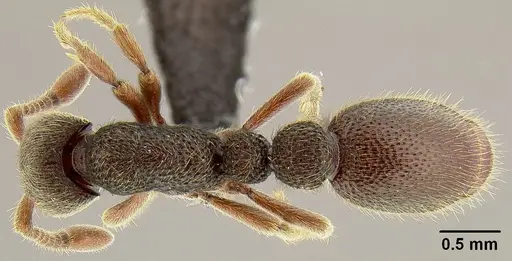
Literature
Loading distribution map...Loading products...