
Onychomyrmex hedleyi
- Sci. Name
- Onychomyrmex hedleyi
- Tribe
- Amblyoponini
- Subfamily
- Amblyoponinae
- Author
- Emery, 1895
- Distribution
- Found in 1 countries
Introduction
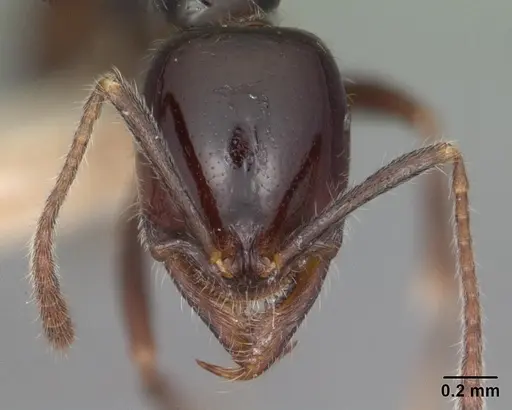
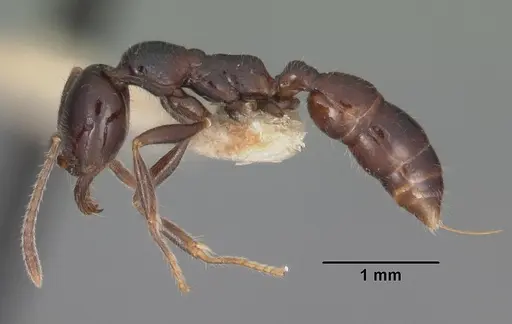
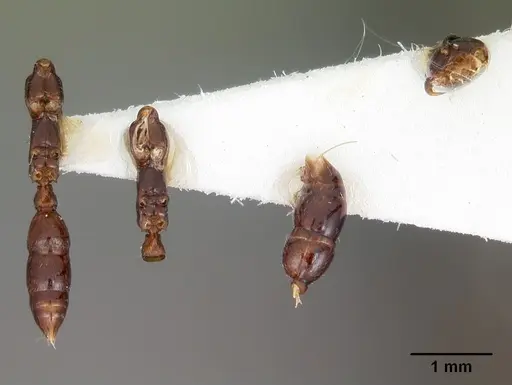
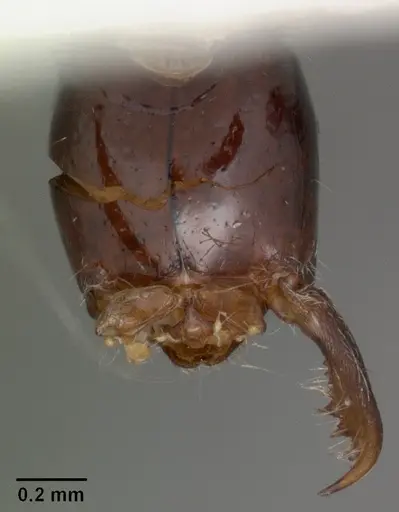
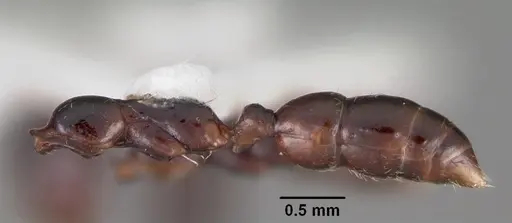
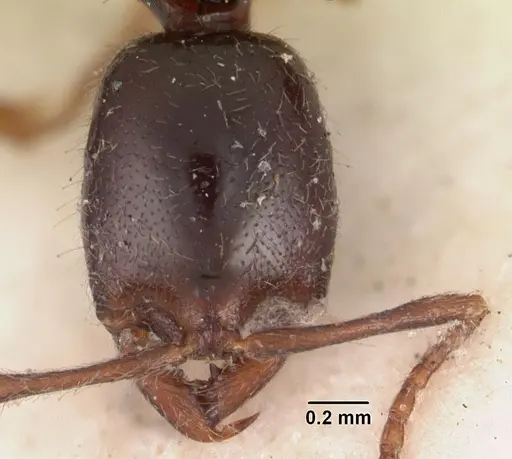
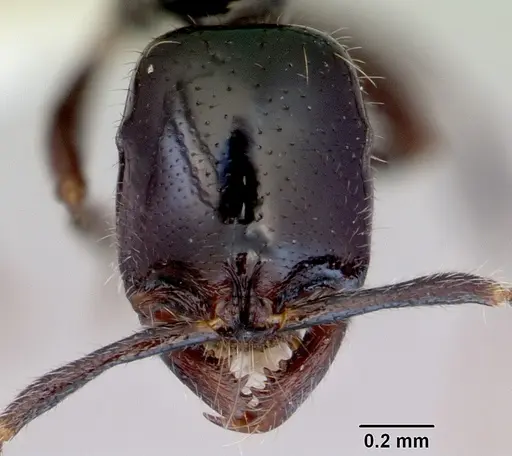
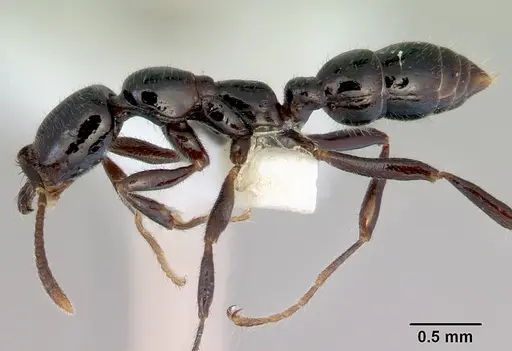
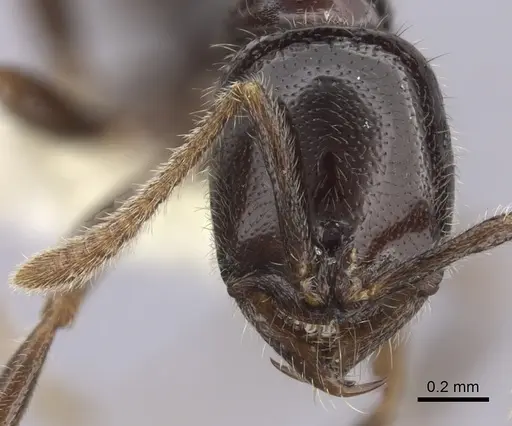
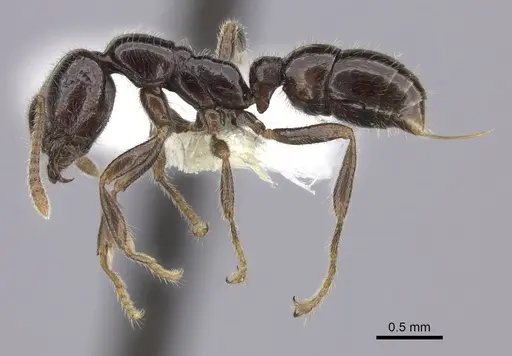
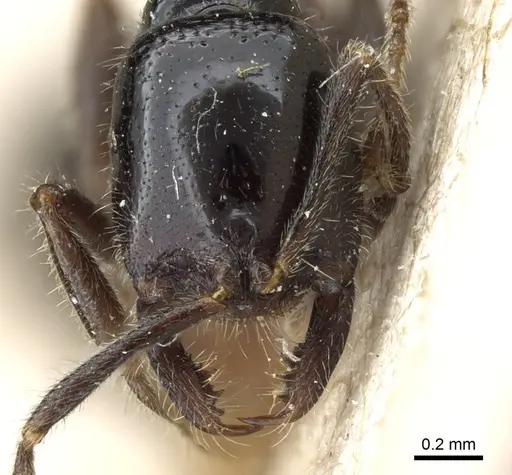
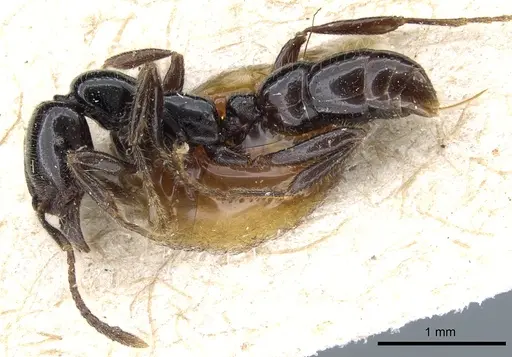
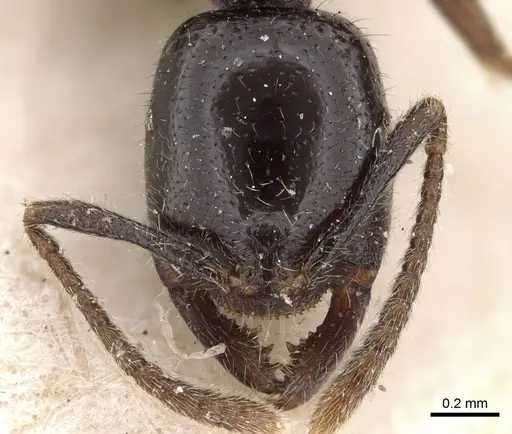
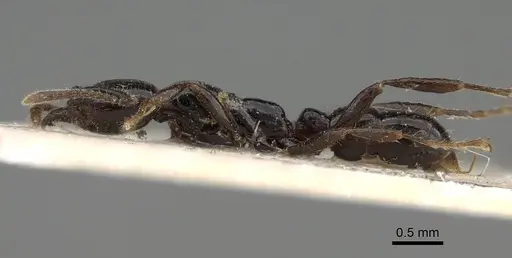
Onychomyrmex hedleyi is a small, dark ant native to the rainforests of Queensland, Australia. Workers measure 3.5-4 mm and have reddish markings around the thoracic sutures, abdomen, and face . This species belongs to the Amblyoponinae subfamily and is one of the few army ant species outside the traditional Ecitoninae subfamily . Unlike typical ants, these have ergatoid queens - wingless, physogastric females that serve as the colony's sole reproductive individuals . Colonies can reach up to 850 workers and exhibit classic army ant behaviors including nomadic lifestyle, nocturnal raids, and group prey retrieval . What makes Onychomyrmex hedleyi unique is its army ant-like lifestyle despite being in the Amblyoponinae subfamily, with nomadic colonies that relocate regularly and conduct nocturnal raids .
Quick Summary
- Difficulty: Expert
- Origin & Habitat: Queensland, Australia, highland rainforest environments. Workers are found foraging in rotten logs and conducting raids in the forest [2][3][4].
- Colony Type: Strictly monogyne, colonies have a single ergatoid (wingless) queen. Ergatoid queens are physogastric with noticeably enlarged abdomens, and they do not perform worker tasks, reproduction is their exclusive function [5].
- Size & Growth:
- Queen: Size data unavailable, ergatoid queens are physogastric with gaster much larger than workers [5].
- Worker: 3.5-4 mm [1]
- Colony: Up to 850 workers [1]
- Growth: Slow, only 1-6 ergatoid gynes are produced annually, indicating limited reproductive output [5]
- Development: Unknown, no direct development data available. Based on related Amblyoponinae species, estimate 6-10 weeks at optimal temperature. (Development timeline unconfirmed for this species.)
- Antkeeping:
- Temperature: Keep warm, around 22-26°C, based on highland rainforest conditions.
- Humidity: High humidity required, rainforest habitat. Keep nest substrate consistently moist but not waterlogged [3].
- Diapause: No, as a tropical Australian species, they remain active year-round.
- Nesting: Nomadic colony structure, they relocate regularly in the wild (up to 150 cm) [7]. In captivity, provide a flexible setup that allows movement between nest areas.
- Behavior: Nocturnal army ant behavior, foraging and colony relocation occur almost entirely at night [6]. Workers recruit nestmates to conduct group retrieval of prey. If prey is too large, the entire colony moves to the prey site rather than abandoning it [7]. They are specialist predators, primarily hunting large prey like centipedes [8]. Workers move relatively slowly and are easily captured in the wild. Escape risk is moderate, workers are small but not particularly agile.
- Common Issues: very limited availability, this species is rarely kept in captivity and not commercially available., specialist predator diet may be difficult to replicate, they prefer large prey like centipedes., nomadic colony structure requires flexible housing that allows regular relocation., no established captive breeding protocols, wild colonies are the only source., slow colony growth with only 1-6 new queens produced annually makes colony expansion very gradual.
Understanding Ergatoid Queens
Onychomyrmex hedleyi represents a case of queen evolution where winged queens are replaced by ergatoid queens. These ergatoid queens are physogastric, meaning their abdomens become dramatically enlarged to accommodate egg production. Critically, these queens are 'sole-purpose' reproductives, they do absolutely no worker tasks. They don't forage, don't care for brood, and don't participate in colony defense. The colony relies entirely on workers for all non-reproductive tasks. This is different from gamergates because ergatoid queens are a dedicated caste. Only 1-6 new ergatoid gynes are produced per year, making colony reproduction extremely slow [5].
Army Ant Lifestyle
This species is one of the few army ants outside the Ecitoninae subfamily, representing convergent evolution of army ant traits. Colonies are nomadic, they don't maintain a permanent nest but relocate regularly, sometimes moving up to 150 cm. This movement is tied to prey availability. Unlike typical ants that send foragers, these ants conduct coordinated raids. When workers find large prey like centipedes, they recruit nestmates for group retrieval. If the prey is too large or heavy to move, the entire colony relocates to the prey site rather than abandoning the food source. Queens are guarded during relocation and moved to new bivouac sites. All foraging and raiding activity is almost entirely nocturnal [6][7].
Feeding and Diet
Onychomyrmex hedleyi is a specialist predator classified in the 'Specialist Predator' functional group [8]. In the wild, they hunt large prey including centipedes, this is unusual among ants and requires significant prey-handling capability. Workers do not dismember prey individually but recruit nestmates for group retrieval. In captivity, replicating their natural diet is challenging. Offer a variety of small live invertebrates including crickets, mealworms, and other arthropods. Given their preference for larger prey, you may need to provide appropriately sized prey items. Sugar sources are unlikely to be accepted, as specialist predators, they get their nutrition from protein-rich prey. Always provide a water source.
Housing Considerations
Keeping nomadic army ants presents unique challenges. In the wild, colonies relocate regularly, so captive setups should allow for this behavior. A naturalistic setup with multiple connected chambers works better than a fixed formicarium. The nest material should be moist but allow for some dry areas. Because they are nocturnal and sensitive to light, minimize disturbance during daytime hours. Escape prevention is important though they are not strong climbers. The key challenge is that this species is rarely kept in captivity, there are no established protocols for long-term husbandry. If you obtain a colony, expect a learning curve and be prepared to adapt based on colony behavior. [7]
Temperature and Seasonal Care
As a highland rainforest species from Queensland, Australia, Onychomyrmex hedleyi requires warm, humid conditions. Aim for temperatures in the low-to-mid 20s Celsius. Queensland experiences mild winters, so this species likely has minimal diapause requirements, they may reduce activity but probably don't enter true hibernation. Maintain stable temperatures without major fluctuations. A heating cable on one side of the nest can create a beneficial gradient, allowing ants to thermoregulate. Combined with high humidity, this mimics their natural rainforest understory environment.
Frequently Asked Questions
Is Onychomyrmex hedleyi available for purchase?
No, this species is extremely rare in the antkeeping hobby and not commercially available. Wild colonies are the only source, and their specialized requirements make captive breeding challenging. This is not a species you're likely to find for sale.
How long do Onychomyrmex hedleyi colonies live?
The exact colony lifespan is unconfirmed, but ergatoid queens likely live for many years like other long-lived ant species. The slow reproductive rate suggests each colony represents a significant investment of time to establish and grow [5].
Do Onychomyrmex hedleyi ants sting?
They do not have a functional sting. As members of the Amblyoponinae subfamily, they have aberrant venom glands with reduced structures [9]. They can bite if handled, but the primary defense is their predatory nature and group recruitment behavior.
Can I keep multiple queens together?
No, colonies are strictly monogyne with a single ergatoid queen. Multiple queens would likely fight. The ergatoid queen system is fundamentally different from polygynous arrangements, and there's no evidence of pleometrosis in this species [5].
What do I feed Onychomyrmex hedleyi?
Feed live invertebrate prey, they are specialist predators that prefer larger prey like centipedes. In captivity, offer appropriately sized crickets, mealworms, and other arthropods. Do not rely on sugar water or honey as a food source. Fresh water must always be available [8][7].
Are Onychomyrmex hedleyi good for beginners?
No, this is an expert-level species. They are rarely kept, have specialized dietary requirements, exhibit complex army ant behaviors requiring specific housing, and there are no established captive protocols. This species is not recommended for anyone except experienced antkeepers.
How big do Onychomyrmex hedleyi colonies get?
Colonies reach up to 850 workers on average [1]. This is moderate for army ants, much smaller than Eciton colonies which can reach hundreds of thousands, but significant for a ponerine ant.
Do they need hibernation?
No, as a Queensland rainforest species, they likely remain active year-round with perhaps reduced activity during cooler periods. True diapause is unlikely. Maintain warm temperatures throughout the year.
Why do they move their colony so often?
They are nomadic army ants, this is their natural behavior. In the wild, colonies relocate up to 150 cm to follow prey availability. In captivity, provide housing that allows for this movement rather than forcing them to stay in one location [7].
When do they forage?
Almost entirely nocturnal. Army ant behavior and colony migration in this species is almost entirely a nighttime activity [6]. Expect minimal daytime activity and peak foraging after dark.
Report an Issue
The current care sheet is based fully on literature. See inconsistencies, or something that's incorrect? Please , it will be resolved after review from an admin. Contributing to the blogs tab also helps providing information, to make us be able to further improve the caresheets. Thank you for your support!
References

This caresheet is licensed under CC BY-SA 4.0 .
Community Blogs
CASENT0003164
View on AntWeb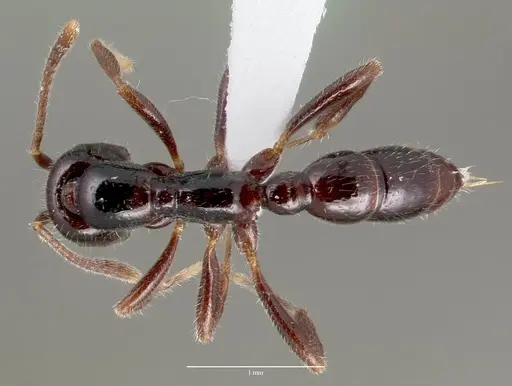
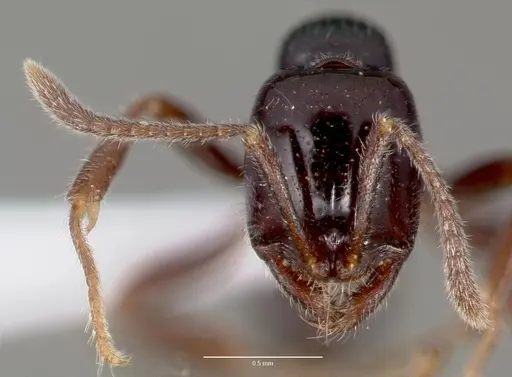
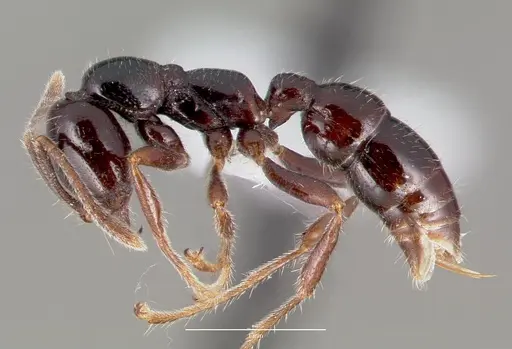
CASENT0102176
View on AntWeb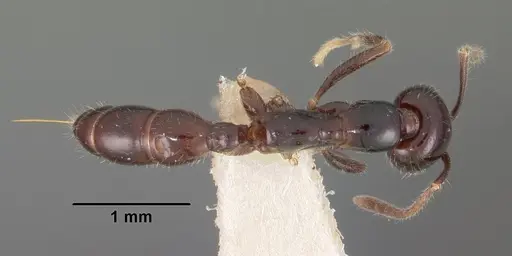
CASENT0102177
View on AntWeb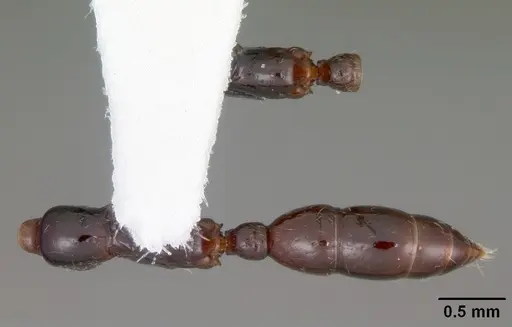
CASENT0102178
View on AntWeb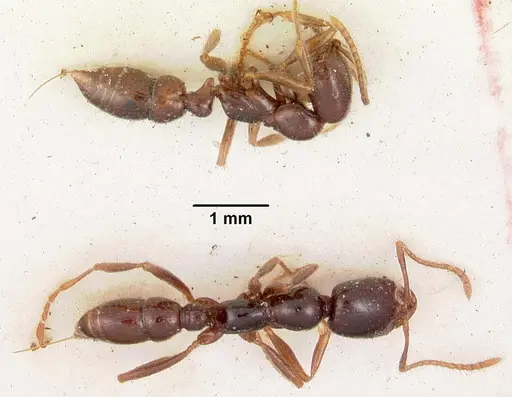
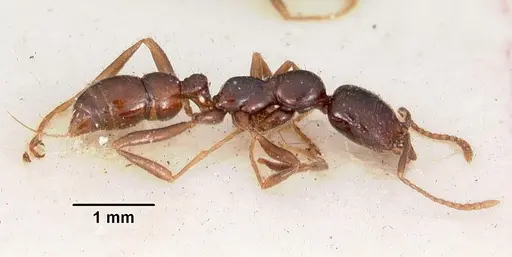
CASENT0106018
View on AntWeb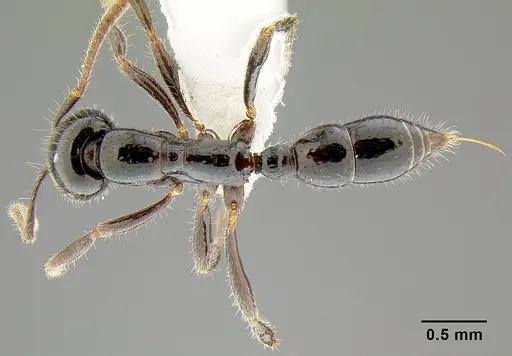
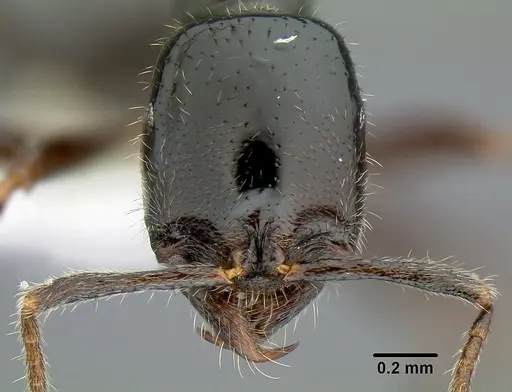
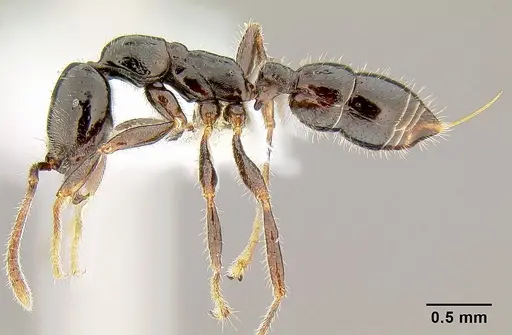
CASENT0172260
View on AntWeb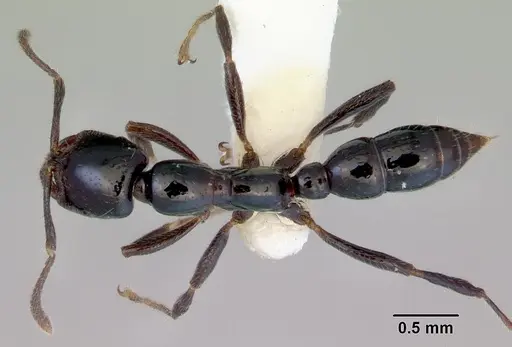
CASENT0260456
View on AntWeb
CASENT0903769
View on AntWeb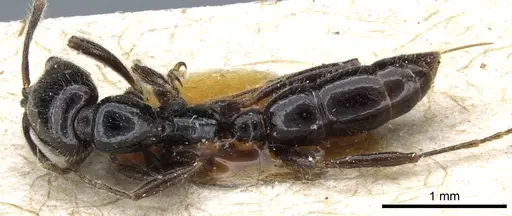
CASENT0922418
View on AntWeb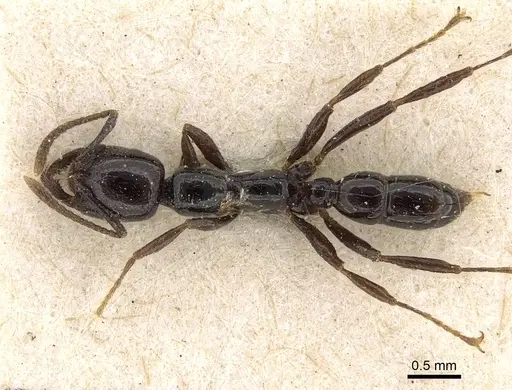
Literature
Loading distribution map...Loading products...