
Odontomachus testaceus
- Sci. Name
- Odontomachus testaceus
- Tribe
- Ponerini
- Subfamily
- Ponerinae
- Author
- Emery, 1897
- Distribution
- Found in 1 countries
Introduction
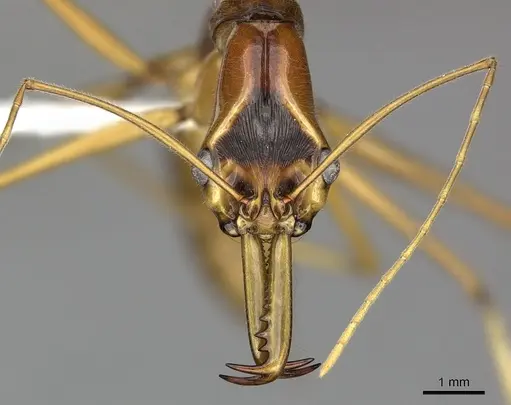
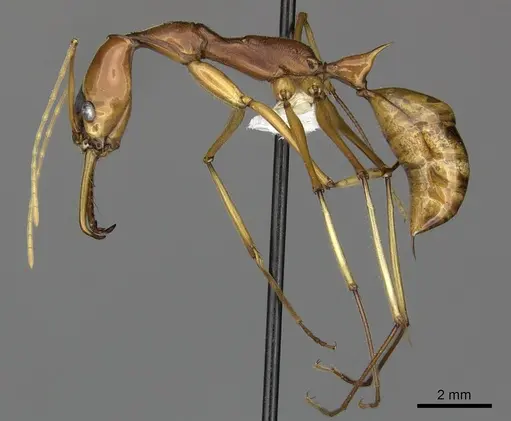
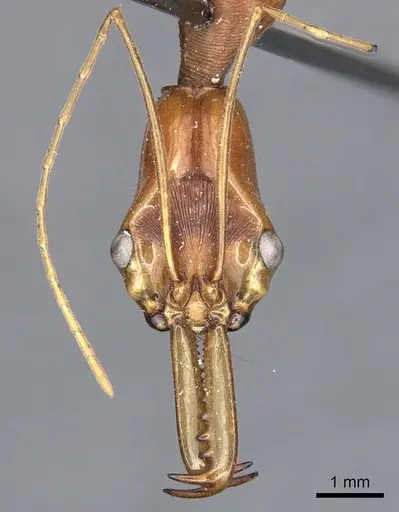
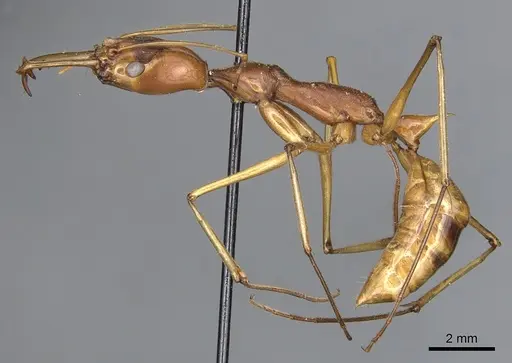
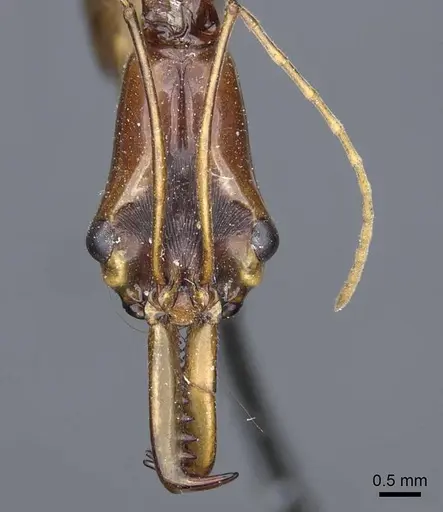
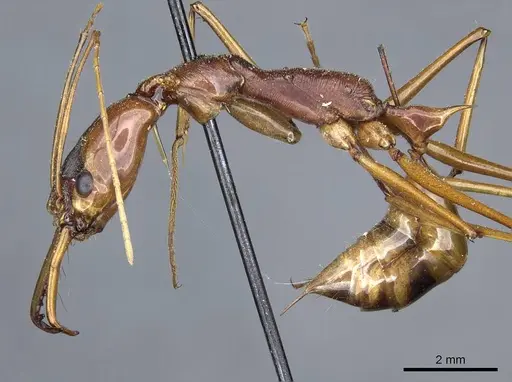
Odontomachus testaceus is a trap-jaw ant found in New Guinea, including Papua New Guinea and Indonesia's Irian Jaya region . It belongs to the tyrannicus species group . Workers have large, curved mandibles that snap shut at high speeds to capture prey, and they nest in soil or rotting wood in tropical forests . Size data is unavailable, but based on Odontomachus genus patterns, workers are typically around 8-15mm. This species is known for its powerful trap-jaw mandibles used for hunting insects and other small invertebrates .
Quick Summary
- Difficulty: Medium
- Origin & Habitat: New Guinea region (Papua New Guinea and Indonesia Irian Jaya). Found in tropical forest habitats, typically nesting in soil or rotting wood [1].
- Colony Type: Colony structure is unconfirmed, but based on Odontomachus genus patterns, likely monogyne (single queen) [1].
- Size & Growth:
- Queen: Size data unavailable, inferred from Odontomachus genus (~12-15mm)
- Worker: Size data unavailable, inferred from Odontomachus genus (~8-15mm)
- Colony: Up to 300 workers, estimated based on Ponerinae patterns [1].
- Growth: Moderate, inferred from Ponerinae patterns [1].
- Development: Estimated 6-10 weeks at tropical temperatures, inferred from related species [1]. (Development is temperature-dependent, with faster growth in warmer conditions.)
- Antkeeping:
- Temperature: Keep at 24-28°C, inferred from tropical habitat [1].
- Humidity: Keep nest substrate consistently moist but not waterlogged, inferred from forest habitat [1].
- Diapause: No, tropical species do not require hibernation [1].
- Nesting: Y-tong or plaster nests with moist substrate, inferred from habitat [1].
- Behavior: Workers are active foragers with powerful trap-jaw mandibles. They are predatory but not aggressive toward humans. Escape risk is moderate due to agility [1].
- Common Issues: tropical temperature requirements may need heating in cooler climates., small colony sizes mean losses can be devastating., predatory diet requires live prey., wild-caught colonies may have parasites., slow founding phase requires patience.
Housing and Nest Setup
Use Y-tong or plaster nests for Odontomachus testaceus. Provide dark, humid nest chambers with consistently moist substrate [1]. Avoid bright lighting near the nest. A water reservoir can help maintain humidity. Since they are tropical, keep the nest in a warm area, using a heating cable if room temperatures are below 24°C [1].
Feeding and Diet
Feed live or dead insects such as fruit flies, crickets, or mealworms for protein. Offer sugar water or honey as an energy supplement [1]. Remove uneaten prey after 24 hours to prevent mold. Protein is essential for brood development.
Temperature and Seasonal Care
Maintain temperatures at 24-28°C year-round. Avoid drafts or cold areas. If needed, use a heating cable on one side of the nest [1]. No hibernation is required for this tropical species.
Behavior and Defense
Workers use trap-jaw mandibles to hunt prey at high speeds. They can sting if threatened, causing mild discomfort similar to a bee sting [1]. They are not aggressive toward keepers but will defend the nest. Escape prevention is important due to their agility.
Colony Development and Growth
Colony growth is moderate. Queens likely found claustrally, sealing themselves to raise first workers on stored reserves [1]. The first brood takes several months to develop. Patience is needed as colonies max out at smaller sizes compared to other ant species.
Frequently Asked Questions
How long does it take for Odontomachus testaceus to raise first workers?
Expect 6-10 weeks from egg to worker at optimal tropical temperatures, but founding may take several months [1].
What do Odontomachus testaceus eat?
They need live or dead insects for protein, with sugar water as a supplement [1].
Do Odontomachus testaceus ants sting?
Yes, they have a stinger and can sting if threatened, causing mild discomfort [1].
Can I keep multiple queens together?
This species is likely monogyne, so combining queens is not recommended [1].
Do they need hibernation?
No, as a tropical species, they do not require hibernation [1].
Are Odontomachus testaceus good for beginners?
They are medium difficulty due to temperature and dietary needs, so some experience is helpful [1].
How big do colonies get?
Colonies may reach up to 300 workers, estimated from Ponerinae patterns [1].
What temperature do they need?
Keep them at 24-28°C consistently, as they are tropical ants [1].
When should I move them to a formicarium?
Wait until the colony has at least 20-30 workers and is actively foraging [1].
Why are my ants dying?
Common causes include low temperatures, improper humidity, lack of protein, or parasites [1].
Report an Issue
The current care sheet is based fully on literature. See inconsistencies, or something that's incorrect? Please , it will be resolved after review from an admin. Contributing to the blogs tab also helps providing information, to make us be able to further improve the caresheets. Thank you for your support!
References

This caresheet is licensed under CC BY-SA 4.0 .
Community Blogs
CASENT0270629
View on AntWeb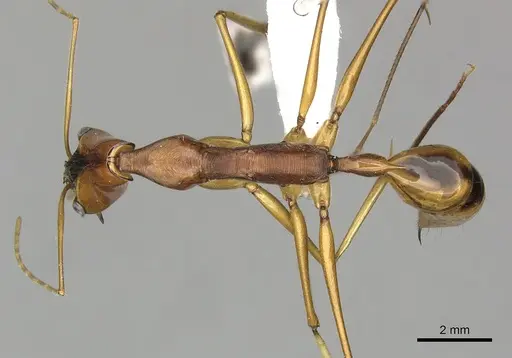
CASENT0650186
View on AntWeb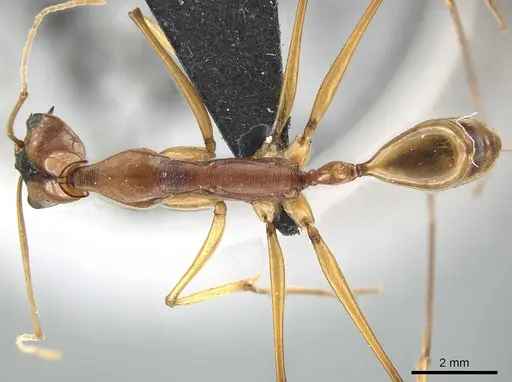
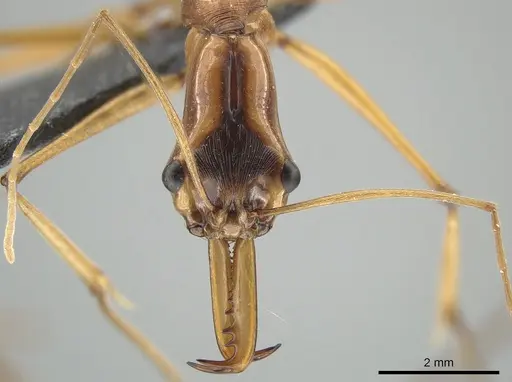
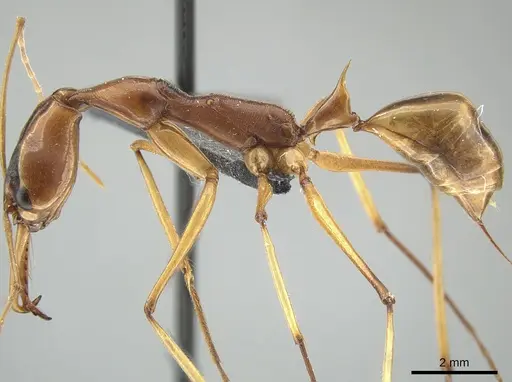
CASENT0650351
View on AntWeb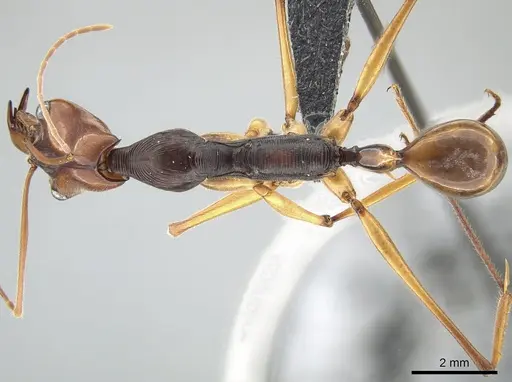
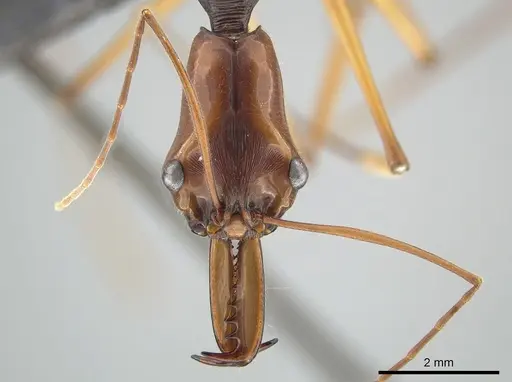
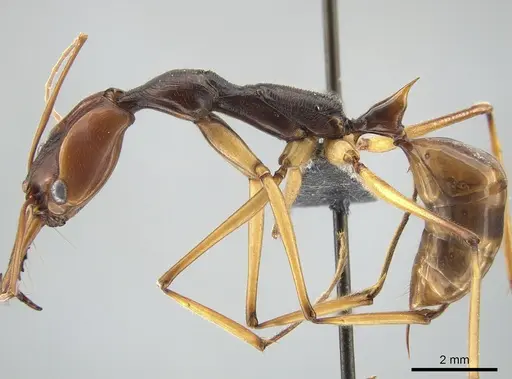
CASENT0900613
View on AntWeb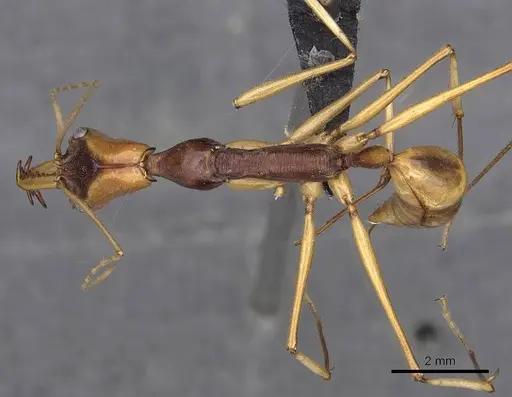
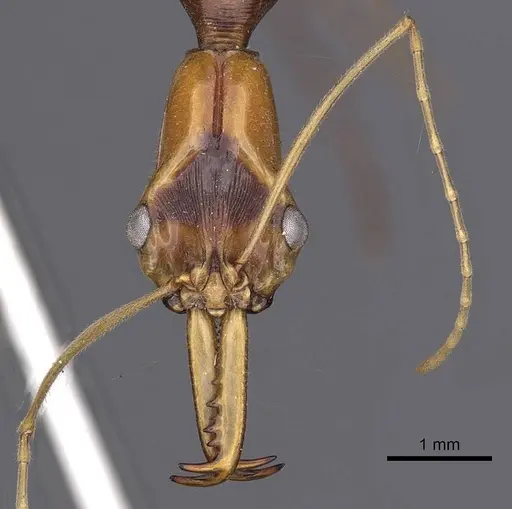
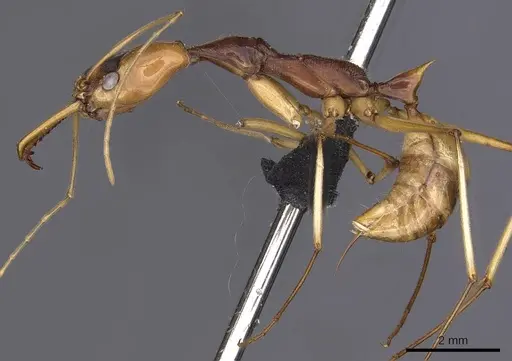
CASENT0903992
View on AntWeb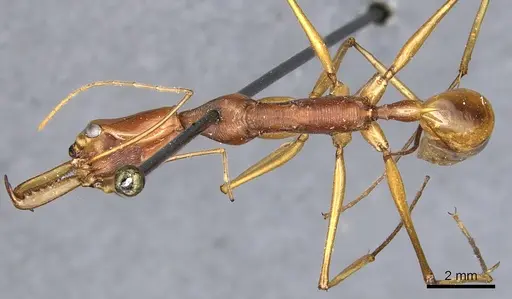
CASENT0905744
View on AntWeb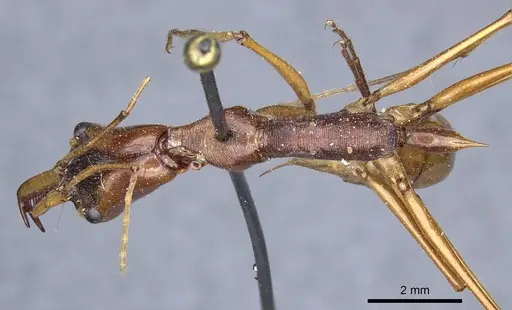
Literature
Loading distribution map...Loading products...