
Odontomachus panamensis
- Sci. Name
- Odontomachus panamensis
- Tribe
- Ponerini
- Subfamily
- Ponerinae
- Author
- Forel, 1899
- Distribution
- Found in 7 countries
Introduction
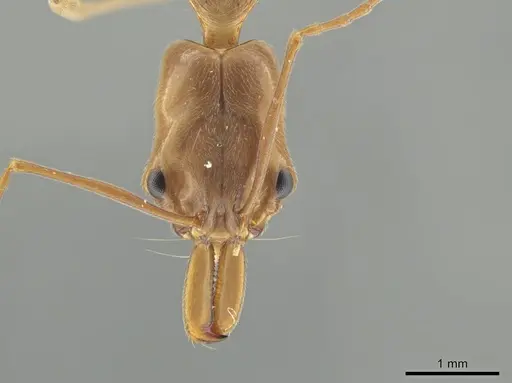
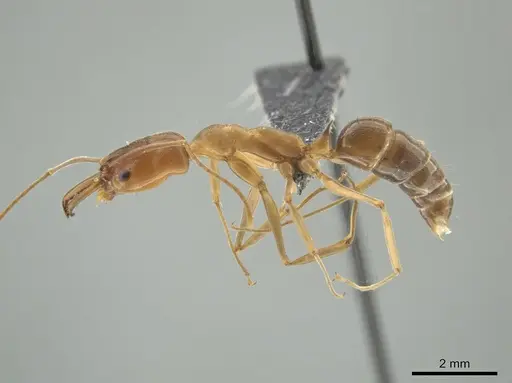
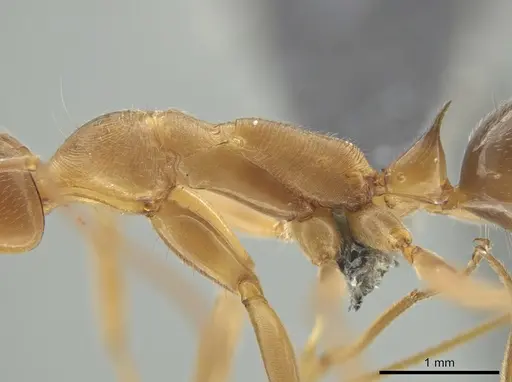
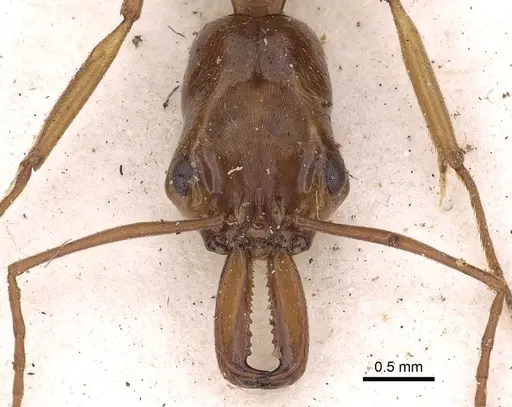
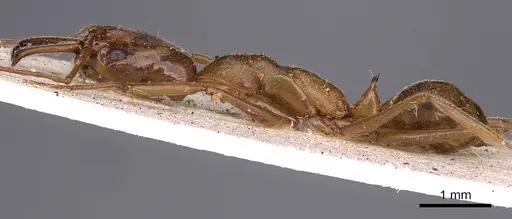
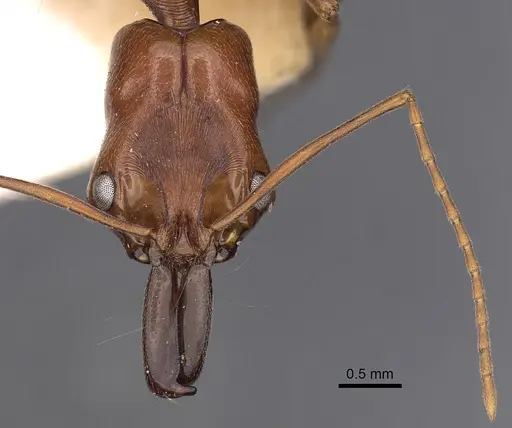
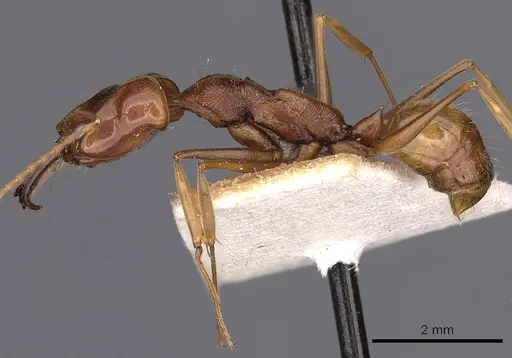
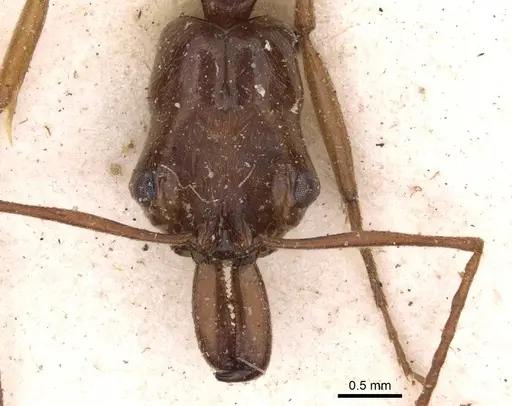
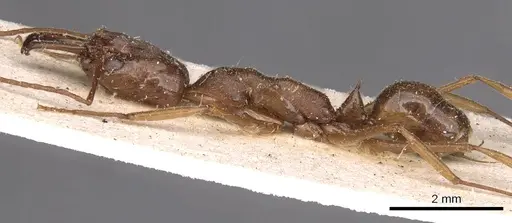
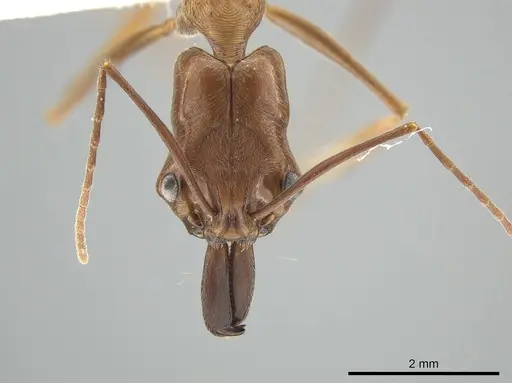
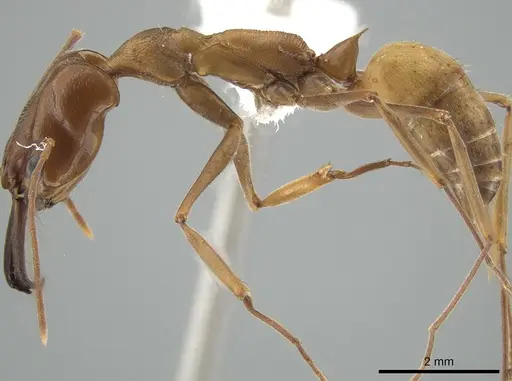
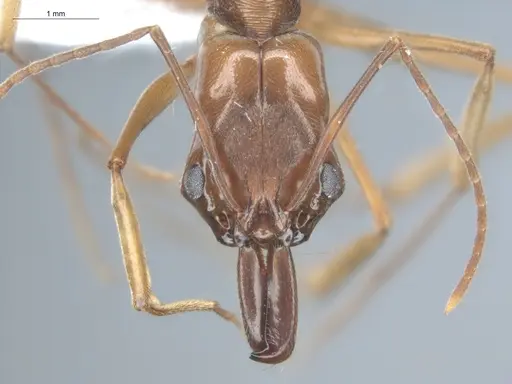
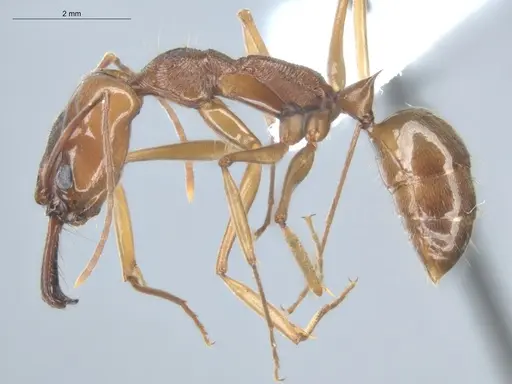
Odontomachus panamensis is a trap-jaw ant found in the Neotropics, from Panama to Brazil and French Guiana. Workers are 9.1-11.5mm long with a yellow to orangish body . They are arboreal and nocturnal, nesting in epiphytes and ant gardens in lowland forests . This species is known for its role in ant gardens, where workers collect seeds from plants like Aechmea mertensii and incorporate them into nest walls . They often live in parabiotic associations with other ant species such as Crematogaster limata .
Quick Summary
- Difficulty: Medium
- Origin & Habitat: Neotropical region, including Brazil, Colombia, Costa Rica, Ecuador, French Guiana, Guyana, Panama, and Suriname. Inhabits lowland tropical forests, typically at elevations up to 550m [2][1].
- Colony Type: Colonies are polycalic, maintaining multiple nest sites. Queen number is unconfirmed from literature [1].
- Size & Growth:
- Queen: Size data unavailable for queens. Inferred from Odontomachus genus patterns, approximately 12-14mm.
- Worker: 9.1-11.5mm total length [1].
- Colony: Over 2,000 workers in mature colonies [1].
- Growth: Moderate, based on Ponerinae patterns.
- Development: Estimated 8-12 weeks at warm temperatures, but specific data unavailable [1]. (Development times are inferred from related trap-jaw ant species.)
- Antkeeping:
- Temperature: Keep warm, roughly 24-28°C, based on tropical habitat [1].
- Humidity: Keep nest substrate consistently moist but not waterlogged, as they inhabit humid forests [1].
- Diapause: No, tropical species do not require hibernation [1].
- Nesting: Arboreal nests preferred, such as Y-tong or naturalistic setups with vertical space [1].
- Behavior: Nocturnal and arboreal, using trap-jaw mandibles for hunting. Moderate escape risk due to medium size. Defensive when threatened [1].
- Common Issues: low temperatures can kill the colony, arboreal nature requires vertical space in enclosures, live prey is essential for protein, polycalic colonies may establish secondary nests outside primary enclosure
Housing and Nest Preferences
You should provide arboreal nests that mimic their natural epiphyte habitat. Use Y-tong nests or naturalistic setups with vertical space and multiple chambers [1]. These ants are nocturnal, so keep the nest dark while the outworld is lit for foraging. Escape prevention is manageable due to their medium size, standard barriers work well.
Feeding and Diet
You need to offer live prey like fruit flies, small crickets, or mealworms, as they are active predators [4]. They may accept sugar water occasionally, but protein from insects should be the main diet. Prey should be small enough for workers to handle.
Temperature and Seasonal Care
Keep the colony warm at roughly 24-28°C, as they are from tropical habitats [1]. In cooler climates, use a heating cable on one side of the nest. They do not require hibernation, so maintain consistent temperatures year-round.
Behavior and Defense
Workers are nocturnal and use their trap-jaw mandibles to hunt prey [1]. They are defensive when threatened and will bite, but are not typically aggressive toward humans. Their primary defense is their powerful bite, not stinging.
Colony Structure and Growth
Colonies can exceed 2,000 workers and are polycalic, meaning they maintain multiple nest sites [1]. Growth is moderate, with first workers appearing several months after queen lays eggs. Expect colonies to reach several hundred workers in the first year or two.
Unique Ant Garden Behavior
Workers collect seeds from plants like Aechmea mertensii and Anthurium gracile, incorporating them into nest walls to create living gardens [1]. This behavior is part of parabiotic associations with other ant species, such as Crematogaster limata [3]. In captivity, you might observe similar seed incorporation if suitable materials are provided.
Frequently Asked Questions
Can I keep Odontomachus panamensis in a test tube?
Not recommended. These are arboreal ants that need vertical space and ventilation. Use a Y-tong nest or naturalistic formicarium instead [1].
How long does it take for first workers to appear?
Estimated 8-12 weeks at warm temperatures, based on Ponerinae patterns [1]. Specific timing for this species is not documented.
What do I feed Odontomachus panamensis?
Live insects like fruit flies, small crickets, and mealworms are essential [4]. They may accept sugar water, but protein should be the main diet.
Are Panama trap-jaw ants good for beginners?
They are intermediate difficulty due to temperature, humidity, and live prey requirements. Not recommended for absolute beginners [1].
Do they need hibernation?
No, as a tropical species, they do not require hibernation. Keep them warm year-round [1].
How big do colonies get?
Mature colonies can exceed 2,000 workers [1]. They are polycalic, supporting large sizes through multiple nest sites.
Why are my ants dying?
Common causes include low temperatures (below 20°C), low humidity, lack of live prey, or stress from handling. Check these parameters first [1].
Can I keep multiple queens together?
Queen number is unconfirmed in literature, but if polygynous, multiple queens may be kept together with caution [1].
When should I move them to a formicarium?
Move when the colony outgrows the founding setup, typically around 50-100 workers. Use an arboreal nest like Y-tong [1].
Are they aggressive?
They are defensive of their nest but not typically aggressive toward humans. Workers will bite if threatened [1].
Report an Issue
The current care sheet is based fully on literature. See inconsistencies, or something that's incorrect? Please , it will be resolved after review from an admin. Contributing to the blogs tab also helps providing information, to make us be able to further improve the caresheets. Thank you for your support!
References

This caresheet is licensed under CC BY-SA 4.0 .
Community Blogs
CASENT0647073
View on AntWeb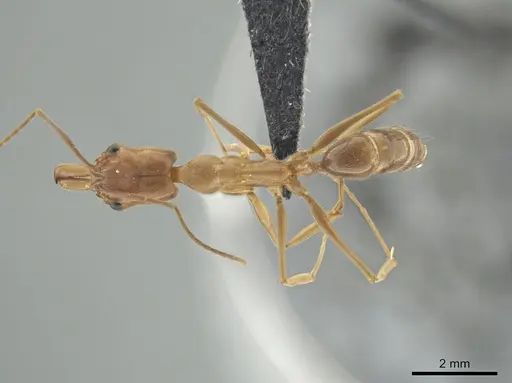
CASENT0900584
View on AntWeb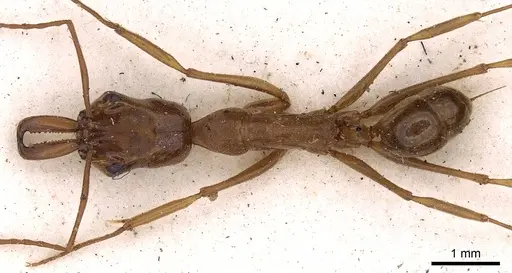
CASENT0900585
View on AntWeb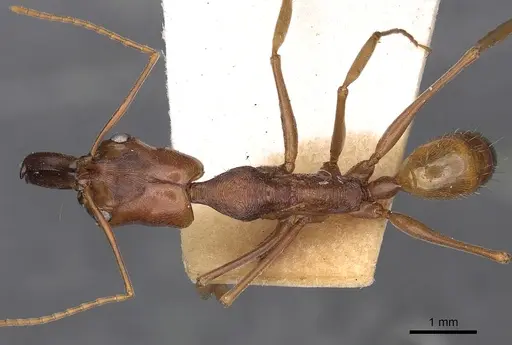
CASENT0907423
View on AntWeb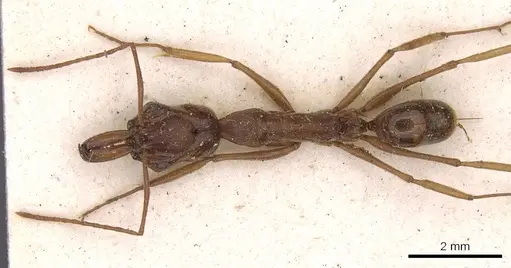
DZUP549121
View on AntWeb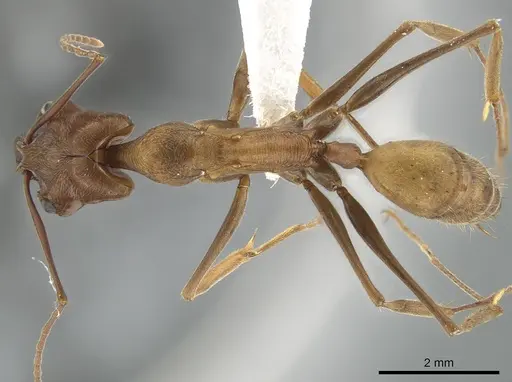
ECOFOG-HC-0044-04
View on AntWeb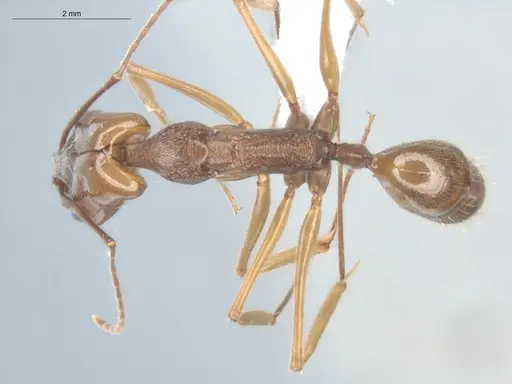
Literature
Loading distribution map...Loading products...