
Odontomachus nigriceps
- Sci. Name
- Odontomachus nigriceps
- Tribe
- Ponerini
- Subfamily
- Ponerinae
- Author
- Smith, 1860
- Distribution
- Found in 1 countries
Introduction
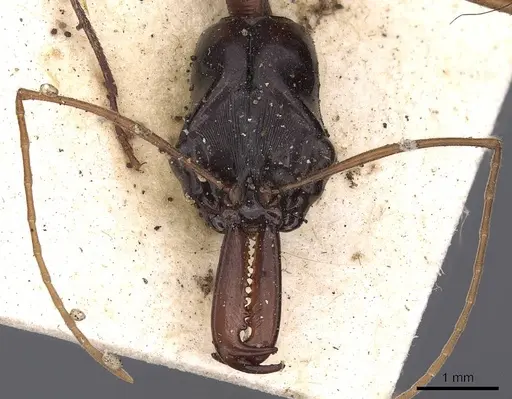
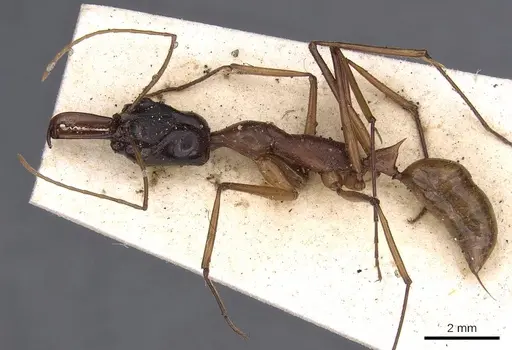
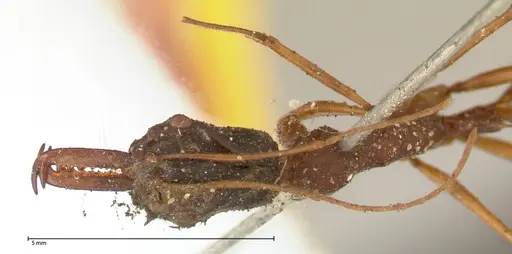
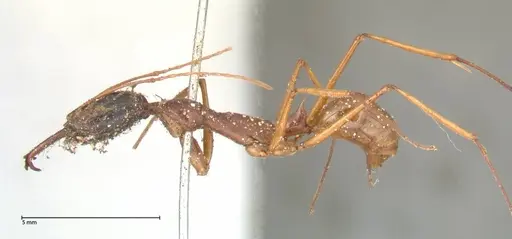
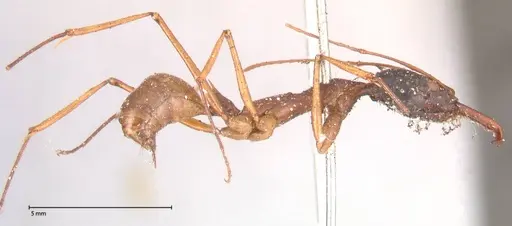
Odontomachus nigriceps is a trap-jaw ant native to New Guinea and surrounding islands in the Australasian region. Workers measure approximately 12-13 mm long . They have a rusty reddish-brown body with a smooth black head, and their powerful mandibles can snap shut rapidly for hunting prey . The species belongs to the Odontomachus tyrannicus group . They are active, predatory ants that hunt small invertebrates. Like other Ponerine ants, they have a potent sting for defense.
Quick Summary
- Difficulty: Medium
- Origin & Habitat: New Guinea region (Papua New Guinea and Indonesian Irian Jaya), in tropical forest habitats [2][1].
- Colony Type: Likely monogyne (single queen) based on typical Odontomachus genus patterns, but unconfirmed for this species.
- Size & Growth:
- Antkeeping:
- Temperature: Keep at 24-28°C, as they are tropical ants.
- Humidity: Maintain moderate to high humidity, keep nest substrate moist but not waterlogged.
- Diapause: No true diapause required, as they are tropical ants.
- Nesting: Natural nesting in soil under ground cover. In captivity, use test tube setups for founding, then transition to formicariums with moist substrate.
- Behavior: Odontomachus nigriceps is an active, predatory ant with a potent sting [1]. Workers are fast-moving and defensive of their nest. Escape prevention is important due to their agility.
- Common Issues: drying out is a common problem due to tropical humidity requirements, monitor substrate moisture regularly., limited data means care recommendations are partly inferred from genus patterns., potent sting can cause discomfort, handle with care [1]., escape prevention is important despite larger size, they are agile climbers., slow founding stage is typical for Ponerine ants, patience required.
Housing and Setup
For founding colonies, use a test tube setup with water and cotton. Once workers emerge, transfer to a small formicarium with moist substrate. For established colonies, provide a nest with chambers for brood, foraging, and garbage. Maintain humidity with a water reservoir or regular misting. Use fluon barriers for escape prevention.
Feeding and Diet
Offer live small insects like fruit flies and pinhead crickets, as they are predatory ants. Feed 2-3 times per week for established colonies. Remove uneaten prey to prevent mold.
Temperature and Heating
Keep temperatures at 24-28°C using a heating cable on one side of the nest to create a gradient. Avoid temperatures below 22°C or above 30°C.
Humidity and Moisture
Maintain moderate to high humidity by keeping the nest substrate damp but not waterlogged. Mist regularly or use a humidity reservoir.
Behavior and Defense
Workers are active hunters using their trap-jaw mandibles to capture prey. They have a potent sting for defense and will defend their nest if threatened [1]. Handle gently to avoid stings.
Colony Development
Colony growth follows typical Ponerine patterns. The queen raises the first brood alone, and workers emerge after several weeks. Development from egg to worker is estimated at 6-10 weeks at tropical temperatures. Colony size reaches up to several hundred workers.
Frequently Asked Questions
How long does it take for Odontomachus nigriceps to produce first workers?
First workers typically appear after 6-10 weeks at optimal temperatures (24-28°C), based on inferred data from related species.
Do Odontomachus nigriceps ants sting?
Yes, they have a potent sting that can cause pain and irritation [1]. Handle gently and avoid disturbing the nest.
What do Odontomachus nigriceps eat?
They are predatory and hunt small invertebrates. Feed them live insects like fruit flies and pinhead crickets.
Can I keep multiple queens together?
This is not recommended, as Odontomachus species are typically monogyne, but specific data for this species is unavailable.
Are Odontomachus nigriceps good for beginners?
They are rated as medium difficulty due to specific temperature and humidity needs, and their potent sting.
What temperature do they need?
Keep them at 24-28°C, as they are tropical ants from New Guinea.
How big do colonies get?
Colonies likely reach up to several hundred workers, based on related Odontomachus species.
Do they need hibernation?
No, they are tropical ants and do not require hibernation.
What size escape prevention do I need?
Use standard escape prevention methods like fluon barriers, as they are agile climbers despite their size.
When should I move them to a formicarium?
Move them after the colony has several workers and the test tube is crowded, ensuring the formicarium maintains proper humidity.
Report an Issue
The current care sheet is based fully on literature. See inconsistencies, or something that's incorrect? Please , it will be resolved after review from an admin. Contributing to the blogs tab also helps providing information, to make us be able to further improve the caresheets. Thank you for your support!
References

This caresheet is licensed under CC BY-SA 4.0 .
Community Blogs
CASENT0900614
View on AntWeb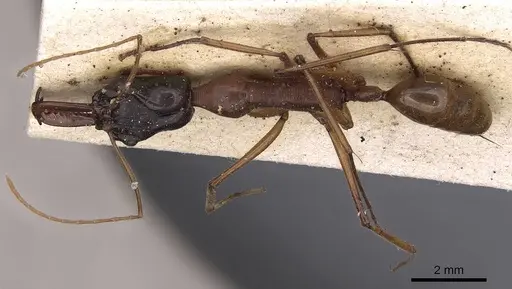
FOCOL0581
View on AntWeb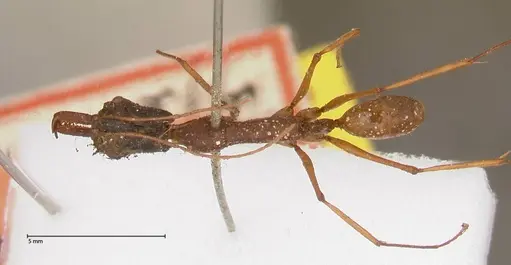
Literature
Loading distribution map...Loading products...