
Octostruma ascrobis
- Sci. Name
- Octostruma ascrobis
- Tribe
- Attini
- Subfamily
- Myrmicinae
- Author
- Longino, 2013
- Distribution
- Found in 4 countries
Introduction
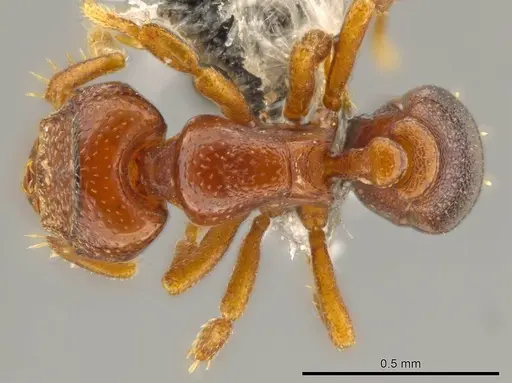
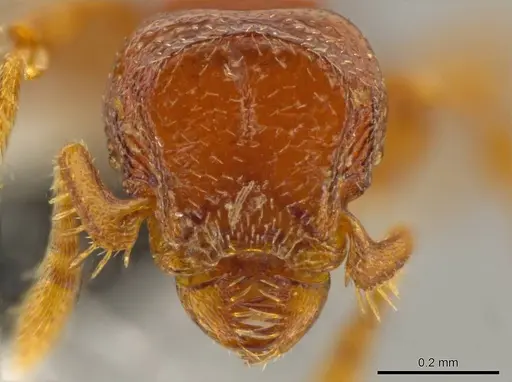
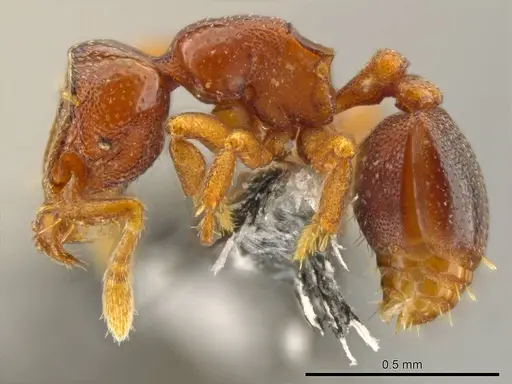
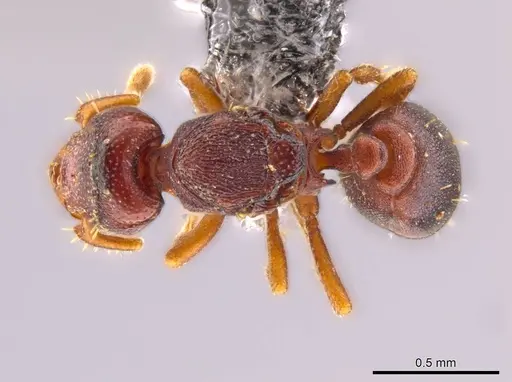
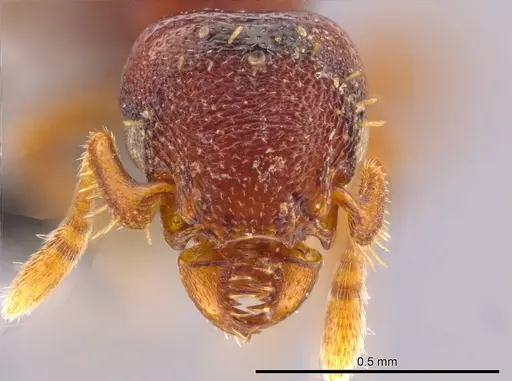
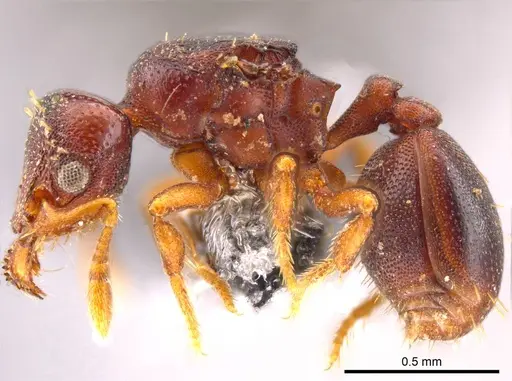
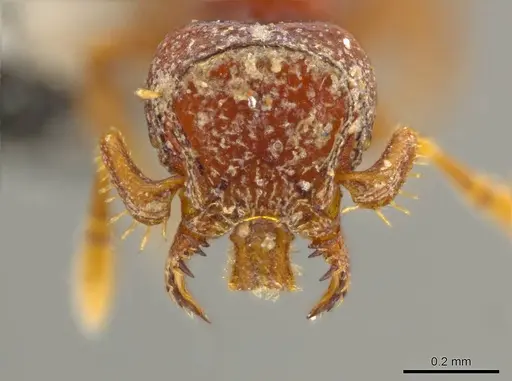
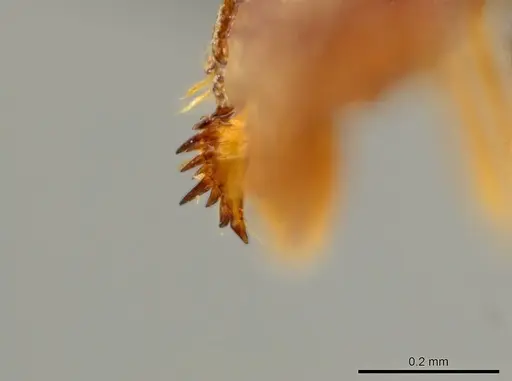
Octostruma ascrobis is a tiny ant native to lowland rainforests of Central America, ranging from Mexico to Costa Rica. Workers are red to red-orange, but size data is unavailable as no total length measurements are provided in the research. They live in forest floor leaf litter and rotten wood, from sea level to 1000 m elevation, most abundant below 500 m . This species has uniquely bowed mandibles with 10 teeth and a very shallow antennal scrobe, giving it a distinctive facial profile .
Quick Summary
- Difficulty: Hard
- Origin & Habitat: Lowland rainforest of Central America (Mexico, Guatemala, Belize, Honduras, El Salvador, Nicaragua, Costa Rica) from sea level to 1000 m, most abundant below 500 m. They inhabit sifted leaf litter and rotten wood on the forest floor [1][2].
- Colony Type: Unconfirmed colony structure. Dealate queens have been found in litter samples, suggesting possible single-queen colonies [1].
- Size & Growth:
- Queen: Size data unavailable, no total length measurements provided
- Worker: Size data unavailable, no total length measurements provided
- Colony: Unknown, based on frequency data in litter plots (0-16%), colonies are likely small [1].
- Growth: Unknown
- Development: Unknown, no data on development time (Development likely depends on temperature and humidity, but no specific studies exist.)
- Antkeeping:
- Temperature: Keep warm, around 24-28°C, as inferred from lowland tropical habitat [2].
- Humidity: Keep substrate consistently moist but not waterlogged, as they inhabit humid forest floor [2].
- Diapause: No, tropical species do not require hibernation [1].
- Nesting: Naturalistic setup with moist soil, rotting wood, and leaf litter is best, mimicking their natural habitat [2]. Use Y-tong, plaster, or 3D-printed nests with appropriate scaling for their tiny size.
- Behavior: Workers are shy and cryptic, foraging individually rather than in trails. They are not aggressive and will flee from threats. Escape prevention is critical due to their tiny size [1][2].
- Common Issues: escape prevention is critical due to their tiny size, standard barriers may not work [2], high humidity needs can lead to mold problems if ventilation is poor, slow growth and small colony sizes may frustrate beginners, wild-caught colonies may contain parasites that can decimate the colony, limited availability makes this species difficult to acquire
Housing and Nest Setup
Octostruma ascrobis requires a naturalistic setup to thrive. These ants naturally nest in rotting wood and decomposing material on the forest floor. A small terrarium or naturalistic formicarium works best, fill it with moist soil or coco fiber substrate, add pieces of rotting wood, dried leaves, and other forest floor debris. This setup provides humidity and structure for navigation. Because workers are tiny, standard test tube setups can work but may be too large, use a small-diameter test tube with a modest water reservoir. Y-tong or plaster nests with narrow chambers are suitable, but ensure chambers are appropriately scaled. Excellent escape prevention is mandatory, use fine mesh barriers and seal all openings tightly [2].
Feeding and Diet
The diet of Octostruma ascrobis is not well-documented, but as part of the Attini tribe, they likely forage for small arthropods, honeydew, and fungal particles. In captivity, offer small protein sources like micro-arthropods (springtails, tiny fruit fly larvae) and sugar sources like diluted honey or sugar water. Prey must be appropriately sized for their tiny workers. Remove uneaten food after 24-48 hours to prevent mold [2].
Temperature and Humidity
As a lowland tropical species, Octostruma ascrobis needs warm, humid conditions. Keep temperatures around 24-28°C with a gentle gradient for thermoregulation. Humidity should be high, keep the nest substrate consistently moist but not waterlogged. A moisture gradient allows ants to self-regulate. Poor humidity can lead to desiccation [2].
Behavior and Observation
Octostruma ascrobis is a shy, cryptic species. Workers forage individually and are not aggressive, retreating from threats. Their small size and cryptic nature make observation challenging but rewarding. They are most active at night or twilight. Escape prevention is critical due to their tiny size [1][2].
Colony Founding and Development
Colony founding behavior has not been directly documented. Based on related species, founding may be claustral, but this is unconfirmed. Dealate queens found in litter samples suggest they may use pre-existing cavities. Colony growth is likely slow, with small maximum sizes [1].
Seasonal Care
As a tropical species, Octostruma ascrobis does not require hibernation. Keep them warm year-round. Slight seasonal variations in rainfall may occur, but consistency in temperature and humidity is key [2].
Frequently Asked Questions
How long does it take for Octostruma ascrobis to produce first workers?
The egg-to-worker timeline is unknown for this species. No data exists on development time [1].
Can I keep Octostruma ascrobis in a test tube?
Yes, but use a small-diameter test tube with a modest water reservoir to avoid drying out. A naturalistic setup is better [2].
Are Octostruma ascrobis good for beginners?
No, this species is rated as difficult due to tiny size, high humidity needs, and slow growth. It is best for experienced keepers [2].
How big do Octostruma ascrobis colonies get?
Maximum colony size is unknown, but based on frequency data in litter plots, colonies are likely small [1].
What do Octostruma ascrobis eat?
They likely accept small protein sources like micro-arthropods and sugar sources. Prey must be appropriately sized [2].
Do Octostruma ascrobis need hibernation?
No, as a tropical species, they do not require hibernation [1].
Why are my Octostruma ascrobis escaping?
Their tiny size allows them to squeeze through small gaps. Use fine mesh, seal openings, and apply fluon barriers [2].
Can I keep multiple Octostruma ascrobis queens together?
This has not been documented. Based on related species, they likely form single-queen colonies. Do not combine unrelated queens [1].
When should I move Octostruma ascrobis to a formicarium?
Wait until the colony has several workers. A naturalistic setup from the start is recommended [2].
Why is my Octostruma ascrobis colony declining?
Common causes include low humidity, temperatures below 22°C, mold from overfeeding, or parasites from wild-caught colonies. Review husbandry conditions.
Where can I get Octostruma ascrobis?
This species is rarely available in the ant hobby. You may need to find a specialized dealer or collector in Central America [1].
Report an Issue
The current care sheet is based fully on literature. See inconsistencies, or something that's incorrect? Please , it will be resolved after review from an admin. Contributing to the blogs tab also helps providing information, to make us be able to further improve the caresheets. Thank you for your support!
References

This caresheet is licensed under CC BY-SA 4.0 .
Community Blogs
Literature
Loading distribution map...Loading products...