
Ochetellus sororis
- Sci. Name
- Ochetellus sororis
- Tribe
- Leptomyrmecini
- Subfamily
- Dolichoderinae
- Author
- Mann, 1921
- Distribution
- Found in 1 countries
Introduction
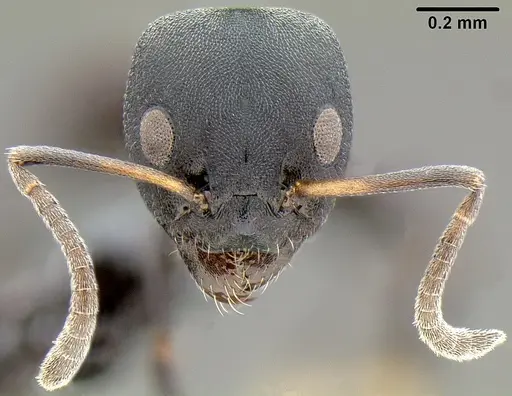
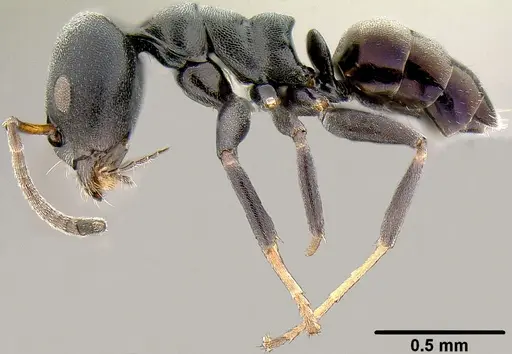
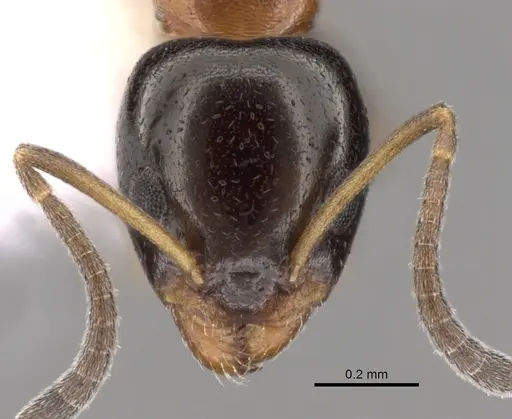
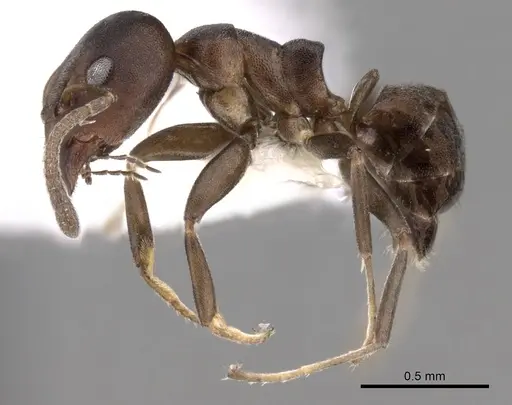
Ochetellus sororis is a dark ant species endemic to Fiji, meaning it is found nowhere else on Earth. The head is broader and shorter with more convex sides compared to its close relatives in Australia and New Caledonia . It nests in ant-plants and has been associated with clavigerid beetles . This species is found on islands such as Viti Levu, Vanua Levu, Kadavu, and the Lau group, where it forages in vegetation and leaf litter in scrub habitats . Ochetellus sororis is the only species of the genus Ochetellus known from Fiji, making it a unique part of Fiji's ant fauna .
Quick Summary
- Difficulty: Medium
- Origin & Habitat: Fiji islands, endemic to Viti Levu, Vanua Levu, Kadavu, and Lau group. Found in scrub habitat and leaf litter in tropical forest environments [1][2][3].
- Colony Type: Likely monogyne (single-queen colonies) based on typical Dolichoderinae patterns, but unconfirmed for this species.
- Size & Growth:
- Queen: Size data unavailable.
- Worker: Size data unavailable.
- Colony: Colony size data unavailable.
- Growth: Moderate, inferred from tropical Dolichoderinae patterns.
- Development: Estimated 6-8 weeks at tropical temperatures based on genus-level data. (Development time is estimated from related species, direct measurements unavailable.)
- Antkeeping:
- Temperature: Keep warm, roughly 24-28°C, based on tropical habitat [1][2].
- Humidity: Keep substrate consistently moist but not waterlogged, based on tropical habitat [1][2].
- Diapause: No, tropical species from Fiji, no hibernation needed.
- Nesting: Y-tong or plaster nests work well, based on natural nesting in ant-plants and rotting wood [1].
- Behavior: Generally calm, typical of Dolichoderinae ants. Workers forage actively in vegetation and on the ground. They have a mild chemical defense, secreting compounds from the abdomen, but are not particularly aggressive. Escape prevention should be moderate due to their small size.
- Common Issues: cold temperatures below 20°C can stress or kill colonies, dry conditions can lead to brood failure, limited availability makes acquisition difficult due to endemism [2][4]
Natural History and Distribution
Ochetellus sororis is a true endemic of Fiji, found exclusively on the islands of Viti Levu, Vanua Levu, Kadavu, and the Lau group [2][4]. It is the only species of the genus Ochetellus known from Fiji, making it a unique part of Fiji's ant fauna [1]. This species was originally described as Ochetellus sororis by Mann in 1921 before being reclassified into the genus Ochetellus by Shattuck in 1992 [5].
In the wild, these ants nest in ant-plants (plants that have specialized structures to house ants) and have been documented living alongside clavigerid beetles, a group of beetles that are myrmecophilous and often live within ant colonies [1]. Workers have been collected from vegetation, malaise traps, and sifted leaf litter, indicating they forage both in plants and on the ground [1]. Studies in the Yasawa islands found them in scrub habitat with a frequency of 0.050 in that specific habitat type, making them a moderately common but not dominant species in their ecosystem [3].
Housing and Nest Preferences
In captivity, Ochetellus sororis does well in Y-tong (AAC) nests or plaster nests that can hold some moisture. Since they naturally nest in ant-plants and rotting wood in humid tropical environments, a nest that retains moderate humidity works best [1]. The nest should have chambers sized appropriately for their small workers.
For founding colonies, a standard test tube setup works well. Place the test tube in a warm area with moderate humidity. Once the colony reaches a small number of workers, you can consider moving them to a formicarium with a small outworld. The key is maintaining consistent warmth and humidity without letting the nest dry out completely.
Escape prevention should be standard, these ants are small but not particularly known for being escape artists. A barrier of Fluon on test tube rims or formicarium edges is sufficient.
Temperature and Seasonal Care
As a tropical species from Fiji, Ochetellus sororis requires warm temperatures year-round. Keep the nest area at roughly 24-28°C for optimal brood development[2]]. A heating cable placed on one side of the nest creates a gentle temperature gradient that allows ants to regulate their own temperature.
Unlike temperate species, these ants do not require hibernation or diapause. Maintaining consistent tropical temperatures is essential, cold temperatures below 20°C can stress the colony and slow or stop brood development.
Humidity should be moderate to high, keep the substrate or water reservoir moist[2]].
Feeding and Diet
Based on typical Dolichoderinae feeding habits, Ochetellus sororis likely accepts a mix of sugar sources and protein. Offer sugar water, honey, or diluted honey water as a constant energy source. For protein, provide small insects like fruit flies, small mealworms, or cricket pieces.
Feed protein roughly twice a week, adjusting based on colony size and consumption. Remove any uneaten prey after 24-48 hours to prevent mold. Sugar water should be available constantly, a small drop on a piece of cotton or in a test tube cap works well.
These ants forage actively, so they should discover food quickly. Their small size means even small prey items are suitable.
Colony Development
The colony starts with a founding queen who raises the first brood alone. Once the first workers emerge, they begin foraging to support further growth.
Based on related Dolichoderinae species, expect the first workers to emerge roughly 6-8 weeks after founding at optimal temperatures (25-28°C). Growth rate is moderate, the colony will expand gradually as more workers are produced.
Patience is key with this species, especially in the founding stage. Small colonies develop slowly, and overfeeding can lead to mold problems. Start with very small prey items and minimal sugar portions.
Frequently Asked Questions
How long does it take for Ochetellus sororis to produce first workers?
At optimal temperatures (25-28°C), expect first workers approximately 6-8 weeks after the queen lays eggs. This is an estimate based on related Dolichoderinae species, as specific development data for this species is not available.
Do Ochetellus sororis ants need hibernation?
No. As a tropical species from Fiji, they do not require hibernation. Keep them warm year-round at 24-28°C. Cold temperatures can stress or kill the colony.
What do Ochetellus sororis ants eat?
Feed them sugar water or honey as a constant energy source, and protein sources like small insects (fruit flies, small mealworms, cricket pieces) twice weekly. Remove uneaten prey after 24-48 hours to prevent mold.
Are Ochetellus sororis good for beginners?
This species is rated as Medium difficulty. While not the hardest species, the need for constant warmth and humidity, combined with slow founding colony growth, makes experience helpful. Their limited availability (endemic to Fiji) also makes them a more advanced choice [2][4].
How big do Ochetellus sororis colonies get?
Colony size data is unavailable for this species. Based on related species, colonies may reach moderate sizes, but specific numbers are not known.
Can I keep multiple Ochetellus sororis queens together?
This species appears to be monogyne (single-queen) based on typical Dolichoderinae patterns, but this is unconfirmed. Combining unrelated queens is not recommended as they would likely fight. Only keep one queen per colony.
What temperature is best for Ochetellus sororis?
Keep nest temperatures at roughly 24-28°C. A heating cable on one side of the nest creates a gradient. Being from tropical Fiji, they need consistent warmth[2]].
Where can I get Ochetellus sororis?
This species is endemic to Fiji, meaning it is found nowhere else naturally. Wild-caught colonies are essentially impossible to obtain outside of Fiji. Availability in the antkeeping hobby is very limited [2][4].
What humidity do Ochetellus sororis need?
Maintain moderate to high humidity, keep the substrate consistently moist but not waterlogged. These ants naturally inhabit humid tropical environments in Fiji[2]].
Report an Issue
The current care sheet is based fully on literature. See inconsistencies, or something that's incorrect? Please , it will be resolved after review from an admin. Contributing to the blogs tab also helps providing information, to make us be able to further improve the caresheets. Thank you for your support!
References

This caresheet is licensed under CC BY-SA 4.0 .
Community Blogs
CASENT0171060
View on AntWeb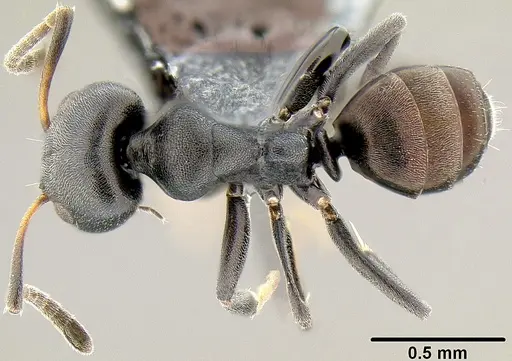
CASENT0249750
View on AntWeb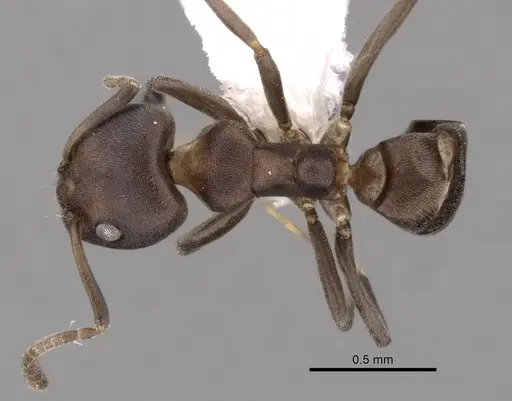
Literature
Loading distribution map...Loading products...