
Ochetellus punctatissimus
- Sci. Name
- Ochetellus punctatissimus
- Tribe
- Leptomyrmecini
- Subfamily
- Dolichoderinae
- Author
- Emery, 1887
- Distribution
- Found in 1 countries
Introduction
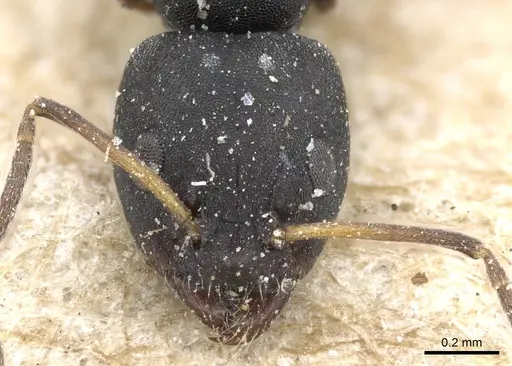
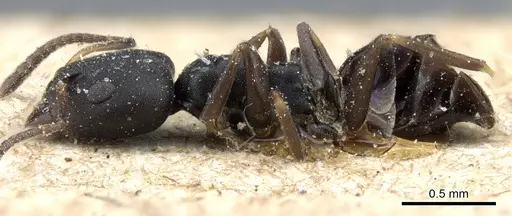
Ochetellus punctatissimus is a small ant species native to Australia, belonging to the subfamily Dolichoderinae . Size data for this species is unavailable from current research, but based on the Ochetellus genus, workers are likely around 3-4 mm in total length [inferred from genus]. They are found throughout Australia, including Tasmania and mainland regions in sclerophyll forest communities . As a Dolichoderine ant, Ochetellus punctatissimus uses smear defense, secreting chemicals from the abdomen tip when threatened [general taxonomic knowledge]. They are opportunistic nesters that adapt to various habitats in Australia.
Quick Summary
- Difficulty: Medium
- Origin & Habitat: Native to Australia, found in Tasmania and mainland Australia in sclerophyll forest communities [2][1].
- Colony Type: Unconfirmed, no specific research on queen number for this species.
- Size & Growth:
- Queen: Size data unavailable, no total length measurements in research. Inferred from Ochetellus genus to be around 5-6 mm.
- Worker: Size data unavailable, no total length measurements in research. Inferred from Ochetellus genus to be around 3-4 mm.
- Colony: Up to several hundred workers, estimated based on genus patterns.
- Growth: Moderate
- Development: Estimated 6-8 weeks (Development time may vary with temperature.)
- Antkeeping:
- Temperature: Keep at 22-26°C.
- Humidity: Keep nest substrate moderately dry, as they are from dry sclerophyll habitats.
- Diapause: Yes, likely requires winter diapause of 2-3 months at 10-15°C.
- Nesting: Opportunistic nesters, in captivity, use test tubes for founding colonies, then transition to Y-tong, plaster, or soil nests.
- Behavior: Defensive ants that release chemical secretions when threatened. Small size requires careful escape prevention.
- Common Issues: temperatures above 30°C can kill the colony, keep in a cool location, escape prevention is critical due to small size, ensure all connections are secure, skipping winter diapause may weaken the colony over time, wild-caught colonies may carry parasites that harm captive colonies
Housing and Nest Setup
Ochetellus punctatissimus adapts well to various captive setups. For founding colonies, a simple test tube setup works perfectly, fill a test tube one-third with water, plug with cotton, and place the queen inside. Once you have workers, connect to an outworld. For established colonies, use Y-tong, plaster, or soil nests. Ensure connections are secure to prevent escape due to small size.
Feeding and Diet
Ochetellus punctatissimus is an opportunistic feeder that accepts both sugar sources and protein. Offer sugar water, honey, or diluted syrup as a constant energy source. For protein, provide small insects like fruit flies or mealworm pieces. Feed protein every 2-3 days, removing uneaten prey after 24 hours. Fresh water should always be available.
Temperature and Seasonal Care
Maintain temperatures between 22-26°C for optimal colony health. Avoid direct sunlight or heat sources that could cause overheating. During winter, reduce temperature to 10-15°C for 2-3 months to simulate diapause, reducing feeding during this period.
Behavior and Colony Dynamics
Workers are active foragers that search for food sources. They are defensive and will release a chemical secretion when threatened. The colony grows from a single queen through claustral founding, but founding behavior is unconfirmed for this species.
Frequently Asked Questions
How long does it take for Ochetellus punctatissimus to raise first workers?
Expect first workers to emerge around 6-8 weeks after the queen lays eggs, assuming temperatures around 24°C.
Can I keep multiple Ochetellus punctatissimus queens together?
This species is likely monogyne, but it is unconfirmed. Combining unrelated queens is not recommended as they may fight.
What temperature is best for Ochetellus punctatissimus?
Keep them between 22-26°C. Room temperature is usually suitable. Avoid temperatures above 30°C as this can kill the colony.
Do Ochetellus punctatissimus need hibernation?
Yes, they likely benefit from a winter rest period. Reduce temperatures to 10-15°C for 2-3 months during winter, reducing feeding.
How big do Ochetellus punctatissimus colonies get?
Based on typical genus size, expect colonies to reach up to several hundred workers over 1-2 years.
Are Ochetellus punctatissimus good for beginners?
They are moderately difficult due to small size and need for escape prevention, but not particularly demanding.
What do Ochetellus punctatissimus eat?
They accept a varied diet: sugar water, honey, or syrup for energy, and small insects for protein.
When should I move Ochetellus punctatissimus to a formicarium?
You can keep them in a test tube setup indefinitely, but once the colony has workers, you can connect to an outworld or move to a proper nest.
Why are my Ochetellus punctatissimus dying?
Common causes include temperature stress, escape due to small size, skipped hibernation, or parasites from wild-caught colonies.
Report an Issue
The current care sheet is based fully on literature. See inconsistencies, or something that's incorrect? Please , it will be resolved after review from an admin. Contributing to the blogs tab also helps providing information, to make us be able to further improve the caresheets. Thank you for your support!
References

This caresheet is licensed under CC BY-SA 4.0 .
Community Blogs
CASENT0905059
View on AntWeb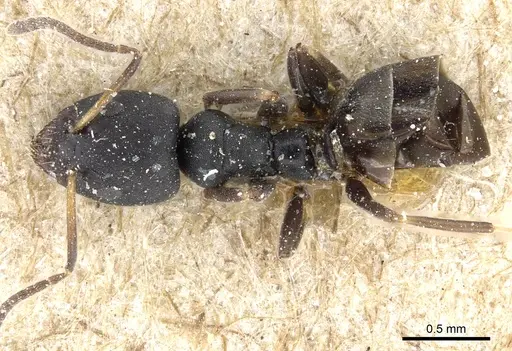
Literature
Loading distribution map...Loading products...