
Nylanderia rosae
- Sci. Name
- Nylanderia rosae
- Tribe
- Lasiini
- Subfamily
- Formicinae
- Author
- Forel, 1902
- Distribution
- Found in 1 countries
Introduction
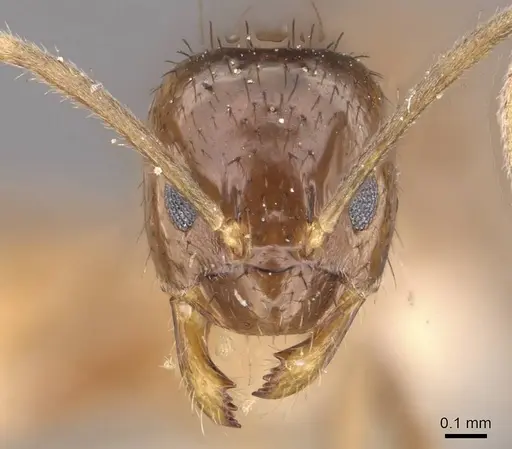
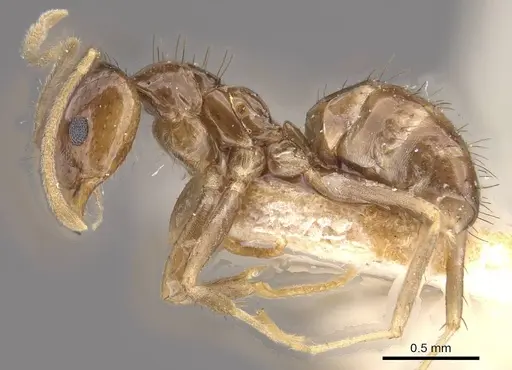
Nylanderia rosae is a small ant species native to Australia, belonging to the Formicinae subfamily. Workers are around 2-3mm long, with long legs and antennae, and dark brown to black coloration . They are found throughout Australia in urban green spaces and modified habitats . The genus Nylanderia was separated from Paratrechina in 2010,and these ants are known for their quick, erratic movements . This species prefers simple habitats with low vegetation complexity, such as golf course fairways with only a herb layer . They are day-active predators and scavengers, attracted to protein baits like minced meat, which is unusual compared to sugar-feeding ant species .
Quick Summary
- Difficulty: Easy
- Origin & Habitat: Australia, found throughout the continent in urban green spaces, particularly in low-complexity habitats like golf course fairways and areas with only herb layer vegetation [2][3].
- Colony Type: Based on Nylanderia patterns, likely monogyne, but unconfirmed for N. rosae.
- Size & Growth:
- Queen: ~4-5 mm, inferred from Nylanderia genus
- Worker: Approximately 2-3 mm [1]
- Colony: Unknown, no data available
- Growth: Unknown, estimated moderate based on genus patterns
- Development: Unknown, no direct data. Estimated 6-8 weeks based on related Formicinae species. (Development timeline unconfirmed.)
- Antkeeping:
- Temperature: Temperature needs are estimated based on genus patterns, keep around 22-26°C during active season.
- Humidity: Keep nest substrate consistently moist but not waterlogged.
- Diapause: Likely required for temperate species, provide 2-3 months at cooler temperatures during winter.
- Nesting: Accepts various nest types such as soil, under stones, or rotting wood [1]. Test tubes work for founding, Y-tong for larger colonies.
- Behavior: Day-active with erratic movements [1]. Attracted to protein baits [2]. Workers are small but can defend colony. Escape risk due to tiny size, use fine mesh barriers.
- Common Issues: tiny size means escapes are likely without fine mesh barriers., protein-focused diet may require more varied feeding than sugar-water-only species., slow colony growth can test keeper patience., winter dormancy requirements may be unfamiliar to keepers used to tropical species., limited available information means some care aspects are estimates rather than confirmed.
Nest Preferences and Housing
In the wild, N. rosae nests in soil, under stones, and in rotting wood [1]. For captive care, test tubes work for founding colonies. Once the colony has enough workers, move to Y-tong or naturalistic setups. Provide moist substrate but avoid waterlogging. Ensure tight connections and fine mesh barriers due to tiny size.
Feeding and Diet
Research shows N. rosae is attracted to protein sources like minced meat baits [2]. Offer small insects such as fruit flies or mealworms 2-3 times per week. Remove uneaten prey after 24 hours. Sugar water can be offered occasionally.
Temperature and Seasonal Care
Temperature and seasonal care for N. rosae are not well-studied. Based on related species, maintain colonies at room temperature and consider a cooler diapause period during winter. Observe your colony for activity levels to adjust care.
Behavior and Colony Dynamics
Nylanderia ants are known for quick, erratic movements [1]. Workers forage individually and are day-active [2]. Colonies grow gradually, first workers may emerge in 6-8 weeks based on related species. The queen is long-lived.
Frequently Asked Questions
How long does it take for Nylanderia rosae to produce first workers?
Development time for N. rosae is unconfirmed. No direct data is available on egg-to-worker timeline.
What do Nylanderia rosae ants eat?
They are protein-focused scavengers and predators, attracted to protein baits like minced meat [2]. Offer small insects 2-3 times per week.
Do Nylanderia rosae ants need hibernation?
Hibernation needs are unconfirmed for this species. Temperate ant species often require diapause, but no specific data exists for N. rosae.
Are Nylanderia rosae good for beginners?
Yes, they are considered easy to keep due to their adaptability and non-aggressive nature.
Can I keep multiple Nylanderia rosae queens together?
This species is likely monogyne, so combining queens is not recommended. No specific data on queen compatibility.
How big do Nylanderia rosae colonies get?
Colony size is unconfirmed for this species. Related Nylanderia species can reach several hundred workers.
When should I move Nylanderia rosae to a formicarium?
Move them when the colony has outgrown the test tube, typically after several weeks of growth.
Why are my Nylanderia rosae escaping?
Their tiny size allows them to escape through small gaps. Use fine mesh barriers and tight lids.
What temperature is best for Nylanderia rosae?
Temperature needs are estimated, keep around 22-26°C during active season and observe colony activity.
Report an Issue
The current care sheet is based fully on literature. See inconsistencies, or something that's incorrect? Please , it will be resolved after review from an admin. Contributing to the blogs tab also helps providing information, to make us be able to further improve the caresheets. Thank you for your support!
References

This caresheet is licensed under CC BY-SA 4.0 .
Community Blogs
CASENT0911022
View on AntWeb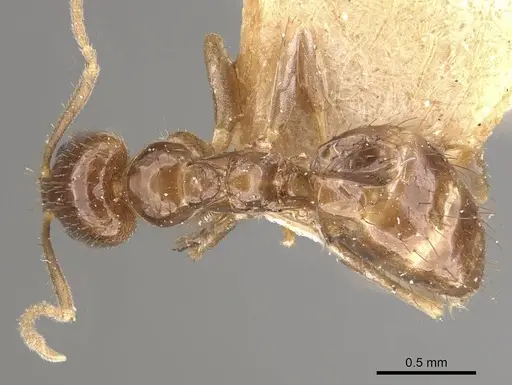
Literature
Loading distribution map...Loading products...