
Nylanderia hystrix
- Sci. Name
- Nylanderia hystrix
- Tribe
- Lasiini
- Subfamily
- Formicinae
- Author
- Trager, 1984
- Distribution
- Found in 1 countries
Introduction
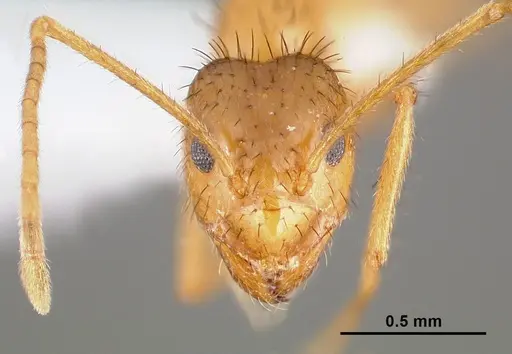
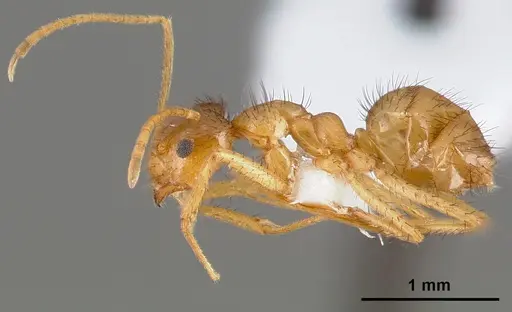
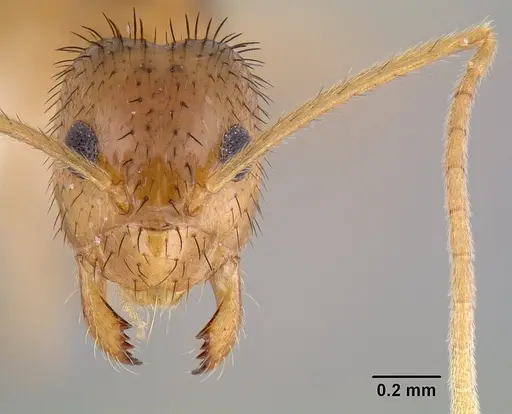
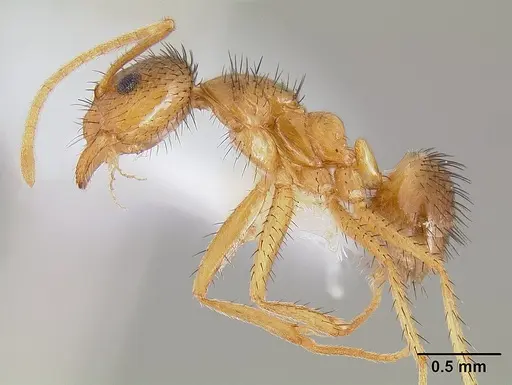
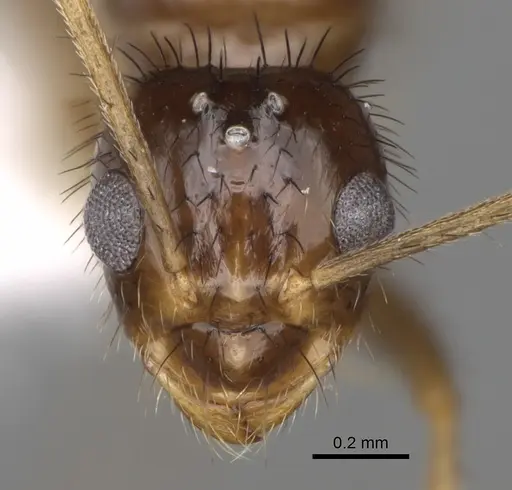
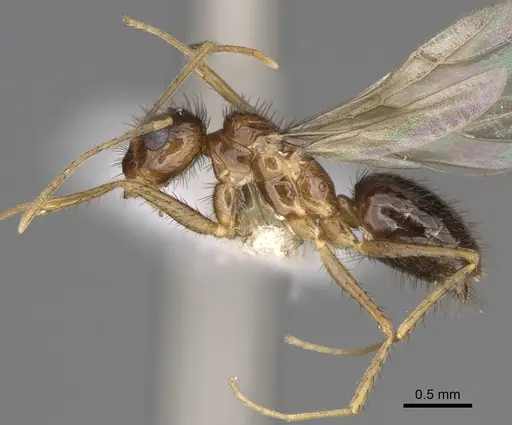
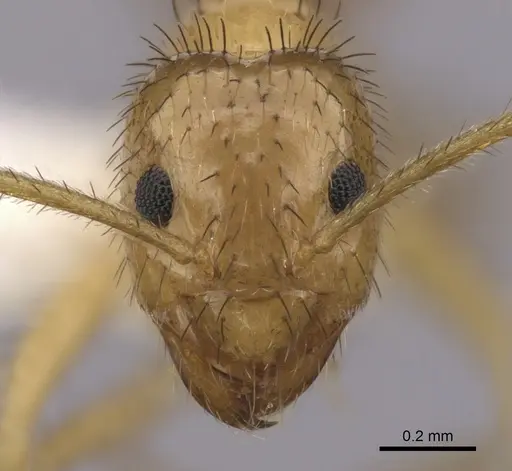
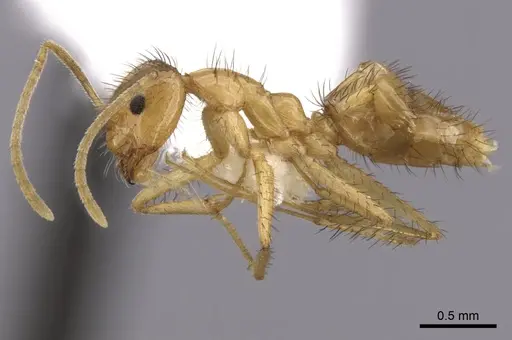
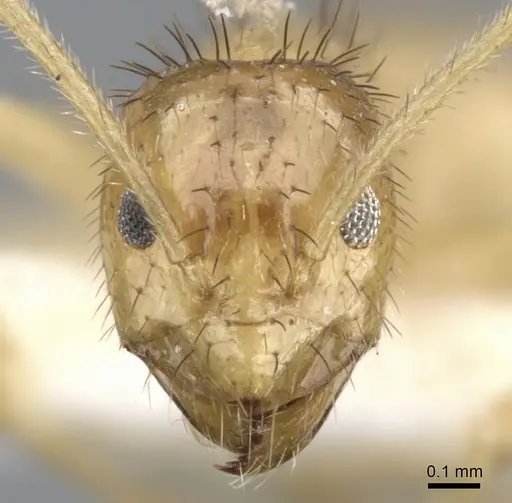
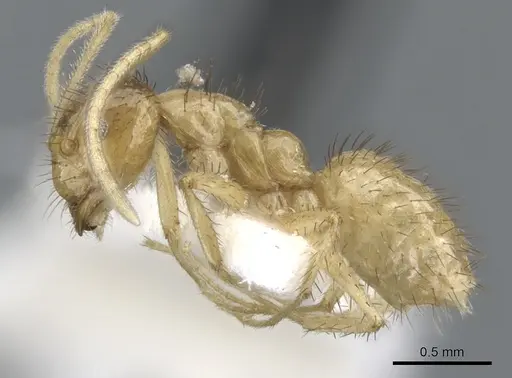
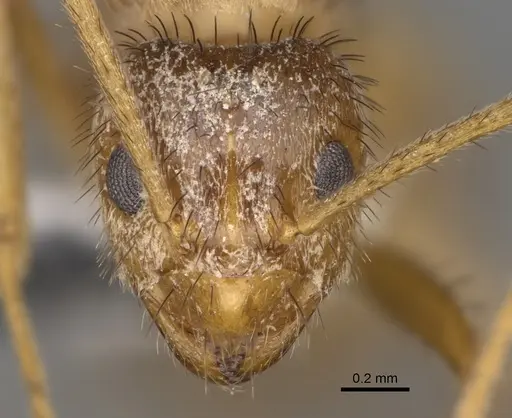
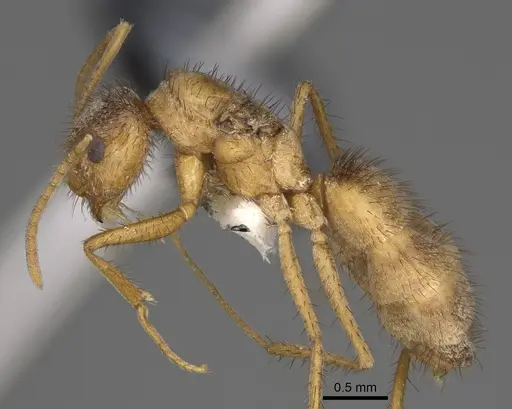
Nylanderia hystrix is a small ant native to the deserts of the American Southwest. Workers measure 2.51-3.10 mm in total length and have a distinctive appearance: uniformly yellow to brownish-yellow with numerous black macrosetae that contrast sharply against their light body . This desert species cannot be easily confused with any other Nearctic Nylanderia due to its unique look . Queens are larger at 4.37 mm, and males are similar in size to workers . This ant inhabits the Mojave and Great Basin deserts, ranging from southern California through Baja California into northern Mexico . They nest under stones in desert washes and are found from creosote-sagebrush deserts to pine-juniper woodlands at elevations between 500-1500 m .
Quick Summary
- Difficulty: Easy
- Origin & Habitat: Native to the Nearctic region, specifically the Mojave and Great Basin deserts of the American Southwest, extending into Baja California and northern Mexico [1][2]. They inhabit desert washes under stones and range from creosote-sagebrush deserts to pine-juniper woodlands at 500-1500 m elevation [1].
- Colony Type: Colony structure is not documented in scientific literature. No data on queen number or social structure is available.
- Size & Growth:
- Queen: 4.37 mm [1]
- Worker: 2.51-3.10 mm [1]
- Colony: Unknown, no data on colony size in the research context
- Growth: Unknown, no data on growth rate in the research context
- Development: Unknown, no data on development timeline in the research context (Development time is not studied for this species. Desert ants may develop faster at warmer temperatures, but this is inferred from general patterns.)
- Antkeeping:
- Temperature: Keep at room temperature, roughly 20-25°C, as inferred from desert species patterns. No specific temperature data is available in the research context.
- Humidity: Low humidity is suitable, as they nest in dry desert washes [1]. Keep the nest substrate relatively dry with occasional damp areas to avoid mold.
- Diapause: Unknown, no data on diapause requirements in the research context.
- Nesting: They naturally nest under stones in desert washes [1]. In captivity, use test tubes for founding colonies, then transition to dry formicariums like Y-tong nests with minimal moisture. Avoid overly humid conditions.
- Behavior: Based on Nylanderia genus patterns, workers are typically calm and non-aggressive. They are active foragers but pose an escape risk due to their small size (under 4 mm). No species-specific behavior data is available in the research context.
- Common Issues: escape prevention is critical due to small size, use fine mesh and tight lids, overly humid conditions can cause mold since they are desert-adapted, wild-caught colonies may have parasites that harm the colony in captivity, no data on founding success, beginners should avoid disturbing queens, temperature extremes can halt development or kill the colony
Housing and Nest Setup
For founding colonies, use a test tube setup with water and cotton plug. Keep the queen in darkness for 4-6 weeks until workers emerge. Once the colony has workers, move to a dry formicarium like Y-tong nests. They naturally nest under stones in desert washes [1], so provide a dry substrate with minimal moisture. Avoid acrylic nests, use plaster or soil-based nests instead. Provide an outworld for foraging with a shallow food dish.
Feeding and Diet
No specific diet data is available for this species. Based on Formicinae patterns, they are omnivorous and may accept sugar sources like honey water and protein like small insects. Offer food every few days and remove uneaten items to prevent mold.
Temperature and Seasonal Care
Keep at room temperature around 20-25°C, as inferred from desert species patterns. No specific temperature data is available. During winter, if diapause is needed, lower temperatures to 10-15°C for 2-3 months, but this is unconfirmed.
Behavior and Foraging
Workers are active foragers that explore their environment. Based on Nylanderia patterns, they are typically calm and non-aggressive. Their small size means they are escape-prone, so use fine mesh barriers. No species-specific behavior data is available [1].
Colony Development
No data on colony development is available. Queens may seal themselves in during founding, but this is unconfirmed. First workers may emerge in 6-10 weeks, but this is inferred from related species and not confirmed for N. hystrix.
Frequently Asked Questions
How long does it take for Nylanderia hystrix to produce first workers?
No data is available on development timeline. Based on related species, it may take 6-10 weeks, but this is unconfirmed for N. hystrix.
Can I keep Nylanderia hystrix in a test tube?
Yes, test tubes work well for founding colonies. Use a standard setup with water and cotton plug, and keep it dark until workers emerge.
What do Nylanderia hystrix eat?
No specific diet data is available. They are likely omnivorous and may accept sugar and protein foods.
Do Nylanderia hystrix need hibernation?
No data is available on diapause. It is unknown if they require a winter rest period.
Are Nylanderia hystrix good for beginners?
Yes, they are considered easy to keep due to their calm nature, but escape prevention is critical due to their small size.
How big do Nylanderia hystrix colonies get?
Colony size is unknown, no data is available in the research context.
When should I move my colony to a formicarium?
Move from test tube to formicarium once workers are present, but no specific timing is documented. Use dry nests like Y-tong.
Why are my Nylanderia hystrix dying?
Common causes include overly humid conditions, temperature extremes, or parasites from wild-caught colonies. Match setup to their desert habitat.
Report an Issue
The current care sheet is based fully on literature. See inconsistencies, or something that's incorrect? Please , it will be resolved after review from an admin. Contributing to the blogs tab also helps providing information, to make us be able to further improve the caresheets. Thank you for your support!
References

This caresheet is licensed under CC BY-SA 4.0 .
Community Blogs
CASENT0005424
View on AntWeb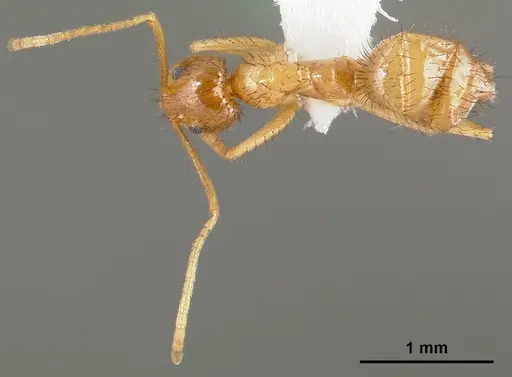
CASENT0106037
View on AntWeb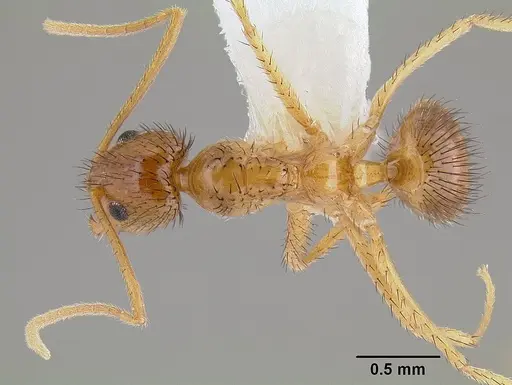
CASENT0106724
View on AntWeb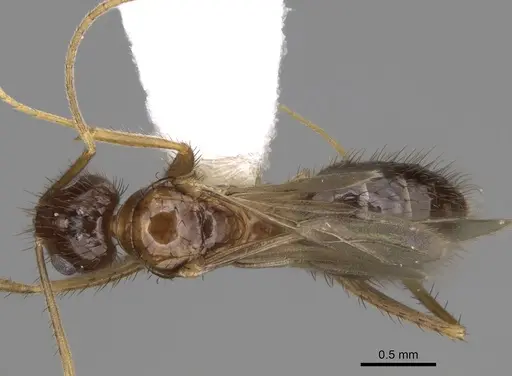
CASENT0280572
View on AntWeb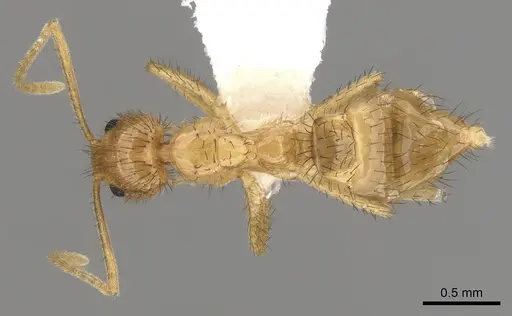
CASENT0903133
View on AntWeb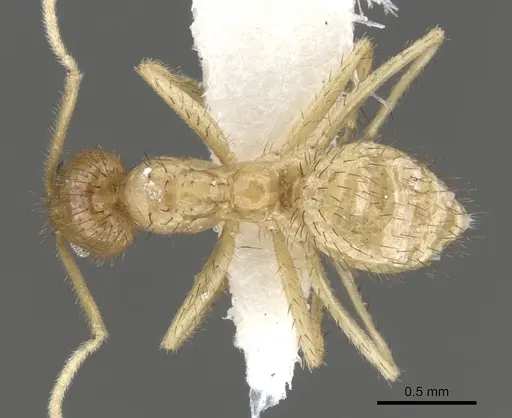
USNMENT00751406
View on AntWeb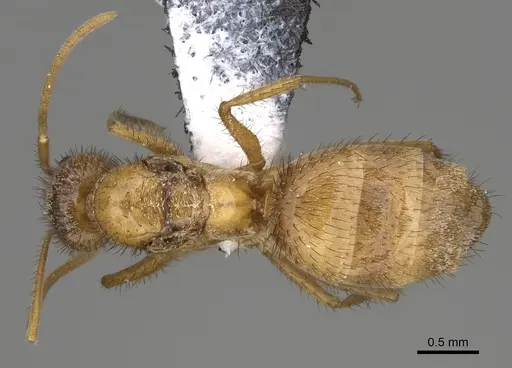
Literature
Loading distribution map...Loading products...