
Nylanderia flaviabdominis
- Sci. Name
- Nylanderia flaviabdominis
- Tribe
- Lasiini
- Subfamily
- Formicinae
- Author
- Wang, 1997
- Distribution
- Found in 2 countries
Introduction
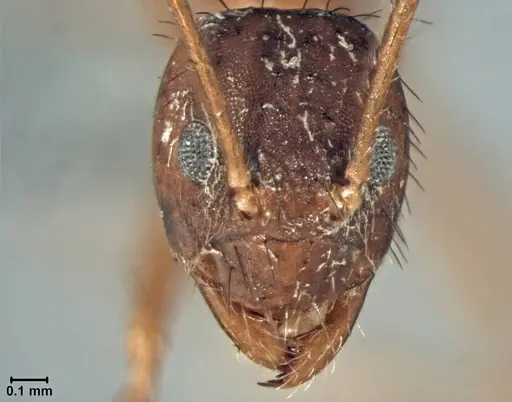
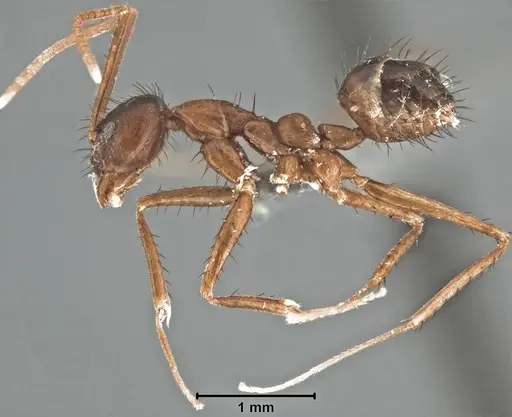
Nylanderia flaviabdominis is a small ant native to China, with workers measuring 3.26-3.77 mm in total length . It is found in Hubei and Fujian provinces, primarily in primary forest habitats . This species is a habitat specialist, not occurring in secondary forests or rubber plantations . In subtropical evergreen forests, N. flaviabdominis disperses seeds of Corydalis plants. Workers use simple cooperative recruitment, sending 5-30 ants to retrieve seeds once discovered, with an average dispersal distance of 0.45 meters for Corydalis wilfordii .
Quick Summary
- Difficulty: Medium
- Origin & Habitat: Native to China, specifically Hubei and Fujian provinces in subtropical evergreen forests [1][3]. This is a primary forest specialist [2].
- Colony Type: Colony structure is not well documented. Nylanderia species are often multi-queen, but specific data for N. flaviabdominis is lacking.
- Size & Growth:
- Antkeeping:
- Temperature: Keep at moderate temperatures around 20-25°C, based on subtropical distribution [1].
- Humidity: Keep nest substrate consistently moist but not waterlogged, reflecting primary forest habitat [2].
- Diapause: Diapause requirements are unknown for this species.
- Nesting: In nature, nests in forest floor litter [1]. Use Y-tong, plaster, or soil nests that maintain humidity.
- Behavior: Workers are active foragers using simple cooperative recruitment [1]. They are not particularly aggressive but will defend the nest. Escape prevention is critical due to small size.
- Common Issues: small size means escapes are likely without fine mesh barriers and tight-fitting lids., primary forest specialist may be sensitive to habitat changes, avoid dry conditions., slow colony growth can frustrate beginners who overfeed or disturb the nest too often., wild-caught colonies may carry parasites that can devastate captive populations., humidity control is critical, too dry and brood dies, too wet and mold becomes a problem.
Housing and Nest Setup
For founding colonies, a standard test tube setup can be used, but founding behavior is unconfirmed [1]. Once the colony grows, move to a naturalistic setup with moist soil or a Y-tong/plaster nest that maintains humidity. Ensure all connections are escape-proof due to small worker size.
Feeding and Diet
Offer sugar sources like honey water constantly and protein prey such as small insects 2-3 times per week [1]. Remove uneaten food after 24 hours to prevent mold.
Temperature and Seasonal Care
Aim for 20-25°C with a gentle gradient. Winter care is not documented, a mild cool-down may benefit established colonies but is not required. [1]
Behavior and Foraging
Workers use simple cooperative recruitment, sending small groups to food sources [1]. They are fast-moving and will defend the nest, so escape prevention is essential.
Frequently Asked Questions
How long does it take for Nylanderia flaviabdominis to produce first workers?
The exact timeline is unknown. Based on related Formicinae, estimate 6-10 weeks at optimal temperature [1].
Can I keep Nylanderia flaviabdominis in a test tube?
Yes, test tubes work for founding, but move to a larger setup once the colony grows [1].
What do Nylanderia flaviabdominis ants eat?
They accept sugar sources and protein like small insects [1].
Are Nylanderia flaviabdominis good for beginners?
This species is rated medium difficulty due to small size and escape risk [1].
How big do Nylanderia flaviabdominis colonies get?
Colony size is not documented [1].
Do Nylanderia flaviabdominis need hibernation?
Diapause requirements are unknown for this species [1].
Why are my Nylanderia flaviabdominis dying?
Common causes include dry conditions, poor escape prevention, overfeeding, or stress [1].
When should I move my colony to a formicarium?
Move once the colony grows and the test tube is cramped, using a humidity-maintaining setup [1].
Can I keep multiple Nylanderia flaviabdominis queens together?
Colony structure is unconfirmed, combining unrelated queens is not recommended due to potential aggression [1].
Report an Issue
The current care sheet is based fully on literature. See inconsistencies, or something that's incorrect? Please , it will be resolved after review from an admin. Contributing to the blogs tab also helps providing information, to make us be able to further improve the caresheets. Thank you for your support!
References

This caresheet is licensed under CC BY-SA 4.0 .
Community Blogs
USNMENT00755070
View on AntWeb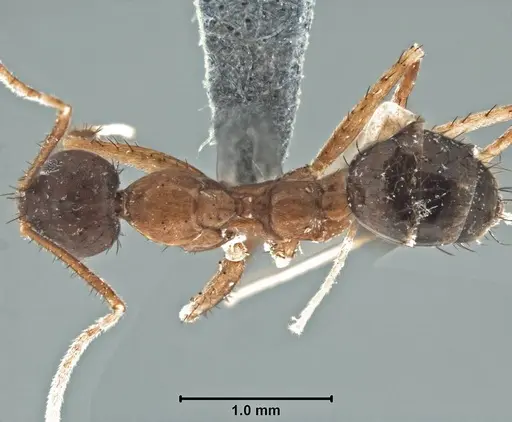
Literature
Loading distribution map...Loading products...